In May 1924, F. Scott Fitzgerald and his wife Zelda, left Great Neck for Europe. After a brief stay in Paris, the couple took rental of the Villa Marie in Valescure near Saint Raphael on the French Riviera. It was here that the author composed the final drafts of his novel, The Great Gatsby. During long periods of isolation, Zelda embarked on a romance with French Pilot, Edouard Jozan. The story below is taken from Odyssey of American Dreamer — real-llfe historical events told as a story from Scott’s point of view. Illustrations by Gemini Storybook.
Audio version
In the second week of July, Max Perkins would mail Scott a copy of The Woman’s Home Companion. It was a professional courtesy of sorts, as it included one of his articles. He was looking at it as he sat in the garden of their villa in Saint Raphael one evening. After leaving New York in May, they’d spent the first nine days in Paris, catching up with Zelda’s sister, Rosalind and her husband. After a brief stay in Hyères they headed down South to the coast where they put the downpayment on a villa they would rent for the summer. Using the stately and rather British Grimm’s Park Hotel as their base, they had scouted around Cannes but found nothing to suit their budget. Living like the Medicis in Great Neck had completely wiped them out. Back in April, Scott had produced a complete record of household costs for the year and found that they were spending twice as much on drugs and cigarettes as they were on books — and that didn’t even include the liquor. [1] Whenever they were asked how the money had been spirited away, Zelda would simply say, ‘ghosts.’ And that’s how they were living now, like ‘ghosts’. The $12,000 they’d ‘lost’ the previous year, now meant losing the various luxuries they’d got used to — the servants, the barbers, the hairdressers, the limo hire, the taxis. They been told that they had to budget and stick to it as resolutely as possible. This meant leaving the class of the newly rich. They were down to their last $7,000. Scott started telling people that if they were able to scrape enough cash together they could afford three-quarters of a servant. They were also on the lookout, he would jest, for a one-legged cook who could do a six day week. Other extravagances like the parties at lavish restaurants, the theatre tickets, the gambling would all have to go too. At best they might be able to go to one play every five months. The only exception they made was a nanny for Scottie — a bossy English nurse who they’d hired in Paris. [2]
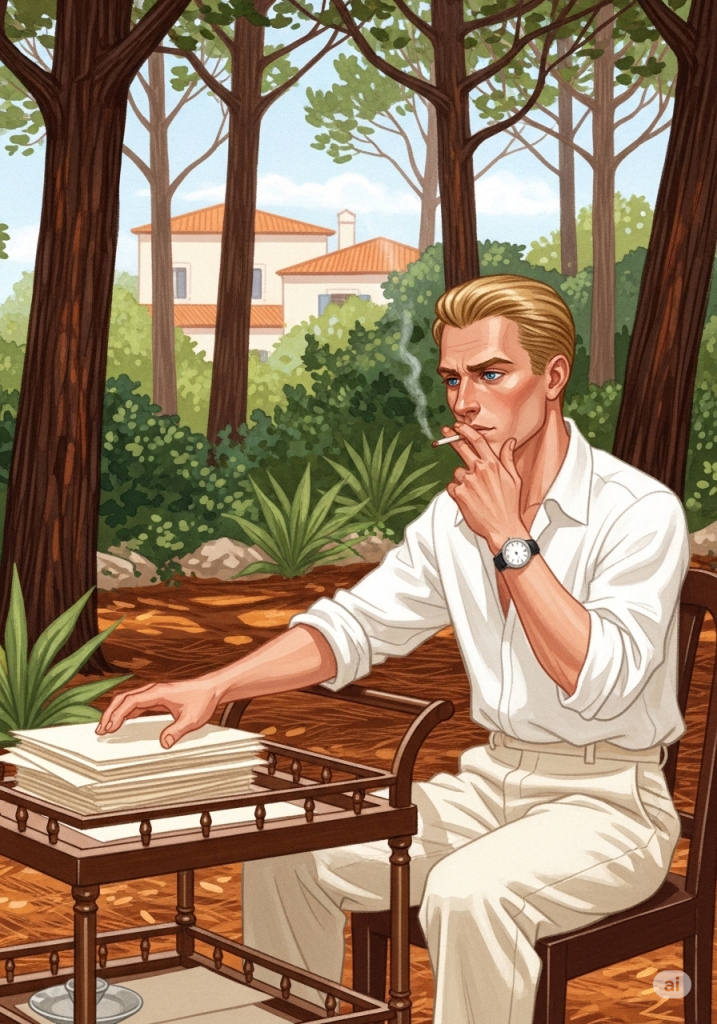
The villa they took, half-way between Saint Maxime and Cannes, was a red-roofed affair with blinding white walls and sat on the side of a pine-covered hill a mile or so above the bay. Zelda would later write that it was a long way back from the sea and that the “smell of tobacco flowers permeated the faded blue satin of the Louis XV parlour.” A wooden cuckoo sat in the oak dining room, and “petunias fawned on the balustrade.” Outside, the gravel drive wound around an avenue of giant palms and the rose-grey walls of the villa “yawned in the golden shower of late sun.” In the garden was a bamboo summerhouse, an ideal place for Scottie to play. The whole dreamy calamined vision looked like something from a Gauguin painting and they had it till November. In terms of amenities it was hardly a luxury option, but in every other respect it was just the place. This time, Scott wasn’t interested in whether the place had a swimming pool, a concierge service, a chef or a housekeeper. The only thing that mattered was that it had romance and was as far away from the buzz and whir of modern life as possible. It was just as he’d told Tom Boyd back in Great Neck; it was somewhere to be alone. To be completely alone. Writing in The Bystander in March 1924, the British travel writer and keen golfer, E. P. Leigh-Bennett, had written that Valescure catered for an “entirely different species of mankind”. It was welcomed and loved by the man who loathed what might only be described as “the atmosphere of the something Jazz band.” It stood apart from all this. The men and women who had come to play golf here in 1924 were the same men and women who were coming here in 1904 and 1911. Even the wild boar you occasionally found snuffling around the holes on the greens were the same. In the evening, as the casino lights would blaze in the towns in the distance, and the orchestras would start tuning up, the men and women of this hermit’s retreat would watch unmoved as the cars roared away from the clubhouse. [3] No. What it lacked in facilities it more than made up for in solitude, and this was all he craved at this time.
The villa they looked at in Cannes was a big, beautiful beast of a place, but at $110 per month and a staff of eight to feed, it was more than they had budgeted for. Scott would later recall arriving there by taxi. The villa “rose like white marble out of a great hill … like a castle of old.” Just to add to the romance he had daydreamed that the “thin, dispirited man” driving the car had once been a Prince in Russia until he had been forced into exile by Lenin. Next door was the Villa Allerton, the home of the Grand Duke Mikhailovich of Russia who was currently north in Paris. According to the agent, the beautiful Belle Époque villa they settled for in Valescure had been built by the Baron lover of actress, Suzette Reichenberg and at $79 a month was the fairest deal they had seen yet. [4] Locals would later tell him that it had been gifted to the actress before falling into the hands of Georges Roty who had renamed it after his mother, Marie. Since then, the Villa Marie had become the occasional winter home of Sir Reginald Hoskins, a Major General in the British Army.Scott had just been telling Thomas Boyd that the place was “saturated in Shelley”. If Boyd wanted a snapshot of the Riviera, Scott advised him to read the poet’s ‘Stanzas Written in Dejection’: “Like light dissolved in star-showers, thrown:, I sit upon the sands alone,— The lightning of the noontide ocean, Is flashing round me.” [5] Just a few minutes earlier he had watched a sparrow-hawk drop like a stone from the air and make a lightning swoop on a tiny Goldcrest perched on one of the conifers, a violent change in tempo in an otherwise languid evening.

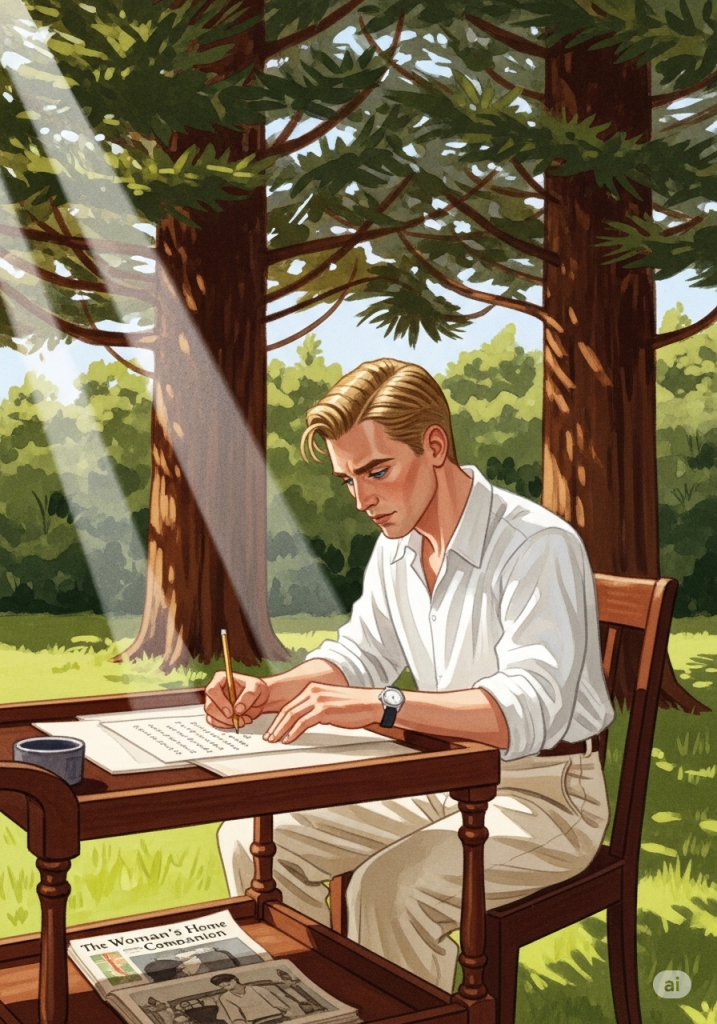
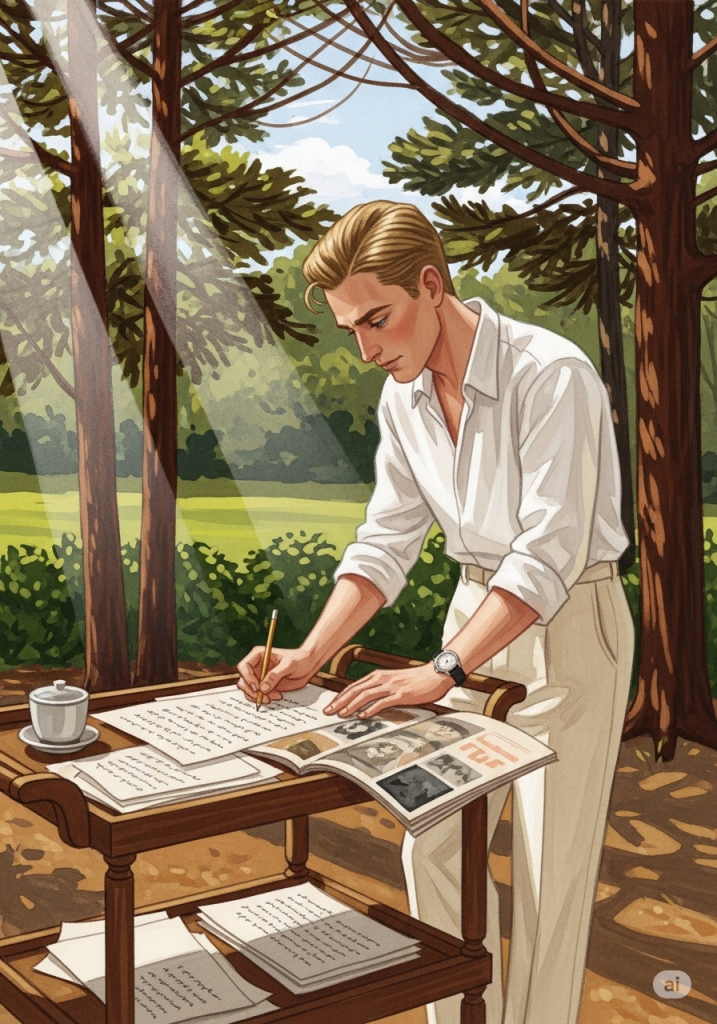
Scott had wheeled a two tier tea trolley into a shaded spot in the garden, surrounded on all sides by dense Mediterranean flora. Poking through the trees was the villa’s Giotto-styled belltower and blazing terracotta roof, a style that took many of its cues from the same faux-chateau designs as Alva Belmont’s florid palace on Sands Point, only this time, the rounded turret rooms didn’t have the conical ‘hats’ that you got in children’s fairy-tales like Cinderella. It was here with pine needles lying thick underfoot that he sat flipping through the broad pages of the magazine, several leaves of his pencil-written novel sticking out from beneath. On the top sheet there was a note in the margin: ‘Ring’. He’d been fiddling around with one of the party scenes. Nick and Jordan are on the other side of the garden. Jordan starts saying they should leave. They look around for an exit but wander accidentally into Gatsby’s gothic library. He wanted to feature a cameo of Ring Lardner browsing among the rows of books with those big googly eyes of his. He was known among his sports writer friends as “old owl eyes.” [6] Dealing with the cameo would be an easy enough task, he could disguise it a little by having the guy wear those thick horn-rimmed spectacles, but it had to reveal something about Gatsby, or, more to the point, his fraudulent capers with Rothstein. He also wanted to include Ring in another scene too. In July the previous year, Scott had driven Ring and his editor, Max Perkins to ‘Chalet Durand’ on Maple Street, a smoky French restaurant and speakeasy off East Shore Road in Manhasset. It was their go-to meeting place and usually full of burly, husky Irish men. Determined to show them just how Irish he was, Scott had got roaring drunk and insisted on driving them home. Instead, he reversed out of the Durand parking lot, missed a bend in the road, and careered down a sloping bank and into a nearby lily pond. All he remembers is that Ring was telling everybody who ran down the slope to help that he wasn’t the one who was driving, and then this long ghostly pause as he slowly swung open the door of the coupe and stepped dangling and bewildered from the wreck. “What’s the matter?” he had asked no one in particular, “Did we run outta gas?”. He wasn’t sure why he wanted to include it, but there was something immensely satisfying in knitting the dull grey world of fact into the phosphorescent world of fiction. Not everybody saw it like this. Some of his friends were horrified by it. One of them called him a trematode. He learned later that it was a parasite that turned its host into an entirely different species. They thought it was exploitative, abusive. They said he couldn’t take liberties with the past and futures of the friends he knew. He kept messing with people, making them come from places they could never have come from, transforming them into other people — which is what he’d done with Gerlach. [7] But for Scott, it was like he was lifting everyone he knew to a whole new plane of existence; adding a rich layer of gold plate to those special moments in time, removing the flaws from the people he loved until the very atoms that bonded them dissolved into pure energy and radiation and they floated to a miraculous afterlife. Reality gave way to illusion and life gave way to art. Until immortalised with the little magic tip of his pen it was like they never really existed. He was absolutely certain that Ring would love it and Gerlach was so much better for the transformation.
He looked again at his magazine. On the inside fly was an advertisement for Swan’s Cake Flour, ‘the preferred mix of housewives for 29 years’. As he contemplated the benefits of using fewer eggs with this versatile little cake mix, the sun had begun its steady collapse behind the Esterel Massif Hills, and was now quietly exploding in the softest of orange auroras. Zelda and the Murphys had been down at the beach and were probably in a bar having some tasteful drunken disaster. Gilbert Seldes, his friend from The Dial and a regular face on the party circuit in Great Neck, had just married Alice Wadhams Hall in Paris and was honeymooning in Antibes along the coast. The wedding had taken place in June and a reception had been held on the lawn of Gerald and Sara Murphy’s ‘spring’ home in Saint-Cloud. John Dos Passos, Jay Kaufman, Olga Picasso, and Donald Ogden Stewart had all been there. Since the wedding, there had been a mass migration south to the Riviera and he and Seldes were meeting regularly with the Murphys at their temporary digs in Antibes. [8] Seldes had introduced Gerald to Scott at a party in Great Neck in November the previous year. He had come over on the Aquitania. Joining him on the trip had been the retiring US Ambassador to Britain, George Harvey, Swedish ballet director Rold de Mare, movie star Rudolph Valentino, Gerald’s Yale pal, Cole Porter, and Edmund L. Baylies, the organiser of the ‘Green Light’ Memorial Tower at the Seamen’s Institute on South Street. [9]
Murphy had come to New York to oversee the production of his off-the-wall Jazz ballet, ‘Within the Quota’, a one act piece which mocked the immigration restriction bill being proposed by Johnson and Reed and its immediate predecessor, the 1921 Emergency Quota Bill. Cole Porter provided the music and Murphy designed its bright and colourful sets. At its performances in New York, Scott and Seldes’s mutual friend, Donald Ogden Stewart, was said to have provided some “humorous interpolations.” In April 1924, the ballet was reviewed in Selde’s The Dial by another of their friends, Paul Rosenfeld. [10] Part of the set design for the ballet was a blow-up of a fictional American newspaper with headlines parodying the capitalist excesses, scandals and hyperbole of the times: “Unknown Banker Buys Atlantic”, “Rum Raid Liquor Ban”, “Largest Liner In: The Queen of the Seas versus The Cathedral of Commerce.” Stewart would describe The Murphys as a Prince and Princess: “They were both rich; he was handsome, she was beautiful; they had three golden children. They loved each other, they enjoyed their own company, and they had the gift of making life enchantingly pleasurable for those who were fortunate enough to be their friends.” [11] Although Gerald and Sara sailed back to France in the last week of December, in time to spend Christmas with their children, Gerald’s sister Esther had Christmas dinner with him and Zelda in Great Neck. [12] Joining them was Edmund Wilson and his wife, Mary, John Dos Passos and Gilbert Seldes. Wilson was said to be so taken with Esther that he would cycle all the way to her father’s summer house, Little Orchard, in Southampton from his place in Brookhaven. [13] The Fitzgeralds would join Esther at another party in April that year. [14] Sharing the Murphy’s passion for art and the expensively unconventional, Zelda had been drawn immediately to the pair, and planning to nip around the coast with ease to their temporary digs in Antibes, had insisted on buying a car — a little blue Renault thing. Much to Scott’s horror, she then pleaded to have the roof taken off, so it could be more like a convertible.
It was during one of their infrequent incursions into Saint Raphael alone that a breezy French pilot had taken a shine to Zelda. They had been inseparable for weeks, and although it had taken him a long time to twig that this was more than a passing flirtation, it was beginning to have the profoundest effect on their marriage and the novel. The man, a Lieutenant Jozan, had made a bit of a name for himself during the war, and was now instructing the young recruits in the whizz-bang world of naval aviation. At first, Scott had been more than a little in awe of him. He had watched spellbound as this white-suited Apollo glided through the air, buzzing the rafts and pontoons in his single seater seaplane. Roaring above the beach, it seemed that at any moment an orchestra would strike up the French National Anthem and dozens of naval cadets would come striding across the dunes singing at the top of their lungs — a bravura display of Liberté, Égalité, Fraternité.

Tanned and lean from weeks of obsessive swimming, Zelda had bathed in Jozan’s golden brilliance with all the coquettish deference of a schoolgirl. He had seen them sitting together on the beach the day before, glowing like amber statues of Apollo and Alectrona. For the first six weeks she had grown fat on Chablis and bananas and pigeons cooked with olives. Scott had been joking that a woman’s place was with the wine but now she was busy building a whole new world for herself and a whole new personality to go with it. They had met him in a restaurant, where he was fanned, as usual by friends, all of them young Lieutenants. Zelda had been scratching around for a comb in her handbag after catching a glimpse of her hair in the mirrors. As if by magic, Jozan had produced a small red one from his pocket and a “smile of tragic seriousness had lit the golden face.” As Scott had left to order port at the bar, Jozan, the handsomest of the group, had introduced her to the other Lieutenants. When Scott returned with the drinks, Zelda had remarked on the resemblance between the two men, before adding that there was a profound difference between them too. Whilst Scott was a “moon person”, their dashing new friend was “full of the sun.” He had no idea what it meant. Maybe she was saying he was full of cheese or something. Dancing with Jozan later, she had told him, had been like “embracing a lost religious rite.” [15]
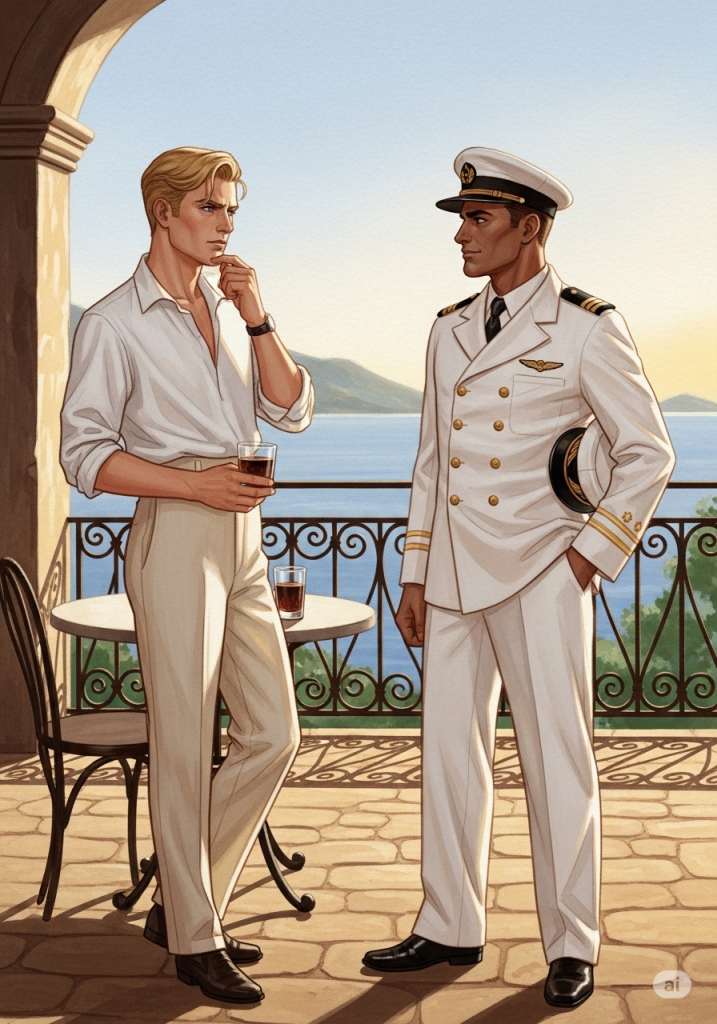
A little later in the evening, Scott had chatted to him privately. Lieutenant Jozan was, he had boasted, in the ‘necessary business’ of killing people. He was hooked, or so he claimed, not on drugs or on alcohol like other men, but on danger. As he said it, the gallant young lieutenant had waited for the gasps and the applause from anybody within half an earshot. Scott had asked, no less gallantly, if this was why instead of joining other mercenaries in support of the Spanish in the Rif Mountains of Morocco he had accepted a very cushy role on the Riviera’s Frejus airfield where he was instructing lesser-mortals in aerial daring-dos with a smouldering Gauloises cigarette in one hand, and a Ruby Sparkler cocktail in the other. Scott then joked about the possibility of him putting his aerial stunts to good use by doing a Champagne and Camembert air drop on their villa. If that didn’t provide the necessary quota of danger, he continued, he could always take a daredevil wing walk on their sporty blue Renault — the new roofless model.
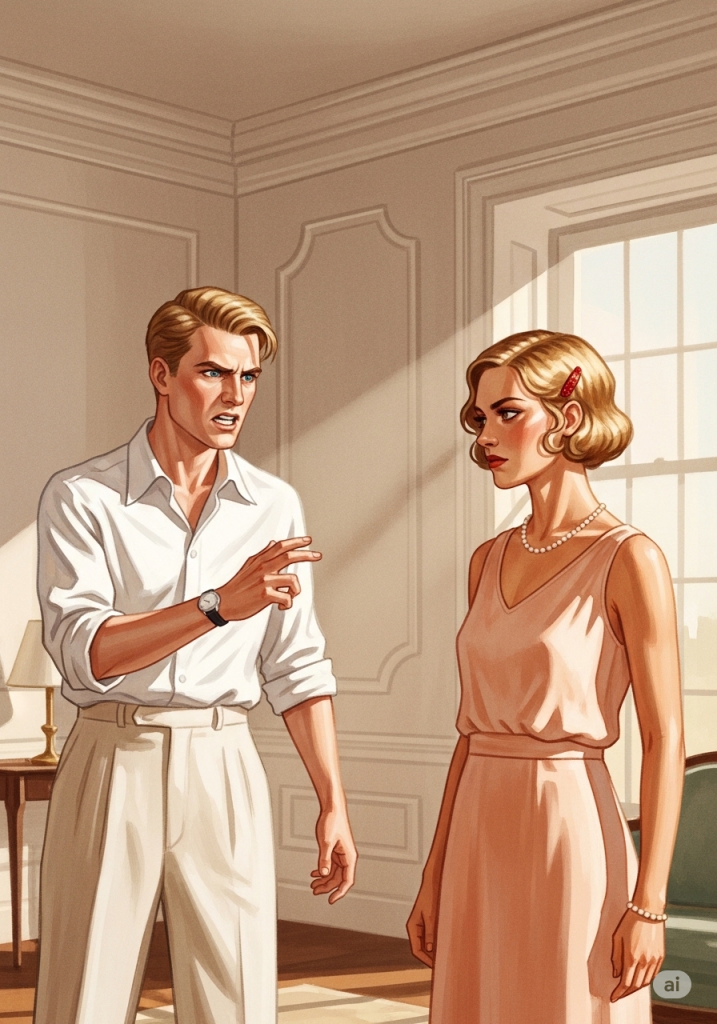
They had only been in St Raphael a few weeks when Scott had cottoned on to the fact that Zelda was bored and in need of attention. Scott could be writing from ten in the morning until the small hours of the next morning, not seeing anyone, not even Zelda. She was, they had joked, a ‘word widow’. For a time she had confined herself to reading Henry James, Robert Hugh Benson, Edith Wharton and Charles Dickens but the afternoons were long, and she usually found herself thinking of the evening long before the evening began.[16] Jozan had started off as the most vaporous of shapes before the heavy monotony of life as a literary widow had condensed him into something more substantial. Out of the monotony had walked this flannel-suited phantom, a little bit dangerous, a little bit gothic and with an utterly charming disregard for family life. The fuss about the car had marked the start of a minor rebellion and a lusting after chaos. As far as he could work out, the car and its former roof had become a symbol of the quiet domestic order that he craved, and taking the roof off somehow symbolised her resistance. Her next move, he feared would be taking a knife to his slippers and having the gas stove turned into a Gatling Gun. Zelda had been less than enthusiastic about leaving Great Neck and the role of dutiful wife was quickly becoming a bore. The princess of the fairy-tale castle that he’d built with such care in his head was shinning down the drainpipe and tearing into town for a skinful of gin-rickeys and an evening of fun — usually losing her clothes somewhere along the way. He had told his friends that he had become so worried about what Zelda was doing when he had passed-out from drinking that he was thinking of giving up drinking. Although his tolerance for booze was notoriously poor, there was this fuzzy warm rush that he liked better than any other feeling in the world. [17] The Murphys had told him he might have better luck giving up passing-out but he liked its effect as a sedative. It was just a case of plying Zelda with enough gin to keep her out of mischief, out of consciousness, and out of town.

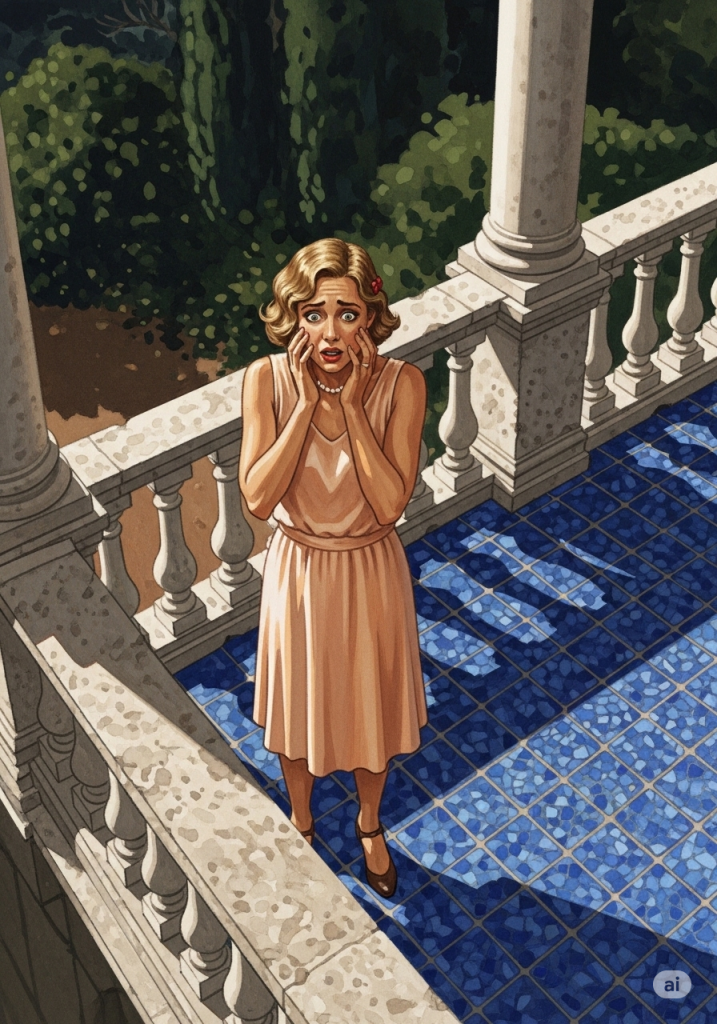
Scott wasn’t under any illusions about the cause of it all. The fragile balance of her emotional and mental wellbeing meant that she was living her life in a constant state of flight. That’s what the maniacal drill of social engagements and the parties were all about. Lardner would often introduce them at parties as ‘Mr and Mrs Fitzgerald. Mr Fitzgerald is a novelist and Mrs Fitzgerald is a novelty’. She was regarded by most of his friends as this fabulous, wild eccentric, but they didn’t know the half of it. If you looked closely at the cracks in that beautiful porcelain surface of hers you would see a plate that was even more fragile beneath. For Zelda, the impulse to escape overwhelmed every instinctive need to rest and be mindful. Without people around her, the world went dark. And with the darkness would come all those grossly distorted thoughts, the chronic exhaustion, the paranoia. Scott looked back across the lawn to the villa. The villa had this delightful Moorish balcony where they liked to sit most evenings. A few nights earlier, she had sworn she saw shapes moving in the mosaic upon the floor — like snakes curling around her feet. She’d become so disturbed at one point that she’d threatened to jump. She’d been mumbling something about ants — big at first and then small — swelling and popping like black balloons on the blue and red tiles. Within minutes she was screaming that Scott was trying to murder her and that he planned to have his friends from New York shoot Jozan. [18] She’d been depressed all day and had insisted on driving into town to do some shopping. She wanted some sweet baby dolls for Scottie, but all the shops were closed. It was after midnight.
For the first few years of their marriage, Scott had found it difficult to square-up the Zelda who composed such hypnotic, elevated prose with the Zelda who sought satisfaction in the most worthless of material pleasures. It had since dawned on him that few if any writers behaved any differently, himself included. In both cases you were just losing yourself in places that were at the farthest limits of reality. The similes and the metaphors you plucked from the ether didn’t make something complex or unfamiliar about the world more understandable or more vivid, they just revealed your desire to escape it. The words didn’t light the darkness, they just helped plaster over it, elevating you to another plane entirely. Writing was no different to the dope or the drink in that respect. If anything, making money from writing just complicated things. It had steered them to whole new levels of recklessness and self-indulgence. Scott had always told himself that the reason people read his flapper stories was down to escapism, a way of avoiding the unpleasant, stressful, or mundane aspects of daily life. But the reason he’d written these stories was down to escapism too. In Plato’s view of the world, poets moved away from the truth. Poetry was the lies of fools. For Friedrich Nietzsche, though, the colourful screens that the poet drew around their worlds and the elaborate masques these ‘liars’ performed — their “broken words and false rainbows” — freed others from the burden and the obligation of the truth. It seemed both men were right but only one of them understood the true value of all those lies.
By summer 1924, Scott was wanting to tell the whole damn world about Nietzsche. In April the previous year he had told the North American News Alliance that Mencken’s ‘The Philosophy of Friedrich Nietzsche’ was among ten books he had enjoyed reading the most. [19] Even vaudeville stars like Harland Dixon were quoting him: “I won’t smoke, chew, drink, or sip tea in the afternoon,” Harland would quip, “but I do read Nietzsche.” There was a joke going round that there were two important events in our lives at seventeen: we grew a moustache and we discovered Nietzsche. In Jazz Age New York, Nietzsche was everywhere. And Scott was convinced he knew why. The youth of America had no interest in the truth, they wanted something better than the truth. Floating in a universe of no meaning, what we found at the end of the rainbow, false or otherwise, was usually of our own creation. Life was what you made it. Scott had included another book in his ‘top ten’ reads — The Mysterious Stranger by Mark Twain — and it had said roughly the same thing. “There is no God, no universe, no human race, no earthly life, no heaven, no hell,” “ he had written. “It is all a dream — a grotesque and foolish dream. Nothing exists but you. And you are but a thought — a vagrant thought, a useless thought, a homeless thought, wandering forlorn among the empty eternities.” [20] If Scott had read it right, then Tom and Huck had emerged from the cave in the rocks with the news that God was dead. Twain had been wandering around the philosophies and theologies of the world and found them lacking in comfort, plausibility and rationality. It wasn’t God that kept humankind driving forward, Twain had realised, but a carrot on a stick. In a desperate bid to make meaning from our lives and have some sense of going forward we invented our own rewards. Scott had reviewed Sherwood Anderson’s Many Marriages for the New York Herald, and couldn’t resist sharing his enthusiasm for this way of thinking: “The world in which I trust, on which I set my feet, appears to me to exist through a series of illusions.” [21] For stockbrokers the reward they created for themselves was in green crinkly dollars and for men like James J. Hill it was in building railroads that gave birth to empires. For poets like Scott, these false rainbows were found in words.
Ever since reading Mencken’s book, Scott had been possessed by the idea of writing his own Nietzschean fairy-tale. In the unused prologue to Gatsby that he’d given to The American Mercury, he’d set out the framework of the idea and had even included a direct reference to Nietzsche that he knew Mencken would think was swell. The reference was in the final lines of the story as the boy runs from the church. The “girls with yellow hair” walk sensuously along the roads, calling “innocent, exciting things to the “tall young men from the farms” working on the grain. A “blue sirocco” wind trembles nervously over the wheat. But the wind, he writes, was no match for “the blonde Northern girls” who are seducing the boys in the fields. For Nietzsche, the gentle breath of the sirocco — a light southern wind — personified the weak, lazy will of Christian docility that was grossly inferior to the invigorating winds of the north. God’s suffocating breath was blowing drowsily across the wheat fields of the young boy’s Midwestern hometown. In the boy’s eyes at least, the townspeople retain a lazy servility to God. Nietzsche thought it better to live amid the ice and thunderous roaring winds of the north than the warm, fatalistic breezes of the tropical south. These light sirocco winds, Nietzsche believed, sapped the energy out of man and curbed the egotism of the strong, “a conspiracy of the chandala against the free functioning of their superiors and the free progress of mankind”. The boys out in the fields were losing themselves to love. From what Scott could gather, Nietzsche took a very dim view of love. For Nietzsche, it wasn’t love that was real but friendship. The hero of Scott’s novel was an absolute fool for love, but friendship was the thing that really lasted. This would be borne out by the relationship between Nick and Gatsby. Love was just this absurd delusion — a wilful blindness. Mencken had just translated Nietzsche’s The Antichrist and had included it in his own ‘top reads’ in the same weekend newspaper. Scott had liked the image of the wind and woven it into his prose.
The thing with Jozan was changing the entire tone of the novel. The book had started life as a Lasky studio take on A Midsummer Night’s Dream, but if his vitriol remained at this level it would likely turn into some gory, blood soaked revenge tragedy like Hamlet, something that would please the thrill loving reading public and intellectuals alike. Maybe this was no bad thing. Scott knew he’d been whoring himself creatively. He would write stories — stories he could be proud of — and then remodel them for whatever magazine was paying the most. The Saturday Evening Post wanted saleable stories, not art. Mencken’s American Mercury had been a godsend in that respect. In stories like Absolution he was under absolutely no obligation to compromise his writing. Despite this, he wanted his new novel to sell but was keen to pack it with as much golden prose and high-minded philosophy as possible, even if that philosophy wouldn’t be immediately obvious. Based on another of Mencken’s recommendations, Scott had been reading Nietzsche’s We Fearless Ones, in which the philosopher took a look at the qualities and skills necessary for thriving in a world where God is dead and where both tradition and modernity can be transcended or discarded. In it, Nietzsche takes issue with man’s “unconditional will to truth”, his overwhelming determination not to be deceived. That was all well and good, but it seemed to Scott that there was happiness to be had in certain kinds of deception. This Gatsby character had created a world in which he didn’t need God. Neither did he need answers to life’s loftiest questions. It was his love for Daisy that moved him forward, and he didn’t mind that this love was a foolish love. Gatsby told lies and was happy to be lied to. Scott knew he could open The Woman’s Home Companion at random and find proof that Gatsby wasn’t alone in any of this. Just look at that, page forty-five: “Your future is your own making!” The Palmolive Soap Company must have paid someone at the magazine a fortune for that. It was a full page spread. The picture showed an illustration of a gypsy fortune teller looking at the palm of a beautiful young woman. The copy that accompanied the ad explained how a daily routine of washing with this soap was prolonging the youthful appearance of millions of women. Not only that, it brought romance to your life. [22] The whole thing was absurd, but there were millions of women who believed every line of it. It wasn’t your logic these ads were appealing to, but your emotions, emotions like pride and longing. What they did, was promise you happiness. God couldn’t promise happiness. He promised suffering, privation and a lifetime of dry skin. How on earth was God ever going to compete with the Palmolive Soap Company on that basis?
Nietzsche had never really understood why people got so cheesed off about being deceived, and neither did Scott. Why was it that a life aimed at semblance, deception and simulation was so very, very wrong? It had worked well enough for Odysseus. Odysseus had faced a ten-year, obstacle-ridden journey to return home to Ithaca after the Trojan War and it was down to his many dimensions and the profound love he had for Penelope. It was a passionate belief or the delusions of love that made man happy, not the truth. [23] It was just as Nietzsche had said: poets had known this for years. ‘The poet, who can willingly and knowingly lie, can alone tell the truth’. [24] Scott had thought back to the painting of the yellow-haired Eros they had seen at the Louvre on their first trip to Europe. The little blond-haired cherub is lying there dead in his coffin but he is smiling. He has died in the dream of love. It didn’t matter if that love was real or a product of his imagination because that love, as foolish as it was, was now a forever love. The only truths that mattered in this world were those we believed in. For Nietzsche, reality was raw, often harsh, and inherently meaningless. It was the reason we had art — so that we wouldn’t die of reality. It was the same with all those colossal mansions owned by the millionaires back on Long Island. You didn’t build a big beautiful house to embrace the world around you, you did it to keep it out. He had done exactly the same thing with Zelda. She had become both his dreamhouse and his safehouse, and Lieutenant Jozan was like this unwanted intruder in all of it. Looking around the garden at the wall of pine trees and rose bushes that surrounded him on all sides he imagined the cruel white figure of Jozan gliding toward him through the leaves with a pistol in his hands. Scott would drop his manuscript and the villain would pump three .38 caliber shots into him. The two-tier tea trolly would topple over and blood would be splattered all across his copy of the Woman’s Home Companion.
At first, the whole thing with Jozan had been okay. You might even say he’d encouraged it. A little bit of jealousy would help him with his characters, but bitter jealousy, murderous jealousy — well that was a whole new thing. Earlier in the day he had picked up an old copy of The New York Herald, the Paris edition, that was lying around in the summerhouse. The story, which was a good month old, was dated June 10 and it had been a special to the Herald. According to the newspaper, a Japanese man called Tashima had been left to nurse his love for the pretty daughter of a neighbour who had sailed for America some seventeen years before. His one purpose had been to follow her, and after a lengthy search in California he had found her in Los Angeles. She had married a prosperous man in Hollywood and was mother to his five children. She was happy and had told Tashima to leave. She was not in any position to renew the vows of love she had made all those many years ago. Absolutely convinced that she secretly shared his deep affection, he returned with a gun and shot her down before turning the gun on himself. His last words to the girl had been, “I will make the decision for both of us.” [25]
For Scott, the adulterous affairs of the heart were confined to paper but Zelda, as always, was loosening her creativity around the flesh and the bones of life. Scott had never slept with any other woman but Zelda, but certainly in the years before the marriage, and occasionally after, Zelda seemed compelled to surround herself with admirers and quasi-romantic liaisons. Although he was never entirely sure if the encounters were ever sexual, she would always hint that they were, and the cruel, toxic scent of unfaithfulness would be left hanging in the air as bait. The result would be jealousy, and the result of jealousy would be drama and the result of the drama would be the complete realignment of the earth, the stars and the planets around her cooling little sun. Only that February, he had written an article in which he’d expressed his belief that jealousy was “the greatest proof of and prop to love”. It was, he went on, a potent and positive force in matrimony. Out of the chaos would come compromises, concessions. [26] The thing with Jozan was getting rather serious though. And this was beginning to bother him — as inspiring as it was creatively. It had started innocently enough. It would be Jozan this and Jozan that, as if just saying his name brought him bouncing back into the room every time she said it. If there was a restaurant in the town he wanted to try, Jozan would have tried it already. If they watched a sunset together, then Jozan would love it too. If a plane flew overhead it would be Jozan. If a seagull flew overhead it would be Jozan. In fact, if he’d told her there was this new discovery from Albert Einstein that would redefine our understanding of space, time, mass, energy, and gravity, then you can guarantee it would already have been discovered by Jozan.
He shouldn’t have been surprised by any of this. Zelda had always maintained that it was possible to love two people. The very idea had sounded absurd. Did Juliet love Romeo just a little bit? Did Cathy love Heathcliffe but loved Edgar Linton more? Was the title of Shakespeare’s famous tragedy, ‘Antony and Cleopatra … and Whatshisface?’ Zelda had always said they were more like twins than lovers, and there was no such thing as a third twin. And if what she was saying was true about her feelings for Jozan, then what about all those letters she had mailed him at Camp Sheridan and Morningside Heights? “Scott my darling lover, I know that I’ll always be yours and you’ll always own me.” “Scott there’s nothing I want in all the world but you, and your precious love. All the material things are nothing.” He had taken those words, laid them at his feet and used them to climb the lofty heights of success. Saying they meant nothing was like taking the ladder from under him and letting him tumble on his ass like a clown. Everything he’d achieved as ‘America’s most promising author’ had been invested in the words she had written. A world that had once seemed so full of poetry and meaning, was suddenly looking as vulgar as a Minsky Brothers burlesque show. The spell was being broken. He had written to a friend that this was what the new novel was about — the loss of those illusions that give such colour to the world that you didn’t care if things were either true or false, right or wrong, real or imagined, because they saturated everything with such a “magical glory.” [27] Scott’s greatest fear was that none of what he or Zelda had felt had been real to begin with, that it had been drawn from a well of the most sentimental delusions, feelings not formed in the heat of cosmic collisions but hacked from the words of poets and fairytale philosophers like Rousseau. The sweetness of the music was fading and only the crackle of the vinyl remained. A showdown was looking inevitable. If the fate of his marriage had to be decided by a duel, then by God, he would give him a duel. It was something his readers would love.
Beyond Our Reach
Scott had been so lost in his fears about Zelda that he’d spent the best part of the evening barely looking at the magazine or adding to his manuscript. He was hoping Zelda would arrive home at any moment and had held on to the last few measures of gin as an offertory of sorts. If it all went as smoothly as it did in his head, Zelda would find him in the garden and clear a space to sit among the pine needles. He would say that leaving them as they were was the better idea, as they were a lot softer than they looked and pour her a drink. Then they would talk. She would ask about the novel and offer to read a few lines. He would say it wasn’t necessary and that she should tell him about her day. And they would both speak in that soft, monotone drawl that lovers often use after quarrelling, like someone had just dropped off to sleep and they were trying to keep quiet. He would joke that this was the last of the booze, and as was the routine, she would pretend to faint. Then they would hear a nightingale singing at the edge of the woods and they would spend the remainder of the gin talking about Keats and ‘negative capability’. Zelda would kid that if anybody was capable of being negative, he was. No one would mention Jozan, or bring up the subject of murdering anyone, and if they did they would make some darkly humorous comment about burying each other in the wine cellar. Then the nanny would surprise them with Scottie. She would ask if anyone had seen Frances and then Frances would jump out from behind her going ‘boo’ and they would feign surprise. By the morning, the three of them would be back in the kitchen singing some silly song about eating peaches and biscuits for breakfast and everything would be forgotten. Thinking of Scottie he picked up the magazine: ‘The Woman’s Home Companion: The foremost institution for women—directed by women.’ It was the July 4th edition and included his two page essay, ‘Wait Till You Have Children of Your Own’, the article he had completed just days before leaving for Europe.
As he leafed through the first pages, he saw that his article was supported by two similar pieces; one by his former Great Neck neighbour and party-regular, General Pershing, and one by Edward Elwell Whiting, the respected editor of the Boston Herald who had just published a biography of President Coolidge. Pershing’s piece was just what you’d expect for such an occasion, and full of the “paid patriotism” that Scott had mentioned in his own article. The magazine’s editor, Gertrude Lane, had deliberately solicited articles of a patriotic and pedagogical bent and the General, known for his ramrod-straight beliefs and obedience to the flag, had undertaken his with characteristic bluntness. He had every respect for the patriotism shown by American women during the war, but was keen to hammer home the need of that same patriotism during peace time. As the high emotional tension of fighting subsided, and the danger to the nation was no longer imminent, women, he wrote, would be tempted to take their foot off the gas and take their freedom for granted again. The “patriotism of women, when the country is at peace,” he continued, was an “unorganized affair.” The new danger, as Pershing saw it, was that this calmness may “develop into passivity, even complete indifference.” The threat, it turned out, was Bolshevism. He didn’t mention it by name, but there’s little doubt it’s what he meant. With anti-American propaganda from the left gaining ground, he hoped that the country could be in a permanent state of crisis and in a heightened state of alert. The National Defense Act of 1920 (Kahn Act), passed on June 4, would do just that, he fantasised. The future of America was down to ‘preparedness’ — the preparedness of girls who read the Woman’s Home Companion not to marry the country’s uneducated and various other ineligibles like those who weren’t prepared to attend the Citizen’s Military Training Camps. [28] For maximum impact the article had been packed between an advertisement for Victrola photographs (his master clearly liked the sound of his own voice) and Johnson’s Baby powder, which kept everybody’s patriotism smooth and fresh, including baby’s.
Whiting’s article was a little more interesting and had clearly been inspired by the model for national excellence set-out by President Coolidge in his new book, The Price of Freedom. Wilson had been lampooning it in his play, The Crime in the Whistler Room — ‘The Roosevelt Institute of Success’! A liberal education for all! A school of dreams! By mail order! [29]The previous autumn, Coolidge had made a series of speeches in support of a National Education Week. Education he said, meant freedom. It was the President’s belief that knowledge and freedom went hand in hand: “From its very beginning, America has been devoted to the cause of education. The country was founded on the ideal of ministering to the individual.” The “patriotic devotion” of an “army” of teachers would defend the country from the challenges of International Communism. Despotism, he continued, found its chief support in ignorance. [30] The article by Whiting, whose short biography of Coolidge would be published that autumn, continued in a similar vein.
As it was the July 4th issue — the great birthday of human liberty — Whiting had started by saying that America was beginning to take liberty for granted. Some of its meaning, and the intensity of that meaning had been lost. He thought it might be good if we could wave a magic wand and be transported back in time, waking up each July 4th to find our country as it was in July, 1776, “with all the feverish energy of effort then tapped and flowing and all the perplexities of that mighty moment in the swing of time.” The declaration had been signed as part of a sacred vow and it was time to renew those vows. The pursuit of happiness was the inalienable right of its people. The pledge given by the men who had signed it, wasn’t just symbolic—it was transactional in the deepest sense, a bond sealed in both faith and fear. Although it had always been the right of its people, Independence had never been free or inevitable; America had had to fight for it. For a short time, the war in Europe had sharpened our appetites for liberty, but things had begun to slide, and it was no less taken for granted than gravity or air. It was like some cultural amnesia. The struggles of the past, Whiting feared, were being forgotten. The value of liberty was changing too. In the past, people found joy in simple things: hand-built sleds, the music of rain on roofs, or stories told by candlelight. Today, it seemed like happiness was too often tangled up in goods, ambition, and the constant quest for more. America was on that hedonic treadmill: its circumstances were improving, and so its expectations began to rise along with them. Whiting’s reference to “eternal vigilance” had intrigued Scott enormously. It reminded him of those freaky trade signs used by opticians, those two enormous spectacles sitting on a disembodied face. Whiting was saying that preserving one’s liberty and right to happiness was down to some kind of hypervigilance. And then he said something really weird: the key to real happiness was having all the things you really wanted just outside of reach. It was just as Rosseau had said, only Whiting had phrased it a little less floridly. He said that happiness was like a light that shone ahead in the distance. One should keep the goal in sight but never quite reach it: “The great goals of life are unattainable for mortal men. They are beacons which beckon us on, which by their light sustain us through dangers, difficulties, and delays.” Scott copied the next thing down verbatim into his jotter: “A goal attained ceases to beckon onward. There is no power to inspire in that which we may easily possess. Human ideals are always just a little beyond reach; but we never cease to stretch our hands toward them. The perfection of love is a dream of all men and all women of all times. That it is a dream, is its magic. Men and women will die singing if before them shines a great vision.” [31] It was really quite profound. The light was a source of inspiration. It was a man’s fuel, the fuel of poetry. Rousseau had known this. Coleridge too. It didn’t really matter whether it came down to love or money, it was the striving that made you do great things, not the having. Happy birthday America.
Scott had been impressed by the size and the quality of the magazine and Perkins, in his trademark competent style, had done a first-class job in packing it. He’d also included a full-page advertisement for the article that had appeared in the New York Times on the day of its publication, something he felt rather flattered by. The headline read: “And I hope she’ll be a fool—”. [32] Seems everybody had loved that line from Zelda. In fact, Scott had liked it so much that he was putting it in the mouth of Daisy. [33] The magazine’s cover art, by Maginel Wright Enright, showed children picking flowers and had been painted with a rich blue gouache background. The figures, all girls of eight or nine years of age, were all yellow haired with the exception of the tallest girl who was red-headed. It was a picture of unself-conscious innocence.
After reading the essays by Pershing and Whiting, Scott had begun to have doubts about the sincerity of his own article. He had accused his father and his mother of passing on all the delusions of one age on to another. America, like the Church, had been pushing fairy-tales. Shortly after arriving on the Riviera, they’d had a drive along the coast to Antibes. During one of their cliff-top walks, little Scottie had asked him what the ‘popping’ light was on the horizon. He explained that it was a lighthouse. What was a lighthouse? Well, a lighthouse was a tower with a big bright light on it, he had said, and the light went round and around to help sailors at night, guiding them away from all the rocks and bringing them safely back to land. He had then told her an outright lie. He had told her the lighthouse was inhabited by fairies and that it was the fairies who turned the wheel that made the light go around and around. Scottie had been sitting on his knee looking like a fairy princess in a filmy pink dress that Zelda had made, so it had been the very first thing to have come into his head. She was literally shaking with excitement. Over the ensuing days, Scottie had kept asking to see the lighthouse. She was desperate to meet the fairies. One night, his new friend Gerald Murphy had come over in his large Panama hat, his white suit and his spats and asked if he could drive Scottie to have a look inside the lighthouse. No sooner had the question tumbled from his lips than she asked Mummy to put her in her pink dress. Within moments she was hopping into the back of his car and wedging her pudgy pink body between his own children, Honoria, Baoth and Patrick. But the closer she got to the lighthouse the more nervous she became. Standing bright and monolithic in the near darkness it had looked huge and rather monstrous. There was no way they were going in. Her eyes had grown to the size of saucers and she had frozen in her seat, her chubby little hands gripping at her dress. Gerald had cottoned on quick and told her there was no need to worry, the fairies were probably busy and they could watch from a little further away. [34] Even Gerald had been in on the deception. Scott had mentioned it to Zelda and asked if it was wise to encourage such fantasies. The child would enter adulthood totally unprepared for either the violent indifference of the real world or the cruelty it heaped on its dreamers. You were, he went on, setting them up for a lifetime of disappointment, disillusion — if not outright fear. Zelda had thrown Nietzsche back at him. Nietzsche, she reminded him, viewed illusion as essential for human existence, acting as a necessary, life-affirming shield against the often unbearable, chaotic truth of reality. “Better to be a happy little fool than a miserable fucking pragmatist,” snapped Zelda. Reality, she went on, was an illusion we had forgotten was an illusion. The race to truth was a race to death. It really came down to whether the lie built something worth having or destroyed something. The only thing that really mattered was that Scottie would have enough money to decide what she wanted to believe and which world she wanted to live in. It was all relative. If you told a child there was no Santa you might as well tell them there was no God. Santa was just the name that people gave to the spirit of Christmas and the spirit of giving. Scott had shrugged his shoulders and tapped at the newspaper in front of him. The papers were reporting that the Russians were telling their children there was no Santa Claus. Apparently the elves had formed a Soviet. Decisions in the workshop would no longer be made by some fat capitalist autocrat in a jolly red suit but by an elected worker’s council. Eggnog was banned too.
It was 8.55pm. In Ireland, the Orange Day Parade would be finishing and all good Catholics like himself would be retiring their vitriol for the evening. And there was still no sign of Zelda. Pulling out his jotter from beneath the magazine he composed a letter to Max, thanking him for the magazine and quizzing him about his ongoing negotiations with Ring Lardner, who had finally let the house back home. “Poor Ring,” he continued, “It’s so discouraging that he keeps on drinking. How bored with life the man must be.” And with that he picked up the tumbler, stared out across the ocean and imagined a single green light ‘popping’ away on the next headland. Unobtainable. Out of reach.
Something Completely His Own
By the end of October, Scott was writing to Scribner’s saying that he’d completed over 50,000 words of the novel. He told them that he had done something that was completely his own, although how good his own was, remained to be seen. Although he’d had the first three chapters completed before the move to Europe, the whole thing had evolved significantly and gone through several major revisions. At the end of September he’d hired a typing agency in Nice after seeing an ad in the local press: ‘Institut Gaudio, steno, dactyl, comptabilité 19, avenue de la Victoire, Nice.’ They had several different branches, but the one in Nice was the closest. The thing with Jozan had come to a head on July 13. He referred to it in his ledger as ‘the Big crisis’. Much of what had happened was now a blur. He knows that they had drunk a lot, shouted a lot, cried a lot, apologised a lot and driven around randomly alone at night quite a lot too. They had even joked to friends that he had locked Zelda in her bedroom for two weeks just to stop her from getting a divorce. But the violence of his words, and the thoughts they tried to communicate had shocked even him. When she had told him that she no longer loved him, and if she did still love him it was not like it was before, it was like she had put a knife right through his head. All the vows they had made just four years earlier suddenly had no more substance than air. Those solemn binding promises, the whole ‘till death do us part’ thing had not been an expression of those unseen forces of fate or destiny, but because they were part of the script. Even those silly little things they’d shared, like the songs about eating peaches and biscuits for breakfast, were now left joyless and orphaned. Zelda had been this wall, this house that had protected him from reality.
The rows had been pretty intense. So intense, that the trips they made to Monte Carlo and San Maxime with the Murphys and the Seldes in the weeks that followed had been awkward to say the least, but things were now back on track. In two weeks’ time there’d be the Mourning Moon, the last full moon before the Winter Solstice, and a time of loss and letting go. The ‘Midsummer Night’s Nightmare’, as Scott was apt to call it, had been over by September, and he was living like a man reborn: swimming daily and on the wagon. Zelda seemed a lot less scattered too. She had started writing again. She had a story about the movies that she’d started back in Great Neck. A little comedy thing. The Chicago Tribune were just one of the titles interested. [35] There was, he conceded, no sourer experience than the faithlessness of time, and though things were the same, they were not the same. The walls to the house, this incomprehensible failure of a house, were starting to crack.

[1] ‘How To Live On Practically Nothing A Year’, F. Scott Fitzgerald, The Saturday Evening Post, September 20, 1924, Vol.197, No.12, p.17. p.168
[2] ‘How to Live on $36, 000 a Year’, F. Scott Fitzgerald, Saturday Evening Post, April 5, 1924, Vol.196, No.40, p.22, p.94, p.97 ; ‘How To Live On Practically Nothing A Year’, F. Scott Fitzgerald, The Saturday Evening Post, September 20, 1924, Vol.197, No.12, p.17. p.168
[3] ‘Riviera golf’, The Bystander, March 5, 1924, p.
[4] ‘How to Live on Practically Nothing A Year’, The Saturday Evening Post, September 20, 1924
[5] ‘Dear Tom, St Raphael, France, June 23, 1924’ F. Scott Fitzgerald, Correspondence, p.142
[6] ‘Ring Known to Friends as Old Owl Eyes’, Boston Globe, September 26, 1933, p.28
[7] ‘Dear Scott’, Ernest Hemingway, Key West, May 28, 1934, Ernest Hemingway, Selected Letters, 1917-1961, Scribner, 1981, p.407
[8] ‘Hall-Seldes Wedding Held’, Chicago Tribune (European Edition) June 22, 1924, p.2; Dear Scott, Dearest Zelda, p. 68
[9] ‘In the Aquitania’, New York Herald (Paris Edition), November 3, 1923, p.4; ‘Big Delegation on Aquitania’, The Times-Picayune, November 13, 1923, p.17; ‘Rolf De Mare Arrives’, New York Times, November 10, 1923, p.27.
[10] ‘Musical Chronicle’, Paul Rosenfeld, The Dial, April 1924, vol. 76, p.389. It’s a toss-up as to whether it was Seldes or Ogden Stewart introduced the Fitzgeralds to Murphy. Ogden Stewart didn’t like to party with Scott on account of his excessive drinking, whilst Seldes was a regular on the circuit with Lardner. Seldes thanked the Murphys in the ‘acknowledgments’ of his book, The Seven Lively Arts, 1924.
[11] ‘By a stroke of luck!: An autobiography’, Donald Ogden Stewart, p.117
[12] ‘Steamboat Departures’, The Times-Picayune, December 18, 1923, p.21
[13] ‘To John Peale Bishop, June 30, 1923’; ‘To John Peale Bishop, January 25, 1924’ , Edmund Wilson, p.105, p.119, Letters on Literature and Politics, 1912-1972, ed. Elena Wilson, Farrar, Straus & Giroux 1977
[14] Ledger, April 1924.
[15] ‘Save Me The Waltz’, Zelda Fitzgerald, p.98
[16] Save Me The Waltz, Zelda Fitzgerald, p.
[17] A Moveable Feast, Ernest Hemingway, Scribner, 1964, pp.179-180
[18] ‘Adultery: the suspected wife condemned of evil…’ (undated); Zelda Fitzgerald Papers, C0183, Box 3, Folder 41, Manuscripts Division, Department of Special Collections, Princeton University Library
[19] ‘The Ten Books I have Enjoyed Most’, Jersey City Evening Journal, April 24, 1923,
[20] The Mysterious Stranger, Mark Twain, Harper and Brothers, 1922, p.140
[21] ‘Sherwood Anderson on the Marriage Question’, F. Scott Fitzgerald, New York Herald, March 4, 1923, Section 9, p.5
[22] ‘Your future is your own making!’ (advertisement), Woman’s Home Companion, July, 1924, Vol. LI, No. 7, p.45
[23] ‘We Fearless Ones’, Book Five, The Gay Science (1882), Friedrich Wilhelm Nietzsche, ed. Walter Kaufmann, Vintage Books, 1974, p. 282
[24] From Nietzsche’s poem, ‘The Wreckage of the Stars’.
[25] ‘Japanese Have Love Tragedies’, New York Herald (Paris edition) June 10, 1924, p.2. I deliberately telescope coverage of the event to coincide with the affair with Jozan.
[26] ‘Making Monogamy Actually Work’, St Louis Post-Dispatch, February 25, 1924, p.
[27] ‘To Ludlow Fowler, August 1924, F. Scott Fitzgerald, A Life in Letters, p.78
[28] ‘Peacetime Patriotism’, John J. Pershing, Woman’s Home Companion, July 1924, Vol. LI, No.7, p.4
[29] ‘Crime in the Whistler Room’, Edmund Wilson, Five Plays, p.141
[30] ‘Coolidge Appeals For Aid to Schools’, New York Times, October 1, 1923, p.9
[31] ‘Independence Day Every Day’, Edward Elwell Whiting, Woman’s Home Companion, Editorial, July 1924, Vol. LI, No.7, p.2
[32] ‘and I hope she’ll be a fool—’, The New York Times, June 20, 1924, p.20
[33] The Great Gatsby, p.21
[34] Sara & Gerald: Villa America and After, Honoria Murphy Donnelly, NYT Times Books, 1982, p.28
[35] The story would eventually be published on June 7, 1925 credited to Scot. Scott explains in his ledger that he had added the climax and made some revisions.