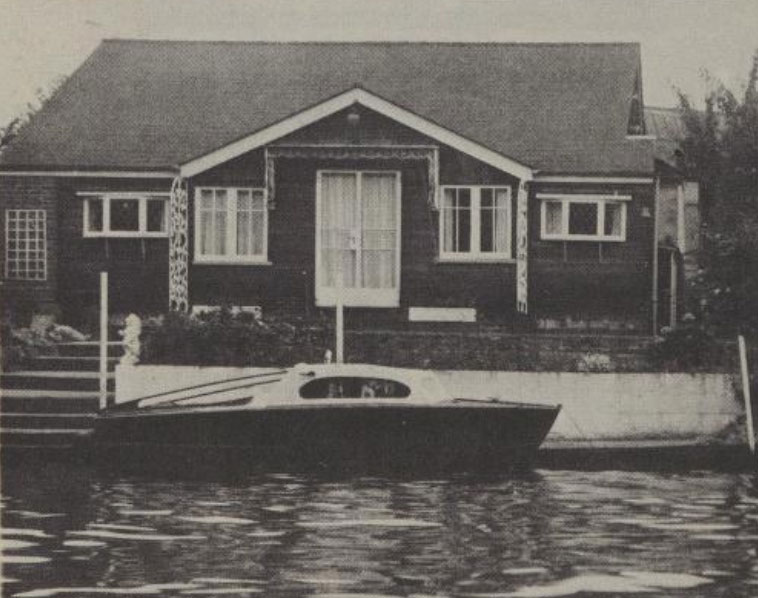
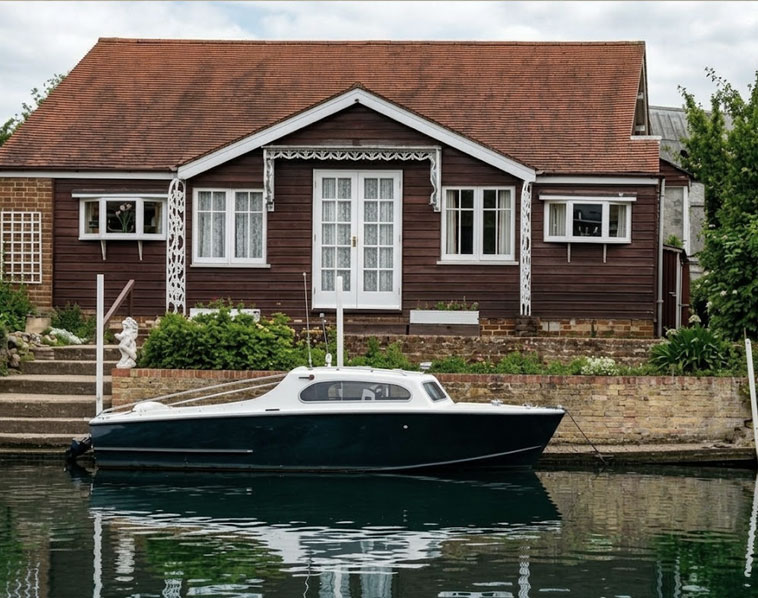
In late September 1920, former MP and firebrand socialist Victor Grayson vanished into thin air, leaving behind one of Britain’s most haunting political mysteries. According to Hilda Porter, the manageress of his London apartment building, Grayson had been receiving biweekly cash deliveries from two uniformed men. On his final day, two enigmatic strangers arrived, spent hours locked in discussion with Grayson, and escorted him to a car carrying two heavy suitcases. Another account placed Grayson entering a bungalow on the Thames owned by royal broker Arthur Maundy Gregory — a man Grayson had publicly threatened to expose over a corrupt cash-for-honours scandal. Promising Porter, “I’ll be in touch shortly,” Grayson walked out the door and was never seen alive again.
Numerous theories attempt to explain Grayson’s sudden vanishing. One compelling account claims he was probing a lucrative cash-for-peerages scheme involving Maundy Gregory and Prime Minister Lloyd George—ironically on orders from Sir Basil Thomson, head of Special Branch and Director of Intelligence. Another holds that Thomson simply viewed Grayson as a ‘dangerous communist’ and commissioned Gregory’s network to shadow his every move.
Personally I’m not committing myself to any one theory. Some writers claim that Victor Grayson was working for British Intelligence and others that he was working for the Soviets or the Irish Secret Service. He may well have been working for all three of them but as long as police and security records on Grayson remain closed we are unlikely to know either way. He was a deeply secretive man and remained a mystery to many of his friends even in his own lifetime. That Grayson disappears within a month of Toplis being ambushed and killed in Penrith in 1920 certainly grabbed my attention, but it’s not proof they ever met, or that Toplis took part in the mutiny at Étaples. That said, one of the most frequent visitors to Grayson’s house in the months before he vanished was Horatio Bottomley. And therein lies another tale.
Soldier’s Friend
As editor of John Bull, Bottomley was widely revered as the ‘Soldiers’ Friend’. Crucially, he was present in Étaples—having spent years lobbying for improved military welfare—when the mutiny erupted. In The Monocled Mutineer, authors John Fairley and Bill Allison take the story further, claiming Bottomley directly mediated between camp officials and mutineers after troops delivered their demands to Brigadier Thomson. The claim is backed up by Étaples witness, A.B Newland Senior who says that Bottomley ‘took an active part in persuading the men to return to duty’. Whether he was given “complete control of the situation”, as some early rumours allege, isn’t known. The writers also allege the demands for camp improvements were served by Toplis himself. The diary of General Haig shows that Bottomley was in Étaples at the time and he had dinner with him on the 12th September to discuss the morale of the troops. Just 12 months after Grayson disappeared, Bottomley was charged with War Bond fraud, spent 10 years in prison and died a penniless man in London. 5
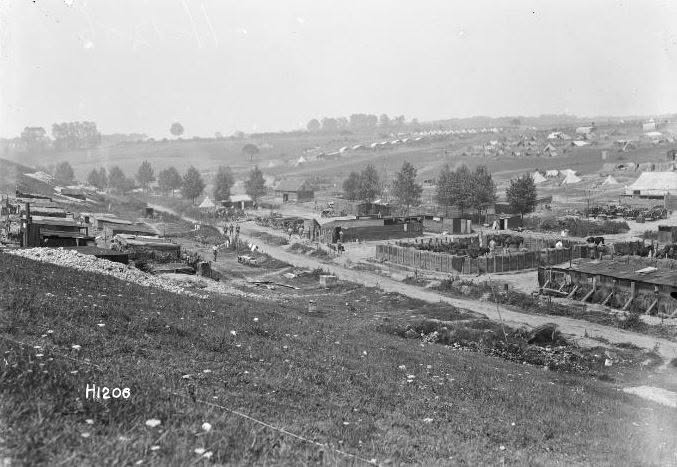
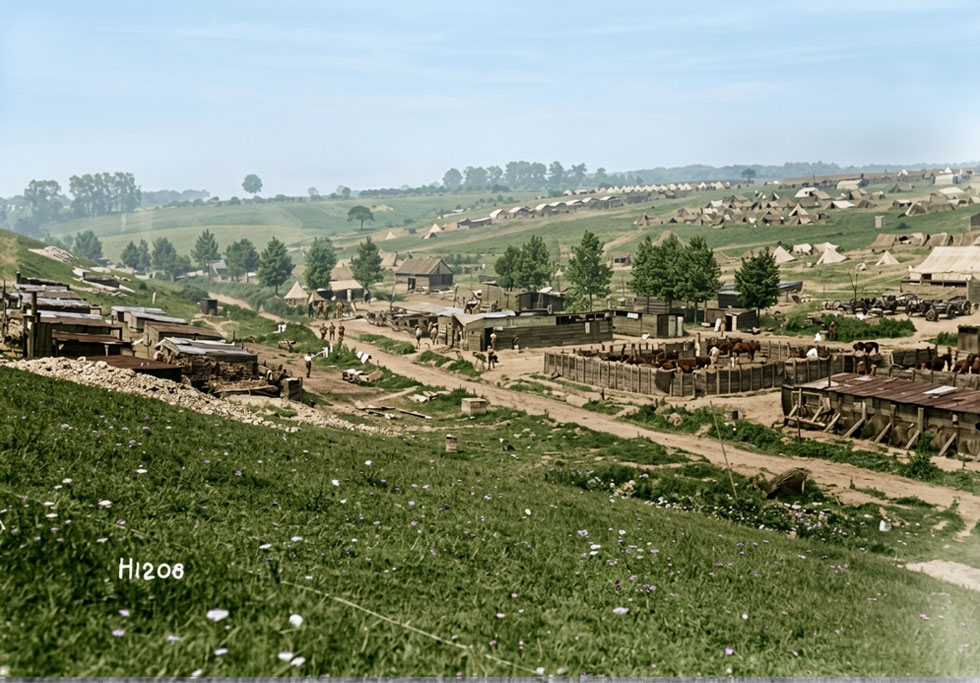
On March 6th 1922, just two days before Bottomley was brought to Bow Street Police Court and charged, a letter by A.B. Newland was printed in New Zealand’s Otago Daily Times. As a volunteer with the Church Army, Newland had witnessed the riots at the camp first-hand and asked why Lieutenant Colonel Hugh Stewart of the 1st Canterbury Infantry Regiment had failed to mention the mutiny in his official history of the New Zealand War effort that had been published that same year. The author of the letter even claimed to have a copy of the execution orders for Jesse Short, an event that was not confirmed officially by the MOD until the 1980s [ read letter ].
As it turns out, the author of the official history, Hugh Stewart, was Grayson’s commanding officer and had spent the years immediately prior to the war in Russia. [1] Newland’s claims were corroborated in a separate account in the Manchester Guardian dated February 1930. The Guardian article starts with an incendiary quote from war poet, R.H. Mottram, whose book Three Personal Records of War had been published just weeks before:
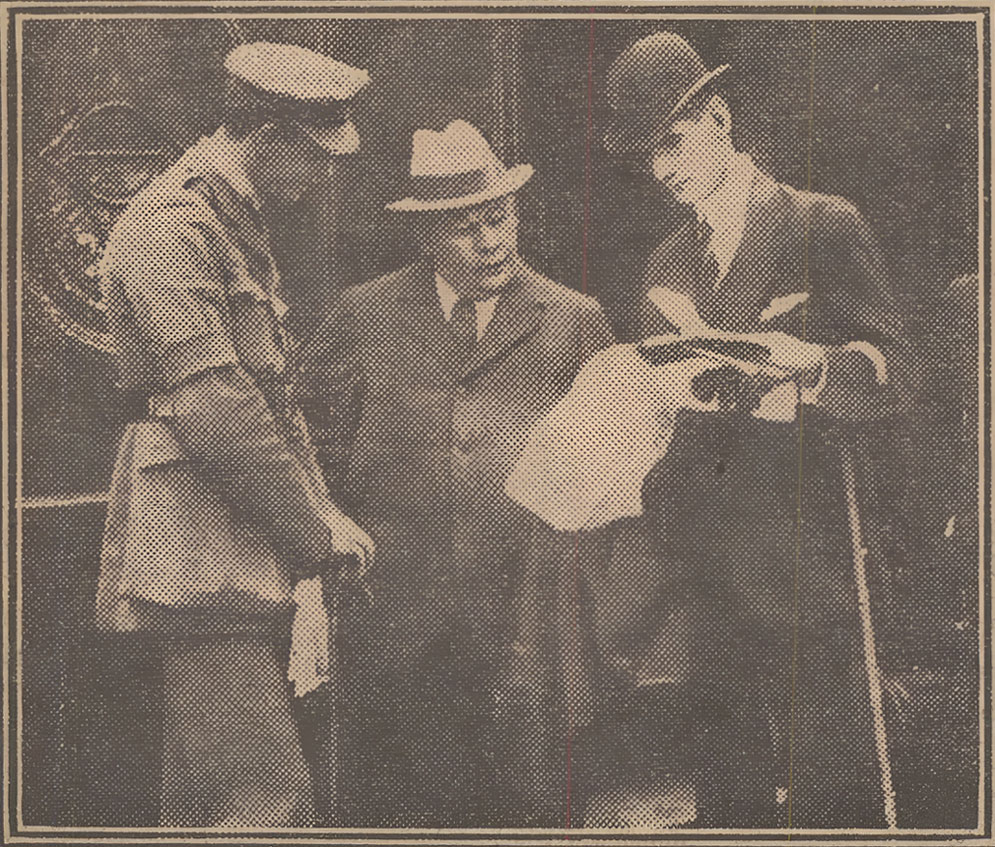
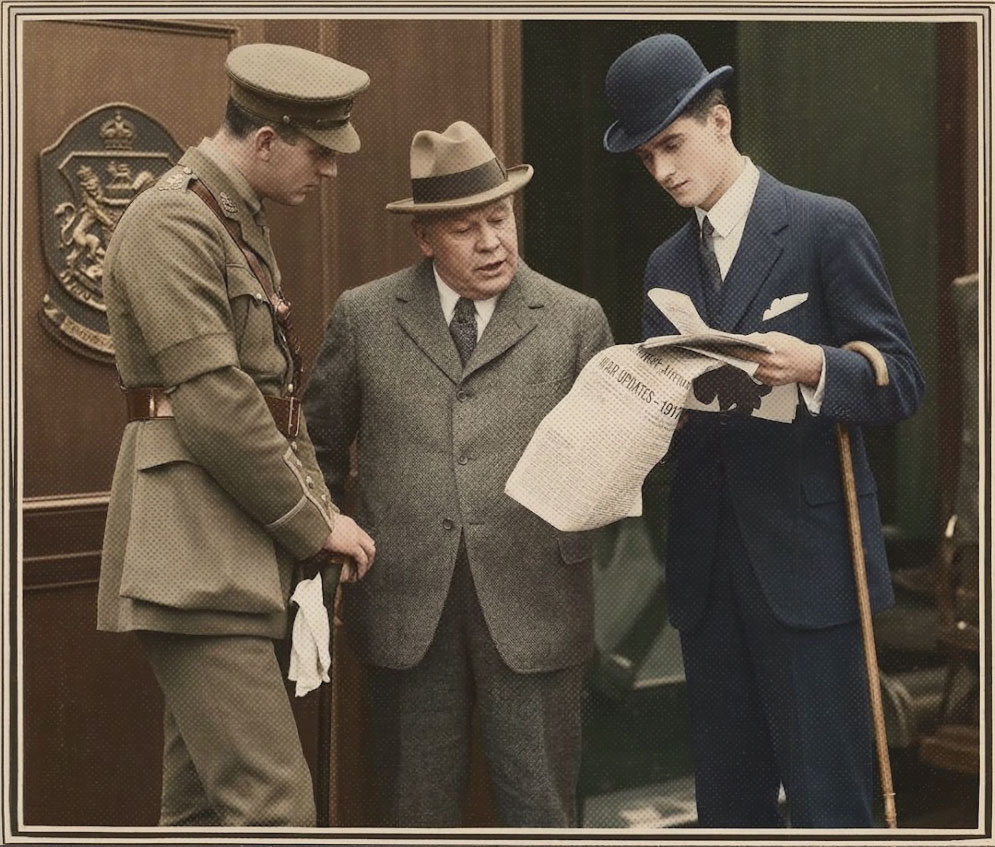
The culmination of this period was that occurrence, chiefly disgraceful to writers about the war who appear to be in conspiracy to conceal it, the Mutiny at Étaples. All countries engaged in the war had periods of widespread mutiny, a fact which should be noticed and recorded, not hushed up … With the British it occurred … over some rumoured disagreement with the police. I never knew the truth and perhaps no one knows it — The Mutiny at Étaples: An Incident of 1917 Fighting Soldiers and Red Caps, Manchester Guardian, February 13 1930.
On the surface of things. it all looks a little suspicious; Étaples Camp Commander, General Thomson is removed from the base just a few weeks after the mutiny and is retired shortly after the armistice, suspected Mutineer, Percy Francis Toplis is gunned down in June 1920, Grayson disappears in September 1920 and Étaples ‘champion’, Horatio Bottomley, is jailed little more than a year or so later. In the words of R. H. Mottram the world did seem united ‘in a conspiracy to conceal it’. And the mysteries didn’t end there.
In 1970, journalist and former Naval Intelligence Officer Donald McCormick unveiled a new witness in the Grayson mystery. The man was painter and naturalist, George Flemwell. On a rare visit to London from his new base in Switzerland, Flemwell claims to have seen his old friend Victor Grayson on a motorized canoe on the Thames, some three days after his disappearance. According to Flemwell, Grayson was on his way to Ditton Island, a pedestrianized community at the centre of the river. Flemwell claims the boat had landed alongside a jetty belonging to Vanity Fair, a wonderfully decadent riverside bungalow owned by honours tout and bagman, Maundy Gregory. But this wasn’t the last time that Flemwell would appear in a McCormick mystery.
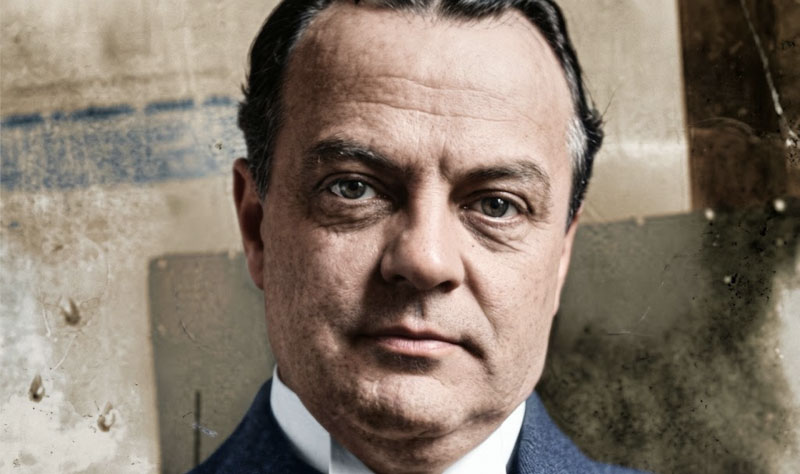
In his 1979 book, The British Connection: Russia’s Manipulation of British Individuals and Institutions, published under McCormick’s pseudonym, Richard Deacon, the same George Flemwell appears in a coded diary alleged to have been written by Arthur Cecil Pigou, suspected ‘Master Spy’ in the mysterious Cambridge Spy Ring. The quote from the diary reads: “Established communications with Piatnitsky via George Flemwell in Switzerland: this is permanent link by Verlet in Geneva.” Osip Piatnitsky was one of the Russian revolutionaries who attended the 5th Congress of the Russian Social Democratic Labour Party in London alongside Stalin and Lenin. Some 12-months after these talks were held, the venue that hosted the congress came under the supervision of Reverend F.R. Swan, one of the most trusted and committed campaigners in Grayson’s 1907 Colne Valley by-election.
The other loose-end relates to Grayson’s former commanding officer Lieutenant Colonel Hugh Stewart of the 2nd Battalion Canterbury Regiment. Between 1908 and 1910, the Aberdeenshire-born Stewart was lecturing in Russia. His association with Professor Tadeusz Stefan Zieliński at the University of St. Petersburg had left him eager to explore provincial Russia.Stewart, who had obtained a First in Classics at Cambridge in 1907, later described how every Englishman who went into Russia ‘felt the fascination of the country’. He saw them as the ‘Athenians of the modern world’ who possessed a ‘spiritual temperament’ totally at odds with the ‘deadness of modern Germany’.
During the ‘roughness of an unknown journey’ across its sprawling peasant wilderness, Stewart had discovered that the ‘poor, backward, ill-educated drunken’ stereotype was nothing more than a myth; Russia ‘had a soul’. Over the course of his immense travels he came to learn its language and its customs. His book recording his journey, ‘Provincial Russia’ was published in 1909 by A & C Black. His co-author, Sunday Times correspondent, George Dobson was subsequently arrested by the Cheka (Soviet secret police) on suspicion of spying for the British. The fact that Stewart enrolled at Cambridge University during the initial phase of ‘Fourth Man’ Pigou’s 60-year tenure there, may be little more than a coincidence, but the passion that both men shared for the Cambridge Mountaineering Society, the Swiss Alps and economics during those critical interwar years, makes it a tantalising proposition all the same. According to his biographer, Ernest Weekley, Stewart had remained in contact with the friends he’d made in Russia right up until his death, and one of his closest was Lydia Paschkoff, intrepid explorer, ardent feminist and confidant of Russian-German aristocrat, Madame Helena Blavatsky, suspected by the British in India of being a deeply resourceful, and dangerously charismatic spy. 6
In 1934, on a roundtrip back from New Zealand, the 50 year old Stewart fell ill and died. He had set-off from Auckland on the cruise ship, the R.M.S Akaroa on September 14th and had fallen ill some three days later. An anonymous letter passed to the press from a fellow passenger had claimed his initial illness had not been serious. Reports of the time go on to describe Stewart as a man of ‘splendid physique’ who had left New Zealand ‘in apparently in the best of health’. The ship and its passengers had arrived at Pitcairn Island — home to the most famous mutiny of all, the Mutiny on the Bounty — when things took a turn for the worse. Within 10 days of being confined to his cabin Stewart was dead. Why he was buried at sea and not on Pitcairn Island is anyone’s guess, but needless to say it’s another deeply frustrating puzzle in an ever frustrating mystery.
What Became of Victor Grayson: The Irish Theory
What happened to Victor Grayson? Among the handful of theories that have been put forward over the years, there could be a strong case for arguing that Grayson never made it out of Liverpool during that last week of September 1920, despite the best efforts of former Intelligence man, Donald McCormick, to shuttle him back to London, and the combined creativity of Cocks, Hunter and Beckett to resurrect him mind, body and spirit-measure, during some post-meeting pub crawl in Maidstone in 1924. As far as the Police (and his mother) were concerned Grayson was last seen addressing a meeting in Liverpool in the last days of September 1920. He was scheduled to pay a visit to Hull but there is no indication that he ever arrived there. Victor’s brother William told the Daily Herald in March 1927 that he “left the hotel in which he was staying and never returned for his clothes”. An insurance policy on his life remain unclaimed.
And that’s as much as we know for sure.
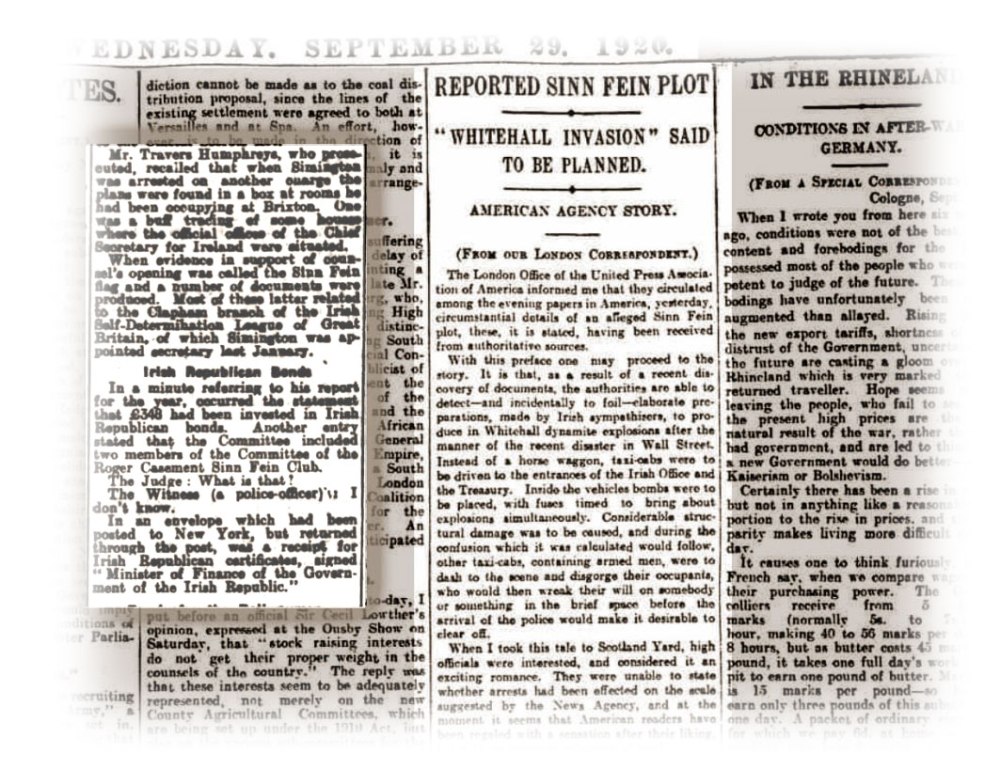
But it’s here that the story takes on an additional twist. On the very day that Grayson disappeared, another curious story reached Britain from New York. The story centred around a major terror attack that was due to take place on British soil. The target was Whitehall, and it was being hatched by a British-based group loyal to Sinn Fein. The London Office of the United Press Association of America began circulating a story that the discovery of documents by US and UK Intelligence had resulted in the detection and the foiling of preparations to detonate explosives at the entrances of the Irish Office and the Treasury in London. After the explosions it was anticipated that armed men would burst from stolen taxi-cabs parked in the neighbouring streets and attack at random the passersby thrashing around in the ensuing panic. It was already believed that munitions and incendiary devices had been secreted by Sinn Fein in London and that attacks involving ‘well known individuals’ were taking shape (Yorkshire Post and Leeds Intelligencer 29 September 1920).
According to the press, hundreds of people were rumoured to be involved and several arrests had been made.
Whilst Scotland Yard were quick to dismiss it as an ‘exciting romance’, within weeks of the story being leaked, Michael O’ Kelly Simington, a clerk at the Office of Works, was tried for wrongfully retaining building plans contrary to the Official Secrets Act. A search of his home in Brixton had uncovered rifles and hordes of pamphlets and letters poised for immediate distribution. As Secretary of the Clapham Branch of the Irish Self Determination League it is believed that Simington had been plotting an attack on the offices of Hamar Greenwood, at this time Chief Secretary for Ireland. The clerk had been arrested on September 26th, just days before the story of the Whitehall attack hit the press, and little more than 48 hours before Grayson disappeared. Inspector Percy Hallet of Scotland Yard found a book in Simington’s possession containing a list of the London branches of the Irish Self Determination League, a receipt signed by the Minister of Ireland’s Revolutionary Republic plus a statement that the plotters included at least two members of the Roger Casement Sinn Fein Club.
Casement was a man of secrets and contradictions: poet, humanitarian, diplomat, revolutionary and, in the eyes of the society in which he lived, a man whose suspected homosexuality could prove as damaging as his alleged treason. Central to his conviction on both counts were the so-called Casement Diaries. Just as MPs in the House of Commons were presented with a petition demanding clemency for Casement, extracts from the diaries began circulating widely in the press and throughout the corridors and chambers of Whitehall. Their explicit references to homosexual acts threatened to undermine support for Casement in the final, critical stages of his appeal. It was the timely disclosure of the diaries that Victor Grayson is said to have been investigating in the weeks and months before his disappearance. Grayson believed them to be forgeries, and suspected that Maundy Gregory, the man tasked with keeping him under surveillance, was responsible for fabricating them.
“One does not like to speak ill of the dead, but the truth about (Casement) ought to be published so that the Irish should not regard him as a martyr. The present writer has seen extracts from his diary, and nothing so filthy, so pornographic, so infinitely disgusting as what Casement set down in black and white can be imagined … I am writing thus strongly because I am aware of the tremendous efforts made to get Casement off — ‘Club Window Gossip’, Sheffield Evening Telegraph 05 August 1916
Let us set the scene. Shortly after Grayson’s return to England from Passchendaele, Sir Basil Thomson, Director of Special Intelligence at Scotland Yard and the man now widely credited with ‘discovering’ the Casement diaries, delivers a stark warning to Maundy Gregory, a known intelligence gatherer. Grayson, he declares, is a “dangerous Communist revolutionary” who may yet link up with “the Sinn Feiners or the Reds”. It is a curious assessment of a wounded man whose political activity has been largely dormant for years. Yet biographers and writers investigating the mystery of Grayson’s disappearance have commonly suggested that Gregory agrees to keep him under surveillance. That the Whitehall Plot should coincide with Grayson’s disappearance and that it should be organized, at least in part, by members of the London-based Roger Casement Sinn Fein Club adds a compelling new line of enquiry.
Simington and the Irish Self Determination League had two main offices outside London: one in Manchester under the auspices of Thomas Faughan in Whalley Range, and one in Liverpool by Patrick J. Kelly. The context, geographically at least, couldn’t have been more apt: Liverpool was the hometown of Victor Grayson and Manchester, the mother of his political invention. Both cities fared badly in the immediate aftermath of the so-called Whitehall plot. Liverpool endured the worst of it with “18 simultaneous fires” breaking out across the city in one blistering night of carnage alone (Western Daily Press, 29th November 1920).
Simington had been arrested on September 26th and by October 21st 1920, he was being sentenced to 15-months hard labour. But the story didn’t end there. Within days of Simington’s conviction, documents were being leaked to the London Evening Standard citing evidence of an alleged plot to burn England to the ground by vengeful Sinn Feiners. Details of a “campaign of outrage and incendiarism” leapt as sensationally as the flames themselves from the various newsstands across Britain. Warehouses throughout Liverpool, Bootle and Manchester were sought and routinely torched, with tins of petrol or paraffin found outside the warehouse doors. In one episode a youth was shot by an assailant making a getaway and in another a bolt-cutter was used on a Policeman (Western Times, November 30th 1920).
Naturally, the press stories possessed all the furious extravagance of your class crime caper, with tales of ‘long-running gun battles’ between arsonists and police. Those who stood trial included Neil Kerr, aged 57, Henry Peter Coyle, aged 25, Matthew Fowler, aged 28, Patrick MacPartlin aged 30, James McCaughhey, aged 32, Sheila Brown, aged 30 and Kathleen Brown, aged 24 (Birmingham Daily Gazette 08 February 1921). The two sisters arrested were teachers and responsible for organising the Liverpool branch of the Roger Casement Sinn Fein Club on Bridge Road in Seaforth, just south of the city.
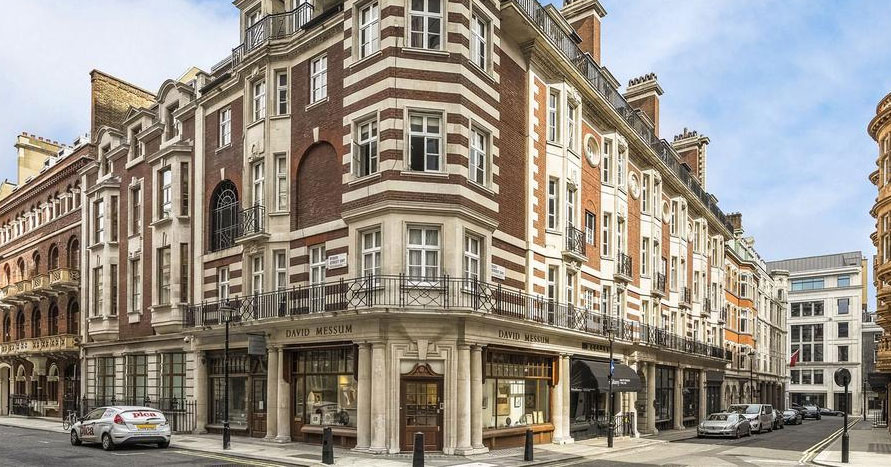
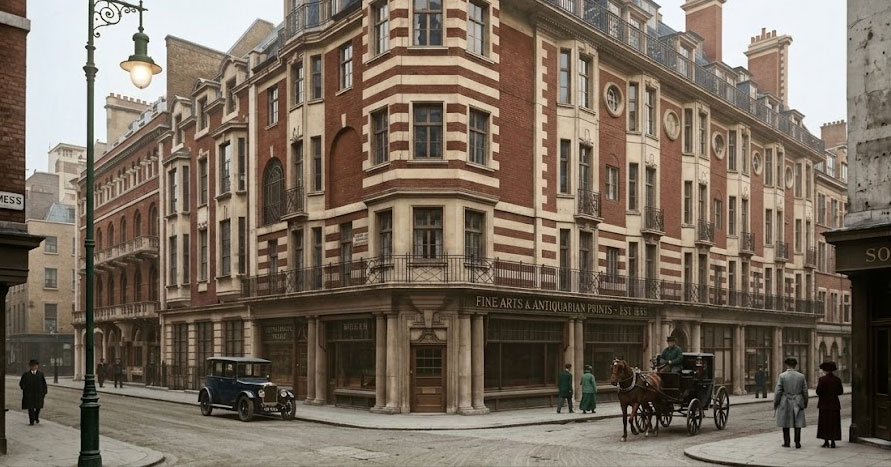
The women weren’t the only well-educated and self-possessed women in the group. In 1918, 34-year old teacher Roisin ni Chillin (Maria Rosina Killen in the press) moved from Manchester to London where she became secretary of the Casement Club in Brixton, earning £340 a year working at the Fairclough Street in Whitechapel (Letters from Roisin ni Chillin to John O’Brien July 1920, Feb 1921). In October 1923 Killen’s relationship with ex-British soldier and trainee teacher, Reginald Dunne, convicted of the murder of Field Marshal Sir Henry Wilson in London the previous year, was investigated by Police. His accomplice was Joe O’ Sullivan, Michael Simington’s co-worker at the Ministry of Labour (Sheffield Daily Telegraph 19 July 1922).
At the time of his death, Wilson had been serving as Special Adviser to the Intelligence Department at Scotland Yard and there was a suggestion that Police had been tipped-off. Despite a thorough investigation, all charges against Dunn’s Casement Club friend, Maria Rosina Killen were dropped.
Simington and the Club weren’t the only ones causing concern for Britain at this time. Running parallel to this saga was a threat with more far-reaching consequences. Just two months prior to the arrest of Simington, Scotland Yard and the Secret Service learned that Patrick McCartan of the as yet unrecognised Irish Republic had made clandestine trips in Moscow to negotiate a treaty between the Soviets and the Dáil Éireann. The trip had been made during the latter half of May and by September 1920, possible collusion between the Bolsheviks in Russia and ‘Feiners’ in the Irish Republic was looking more plausible by the day.
Irish Justice Minister Denis Henry, hastily prepared a government white paper on the threat that such a treaty would pose to Britain. The white paper featured a copy of a memorandum signed by the Irish Republic’s Minister of Propaganda, Desmond FitzGerald (see: Intercourse Between Bolshevism and Sinn Fein, Parliamentary Papers, Session 1921, Vol. XXIX, p.489). Russia was the only country in the world at this time that had formally recognized the Irish Republic. More significantly for Victor, it was his old Liverpool and Belfast comrade, Jim Larkin who presented the most imminent danger.
The Wall Street Bombing
In September 1920, the indomitable Belfast strike leader was serving time in a New York prison for acts of ‘criminal anarchy’ but it was feared that Larkin’s extensive militant network may have played a role in one of the deadliest peacetime attacks on American soil. The Wall Street Bombing was carried out on September 16th 1920., just twelve days before Grayson went missing.
A horse-drawn wagon had been parked across the road from the headquarters of the JP Morgan bank, and at noon over 100 lbs of dynamite and 500 lbs of iron tore through the air. Fifty people were killed and hundreds more were injured. It was estimated that more than two million pounds worth of damage had been inflicted on neighbouring buildings. During his time in the US the Irish Labour Leader had joined the Socialist Party of America. He was subsequently expelled from the party for contact with the Soviets. His arrest on November 9th 1919, had coincided with raids on the New York headquarters of the Russian Soviet (Leeds Mercury 10 November 1919).
The day prior to the Wall Street bombing, Larkin had made an appeal through the Larkin Defence Committee demanding the release of Terence MacSwiney, at this time on hunger strike in Brixton Prison (Daily Herald 15 September 1920). His New York-based brother Peter MacSwiney was closely aligned with the Roger Casement Sinn Fein Club and it’s interesting to note that Casement’s sister Agnes, an associate of the Club’s founder Arthur Griffith, was also living in New York at this time. The fate of MacSwiney had been the trigger for Simington’s Whitehall Plot in the first place and MacSwiney’s eventual death a month or so later, 74 days after he had started his hunger strike, was ostensibly the motive behind the decision to torch the North. MacSwiney died on October 25th, and by November 29th, Liverpool was burning.
Having already united large sections of the Irish Labour Movement and the Irish Volunteers of the 1916 Easter rebellion, nervous Conservatives believed that Larkin’s role in preparing the groundwork for the Soviet-Irish alliance was already quite substantial. They also feared that as a consequence of this success, Larkin would be the natural go-to candidate for the Soviets, who continued to have their doubts that any one leader in Ireland could unite the various revolutionary factions. That July, The Daily Mail presented an even more damning picture when they wrote that Larkin’s “Irish Labour movement” and the Revolutionary Labour Movement “had assumed greater and greater control over the Sinn Fein insurrection.”
Whether or not Grayson had a hand in any of this, or whether he was even aware of Larkin’s plans isn’t known. Several of his closest friends, including Robert Blatchford, said that Victor had taken a keen interest in Irish politics since returning from the war and was actively pursuing the Casement story. It was a statement that was supported by the IRA’s Frank Ryan in 1936.
Had Grayson’s interest in Casement brought him into contact with Simington and the Roger Casement Sinn Fein Club operating in Brixton? Was it blind panic that made him bolt? Had he shared any intelligence regarding the alleged plot with Police and had this put him in an impossible and potentially perilous situation? We may never know. What we do know is that Grayson’s purported Irish sympathies can be traced all the way back to his early days in Liverpool when Grayson and his mentor, Reverend James Lockhart Haigh were assisting in the various Christian Missions on the notorious Scotland Road.
Sir Galahad of the Slums
For the streets around Vauxhall and ‘Scottie Road,’ the arrival of over 300,000 Irish Migrants during the late 19th Century had contributed to privation of almost biblical proportions. Many of the refugees had fused en masse around the streets surrounding the docks, and the Missions managed by Reverend Haigh provided ballast for the poor and the needy. Haigh’s experience of Scotland Road played no small part in his debut novel, ‘Sir Galahad of the Slums’ (1907). Described by the New Age journal as a “thoughtful and suggestive experiment in Sociological fiction” there was nothing really new here. The discreet ideological connection between Knights of the Holy Grail and Marxism had been formed by Marx himself in his 1853 article, The Knight of Noble Consciousness before being belligerently re-imagined as a design for life by Comrade Lenin and as battle-plan by Stalin and Kudenko. The Bolsheviks had seen themselves as a secret military-religious order in the mould of the Templar and the Knights of the Round Table, with Lenin re-cast as the Grail Knight of the much-sought Soviet Union. In his novel, Haigh’s hero is called Vernon. His real-world counterpart was called Victor. And arguably his greatest success in life was in enrolling Victor at the Home Missionary College in Manchester, a test of character that Sir Grayson passed with ease.
Was it just a coincidence that the Reverend’s book was reviewed in Christian Socialist journal, New Age on the very day that Haigh’s flesh and blood protégé, Victor Grayson — much heralded people’s champion and devoted servitor — had his name put forward as candidate for the Colne Valley by-election? In little more than twelve months, Grayson would come to be editor of New Age, so it’s reasonable to assume that the journal played a fairly privileged role in forging his future and maintaining his initial fanbase.
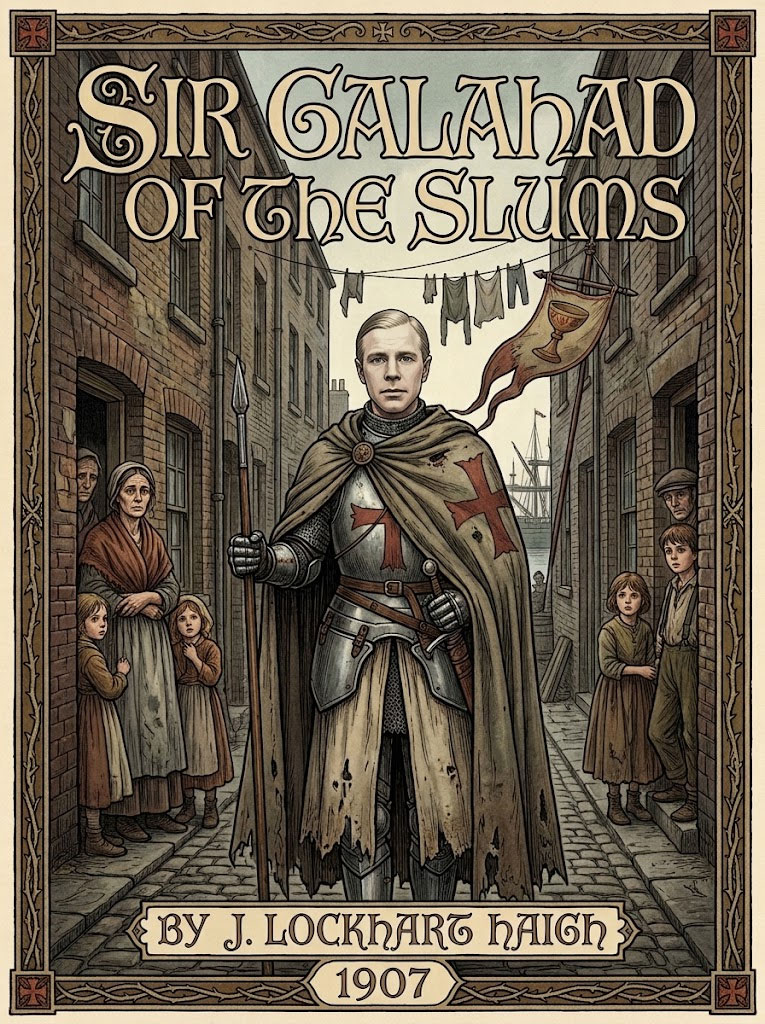
In literary tradition, Galahad was the illegitimate son of Lancelot and Elaine of Corbenic and renowned for his gallantry and purity, a Knight chosen by God himself to seek the grail. Taking obvious cues from the myth, a succession of hacks and fantasists have re-cast Albert Victor Grayson as the illegitimate son and heir of the noble (and swaggeringly militaristic) Spencer-Churchill dynasty invited to sit at the Whitehall table: a rough diamond mined from the most hallowed of grounds, a nobleman by birth, but by trade, just your average fella. Many of the same myths had been built around Stalin, the classic changeling. In fairytales of this nature it always came down to just one thing: the fightback of the disinherited, the return of the repressed. It was as true of Robin Hood as it was of Moses. And if the dubious mythology of his birth didn’t swing it, the entire pitch was spelled out in his name, Victor: one who triumphs, one who defeats.
Even for those as righteously egalitarian as James Lockhart Haigh and his followers, it seems they had a hard time believing that something as powerful and precious as Grayson could ever spring from some backwater tenement in Liverpool. Base metal was base metal, gold was gold.
The story of the grail had gained fresh energy among followers of Frederick Furnivall, celebrated Christian Socialist and co-founder of the London Working Men’s College. And in contrast to what you might expect, the early Christian Socialists were not advocating democracy here but ‘community’. It was about hierarchy, not equality. The group believed that government, like holiness, emanated from the top down and true reform had to be conceived, and then enforced by a proven elite representing the will of the people. It is little wonder the myth resonated so deeply with the young Bolsheviks who’d sought sanctuary and deliverance in the mission halls of London’s East End during their twenty years in exile.
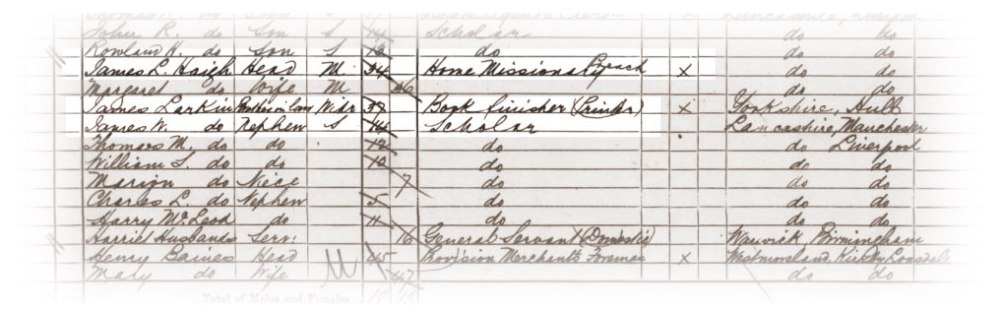
One of the most curious facts to emerge from my look at the life of Haigh is that between 1881 and 1907, another man by the name of James Larkin was living with Haigh and his wife Margaret at his home at 49 Mere Lane in Everton, West Derby. The man was a 37-year old book finisher. He was also the brother of Margaret. Lodging with Larkin was his 14-year son, also called James, and the boy remained in Haigh’s care until 1905 or so, several years after the death of his father. It seems inconceivable that this is the same James Larkin that Grayson befriended in Liverpool, but an Irish relation perhaps? Haigh’s mother Margaret Lockhart was from Ireland, so its certainly plausible. The age of the boy tallies with ‘Big’ Jim Larkin but this boy takes up his profession as a Nautical Engineer, not a docker or dock foreman.
Other claims
It’s not the only occasion in which there is a sliver of Irish intrigue. Labour member Seymour Cocks insists he saw Grayson in Maidstone where Victor divulged his post-War activities in the Irish Secret Service. Cocks also says that Grayson handed him a Belfast address, an address that he subsequently misplaced.
The strangest story by far though, comes courtesy of a woman in Leeds in August 1947.
Selena Ethel Kennally of Bridle Path Square in Cross Gates told the Yorkshire Post that she was convinced the man she married as John Wilson in 1928, and who died at a Sheffield Hospital the following year, was none other than Victor Grayson. Mrs Kennally said that when she first met Grayson he was working as a journalist at a newspaper but had left his job after one week of marriage. She maintained he had no identity papers and no luggage with the exception of one suitcase. According to the woman, a few days before he died, ‘John’ was calling for someone called ‘Ruth’. Doctors also claimed the during his last few hours alive, the man had been repeating the name ‘Grayson’. Intriguingly, among his few possessions was an Irish Republican Belt with the name “Grayson” stamped on it (Yorkshire Post and Leeds Intelligencer 16 August 1947). Armed with this information I did another trawl of the archives. And whilst it did throw up a Selena Ethel Kennally living with her husband John (a former Police Inspector) at Cross Gates in 1939, a marriage between a John Wilson and Selena Kennally in Newcastle upon Tyne in 1928 has so far managed to elude me.
The timeline that follows, shows Victor Grayson’s political rise and development alongside the revolutionary drama unfolding in Russia, and as seen through the eyes of the Secret Service, the MiS and Special Branch, whose response to subversive behaviour, both in the trenches and at home, was often nothing short of hysterical. In fact, there may be an argument for saying that the seeds of the first ‘Red Scare’ in Britain were planted during and not after the war and run parallel with anti-German hysteria, especially in view of Vladimir Lenin’s ‘sealed-train’ transit through Germany back to Russia in time for the October Revolution. The fact that the Bolsheviks’ return to Russia had been signed-off and financed at the highest level by German Chancellor von Bethmann-Hollweg himself — and without the complete understanding of the Kaiser — could only have added to the paranoia and confusion.
The infamous Scisson Documents released shortly after the mutiny in 1918 took concerns to a whole new level. The 68-page collection of ‘secret documents’ obtained by Edgar Scisson alleged that Trotsky, Lenin, and the other Bolshevik revolutionaries were agents of the German government. The documents were clearly fakes, but in some Conservative quarters at least, there was certainly no shortage of faith in them.