I want you to close your eyes and try to picture Gatsby’s parties. The corps of caterers have come and gone and left behind them a landscape of luxury. You have several hundred feet of canvas marquees and enough twinkling fairy lights to make a Christmas tree of Gatsby’s enchanted garden.
And then there’s the music.
There are two full orchestras. One is playing these smooth, elegant foxtrots and the other is pumping out the latest jazz licks. In one corner of the garden a “celebrated tenor sings in Italian” whilst a “notorious contralto” — a woman with the plumage of a flamingo — provides a sizzling soundtrack to the various stunts being performed by a pair of stage twins in yellow chemise dresses at the bar. Looking around at the faces of the guests you spot producers, directors, actors, actresses. And kicking her heels on the side of one of the fountains is the understudy for Follies star, Gilda Gray. It’s like all the stars of Broadway and the Chicago and Metropolitan Opera Companies have all converged at the party.
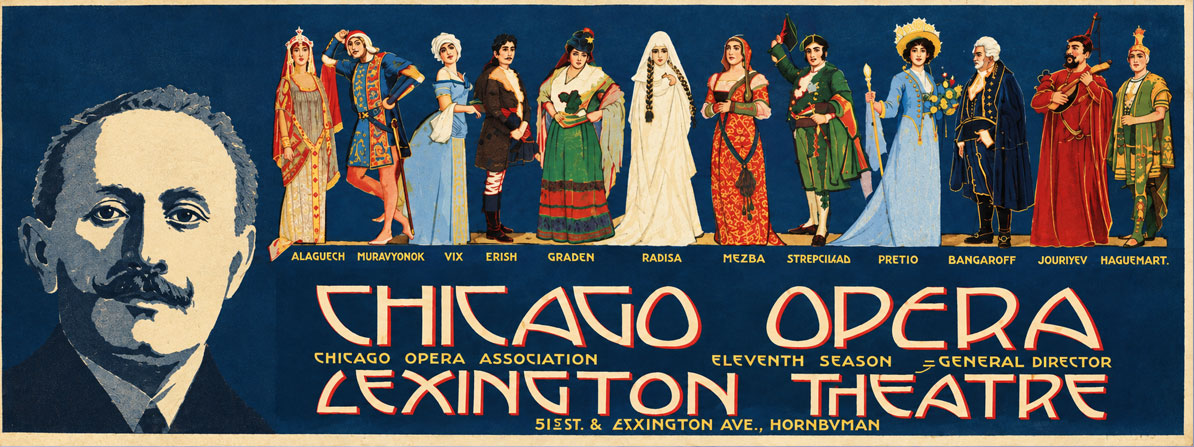
In the last article we learned that ‘the real Great Gatsby’ — Max von Gerlach — had been active on the Berlin opera scene and that he later provided the liquor for the decadent stars of Broadway and its no less glamorous overspill, Great Neck. It was Max that introduced us to singers like Mary Morrison and Alice Peroux-Williams — well known sopranos and contraltos with classical backgrounds. And then there was Francis Cugat, the Spanish-Cuban artist who painted the original dust cover for The Great Gatsby. Cugat had kickstarted his career in opera, designing the souvenir brochures and flyers for ‘celebrated Italian tenors’ like The Great Caruso.
Well there’s something you might not know; stories about Gerlach’s links with the world of opera were not some flash in the pan affair, but would continue well into the 1930s when it was reported by the press of New York that Max had been living at the $40,000 mansion of the notorious former singing star, Lydia Lindgren in Flushing.
The Swedish Nightingale
The story they told was a strange one.
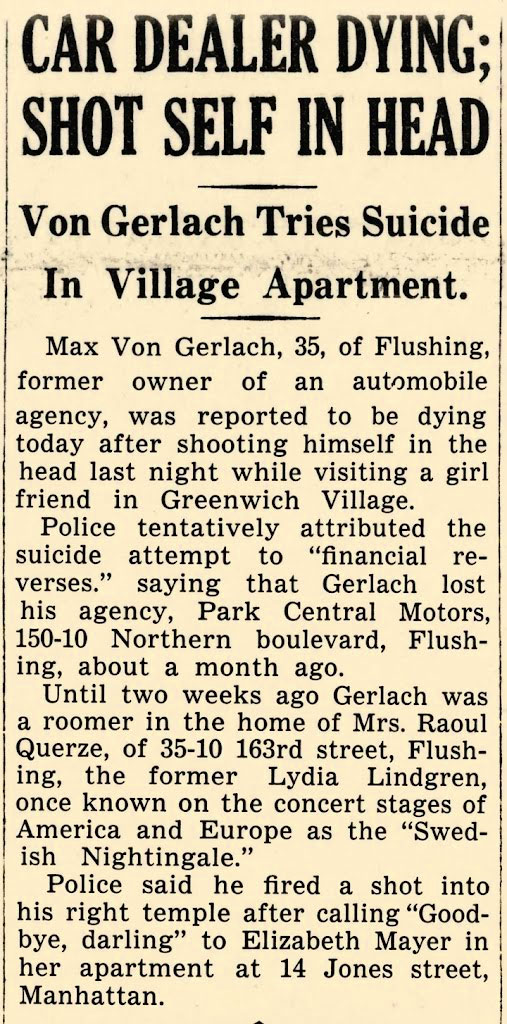
In the last week of December 1939, some ten weeks after war had been declared in Europe, a 55 year old Max Gerlach sat in the apartment of his friend, Elizabeth Mayer in Manhattan, put a revolver to his head and pulled the trigger.
Although the newspapers speculated that Max had been plagued by the collapse of some business concerns, they were also keen to point out that just a few weeks prior to the incident, Max had been living at the home of former ‘Swedish Nightingale’, Lydia Lindgren at 35-10 16rd Street in Flushing. [31] Like Gerlach, the American-based singer who could speak five languages and included the likes of Nietzsche and Goethe among her favourite reads, had spent time studying music in Berlin. [32]
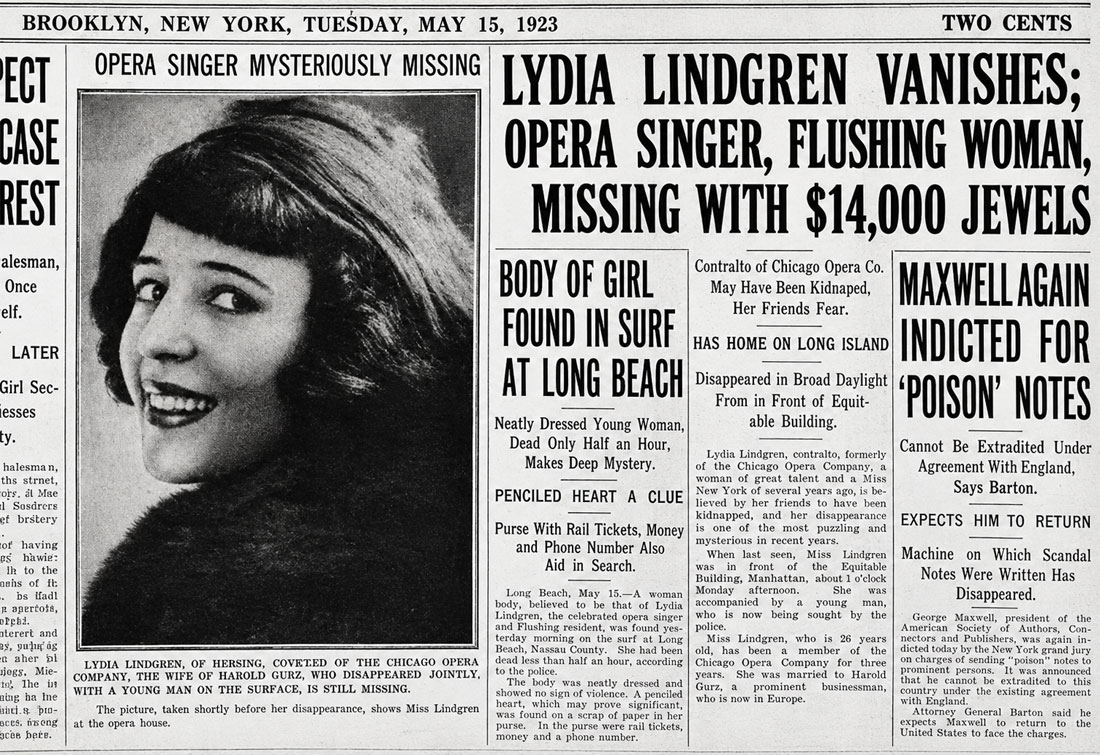
Her meteoric rise to stardom had been helped by her romantic association with German-American millionaire, Otto H. Kahn — chairman of the Metropolitan Opera Company and a powerful figure on Wall Street. After arriving in the United States she was immediately hired by the Chicago Opera Company, the same company that had nurtured the talent of Gerlach’s earlier singing mate, Mary Louise Morrison. In the early 1920s she married Italian tenor and voice coach, Raoul Querze — voice coach of The Great Caruso.
In 1923, Lydia created something of a media frenzy after staging her disappearance from the offices of her lawyer, Anna W. Hochfelder at 120 Broadway. According to the reports that week, Lydia had been due to meet Miss Hochfelder at Kuhn, Loeb & Company on William Street, and had not turned up for the meeting. When she failed to show up at home later that evening, her husband called the police. From that moment on it was just one scandal after another, her personal life being every bit as dramatic as her roles. As one sharp-witted journalist noted, her bid to outdo Grand Opera’s strangest plots would very nearly cost her her life — and not only her own life, but the lives of the people she knew.
At the time of Max’s attempted suicide, the 55 year-old Lindgren had been out of the newspaper headlines for some seven years or more. In the 1920s and early 1930s the startlingly beautiful contralto singer had featured in a steady, glamorous stream of diva sensations, mysterious disappearances and high-profile sex scandals. But in the six years leading up to the incident, things had all been relatively quiet. The only exception to this was a story printed in the last week of October, just a matter of weeks before Gerlach pulled the trigger.
According to the story, Lydia was seeking to petition her former husband, Raoul Querze, for the provision of a temporary allowance. In her customary dramatic fashion, the singer had claimed that the $300,000 fortune she had earned originally, had finally been exhausted. [33] It is not known if Gerlach and Lindgren had been having an affair, nor if his suicide attempt at the home of Mayer had in some way been wound-up with the singer’s own declining fortunes.
According to a full page spread in May 1950, Lindgren had been left destitute.


The $40, 000 mansion in Flushing that she shared with Gerlach was heavily mortgaged and the tax-burden on all her valuables, including her jewellery had been sold. She dismissed the few furnishings she had left in the house as ‘junk’. [34]
As Gerlach dragged his feet around Washington Square Park on the afternoon of December 21st, it would have been perilous underfoot. It was the first day of winter. Ice had brought traffic to a standstill and the roads around the main streets would have been peppered with sand. The temperatures looked set to plummet even further that afternoon, as another barrage of snow showers moved in. It was going to be a White Christmas. Three more shopping days to go. But poor old Max wasn’t thinking that far ahead.
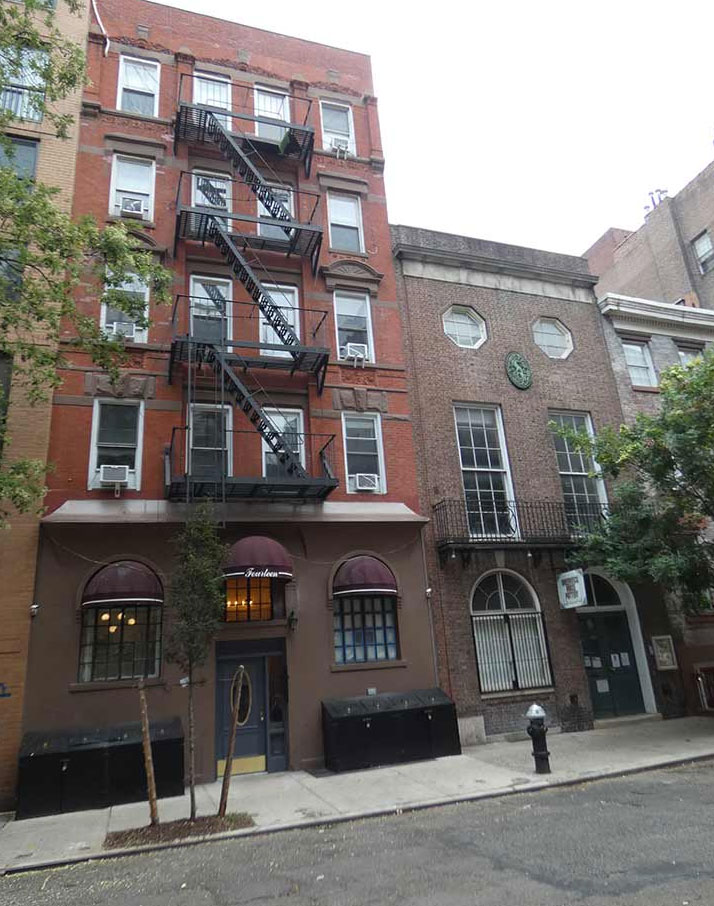
Gerlach appears to have let himself into Mayer’s apartment at 14 Jones Street the afternoon prior to the incident and spent the subsequent time writing letters as he waited for her return. The pair had sat reading until 10.00pm when Elizabeth looked up to see him put a revolver to his head, whisper very calmly his last goodbye and fire a single shot into his right temple. Police would find four sealed letters in his pockets. Who the letters were addressed to and what were included in them was never disclosed.
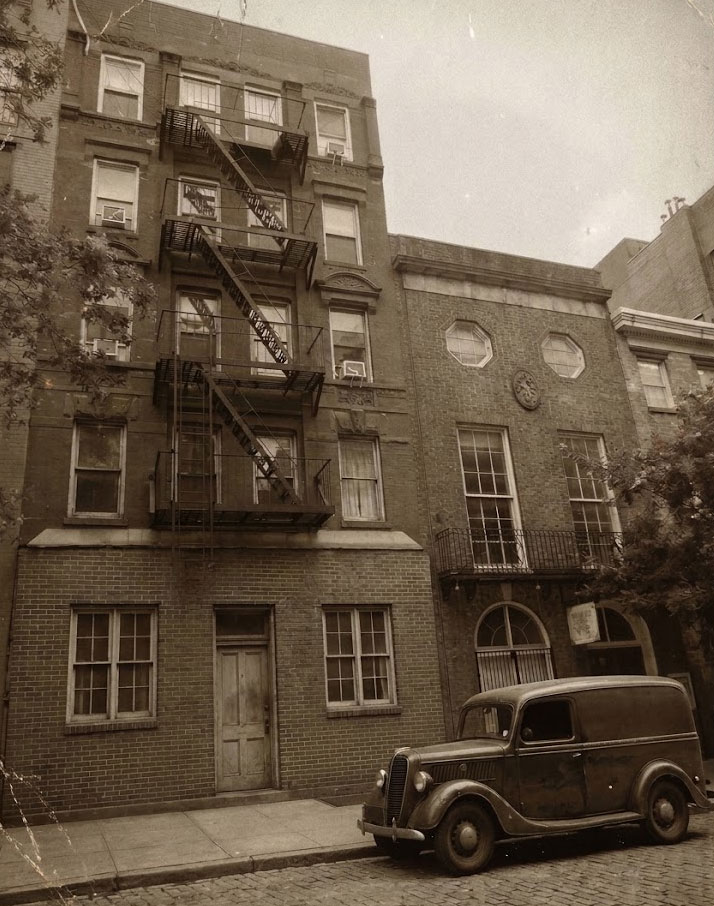
Mayer appears to have known as much about Max as the rest of us. As far as she was aware, Max von Gerlach was a retired army officer and former German baron. Describing him to the press echoed Scott’s description of Gatsby: he had an immaculate military bearing and a strong Oxford accent. Beyond that, she knew very little about him. [35]
When quizzed about Baron von Gerlach, the German Consulate in Manhattan said they had no record of any baron by that name. Lydia Lindgren claimed that she too had no idea about Gerlach’s background, only that he had left the house rather suddenly and had neglected to take his things. Police told reporters that Gerlach was not given to talking about his past, his relatives or personal affairs, and as a result they had practically no further information on him.
Just days earlier, a real German Baron was confronted with a no less violent tragedy when the 21-year old mistress of Baron Friedrich von Oppenheim, a wealthy German monarchist, plunged to her death from his 10th floor apartment in Lower Manhattan. The woman, Lola Lazlo, was the stepdaughter of Hungarian film director, Aladar Laszlo. Friends of the girl were adamant that Lola was incapable of taking her own life and the Baron was grilled by Police. [36] At the time of the tragedy the Nazi Party were pressing for the Baron’s return.
Pressure was being heaped on his wife back in Cologne, but according to his family, von Oppenheim was reluctant to leave America and provide his backing to a war that he and his conservative circle of friends believed to be ill-judged. With the prospect of his assets being seized and the safety of his wife and children now in jeopardy, he returned some eight weeks later. In 1942, he would be investigated by the Gestapo for assisting in the evacuation of Jews workers from the Netherlands.
Radical Greenwich
Little or nothing is known about Elizabeth Mayer, the woman that Max was staying with at the time of his attempted suicide, although the address of the apartment, 14 Jones Street in Greenwich Village, does make it possible to get a snapshot of Max’s lifestyle and the company that he kept at this time. For the best part of twenty years this fashionable Manhattan district was the heartland of New York Bohemia and in 1939 it was literally teeming with boisterous Marxist radicals, bearded artists, freethinkers — and Soviet spies. According to a report drawn up by the Special Committee on Un-American Activities, 14 Jones Street was home to no less than three card-carrying members of America’s Communist Party that year: Mary Gutchess, Clarence Dorman and Silas Goodwin.
If you were to look at the street as a whole you would find that a total of sixteen party members made up the tiny Manhattan block, composed of around thirty separate buildings. [37] At nearby 18 Gay Street were Communist Party members Frances Kline and Mary McCarthy, the Trotskyist author girlfriend of Scott’s longtime friend and confidante, Edmund Wilson. Mary’s neighbours at 17 Gay Street would eventually come to the attention of Federal Agents when it was learned that a Soviet GRU Cell was operating from its premises. The Soviet painter and spy, Esther Chambers was a regular visitor to this address too, and another good friend of Wilson and McCarthy.
In later years, Chambers would famously describe how this tiny little apartment on a curvy block-long street was used as the secret base for a highly efficient communications system between the Communist underground in America and their counterparts in Germany. Letters and film would be carried by couriers using the North German Lloyd SS Line and the Hamburg American Line, developed in-house from a makeshift dark-room consisting of a short-tub, a shelf and battered old photographic enlarger, that had been squeezed in an almost impossible position beside a basin and toilet in the closet-like Gay Street bathroom. Once the film had been developed, couriers and Comintern agents would then meet up in clubs and cafes dotted around the Village and perform a crepuscular routine of ‘dead-drops’. [38]
According to the passionate anti-Communist crusader Kenneth Goff, foreign agents would hand Chambers and his friends money belts containing as much as $10,000. The money would then be used promoting the revolution in South America, the Philippines and Japan. On other occasions, Chambers would fly to San Francisco and to the Soviet colony in Hollywood and disperse funds there. [39]
John Dos Passos (a prominent supporter of Leon Trotsky during the 1930 show trials) and Edmund Wilson were just two of Scott’s friends who had been cool, contented residents of ‘The Village’. At 3 Washington Square North, the pair would have once been just a five-minute walk from Max’s flat at 14 Jones Street. Even closer to Max on McDougall Street was the passionately subversive, Washington Square Bookshop, one of the first book stores ever to stock the banned and ‘obscene’ Ulysses by James Joyce. The Village was about as extreme and as visionary as it got. The story being told in the press was that it had become something of a legend among “long haired poets” and artists. But this wasn’t a new phenomenon by any means.
In the early 1920s, the district had been home to Jane Heap and Margaret C. Anderson’s censor-defying Little Review, before it had no option but to move to Paris. Just a few doors down from this was Samuel Roth’s porn and ‘banned-book’ emporium, The Poetry Bookshop. It was here that the more discerning customer could get their sweaty little hands on ‘bootleg’ copies of Ulysses by James Joyce and Theodore Dreiser’s Genius, invariably dispensed without the slightest shame in their beguiling brown-paper bags.
The district famous for its radical art and politics was also home to one of the most radical Jazz Clubs of its generation too. Ten minutes’ walk around the corner from Max and Mayer at 14 Jones Street was Barney Josephson’s hot new venue, Café Society. The club at Sheridan Square, would be the first racially integrated nightclub in New York. Josephson, a former Cotton Club regular had launched the club just 12 months prior to Max’s suicide attempt, its name handed to given to him by gossip columnist, Maury Paul, who dutifully promoted it as ‘the Wrong Place for the Right People’. [40]
Josephson had originally been inspired by the clubs he had visited in Montmartre in Paris and in Berlin in the early 1930s. It was in Berlin that he had become utterly mesmerised by the reactionary political forces gathering in force around its bars. The bars would be tiny things with small stages. Singers and musicians would be boxed-up and eye to eye with artists, caricaturists, composers, poets and left-wing intellectuals. It was the ultimate in anything goes, from nude dancing to erotic performances, gay acts, drag acts, drug acts and everything in between. Josephson found the experience totally exhilarating and soaked it up.
The smoky burlesque atmosphere of the club also packed a clear anti-fascist message. Once the doorman had shown you in and ushered you downstairs you would be met by the Hitler Monkey — a large clay sculpture of a monkey with the Fuhrer’s head dangling from a pipe on the stairwell. Just three years earlier, Barney’s brother Leon had been among thirty people arrested for plotting Adolph’s murder. A short time later, George Mink — duly charged alongside Leon that day — would be revealed as one of Stalin’s star assassins — a special agent in the G.P.U whose real priority was German naval plans. It was a world turned upside down.
On the walls would be murals satirising their upper-crust Broadway rivals. Behind the bar was a mural of animals. A long, linear menagerie of walruses, bears, pigs, orangutans, lizards and dogs would provide a surrealist mirror of a noisy clientele hollering for drinks in front of them. A cigarette girl would drag her wares around the tables, and following her an ‘ashes girl’. In March 1939 an ad appeared in Scott’s old campus paper, The Daily Princetonian: ‘Café Society: 2 Sheridan Square, Chelsea 2-2737 — Don’t miss, “What You Going to Do When There Ain’t No Swine” sung by Billie Holliday.’
Just four weeks before Max tramped up through the snow and let himself at 14 Jones Street, the unthinkable had happened — Kristallnacht, the Night of the Broken Glass. Brutal Nazi groups had launched a series furious assaults on German Jews. People were beaten, shops were looted, properties were burned and a brand new spectacle of hell spread like wildfire across the nation. When the SS Bremen docked at one of the nearby piers in the Village, a scuffle broke out between Nazi-sailors and outraged New York dockers. The atmosphere of holiday carnival at the club took on a peculiar, manic aspect, the tootin’ of the trumpets and the boogie-woogie licks mingling in a way that only Jazz ever could with the schizophrenic mood of the city.
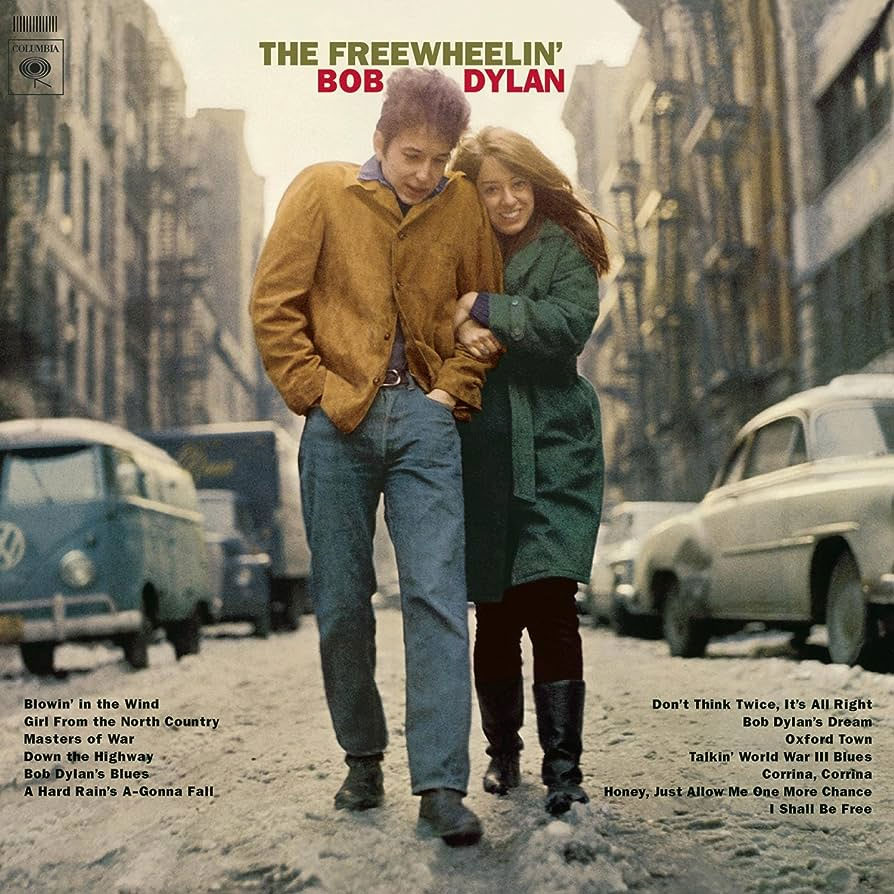
Like so many of the club’s neighbours on Jones Street, the owner’s brother, Leon Josephson would eventually be subpoenaed by the House Committee on Un-American Activities. Federal attention would also fall on its musical director, the civil rights activist and former aristocrat, John Hammond. Fast-forward to the early 1960s and Hammond, still intent on breaking down cultural barriers would play a critical role in launching the career of folk-singer, Bob Dylan. The cover for his second studio album, The Freewheelin’ Bob Dylan was in fact shot just outside 14 Jones Street. All in all, 14 Jones Street was probably the last place on earth to find a preposterously affectatious German monarchist holding a gun to his temple.
Elizabeth Mayer
Nothing at all is known about Gerlach’s girlfriend, Elizabeth Mayer, but a small ad run in Edmund Wilson’s Marxist-lite journal, the New Republic, might just offer a clue. In the late 1920s and early 1930s, the journal regularly promoted rooms here: “Greenwich Village, 14 Jones Street, near Sheridan Square. Two separate rooms, automatic refrigerator, incinerator, fireplace, $60 to $90. References. Agent on premises.” [41] The property itself was a five-storey building made up of around a dozen or so apartments.
In years gone by the block had played a key role in New York’s ‘settlement’ program. Musician and translator, Elizabeth (Wolff) Mayer, who fled from Germany to New York in 1936, had worked on several contributions to New Republic and it is possible, given the journal’s popularity with journalists, authors and editors, that the owner of the two rooms, who also lived on the premises, may have been keen to let it out to like-minded souls in arts and publishing.
The theory has other supporting elements.
Scott’s close friend Edmund Wilson, who appears to have used a similar caricature of Gerlach in his 1924 play, The Crime in the Whistler Room, was associate editor of the New Republic on an on-off basis from the mid-1920s to the 1940s. Perhaps aware of the room’s existence, he had mentioned it to Mayer and Mayer had taken it on, or Mayer had mentioned it to Max and Max had taken it on.
In the summer and autumn of 1961, 14 Jones Street was the home of future Assistant Secretary of State, Richard Holbrooke. Still in his early twenties, Holbrooke was an occasional student writer for the New York Times. At this time, Greenwich Village was still very much the refuge of unknown artists and radical thinkers. Jazz may now have taken a backseat to Rock n’ Roll, but the quick-witted snarl of folk flicked the Vs at the the establishment in the same casual and prickly melodious way. Holbroke’s one room, ground floor apartment was shared with Lawrence Chase, the editor of his college newspaper.
When Holbrooke was offered an advisory role at the White House during the Johnson administration, the FBI performed the usual background checks. During the course of their investigations they found that the youngster’s name was included in the records of the Fair Play for Cuba Committee at Brown University. This would be the 1959 to 1961 period, in the run-up to the Bay of Pigs. Until it was disbanded in the aftermath of the Kennedy assassination, the Cuba Committee was believed to have served as Fidel Castro’s propaganda arm in the United States.
It was during this same period that Holbrooke began spending much of his time at the home of David Rusk whose father, Dean Rusk was serving as President Kennedy’s Secretary of State. It was in fact Rusk who would guide the beleaguered President through the Bay of Pigs fiasco that same year. [42] Although concerned about what they had found, the FBI found no tangible evidence of espionage.
It is interesting to note that it was the same Elizabeth (Wolff) Mayer who was a confidante and patron of the poet W.H. Auden. Auden, also a friend of Wilson and a contributor to New Republic, moved to New York the very same year that Max attempted suicide. The address that Auden provided on the ship manifest in January 1939 was that of Random House founder, Bennett Cerf. Like Wilson, Cerf was another prominent figure in the anti-censorship movement then energising the left-wing cliques and stormy petrels of Lower Manhattan.
British Intelligence would open their own file on Auden in the 1930s and years later the poet would be suspected of playing a part in the escape of Cambridge Spies, Guy Burgess and Donald Maclean. Auden would eventually settle at 7 Cornelia Street in Greenwich Village, a property that was practically back to back with 14 Jones Street. During the early phase of his arrival Auden was reliant on Mayer for emotional and artistic support. Her ‘open house’ on Long Island functioned like some Parisian salon, a refuge for any artist, singer or musician looking to recharge their creative batteries on the constant flow of energies buzzing about the home.
There is, however, no record of Auden’s patroness, Elizabeth (Wolff) Mayer having a separate apartment in Manhattan to the house she had on Long Island. Despite this, she remains a credible, if not totally satisfactory suspect in our search for Gerlach’s girlfriend. A trawl through the US census of 1940 reveals that by April 1940 Mayer was no longer using the Jones Street address. Research undertaken by Horst Kruse in 2014 suggests that Max himself had little option but to move on: the bullet that had entered his temple had left him blind.
Six months after his attempted suicide, Max could be found among the 36 inmates residing at the State Blind Asylum. [43]
It might not have been the end for Max, but it was certainly the end’s beginning.
[31] ‘Von Gerlach Tries Suicide in Village Apartment’, Long Island Star Journal, December 22, 1939, p.1-2
[32] ‘Lydia Lindgren: Mezzo of Chicago Opera Company’, Boston Sunday Post, September 10, 1916, p.42
[33] ‘Singer Asks Ex-mate’s Aid’, San Antonio Light, October 26, 1939,
[34] ‘Artistic Mr Querze’s Persevering Prima Donna’, San Antonio Light, May 5, 1940.
[35] ‘Von Gerlach Tries Suicide in Village Apartment’, Long Island Star Journal, December 22, 1939, p.1-2
[36] ‘Actress Falls Ten Stories to Her Death from Baron’s Rooms’, Los Angeles Times, December 17, 1939, p.1 ; ‘The Gay Dramatist’s Tragic Double Trouble’, Port Arthur News, 27 October 1940.
[37] Signers of 1939-40 Communist Party Petitions for State and City Elections, Boroughs of New York City, Official Report, the Names and Addresses of the Signers of Petitions for Candidates of the Communist Party for State and City Elections, 1939-40, for the Confidential Use of the Special Committee on Un-American Activities, Estados Unidos. Congress. House. Special Committee on Un-American Activities (1938-1944), 1940
[38] Perjury: the Hiss-Chambers Case, Allen Weinstein, Random House, 1997, p.106; Witness, Whittaker Chambers, Random House, 1952
[39] ‘High Treason Exposed’, The Pilgrim Torch, May 1950, Kenneth Goff, Federal Bureau of Investigation.
[40] ‘Cafe Society, The Wrong Place for the Right People, Sarah Bean Armann, 2015, https://www.villagepreservation.org/2015/12/30/cafe-society-the-wrong-place-for-the-right-people/
[41] The New Republic 1929-10-02: Vol 60 No. 774, p. V; The New Republic 1931-10-07: Vol 68 No. 879, p.111. The cost of the room was approximately $1000-1600 in today’s money. The ad was run regularly for several years. In 1931 the price came down to $50-60.
[42] Richard Charles Holbrooke, Federal Bureau of Investigation; ‘The Journalist’, E. Benjamin Skinner, The Unquiet American: Richard Holbrooke in the World, eds. Derek Chollett & Samantha Power, Public Affairs, New York, 2011, pp-13-14.
[43] Kruse, p.25