TURNING BACK THE CLOCK TO 1885
When Scott finally updated his editor Max Perkins on the progress of his third novel in June 1920, he teased him with a rather surprising spoiler: the new book would be set in the American Midwest in 1885 and would have “a Catholic element.” [52] 1885 had been an iconic year in many respects; the Statue of Liberty had arrived in Hudson Bay and former President and Civil War hero, Ulysses S. Grant, had died at home in New York. 1885 was also Year Zero in the myth of National Origins.
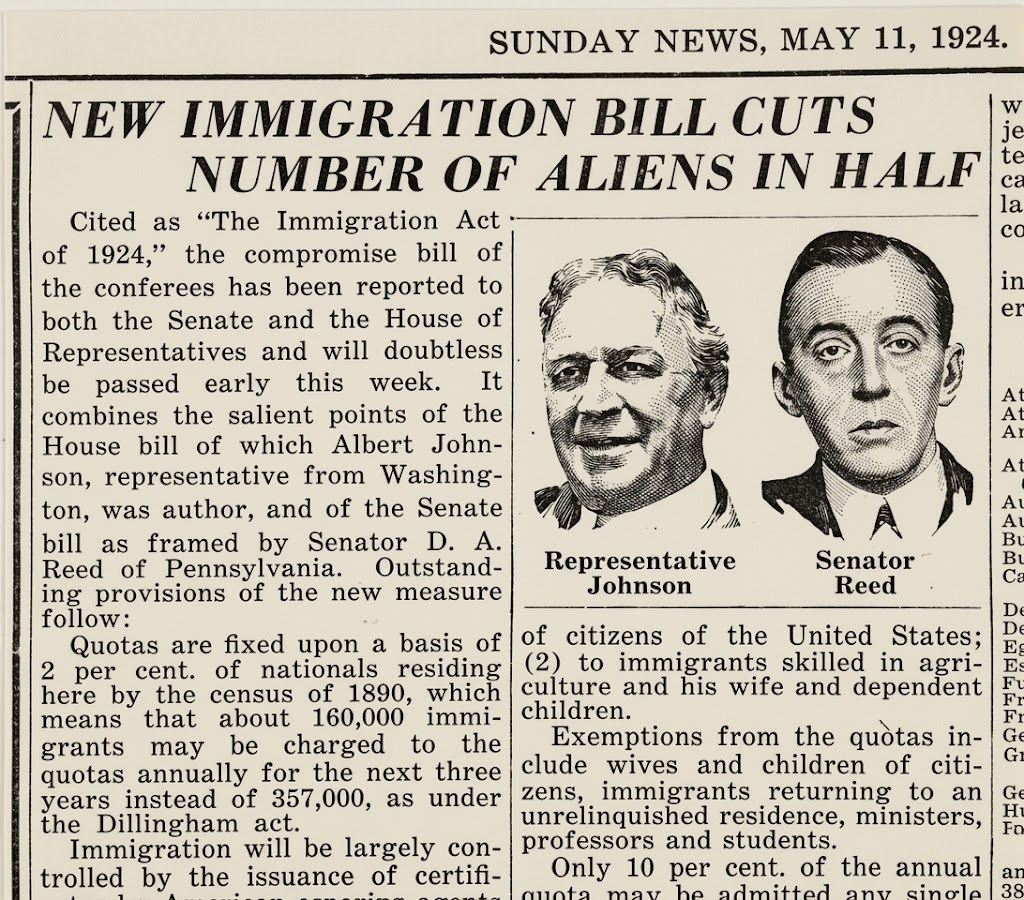
Just weeks before the Alien Restriction Act of 1924 was signed into law on May 24, the Act’s co-sponsor, Senator David Aitken Reed had been celebrating his win in the New York Times: the ‘America of the Melting Pot’ had finally come to an end. Reed explained how the new ground legislation that Congress had passed would “preserve the racial type as it existed here today.” Reed was delighted to announce that America had turned back the clock to 1885. [53] 1885 was the year in which the arrival of German settlers in the Midwest would reach its peak.

As a response, the Alien Contract Labor Laws were introduced, an extreme prohibitive measure that sought to stem the “foreign hordes” pouring into the country “like locusts.” [54] The era of “national conceit and personal selfishness” described by Scott in his article for the Woman Home Companion in June 1924 had begun in earnest. [55]
The publication of Lothrop Stoddard’s The Rising Tide of Color Against White Supremacy by Scott’s publisher, Charles Scribner’s Sons, in May 1920, built upon the deeply divisive pro-war drive, ‘100% American’ (or “99% village idiot”, as Scott would scoff to a friend). [56] The following year, Why Europe Leaves Home, written by the much respected journalist, Kenneth L. Roberts, repeated the same nativist mantra. People with blond hair, Roberts wrote, had a superior ability to “govern themselves” and “govern others.” [57]
By way of balance, a robust series of challenges to Stoddard and Roberts would be provided by equally distinguished writers like Edward Hale Bierstadt and Katharine Fullerton Gerould. In Aspects of Americanization (1922) Bierstadt would share his frustration with the “furious hysteria” of bigotry and chauvinism that was turning the nation’s first settlers against its new settlers. His book, reviewed the same year by Scott’s friend, H. L. Mencken, asked what it meant to be ‘one hundred percent American’? What was ‘American Idealism’? A new kind of American was being created, but who was he?
Intriguingly, Bierstadt’s description of an immigrant arriving in a Pennsylvanian steel town bears an unsettling likeness to Fitzgerald’s Valley of Ashes: “the smoke from the engines mixed with the smoke rising from the steel mills in the valley … it was as though one were in some strange world, swinging in soot instead of ether.” Despite knowing this, the writer lamented, these people would never lose faith in the dream itself — “what they were denied they would still hope and struggle for.” [58]
Bierstadt’s view was shared by Scribner author, Katherine Fullerton Gerould, who Scott had known at Princeton. In Land of the Free the following year, Gerould would offer her own grim prognosis of the slow, chronic decline of America: the nation was dying. It was “living on history alone.” The ‘giants of the land’ who had prepared its glorious destiny, were now all gone. [59]
The Johnson-Reed Act, H. R. 7995, had been formally put before Congress on April 10, 1924 and was expected to reach its resolution in four calendar days. The day that Scott sat down to write his letter to Max Perkins telling him that he was approaching his third novel (The Great Gatsby) from a whole “new angle”, was the very day that the bill was being put before Congress. Scott believed that much of what he had written the previous summer had been “ragged” — it wasn’t good. Over 18,000 words of it would have to go, with only a portion of it remaining for a short story, Absolution, that would be published in H. L. Mencken’s The American Mercury in June. This new book would be a “purely creative work … the sustained imagination of a sincere and radiant world.” [60]
Scott doesn’t mention the news of the bill by name in the letter, but if the recent announcement by Senator Reed was anything to go by, the world of 1885 was no longer like the beginning of time in America, but the end of time. Tom’s bigoted monologue on The Rise of the Colored Empires in the very first chapter of the novel is followed almost by the first mention of Gatsby’s name. The timing of Jay’s ‘arrival’ in the book wasn’t coincidental. Scott was building the narrative framework of a more relevant and modern treatise on the experiences of progress and loss that were now being felt at a national level, and Jay Gatsby was at the centre of that narrative.
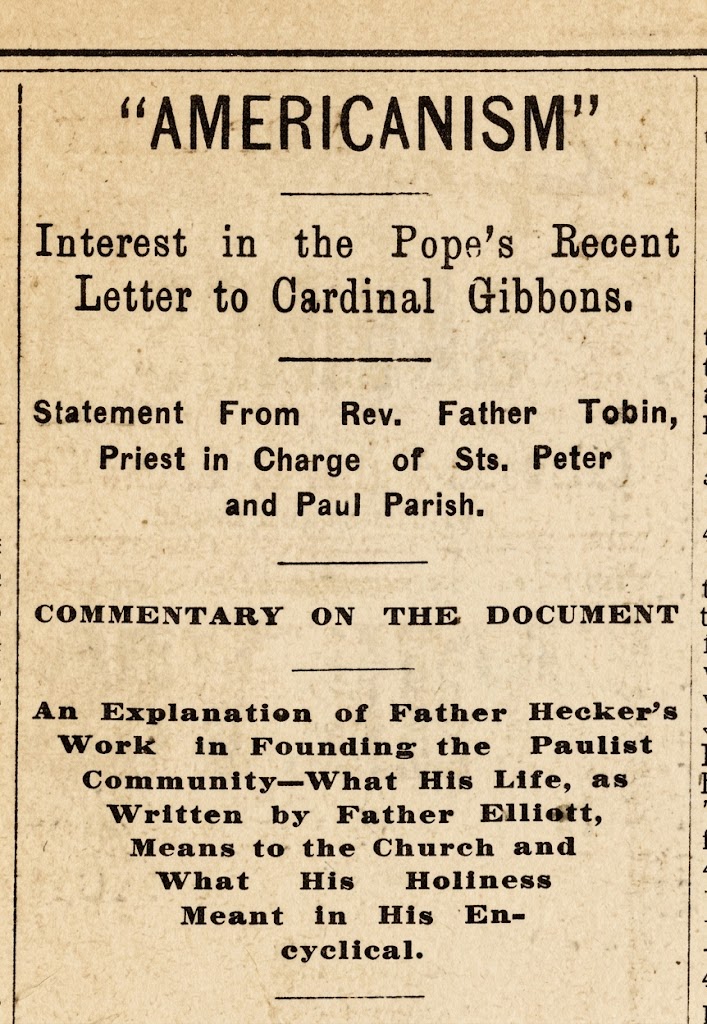
The first twenty-five years of the 20th Century marked a period of dramatic industrial and scientific acceleration. For some, the future couldn’t happen quickly enough, and for others it was happening too fast. Beliefs that had been preserved for centuries, sometimes millennia, were in danger of being lost. Having been broadly supportive of Hecker’s American Catholic movement in the mid-1800s, the Vatican, faced with spiralling global changes after the dissolution of the Papal States, was compelled to apply the brakes. In January 1899, Pope Leo XIII, responding to pressure over a translation of a biography on Isaac Hecker, issued the Testem Benevolentiae Nostrae, an Apostolic Letter banning the practice of Americanism in the Catholic Church.
The biography, Le Père Hecker, was the French translation of a book on Hecker’s life by his friend and fellow Paulist, Father Walter Elliot, a respected civil war veteran who had flirted briefly with US ‘alchemy’ during the Colorado Gold Rush of the mid-1800s. The American edition of the book had been published in 1891 but had attracted little in the way of attention. The storm really got underway with the 1898 translation by the Countess de Raviliax which had been part of a coordinated attempt by Americanists, Denis O’Connell and John Ireland to extend the base of support for the country’s progressive movement among French liberals and intellectuals. For this translation, O’Connell and Ireland sought a preface from the theologian, Abbe Félix Klein at the Institut Catholique. And it was Klein’s preface that “had excited not a little controversy.” [61]
The problem lay in O’Connell and Ireland’s efforts to present Hecker as something of a Catholic overreacher or a Faust — someone who wanted the Church to recognise the “new state” of the human mind and the new environment in which it toiled. Klein presented Hecker as a revolutionary seeking to emancipate the church from the absolute rule of Rome. [62] In Klein’s not entirely faithful reconstruction of Hecker’s thesis, the shackles of the past were keeping men down. Understandably perhaps, the church of Rome was a little concerned. The doctrine of faith which God had revealed was not a theory to be mulled over and improved by “human ingenuity” — it had been “infallibly declared.” What was being handed down was not some idea of truth, it was the truth. As far as the Pope and the Cardinals of Rome were concerned the church’s ‘past’ was as imperative as its future. [63]
According to Klein, it was Hecker’s belief that the principles and rules observed by the Catholic Church had taken shape in a non-secular world. Man was losing his need for God because God had no place in the modern world. Right up to his death in 1888, Hecker had been demanding the Church adapt to the more advanced democratic system of the United States and to the impact of the Age of Enlightenment. After the publication of the Testem Benevolentiae Nostrae in January 1899, any Catholic priest found to be pushing ideas of liberalism would be deemed heretics and excluded from the Church. Almost overnight, American Catholics had found themselves presented with a very stark choice between loyalty to the US Constitution and the authority of the Catholic Church.
Just eleven days before the death of the Pope in July 1903, Father John T. Harrison, the Americanist priest who had baptised Francis Scott Key Fitzgerald in October 1896, gave an impromptu address in Minnesota to reiterate his support for the “triumphant principles” of the Declaration of Independence. The pastor of St Josephs was viewed by many as a force of nature. A rousing speech that Harrison had delivered at the Second Catholic Coloured Congress in Cincinnati in July 1890 had drawn admiring responses from Black Catholic activist, pastor and Civil Rights leader, Daniel Rudd.
According to Rudd’s biographer, Gary B. Agee, Harrison had reminded all those in the hall that “absolute religious equality” that every true American believed in, was already a crucial part of the Roman Catholic church. In matters of colour, the church was “colour-blind.” In an extraordinary address, Harrison and Bishop Ireland called upon all members of the church to support the promotion of ‘Full Equality’ for Blacks. [64]
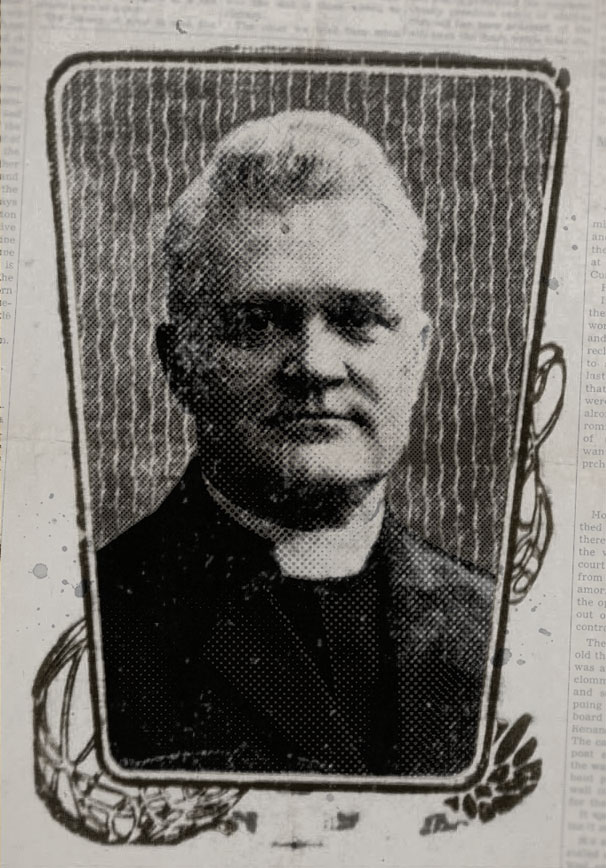
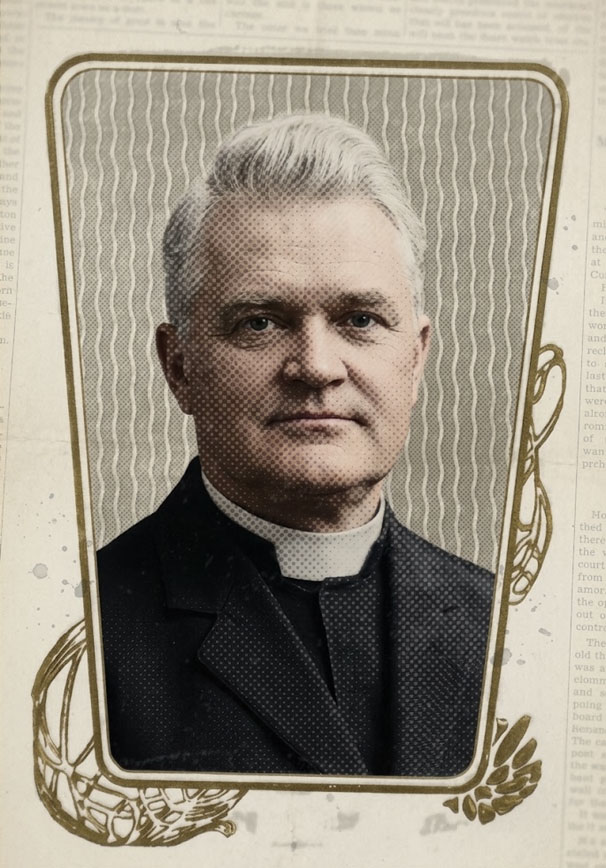
For the next five years, the priest who had helped set up the first ever black congregation in Saint Paul (St Peter Claver Church), would continue to ignore appeals to proceed more cautiously with his revisionist plans from his old friend, Bishop Ireland and the Pontiffs in Washington. At an impromptu address on behalf of the Western Catholic Chautauqua entitled The Triumphant Principles of the Declaration of Independence, Harrison reiterated his support for the core values of the American Constitution. Being an American was an essential part of his faith, and not an optional extra. [65]
THE NEWMAN SCHOOL FOR BOYS
Hecker’s decision to form the Paulist Fathers in 1858 had been a spirited compromise to the challenges that Americanist priests like Harrison and Ireland would face in the years to come: the group would act as a recruitment arm and bridge between the old world of Rome and the new world of America. Among their brightest converts were Scott’s dear friend, Sigourney Fay and Jesse Albert Locke, the headmaster of the Newman School for Boys. As President of America’s Catholic Converts League, Locke had been conscious of a brand new wave of bigotry and nihilism threatening to overwhelm the Catholics of America. For the most part, direct intolerance and persecution had been eradicated, but now there was a whole new struggle that was “more subtle and intense.” [66]
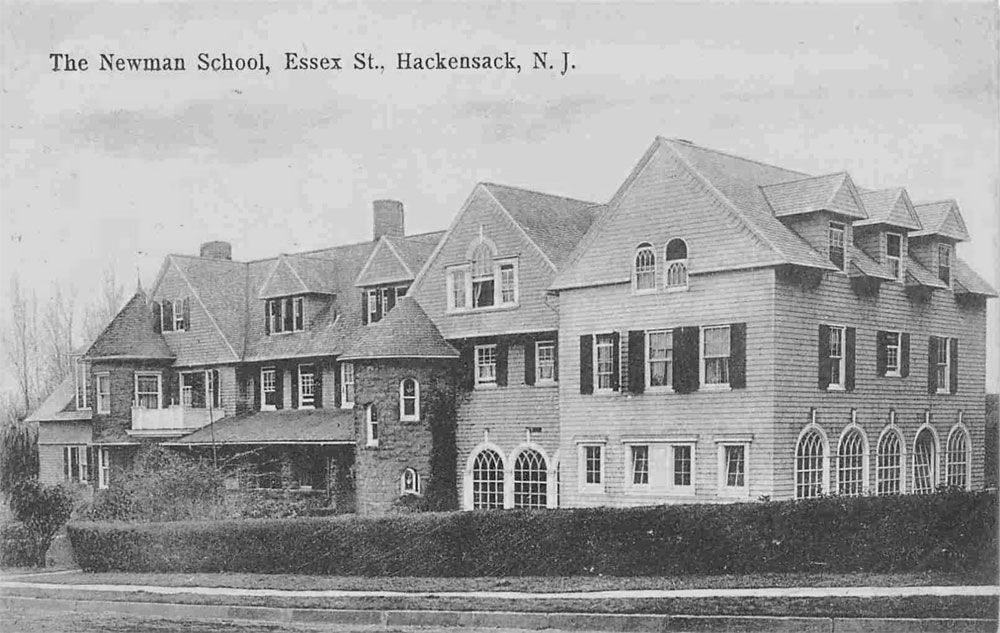
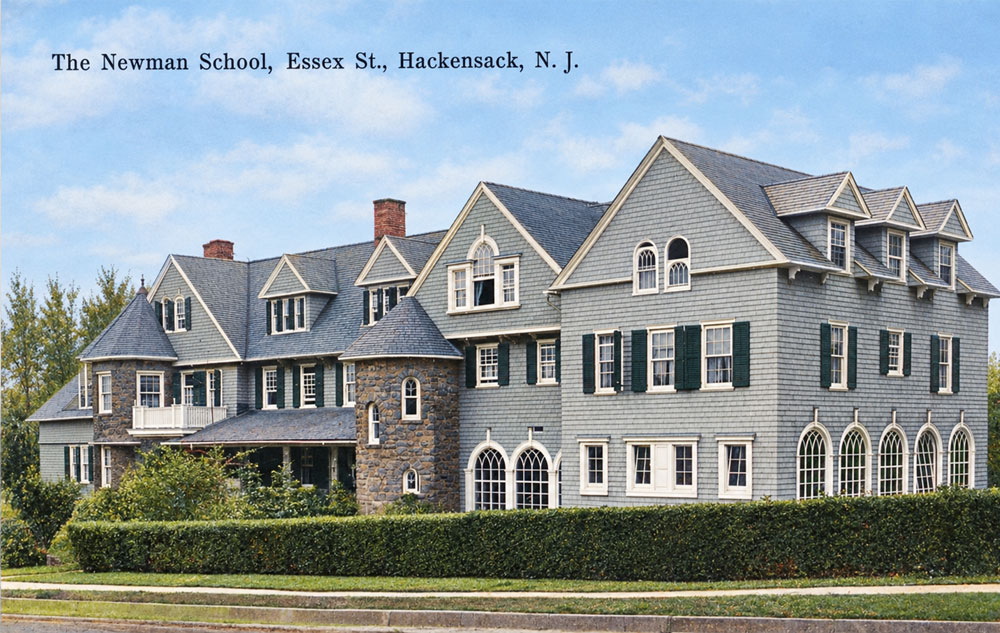
It was the opinion of the Converts League that America’s ‘Gilded Age’ had given rise to the worst excesses of gross materialism and corruption. They would work from the top down. Fay’s easy familiarity with Old Money families of New York like the Astors and the Chanlers would boost their profile in high society and, it was hoped, greatly extend the Church’s influence. [67] Responding to this new challenge, Jesse and his wife, Caroline Hecker-Locke — Hecker’s niece — had founded the Newman School for Boys and staffed it with a raft of freshly converted Catholic laymen whose experience on both sides of the social and religious divides made them capable of engaging with even the most privileged special cases, in the most elegant of surroundings and the most compelling and secular of ways.
Although inspired by the hands-on Americanist tack taken by Caroline’s uncle, Isaac Hecker, the school had been named after John Henry Newman, the former Anglican priest who had led the no less controversial Oxford Movement in England. If Newman had been successful in making Catholic traditions acceptable in the minds of the English, then the school would follow that example by doing the same thing in America. This “sort of unity” in the lives of Hecker and Newman would be recognised by Cardinal Newman himself. They had “both begun a work of the same kind.” [68]
In Newman in Contact with Kant’s Thought, the theologian, Johannes Artz, conducted a thorough forensic review of the impact that Kant had on Newman and the Oxford Movement. In it, Artz repeats a statement that was made by W. S. Lilly in the late 19th century. According to Lilly “the philosophical basis” of Newman’s Oxford Movement was, like Heckers Americanist movement, indirectly derived from Kant. By way of proof, Lilly cited an essay that Newman had written for the British Critic in April 1939.

Newman’s essay, The State of Religious Parties, made the argument that Kant-inspired poets like Coleridge had been applying their “genius in the cause of Catholic truth.” [69] It was Newman’s feeling that Coleridge and the Romantic Poets, who promoted ideas that were often more heathen than they were Christian, had instilled a “higher philosophy into inquiring minds” than the Church and its followers “had hitherto been accustomed to accept.” It may not have been immediately obvious, but they were echoes of the same mind. [70]
By the time that Scott arrived at the school, Locke had been joined by Nelson Hume as Associate Headmaster, with Father Fay brought in as trustee and visiting tutor. The opening of the school in Hackensack, New Jersey came exactly one year after Pope Leo XIII had banned Americanism within the church. An advertisement in August 1902 reads that “training will be aimed to produce both good scholarship and gentlemanly manners.” [71]
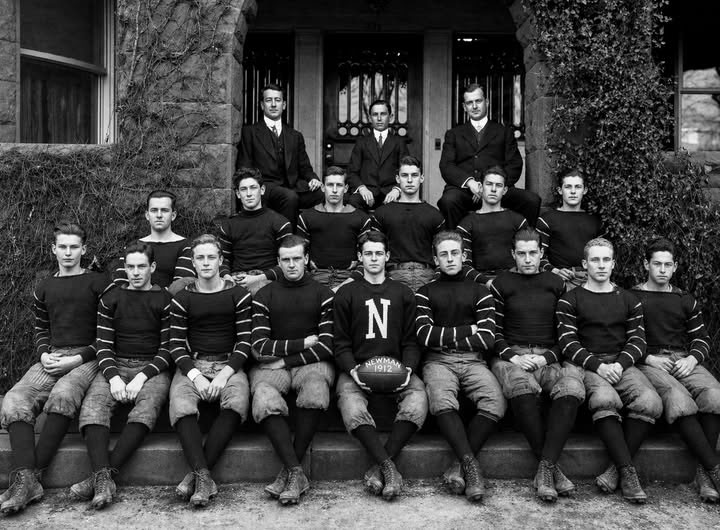
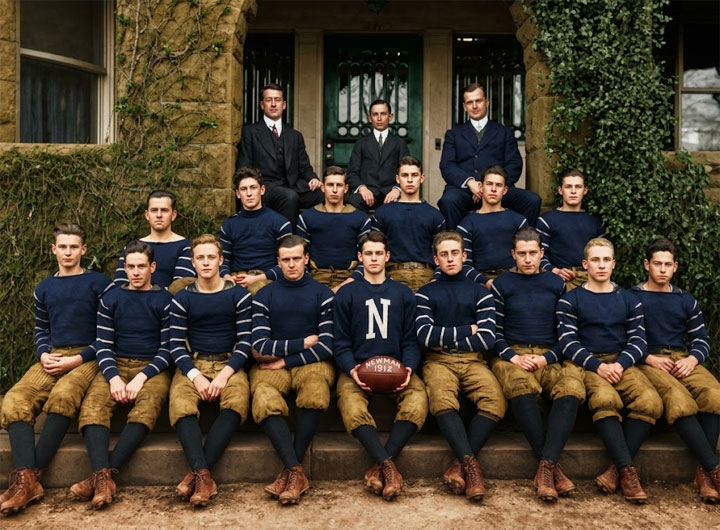
The school, a American Catholic Eton, was a split personality. On the one hand it offered the absolutism of the Catholic Old World, under the patronage of Conservative Bishop, Michael Corrigan, and on the other, the more relativist New World approach of Hecker and the Paulist Fathers. It was East Egg and it was West Egg, and the fragile and challenging young misfit, F. Scott Fitzgerald would attend from 1911 to 1913.
When Scott arrived at Newman in September 1911, Catholics were facing a significant rise in bigotry. The appointment of Irish-American Joseph Patrick Tumulty as Woodrow Wilson’s private secretary and his new proximity to President Taft in the White House had led to paranoid beliefs that the Catholic Church in America were looking to obligate the whole nation to the Holy Roman Empire. Protestants of the American Midwest responded by setting up the ‘Romanist’ conspiracy journal, The Menace (1911-1920) and the Knights of Luther, a growling patriotic association co-founded by Saint Paul businessman, John D. Roberts. In their eyes, the banning of ‘Americanism’ in the Catholic Church in January 1899, and ‘Modernism’ in September 1907, had sent the nation a very clear message: the values of liberty and equality would not be tolerated by Rome.
In an effort to preserve the integrity of the ancient Church, Pope Leo XIII had declared that any Catholic priest found to be pushing ideas of “novelty” and taking licenses with liberty would be deemed heretics and excluded from the church. [72] A free church in a free state was seen by some as an impossible ask. By 1914, The Menace would boast nearly 1.5 million subscribers. To the reactionary Protestants of America, a bold line had been drawn in the sand.
ANTI CATHOLIC SENTIMENT
Within months of being launched, both the Knights of Luther and The Menace newspaper would go about their business of exposing the ‘sinister’ Papal machinery that they believed was ‘clogging’ the heart of the American Constitution. Anti-Irish bigotry, exacerbated by what many believed to be the corrupt grip of the disproportionately Irish Tammany Hall machine under its ‘Boss’, Charles Francis Murphy, would eventually give rise to the formation of The American Party under New York’s disgraced ex-Governor, William Sulzer.
Sulzer looked back to a time when the Tammany Hall — or the Columbian Order as it was known then — emerged from the ashes of the Revolution as a beacon light of hope and inspiration. The feeling among patriots like Sulzer was that it had now become little more than an agent of soft power for the Vatican. The ‘papists’ being run by Chas F. Murphy and his men were putting New York under the martial service of Imperial Rome. The appeals to American Patriots being published in The Menace, had a clearly defined message: the “enemies of liberty and free institutions” were determined to stifle progress. America had become the victim “of an unholy crusade against liberty and human freedom.” It was time for Americans to unite against “Romish oppression and tyranny.” [73]
When the various anti-Catholic groups eventually merged under the banner of the Patriotic Societies in 1916 they paid a memorable visit to Scott’s hometown, Saint Paul. The pamphlets they left in the halls came with a message that wouldn’t have looked out of place on the billboards in the ‘Valley of Ashes’: “Watchman, What of the Night? Are you a patriot? … Remember eternal vigilance is the price of our liberties. Progress is the watchword of humanity.” In the bottom right hand corner of Sulzer’s pamphlet, next to The Patriotic Society’s signature and address, was a Swastika symbol. [74]
Its application couldn’t have been more ironic. The Swastika, an ancient symbol of progress and prosperity was being ripped from its rightful place in the esoteric traditions of the past and dutifully rehabilitated as a totem for the future. The champions of Sulzer’s ‘America First’ movement were doing what the body does at the onset of a virus. They started flooding us with past experiences, past triumphs and past joys that acted like neutrophils on the infected area. It was the cultural equivalent of a runny nose. The more imminent the danger posed by an uncertain future, the larger the dose released. They were storming into the future by putting the whole country into reverse.
Scott would cast his own critical eye over this outpouring of collective nostalgia in an essay for The Bookman in May 1926. In Scott’s opinion, the entire history of America had been “debauched into a pretty and romantic story.” A “literary goldrush” had been mining the seams for “raw and undigested materials.” America was looking to find something “lost and authentic” and all we had to show for its efforts was a preponderance of tales about ‘heroic’ Midwestern farmers and that “beautiful old American life.” America was pushing fairy tales. By way of evidence, Scott presented journalist, John Fox Jr, author of historical romances like Trail of the Lonesome Pine (1906), and Richard Harding Davis, the vigorous patriot and war correspondent famous for ‘Gilded Age’ fairytales like Cinderella and Other Stories (1896). [75]
The author’s decision to switch the novel’s historical setting from New York of the 1880s to New York 1922 may have been prompted in part by something H. L. Mencken had written in his essay, New York for The Smart Set in September 1923. Mencken had found it “curious” that so few American novelists had devoted themselves to the modern metropolis. Practically no one was prepared to unravel its complex tapestry. The only possible exception to this had been The Rise of David Levinsky by Abraham Cahan, a rags-to-riches story that covered the gradual erosion of the hero’s Jewish identity as he is forced to confront the many moral and cultural challenges of his new life in America.
Levinsky’s pursuit of the American Dream has meant enormous spiritual and personal sacrifice. The Promised Land of America has become a nation of lost souls. Beneath the lavish sentimentality and the decorative romanticism of the dream however, Levinsky finds that the America he had yearned for is as “brutally selfish as the jungle” and “worm-eaten with hypocrisy.” Arriving in New York he was met with a civilization that was “honeycombed with conventional lies, with sham ecstasy, sham sympathy, sham smiles, sham laughter.” [76] It was a sentiment that was shared by Mencken; in one single day more money was being spent upon “useless things in New York than would suffice to run the kingdom of Denmark for a year.” Every patriot who pretended to kiss its flag were little more than common “swindlers.” [77] The dream we were being peddled was all just part of a bigger racket. Scott would mention Mencken’s essay when he responded to comments the writer had made about Gatsby: “I thought it might amuse the Mencken who wrote the essay on New York,” the author offered in his defence. [78]
As Sulzer and his friends adjusted to the far-reaching changes of the 20th Century, the Patriotic Society of America went instinctively into reverse. To those who struggled to cope with the world’s increasing evanescence, the past was significantly more real (and much safer) than the present. If they could just rein in the influence of the Catholics and the Irish,America could be great again. Of course, the Swastika’s appearance in America in 1916 marked the symbol’s first, but not last, appearance in reactionary populist movement pushing the narratives of Patriotism, anti-Corruption and National Pride. In a letter to fellow author, John O’Hara in 1933, Scott had written that he was “half black Irish” with “the usual ancestral pretensions.” The author knew exactly what it was what to be on the receiving of prejudice and social estrangement. His reward for his family’s history was a “two cylinder inferiority complex’ and an “intense social self-consciousness.” [79]
The two men that Scott was to meet at Newman would change his life forever: the author and diplomat, Shane Leslie and the charismatic priest, Father Sigourney Fay — Catholics with one foot in the Old World and one foot in the New World. Scott had first been introduced to Leslie by Fay at Newman in November 1912, an event that would prove to be a major turning point in his life as a writer. Leslie had come into his life “as the most Romantic figure” he had ever known. Years later, Leslie would recall the story of the “American white-haired boy-author with the golden pen” who he had been introduced to by Father Fay who showed not only a desperate desire to be a great writer but also very famous.
On his arrival at Newman, Scott was already showing signs of having outgrown the “swaddling clothes” of his faith. Leslie describes how Catholicism had begun to represent everything that was boring, oppressive and “unpoetical” in Scott’s life. Fay had brought a whole new energy to his faith. After being exposed to the more inspiring philosophical works of Anglo-Catholic authors, G. K. Chesterton and Hilaire Belloc, the boy was surprised to find a great deal more romance and excitement in the church than he had ever thought possible. Between them, Fay and Leslie began to persuade Scott that he could write “the great unwritten Catholic novel — the John Inglesant of the United States.” [80]
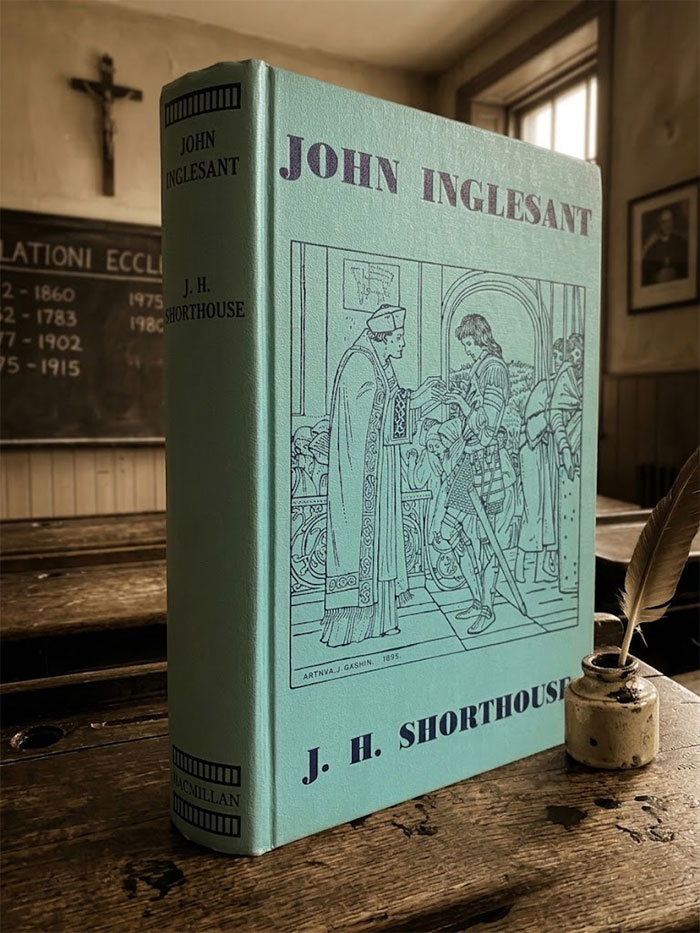
The book that Leslie mentions is an interesting one in several respects. Written by J. H. Shorthouse and published in 1881, John Inglesant tells the story of a gallant cavalier engaged at the highest levels of secret service under King Charles I at the height of the English Civil War. The Morning Post of 1881 saw it as a fluctuating tale of redemption played out against a “tangled maze of religious conflicts” as a new set of Puritans went up against the Papistry and each other. [81] In the book, Inglesant is torn between the love of a girl and his obsessive desire to revenge the murder of his brother. The man is also bitterly divided by his loyalty to his Catholic upbringing and his new Protestant masters. Like Gatsby, he is a man lost between two worlds, and like Gatsby it starts with the arrival of the book’s narrator in a strange new town.
The novel’s author would describe it as a “philosophical romance”, with others seeing that it dramatised the battle between the antiquity and absolutism of the Catholic Church and the liberalism and modernism of the Oxford Movement under Anglican, John Henry Newman. In his Preface to his 1883 edition, the author described his characters as having been “sublimated”; they existed for a very specific purpose and once used, they would exit the stage. [82] Leslie was not the first to mention the novel in the same breath as F. Scott Fitzgerald. In his 1925 review of ‘Creative Oxford’, William Sinkle Knickerbocker had included John Inglesant and This Side of Paradise among a small collection of books bearing the intellectual influence of Newman and the Oxford Movement in the pre-war and post-war period. [83]
SIGOURNEY FAY
Scott’s Newman tutor, Sigourney Webster Fay, was the son of Brevet Lieutenant Colonel, Alford Forbes Fay who had served under Ulysses Grant at Vicksburg and under General McClellan at Potomac. His great, great grandfather, Daniel Forbes had been a member of the Committee of Correspondence at Westboro and had been among the most highly regarded heroes of the American Revolution. [84] Alford’s brother, also called Sigourney Webster Fay, maintained the family tradition by becoming a charter member of the Union League of 1863. According to news reports celebrating the League’s 40th Anniversary, Fay’s membership dated back further than any other living member. [85]
As an associate of the Graduate School at the University of Pennsylvania, Fay Jr had emerged as a talented comic actor. It was here that Fay earned his lifelong reputation as a master storyteller. Fay’s friend, Daisy Chanler, would write that he “had much of the delightful child about him”, combining both “spiritual and temporal gifts.” [86] Over the next seven years, Fay would become the gatekeeper of all that was precious in Scott’s life. He energised the young boy’s reading, aroused his curiosity and made even the dull, old rubric of Catholic instruction seem compelling. Beneath Fay’s dazzling, immersive Ferris wheel, Newman Preparatory School would occasionally take on all the froth and excitement of a pleasure park. The author would later write that the beautifully uplifting world that Fay and Leslie inhabited had made the church a “dazzling, golden thing, dispelling its oppressive mugginess and grey, habitual ‘plaintive rituals’ all “the romantic of an adolescent dream’. [87] Like the “ecstatic patron of light” that was Jay Gatsby, the pair exuded an almost literal “glow.” [88]
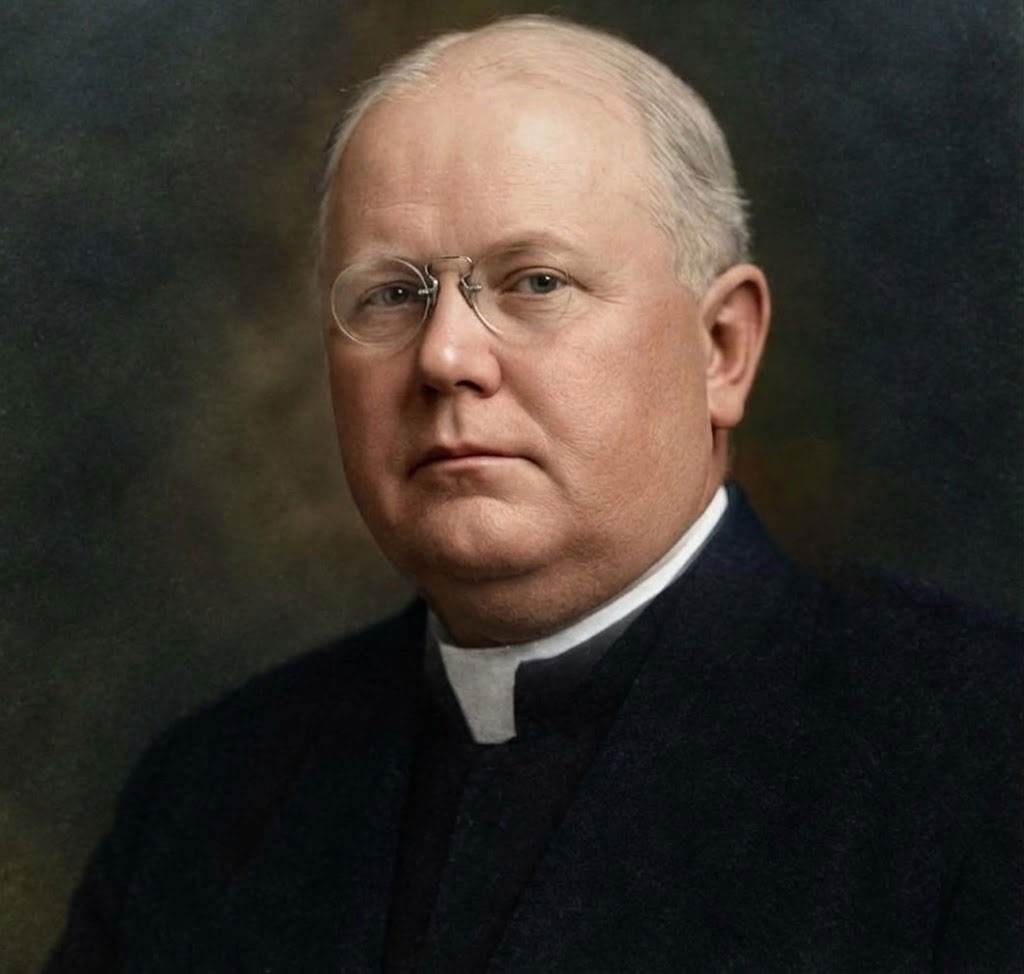
In the summer of 1919, Leslie invited Scott to contribute a short biography of Saint Paul’s Bishop, John Ireland, for the Dublin Review. Despite his misgivings about the way that Scott had portrayed their mutual friend, Monsignor Fay in his portrait of Monsignor Darcy in This Side of Paradise, he thought it was a very “Catholic minded book at heart.” The problem he had with the book was one of balance. Shane thought he had nailed the “political” and “international” aspects of Fay’s character and career — the charming ‘Society priest’ pulling wires for The Pope in New York — but felt that Scott had completely missed the “mystical” and “devotional” side of his character. [89]
Interestingly, in Shane’s review of the book for the Dublin Review, he likens Scott’s depiction of Fay (Monsignor Darcy) to Benjamin Disraeli’s Monsignor Catesby in Lothair (1870), a character that Disraeli had modelled on flamboyant and discredited priest, Thomas John Capel — the Prelate to the Pope in England who was investigated over financial and sexual irregularities. [90] Disraeli is alleged to have chosen the name because of its significance to the Gunpowder Plot of 1605 when Guy Fawkes and Robert Catesby conspired to strike a blow against Protestantism by blowing-up the English Parliament and reinstating Catholic rule. The surnames Catesby, Gaddesby, Gadsby and Gatsby are, incidentally, all believed to have derived from the same root source in the English West Midlands.
In a letter published in London’s Notes & Queries in 1887, a reader writes in from Washington asking if there was any ancestral connection between the name ‘Catesby’ and ‘Gadsby’. According to the author of the letter, the tradition among those who bore the name Gadsby (and its variant Gatsby) was that the name could be traced directly to the gunpowder plotter. The family alleged that after his lands had been seized and property was confiscated, one of Catesby’s sons had changed his name to Gadsby and it was from this branch of the family that the village of Gaddesby in Leicestershire got its name. [91] If there was any relationship between the two names, what was Scott getting at here?
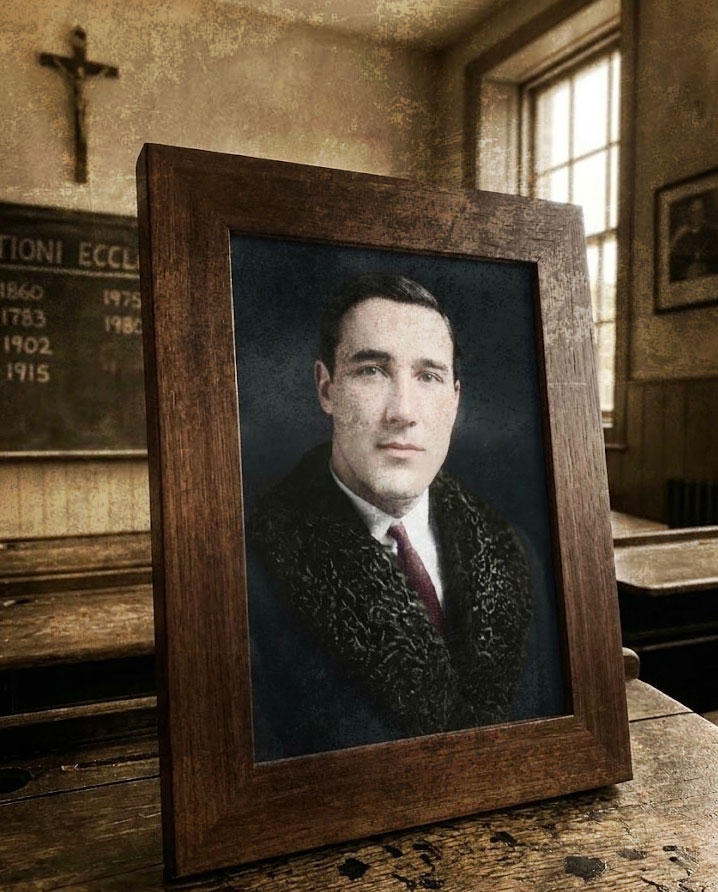
In a letter to Scott written after the publication of This Side of Paradise, Leslie explained how Fay had “left” him his young protégé in his “spiritual testament”, and that it was his responsibility to ensure that Scott’s prodigious talent injured nobody, not even himself. [92] Just months before Scott moved to Great Neck, Shane wrote to his friend again, this time to inform him that he had just been made Chamberlain to the Pope in Rome. [93]
AN OLD WORLD TRYING TO UNDERSTAND A NEW WORLD
Does Gatsby repeat the past with genius? Is Gatsby even that ‘great’? The answer, I think, to both questions is yes and no. Scott’s assessment of Gatsby seems far from consistent in the novel. On the one hand he presents the character’s “capacity for wonder” and his “romantic readiness” as a vital condition of greatness and on the other as a serious flaw. In one breath, Nick will salute him as “worth the whole damn bunch put together” and in the next he will tell us that Gatsby represents everything for which he has “unaffected scorn.” [94] It’s a novel that is full of paradoxes and contradictions, which critics like Thomas J. Ferraro attribute to the “tonal dissonance” of the novel’s overall “Jazz Aesthetic” but which are more likely to be rooted in simple indecision. [95] No efficient algorithms exist to solve Gatsby. He’s intractable.
Scott had taken a far more consistent approach to ‘greatness’ in his 1923 play, The Vegetable, which told the story of Jerry Frost, a simple American railway clerk who through some bungling, electoral error becomes the President of the United States when all he’d really ever wanted to be was a postman. With Jerry, Scott leaves us in absolutely no doubt that he’s not a genius, and he’s not great. Poor old Jerry had been bamboozled into thinking he could do great things, but his life and marriage is left in ruins when he finally discovers he can’t.
Scott’s friend H. L. Mencken had clearly been thinking of the same thing when he wrote that the happy American was little more than a well-cultured “vegetable.” Writing in his third volume of Prejudices in October 1922, Mencken noted that everywhere he looked he was being bombarded with the message that if a man wasn’t happy in America, then it wasn’t because of the inadequacies of the system but because he was insane. Mencken regarded the typical American ‘vegetable’ as someone “smugly basking beneath the stars and stripes” being spoon-fed a daily diet of enriching nutrients. Mencken viewed it as the ideological equivalent of gavaging: a tube was rammed down to the stomach and the typical American was quite literally being force-fed things they didn’t want. [96] Scott seems to have taken this core message and adapted it for theatre audiences. [97]
They weren’t the only American writers thinking along these lines. Sherwood Anderson, an author that Scott had enormous respect for during the time he was writing Gatsby, wrote in his 1922 memoirs, A Story Teller’s Story, that the older and more sophisticated Old World had never really understood America. The artists and patricians of the Old World didn’t appreciate the simple joy in cutting down trees, digging up root stumps and building towns and railroads. It was an Old World trying to understand a New World.
According to Anderson, America had wanted heroes. It had wanted the brave, savage simplicity of adventurers like Dan Cody. Americans, like himself had made every effort to conform to an “unstated and dimly understood American dream.” But what they had gained in wealth they had lost in imagination. The very idea of what it was to be American were just “fairy tales in the night.” It wasn’t the fabulous wealth that made them who they were, but the creativity they had shown in gaining that wealth. In this respect he was in total agreement with Hecker and Charles Waldo Emerson.
If you’d have asked Sherwood Anderson if Gatsby was great, he would probably have said that any genius he had, had been lost in the fabulous yet empty empire he had “founded securely on a fairy’s wing.” [98] The dream had been worthy enough at first but had become “perverted.” [99] By the time he had come to write Gatsby, Scott was coming around to the idea that there was no “perfect man” but there was a man who “had tried”, a man who had “faced life thinking that it could have been fuller and freer.” It wasn’t our deeds that made us great, it was our dreams, the belief that we could “make it so.” [100]
Anderson’s memoirs had been published in January 1922 — the year in which the story of Gatsby unfolds. His 1921 short-story, The Egg, in which the egg was to be a symbol of the absurdity and illusoriness of the American Dream, offered a dry, satirical commentary on the fanatical pursuit of wealth. In The Great Gatsby it is East Egg and West Egg. If Anderson’s story had any influence on Fitzgerald’s egg-like peninsulas, then it is interesting that he split the eggs into two rival seats of power: East Egg (Port Washington, LI), where the wealth of the Old Money was lifeless and inert, and West Egg (Great Neck, LI), where it was vibrant and creative — if more than a little foolish.
America in the early 20th Century was not only looking for greatness and genius, it was looking to redefine what greatness and genius were. In January 1922, the German-born millionaire philanthropist and patron of the arts, Otto H. Kahn made a speech at a Lotos Club dinner. During that speech, Kahn renewed his vows to America: more and more it was “a land of high striving” made up of a magical, winning compound of “sentiment and idealism.” America had always been known as “the land of the almighty dollar”, but he no longer believed this to be true. Even in its most materialistic days “the power of the idea and the impulse of the ideal” had been proven to have had a far greater influence over the spirit of the nation than its famous green crinkly dollar. America’s most valuable asset had always been the imagination of its people. [101]
It wasn’t a man of unlimited wealth that America needed right now but a man of unlimited imagination and poetry. Kahn’s “land of unlimited possibilities” was in desperate need of its prince. What America needed right now was someone like Jay Gatsby.
BOATS AGAINST THE CURRENT
The post-war world that Scott was confronted with in Great Neck in October 1922, was somehow the same but not the same. The sentiment is very neatly expressed by Tom Buchanan in the very first chapter of the novel; civilization was “going to pieces.” [102] The devastating epidemic that was the Spanish Flu had inflicted one final gruelling assault on a world already weakened by social, political and economic degeneration. Running parallel to this were staggering gains in sciences and the arts. James Joyce’s Ulysses had just been unleashed and T. S. Eliot was composing The Waste Land.
In a quirky feature for the Little Review in spring 1922, Ezra Pound revealed that February 1922 had marked the dawn of a new age. We were now in the Year ‘1 p. s. U’. [103] P. s. U had been a reference to James Joyce’s Ulysses, a book which Pound believed had marked a profound shift in the cosmic balance. Writing to Scott’s friend H. L. Mencken in March 1922, Ezra explained that “the Christian-era ended at midnight on Oct.29-30 of last year.” [104] Luckily for party-goers like Scott and Zelda, the calendar that Pound had produced to accompany the piece showed that the dawn of the new age would be followed immediately by the Feasts of Pan and Bacchus. [105] It was party time. Scott had said something vaguely similar himself when he reviewed the period years later. Pressed for an exact year that the Jazz Age had come into bloom, the 35-year old veteran had quipped, “May one offer in exhibit the year, 1922.” [106]
The observations made by scientists during the solar eclipse of September 1922 confirmed everything that Einstein had said about the theory of relativity. The findings, which began to emerge in April 1923 as Scott sketched out the first ideas for Gatsby, didn’t just change our understanding of light, they also changed the way we thought about time. Suddenly everybody was talking about stars and these crazy notions of relativity. In his 1923 novel, Men Like Gods, H. G. Wells had even begun exploring the idea of parallel universes. First serialized in America in Hearsts International Magazine in November 1922, Wells’ Nietzschean fantasy contemplated what it would be like to have two dimensional universes “lying side by side like sheets of paper” in a many-dimensional space — universes that were “parallel to one another, and resembling each other, nearly but not exactly.” [107]
Einstein’s idea of ‘time dilation’ was taking root in the imaginations of the public: the faster than light we moved, the more likely we are to go backwards. After Einstein made his debut lecture in America in April 1921, Catholic transcendentalist, Irving R. Bacon of the New York Times arrived at the conclusion that the scientist’s Theory of Relativity proved and backed-up with an “astonishing force” the general thrust of Kant’s Transcendental Idealism — the idea that time and space were merely functions of the human mind. [108] To those who reduced his complex equations and theories to more manageable and attractive soundbites, Einstein was questioning the whole absoluteness of time. For some, actual time-travel was beginning to look possible. [109] Could you repeat the past? Well of course you could, cried Einstein. In theory, at least.
In 1922, America had entered a period of intense national reflection and many of its greatest minds had found themselves wrestling with these same issues. If Fitzgerald could be accused of anything during this period, it certainly wouldn’t be plagiarism, it would be of tuning-in his own intricate seismometer into those barely cognisant metaphors of the age: the realisation that the American Dream had died before it had ever been formally christened. All that remained of it now was a dream of the dream. New truths were emerging, new questions were being asked.
New Age beliefs like ‘Theosophy’ and ‘spiritualism’ were emerging rapidly in the West, satisfying the fresh demand for more flexible standards of living and more exotic ways of connecting with God. The concessions to knowledge, freedom and happiness made by the various American States at a national and political level were being extended to the religious empires. Reality — or our experience of it at least —was under threat. Worse still, it was being democratised. As powerful and overwhelming as the impulse was to move forward, there was this dull, nagging urge among Catholics to pull back.
In 1981, the historian Margaret Mary Reher would bring the conflict at the heart of American Catholicism into sharp focus with her oft cited essay, Americanism and Modernism Continuity or Discontinuity? [110] What Reher was describing was nothing less than The Ship of Theseus paradox. For every one thing that had been gained, there was something lost. Was it possible that a whole ship, or a whole religion could be preserved after it had been subjected to constant transitions? Replace every plank, every nail and every sail of the ship, piece by piece over time, and could it really be called the same ship?
Catholicism was facing a similar conundrum: how was it ever going to survive in a world in which it refused to adapt to change? Cardinal Newman had once written that there was a large floating body of Catholic truth in the world” that came down by tradition “from age to age.” [111] The boat rolled forward and then instinctively rolled back on a timeless circuit of tides and currents. Scott’s “boats against the currents metaphor” couldn’t have been better conceived.
In November 1924, Scott and Zelda travelled to Rome, taking a room at the Hotel de Princes on the Piazza di Spagna. If they had walked west along the Ponte Cavour they would have arrived at Vatican City. It was here at this hotel that F. Scott Fitzgerald put the final, devastating touches to Gatsby. Of all the places in Europe he could have chosen to complete the novel, he chose a city that had been the seat of Christianity since the 4th Century AD. There were probably few people as puzzled about the choice as his agent, Harold Ober: “I hate Italy and the Italians so violently,” Scott wrote to Ober in January 1925, cruelly dismissing the Church’s new Pope, Pope Pius XI as “Pope Siphilis the Sixth and his Morons.” [112] His old friend and mentor, Shane Leslie, was also on his way there that year. Shane had once joked that if Scott did ever come to Rome he would love to have the pleasure of showing him round clad in a chain and ruff with his chamberlain’s violet breeches and épée.
In an update of Leslie’s travel plans in November 1924, The Freeman’s Journal informed its readers that Leslie, then serving as Chamberlain to the new Pope, would make a pilgrimage to Constantinople. Many of his friends were now abroad and were expecting him already. Leslie intended not only to visit his Bohemian friends in France but would “call on” the Pope in Rome as he made his way through Italy. [113] When Scott eventually contacted his editor about the initial sales of the book, he really didn’t seem to care whether it had shifted 18,000 units or 20,000 units — “Shane Leslie thought it fine.” [114]
Why Scott chose Rome might be partly explained by a passage that would end up being removed from the final version of Gatsby. In the passage, Nick asks Gatsby what he would most like to do with his gifts: “Upset things,” Gatsby responds intently, “I want to turn the world upside down and give people something to think about.” [115] As a moral and intellectual Bolshevik, Gatsby wanted to tear down social walls and light-up the darkest corners of religious beliefs. Like Crowley’s Magus figure, Scott probably saw himself in this same light: the half-formed face of chaos, “spirit and matter; he is peace and power; in him is Chaos and Night and Pan” [116] — or as one of Gatsby’s guests remark, “second cousin to the devil.” [117]
There are more obvious ‘Catholic elements’ in the novel if you wish to look — the ‘confessional’ role adopted by Nick, his suspending of judgement in a way that seems practically saintly, Gatsby being presented as “truly the son of God” and a ‘patron of light’ (the ‘light of the world’?), Meyer Wolfshiem whistling The Rosary in his office, and at least two figurative uses of the word ‘benediction’ (a blessing).
I am also inclined to think there may be another hidden blessing in Nick’s final words to Gatsby: “You’re worth the whole damn bunch put together.” Gatsby’s face, we are told, breaks into a “radiant and understanding smile” as if he’d just been offered redemption (the last rites?). Of course, it’s easy to get carried away with all this. The scene in which Daisy sobs “stormily” into the “thick folds” of Gatsby’s shirts, delirious with emotion at just how beautiful they are, was viewed by Thomas J. Ferraro as “a secularisation of the Protestant theory of the Eucharist.” [118] If she’d sat there and consumed them I might well have been persuaded.
As tempting as it is to see it more symbolically, the scene is likely to be no more than one of the grossly sentimental ‘weak in the presence of beauty’ moments that has been popularised by everyone from Keats in Ode to a Nightingale to Tin Pan Alley show-tunes. Perhaps poor old Daisy Fay is simply reminded of something beautiful that she’s lost. To my mind at least, the ‘Catholic element’ that Fitzgerald retained in the novel is more fundamental than any of the more casual and superficial manifestations we’ve touched on here. Despite many critics making the assumption that the references are blasphemous and iconoclastic, I believe the truth may be a little bit more complex, and that Scott’s ‘ecstatic patron of light’ provides the warm blue inner core of a “sincere and radiant world” whose sacramental vision goes some way toward bridging the gap between traditional Roman Catholicism and the American Transcendentalism that the author keeps in his closet.
The religious soul at the heart of Scott’s novel had not been lost on his friend, Carl Van Vechten. In his own review of Gatsby for The Nation in May 1925, Vechten had written that Scott had taken the theme “of a rather soiled or cheap personality, transfigured and rendered pathetically appealing through the possession of passionate idealism” and turned into something close to a national religion. It had a quality that you might vaguely refer to as “mysticism.” [119] A completely new kind of saviour was emerging from the ashes of post-war America. The saviour that Scott had fashioned from the slag and the mud of shattered dreams, and who would help rescue him from his own cosmic despair, would have all the formidable strength of a Nietzschean Superman, all the imagination of a Shelleyan visionary and all the eternal resonance of Jesus Christ.
Talking to Harry Salpeter of the New York World as the movie adaptation of Gatsby continued its successful run in American theatres, the author explained how this “New Race of Man” would bring America out of decline. Despite all the arrogant assumptions made by “great races with great dreams”, America was a nation of “great failures.” His hopes for America turned instead to “the birth of a new hero.” [120] The publication of The Great Gatsby on Good Friday, 1925 couldn’t have been more suitable in this respect: the death of Gatsby had captured the moment of crucifixion, resurrection, and ascension — a pivotal moment in time when a dubious, shapeshifting dreamer with links to organised crime becomes the light of a brave new world. Francis Scott Fitzgerald, the high priest of the Jazz Age put his missal back in his pocket, finished his Gin Rickey, waved goodbye to Harry and went about his business of spreading the gospel of the American Dream.
[52] ‘Dear Mr. Perkins’, June 20, 1922, Dear Scott/Dear Max, ed. Kuehl & Bryer, Charles Scribner’s Sons, 1973, p.61
[53] ‘America of the Melting Pot Comes to An End’, David Reed, New York Times, April 27, 1924, p. 23.
[54] ‘The Invading Horde’, The Daily Silver Belt, September 21, 1923, p.4
[55] ‘Wait Till You Have Children of Your Own’, F. Scott Fitzgerald, p.13, p.105
[56] ‘To Robert D. Clark, 1921’” A Life In Letters, F. Scott Fitzgerald, ed. Mathew J. Bruccoli, Simon & Schuster, 1995, p.45.
[57] Why Europe Leaves Home, Kenneth L. Roberts, The Bobbs-Merrill Company, 1922, p.47
[58] Aspects of Americanization, Edward Hale Bierstadt, Stewart Kidd Company Publishers, 1922, pp. 9-14
[59] ‘The Land of the Free’, Katharine Fullerton Gerould, Harper Magazine, January 1923, Vol. 146, No.872, p.137-146
[60] ‘Dear Max, April 10, 1924, Dear Scott/Dear Max, ed. Kuehl & Bryer, Charles Scribner’s Sons, 1973, pp.69-70
[61] Testem Benevolentiae Nostrae, 1899
[62] Le Père Hecker: Fondateur des ‘Paulistes’ Américains, Elliott, pp. X-XLV
[63] Testem Benevolentiae Nostrae, 1899
[64] A Cry for Justice: Daniel Rudd and his life in Black Catholicism, Journalism, and Activism, 1854-1933, University of Arkansas Press, 2011, pp.63-65, pp. 154-155
[65] ‘Bishop Fails to Arrive and Address is Delivered by John T. Harrison’, Saint Paul Globe, July 9, 1903, p.6
[66] ‘American Converts are One of the Great Hopes of the Church’, The Monitor, Volume 57, Number 13, January 2, 1904, p.273
[67] The Catholic Converts League was founded by Paulist Minister, Alexander Patrick Doyle (1857-1912). He work closely with Presidents Roosvelt and Taft.
[68] The Life of Father Hecker, Elliott, 422.
[69] ‘Newman in Contact with Kants Thought’, Johnannes Artz, The Journal of Theological Studies , October 1980, New Series, Vol. 31, No. 2, pp. 517-535
[70] ‘State of Religious Parties’, John Henry Newman, British Critic, and Quarterly Theological Review 1839-04: Vol 25, pp.396-426
[71] ‘Ecclesiastical Review’, August 1, 1902, Vol. XXVII, No.2, p.8
[72] Testem Benevolentiae Nostrae, 1899
[73] ‘On the Firing Line’ , The Menace, May 5, 1917, p.2
[74] Life and Speeches of William Sulzer, The Patriotic Societies, New York, 1916, pp. 2-13.
[75] ‘How to Waste Material: A Note on My Generation’, The Bookman, May 1926, Vol 63. No.3, pp.262-265
[76] The Rise of David Levinsky, Abraham Cahan, Harper & Brothers, 1917, p.380
[77] ‘New York’, H. L. Mencken, The Smart Set, September 1923, Vol 72, No.1, pp.138-144
[78] ‘Dear Menck, May 4, 1925’, A Life in Letters, p.111.
[79] ‘Dear O’Hara, July 18, 1933’, F. Scott Fitzgerald, The Letters of F. Scott Fitzgerald, ed. Andrew Turnbull, Bantam, 1971, p.509
[80] ‘Some Memories of F. Scott Fitzgerald’ Shane Leslie, Times Literary Supplement, October 31 1958, p.632
[81] ‘John Inglesant’, The Morning Post, November 10, 1881, No. 34, 127, p.3
[82] John Inglesant: A Romance, Joseph Henry Shorthouse, Macmillan and Co, 1883, p. VII.
[83] Creative Oxford: Its Influence in Victorian Literature, William Sinkle Knickerbocker, Syracuse University Press, 1925, p.26
[84] The Heroes of the American Revolution and their Descendants, Battle of Long Island, Henry Whittlemore, 1897, pp. 119-121
[85] ‘Union League Veterans’, New York Tribune, February 1, 1903, p.14
[86] Autumn in the Valley, Margaret Chanler, Little Brown and Company, 1936, pp.80-85
[87] ‘Homage to the Victorians’, F. Scott Fitzgerald, New York Tribune, Vol. LXXXII, No.27,573 May 14, 1922; p.6.
[88] The Great Gatsby, p.108.
[89] ‘My Dear Fitz, September 3, 1920’, Shane Leslie, F. Scott Fitzgerald Papers, C0187, Box No.46, Folder 17, Princeton University, Manuscripts Division, Firestone Library.
[90] ‘This Side of Paradise’, Shane Leslie, The Dublin Review, Issue. 335, Vol. 167, October-December 1920, p.286. There is much to suggest that Capel was the victim of a vicious Anglican witch-hunt, who were worried about his success in converting high-value British aristocrats to Catholicism.
[91] ‘Catesby, Gadsby’, letter from D.C, Washington, US, Notes and Queries, Oxford University Press, Series 7, Vol.4, July-December 1887, p.448
[92] ‘My Dear Fitz, September 3, 1920, Shane Leslie, F. Scott Fitzgerald Papers, C0187, Box No.46, Folder 17, Princeton University, Manuscripts Division, Firestone Library.
[93] ‘My Dear Fitz, April 3, 1922, Shane Leslie, F. Scott Fitzgerald Papers, C0187, Box No.46, Folder 17, Princeton University, Manuscripts Division, Firestone Library.
[94] The Great Gatsby, p.2, p. 185
[95] Mitchell Breitwieser, F. Scott Fitzgerald, 382
[96] ‘On Being American’, Prejudices, Third Series, H.L. Mencken, Alfred A. Knoff, 1922, pp.9-64
[97] The Vegetable, F. Scott Fitzgerald, Charles Scribner’s Sons, 1923.
[98] The Great Gatsby, p.119
[99] A Story Teller’s Story, Sherwood Anderson, The Viking Press, 1922, pp.298-310.
[100] ‘Wait Till You Have Children of Your Own’, F. Scott Fitzgerald, p.13, p.105
[101] ‘Dinner in Honor of Mary Garden by the Lotos Club’, New York, January 29, 1922, The Lehmaier Press, 1922, p.2, pp.16-17
[102] The Great Gatsby, p.16
[103] ‘Year 1 p. s. U’., The Little Review, Spring 1922, p.4
[104] To H. L. Mencken, Paris’, 22 March, The Selected Letters of Ezra Pound, 1907-1941, Ezra Pound, New Directions Publishing, 1971, p.174
[105] The pipes of Pan are mentioned in the manuscript copy of Gatsby. Pan, a forest deity, is evoked in The Dreaming Song of Spring, a tune that Gatsby sings in the original drafts of the novel, which might be viewed as homage to Pan, the God of Spring. The line in Gatsby (“the King’s daughter, the Golden Girl … high in a White Palace.”) appears to be a reference to the poem, Endymion by John Keats. The action in the poem takes place on the on the night of the ‘Great Pan festival’. Scott wouldn’t be the first Catholic to appropriate pagan symbolism.
[106] ‘Echoes of the Jazz Age, F. Scott Fitzgerald, The Crack Up, ed. Edmund Wilson, p.11
[107] Men Like Gods, H.G. Wells, Cassell and Company, 1923, pp.46-47; H.G Wells New Novel’, Washington Times, November 8, 1922.
[108] ‘Einstein and Kant’, Irving R. Bacon, New York Times, May 15, 1921, p.81.
[109] ‘Are the Stars Really Where We See Them?’, Washington Times, September 10, 1922; p.50
[110] Americanism and Modernism Continuity or Discontinuity?, Margaret Mary Reher, US Catholic Historian, Vol. 1, No. 3, 1981, Catholic University of America Press, pp. 87-103
[111] The Life of Father Hecker, p.135
[112] ‘Dear Ober, January 1925’, As Ever, Scott Fitz — Letters between F. Scott Fitzgerald and his Literary Agent Harold Ober, ed. Matthew J. Bruccoli, 1919-1940, J.B. Lippincott, 1972, p.73
[113] ‘Mr Shane Leslie’s Travel Plans’, The Freeman’s Journal, November 27, 1924, p.4
[114] ‘Dear Max, July 1, 1925’, The Letters of F. Scott Fitzgerald, p.195
[115] The Great Gatsby – Autograph Manuscript, Fitzgerald, Princeton University, Manuscripts Division, Firestone Library, F. Scott Fitzgerald Papers (C0187), Box 4
[116] The Cry of the 4th Aethyr, Which is Called PAZ, Arthur Crowley, The Best of the Equinox, Enochian Magick: Volume I, Weiser Books, 2012
[117] The Great Gatsby, p.73
[118] Thomas J. Ferraro, “Butter-and-Egg Men”, 2000
[119] ‘Fitzgerald on the March’, Carl van Vechten, The Nation, Vol 120, No.3124, May 20, 1925, pp.575-576
[120] ‘Fitzgerald, Spenglarian’, interview with Harry Salpeter, New York World, April 2 1927.