If Chief Inspector Haigh had been confused by the serial spy capers of his first suspect, Ernest C. Brown, then the intelligence making it on to the desk of the victim’s cousin at Mi5, Rafael Farina, would have been more perplexing still — and also well above his pay grade. On the one hand, Florence Nightingale Shore was just a 55 year old nurse who had been in the wrong place at the wrong time on the London to Hastings route, and on the other, this small and rather unassuming woman had found herself at the centre of a complex game being played out at the highest levels of British espionage.
First there was the mysterious trip to her Aunt, the Baroness Farina in Tonbridge, the evening before the murder, and then there was the news that her son was heading the Russian desk at Mi5. If the arrival of a semi-invisible cadre of Russian exiles in Tonbridge wasn’t enough — especially given what we now know about Rafael’s position at Mi5 — then the fact that other émigrés had taken up positions in St Leonards on Sea, makes Florence’s journey there in the first two weeks of January all the more unusual. More puzzling still, is that these same individuals had already appeared on Farina’s radar at Mi5.
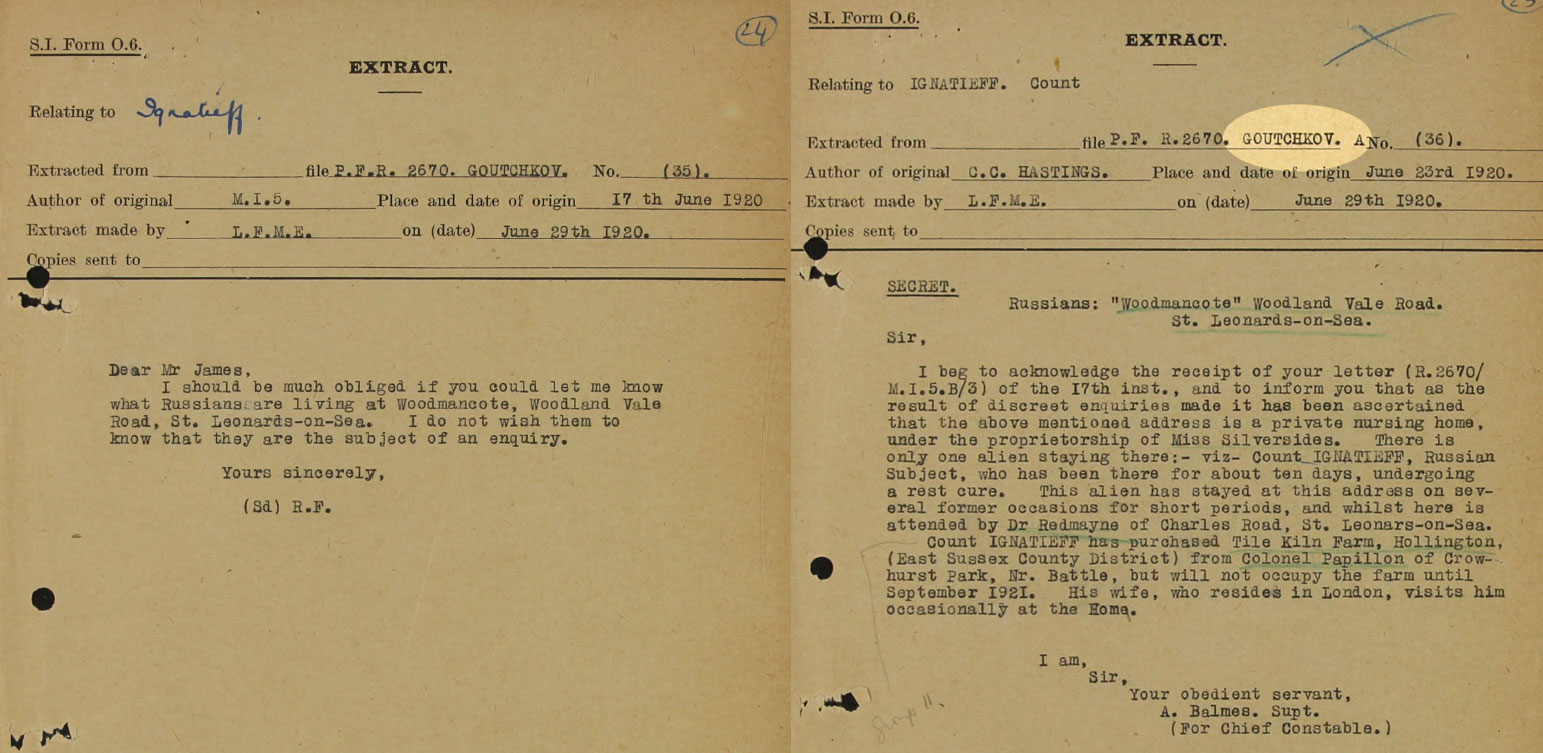
It transpires that in June 1920, shortly after the murder of Florence en-route to St Leonards on Sea, Farina was making follow-up enquiries with Hastings Police about several mysterious Russians living at an address in the same resort. After liaising with Hastings Police, Farina learned that one of the Russians residing at the address was a prominent White Russian called Count Paul Ignatieff, the last Tsarist Minister of Education and a close friend of the murdered Tsar, Nicholas II. [1]
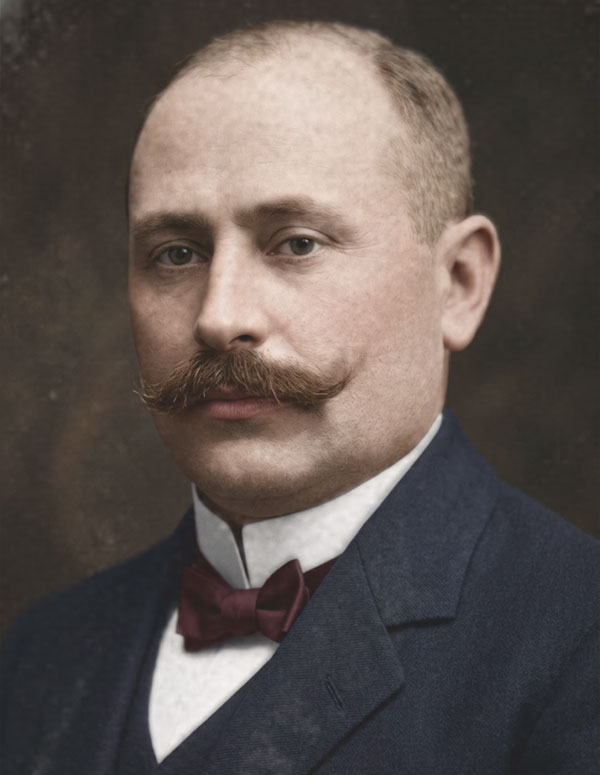
The Count had served as a member of the Provisional Government shortly after the Tsar’s abdication on March 5th 1917. Ignatieff had warned about the dangers of dismissing the Russian First Duma of 1906. As an alternative he had recommended reviving an old form of parliamentary representation evolved from the local government schemes of the Zemstvos. The Tsar’s replacement, Prime Minister Kerensky rewarded the Count’s commitment to social and political reform by making him head of the Russian Red Cross, a role that would eventually bring him into contact with various Western figures looking to reconstruct and rehabilitate Russia in their own progressive image.
The wife of Paul’s cousin in Paris, Count Aleksei Ignatiev, had already made inroads here and was well liked in English circles. Like Florence, at the outset of the war the Countess had found herself assisting the French Red Cross, the family having already made the acquaintance of Dr Alexander MacDonald Westwater of Edinburgh Royal Infirmary whilst assisting the Red Cross in China. After the Bolshevik Revolution of October 1917, the Count had narrowly escaped execution and was forced to flee Russia with his family.
The address at the centre of Farina’s enquiries was Woodmancote — a private nursing home on Woodlands Road in the Silverhill district of St Leonards, about a fifteen minute walk from Warrior Square Station where Florence was due to arrive.
According to the KV2 files at the National Archives, some of the correspondence intercepted by Mi5 suggests the Count was spending much of his time between France and Turkey, the country of his birth. This is interesting in light of Ernest C. Brown’s claim that just twelve months after being quizzed about the murder of Florence Nightingale Shore, he was arrested on murder and espionage charges in Constantinople, the Turkish capital.
The Ignatieff family’s association with Turkey was strong. Paul had been born to Count Nikolay Ignatieff, an aggressive, ultra-Conservative militarist who had previously served as Aide de Camp to the Romanovs and as Ambassador in Constantinople during the years 1864-1877. [2] At the Constantinople Conference of 1876, some 45 years earlier, Lord Salisbury and the Count’s father, General Nikolay Ignatieff, had walked arm-in-arm down the tortuous Rue da Pera in the European Quarter of Constantinople discussing the international issues of the day. Curiously, Ernest C. Brown found himself walking down these same streets in 1921 when he joined the Inter-Allied Commission as staff photographer.
In 1919, Count Paul made an application to the former Vice Consul of Russia in London, Ernest Gambs to relocate from Paris to England. The Count was making tentative enquiries into buying the nearby Tilekiln dairy.
In the KV2 files there is a letter dated September 1919 in which Rafael Farina apologises for not being able to help the Count secure additional British visas for his friend and brother-in-law, Prince Boris Vassilitchikoff and his family in Paris. However, by July 1919, Farina can be seen informing the Ignatieffs of the Home Office decision to issue visas to all his immediate family members, including his five children and brother, Nicholas. His cousin Alexis was not so lucky. A rather terse note dated July 15 1919 states simply that Colonel Count Paul Alexis Ignatieff was ‘probably’ the subject of a Mi5 Blacklist, No.12489.
On the face of things, it looked like something out of John Buchan’s The Thirty Nine Steps: decorated World War I heroine and sister of Brigadier General is murdered on her way to a quiet seaside resort currently under the scrutiny of her Mi5 cousin for harbouring high-value Russian assets and possible enemies of the state. All it needed was a German U-boat turning up at Glyne Gap Beach and Agatha Christie’s ‘Colonel Race’ bounding across the sand flats of St Leonards waving a railway timetable.
To add a further layer of intrigue, it was Baroness Farina — Rafaele’s mother — who was one of the first to visit Florence in hospital. The Baroness had arrived within hours of Mabel and seized immediate control of the narrative as the press mob descended on Hastings. The press conference began with a series of candid interviews. “I cannot think of any motive for the attack other than robbery” she speculated, before bearing tribute to Florence’s “self- sacrificing life”, her life-threatening injuries and the disappearance of several items of expensive jewellery. [3]
Interestingly, her account differed from the statements made by the first witnesses in several respects.
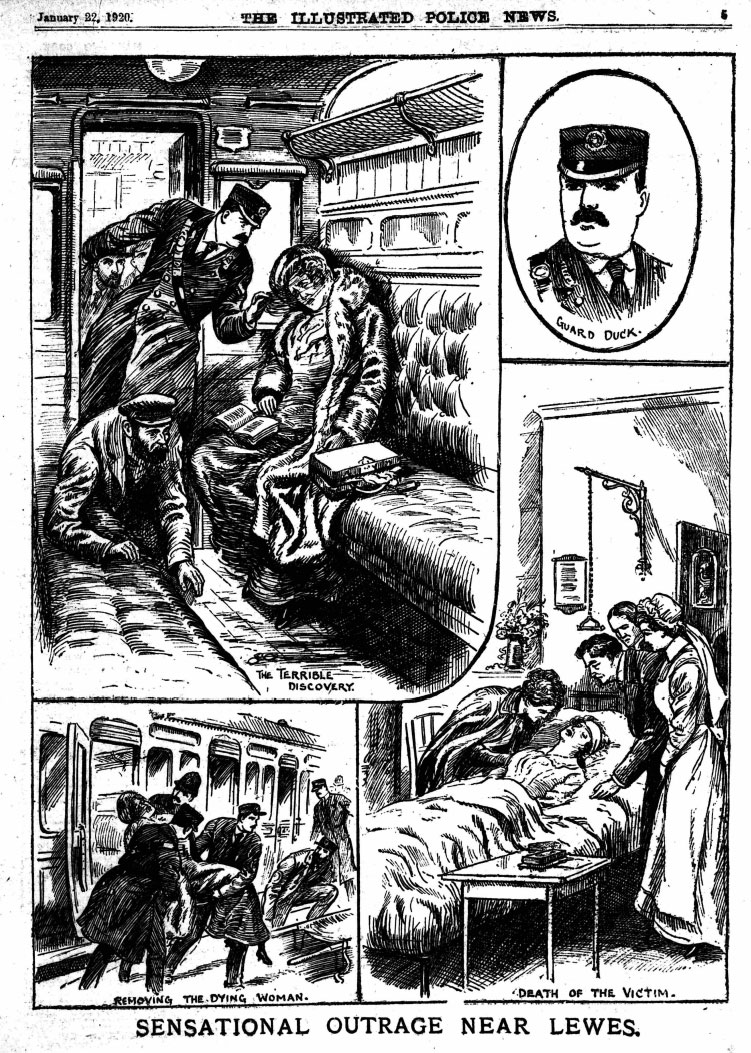
Interviewed by the London Observer on Friday 15th January, the Baroness claimed the cases she had been travelling with had been broken open and all the valuables stolen. However, the earliest newspaper reports describe how the cases ‘were apparently as originally placed’ and her hat was still placed on top of one of the portmanteau boxes. [4] This was supported by the platelayers who were the first to discovered the body when they entered the carriage at Polegate. The workers said there were no signs of resistance and the only indication of a struggle were a pair of broken glasses that lay on the floor of the compartment.
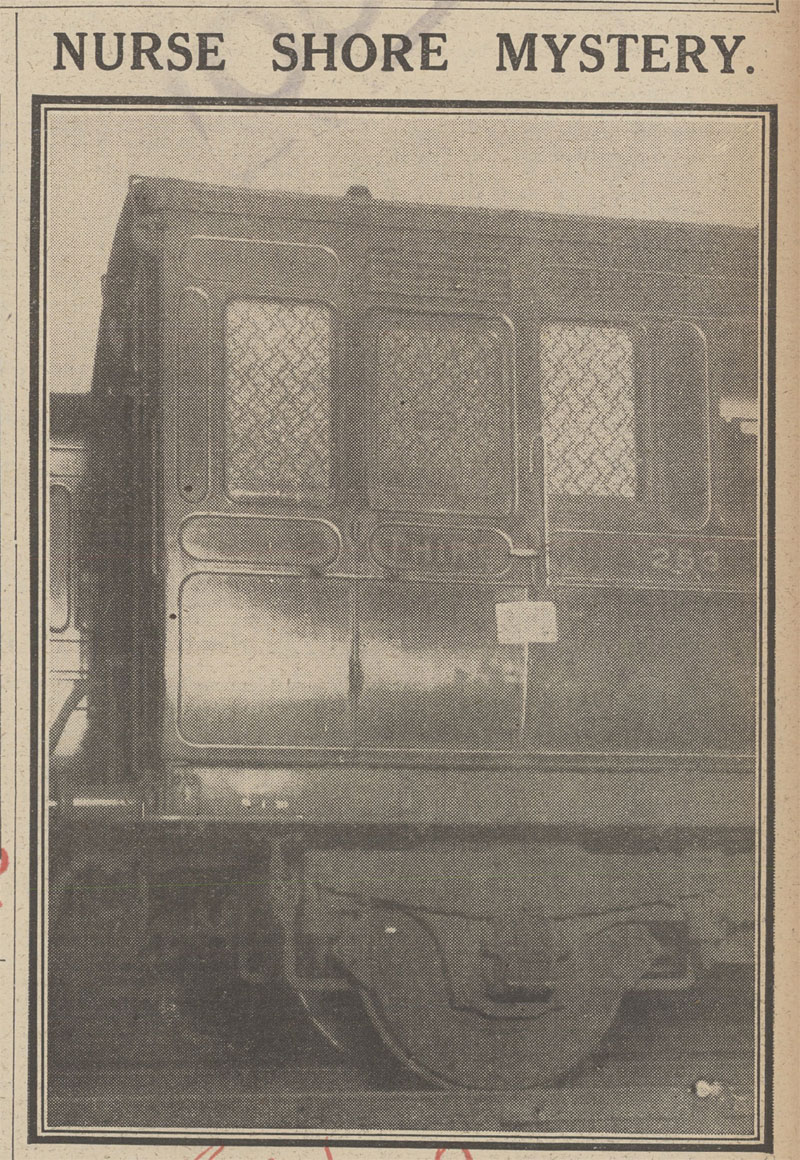
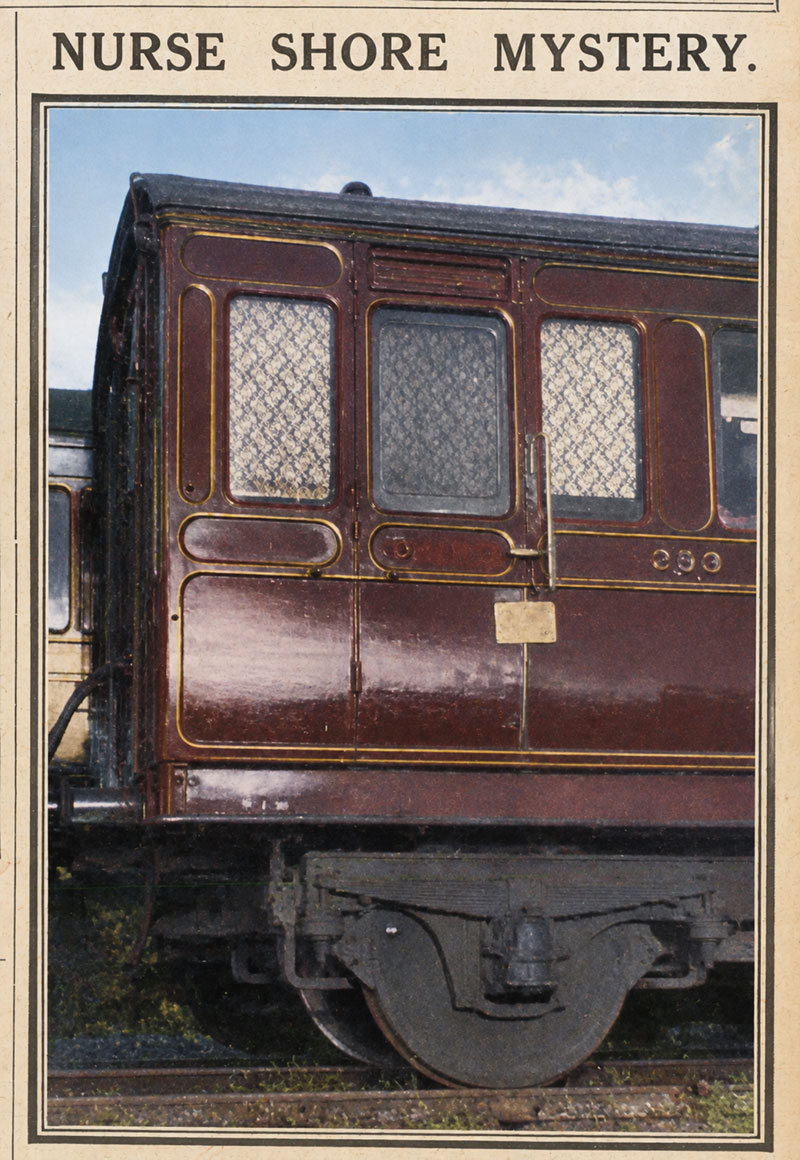
The fact the newspapers also reported the presence of ‘the man in the brown suit’ suggests that the press had received this information from Police, as the only eyewitness to any of this was Mabel, now glued to Florence’s bedside in hospital. The men also reported the ‘open book’ that still lay in Florence’s lap, contradicting any suggestion of a violent struggle. There was blood evidence on the seat where she sat but nowhere else in the carriage. In fact “everything about the carriage seemed to be in perfect order” [5] The Baroness also claimed to have warned her niece against sitting alone in an empty carriage: “Miss Shore visited me on three or four occasions; and the last time, strange to say, I cautioned her about travelling alone … how I do wish she had taken my advice.”
In Christie’s novels it isn’t uncommon to find the lead suspect trying to direct the course of an enquiry by leaving trails of dubious intent. There had been a long-standing tradition in detective novels to have the narrator portrayed as the most trustworthy character; the detective’s right-hand man. Christie’s 1926 novel The Murder of Roger Ackroyd totally bucked that trend when the author’s fictional Belgian detective, Hercule Poirot revealed that the murderer was none other than his most trusted assistant, Dr James Sheppard — the man giving all of the nudges and the one leaving all of the clues.
It’s an extraordinary proposition; Florence Nightingale Shore, the first-cousin of Mi5’s Head of Russian Section was brutally murdered on her way to a prosperous British seaside resort that may have been harbouring enemies of the state. But what had led Mi5 to this discovery?
The file relating to Count Paul Ignatieff — and extracted by Rafaele Farina on June 29th 1920 for his enquiry into Woodmancote nursing home in St Leonards on Sea — had been pulled from a Personal File on someone by the name of ‘Goutchkov’ (File PF/R2670). This basically means that the Woodmancote nursing home address is likely to have been found in communications between ‘Goutchkov’ and a person of interest. The ‘Goutchkov’ the extract refers to is General Alexander I. Guchkov (often spelled Guchkoff). This was the same Alexander I. Guchkov who is alleged to have financed the coup d’etat against Kerensky and the assassination of the Soviet Ambassador, Vatslav Vorovsky.
A former banker and mercenary who had fought on a voluntary basis for General Smuts against the English in the Second Boer War, Guchkov would become Minister of War for Kerensky’s short-lived Provisional Government after the February Revolution in Russia. For a time, he also headed Russia’s Red Cross in Germany. His natural distrust of liberal reform under Russia’s ‘Kadets’ dated back to the Revolution of 1905, and it was with a great deal of caution that he went along with the plans of Kerensky, naturally preferring a constitutional monarchy (featuring another Romanov, not Nicholas) and slow, gradual reform. As much as he saw the need for change, he saw no reason for those changes to be radical. His acceptance of the role under Kerensky was simply a reflection of his desire to stabilise Russia’s war efforts.[6]
After the triumph of Lenin and the Bolsheviks in Russia’s second October Revolution, Guchkov, like Count Ignatieff, found himself living in exile, settling first in France and then Berlin. Despite this he remained active militarily and politically. From his bases in France and Berlin, Guchkov became personally responsible for the funding of the counter- revolution launched by Generals Deniken, Yudenich and Kolchak. By rights, his influence should have ended there. But it didn’t, far from it.
Shortly after Kolchak’s defeat and execution in January 1920, Guchkov would become the chief protagonist in a web of intricate conspiracies to retain the support of White Russia’s British and American allies. He was also at the centre of plots to bring down Lenin and the Bolsheviks. However, the Guchkov Circle’s links to General Bredow of the German Army, and to German Military Intelligence polarized him from the Ignatieffs whose refusal to release funds to Yudenich and Kolchack had contributed to their defeat. [7] Word on the ground in Britain and America was that the White Russian movement would trade with Germany once it had triumphed over the Reds. Naturally, Britain wanted to beat Germany and her allies to those trading opportunities.
If any single person was in a position of sending a message out to Britain over the capture of General Kolchack the week prior to the attack on Florence, it was Guchkov. His daughter Vera, who married Scottish linguist Robert Traill, would eventually become a member of the KGB. In 1975, Vera was alleged to have told the US State Department’s, William Gleason that her father had financed the assassination of Soviet Commissar Vorovsky in Geneva in 1922. [8] Supported by ‘Ace of Spies’ Sidney Reilly, Guchkov is also believed to have funded other anti-Soviet plots. These may well have included the Zinoviev Letter in which Florence’s cousin, Rafaele Farina featured, the fake ‘Harington plot’ in Constantinople and the murder of Florence Nightingale Shore. Guchkov had the means, he had the motive and the funds necessary to carry it out.
Why would Guchkov do this? Maybe in an attempt to frame left-wing anarchists and subversives (like the Bolsheviks or Kerensky) and gain the sympathy and support of British Intelligence services. Or maybe it was an act of revenge for the failures of Offley Shore (the brother of Florence) to assist the Armenian cause and the subsequent capture and execution of his good friend General Kolchak.
One look at other press headlines at the time of the attack on Shore bears testimony to the analogous nature of developments in Russia. Alongside the headline, ‘Who Attacked Nurse Shore’ on page seven of The Daily Mail on Thursday January 15th, was the sensational and almost deafening: ‘Plans To Overthrow Civilisation: Peril of Bolshevist Advances’. The outlook was just as ominous elsewhere. On the left of the ‘Attacked on a Train’ report in the Sheffield Daily Telegraph the very same day, was the story of Kolchak’s disappearance and the collapse of White Russian forces. The Daily Mirror was just as sensational. Beneath the bold letter headline: ‘Train Crime Mystery: Quest for Young Man in Brown Suit’ they ran a dramatic warning of a ‘Red Peril’ that was rapidly sweeping east. Kolchak had been captured and a dangerous military situation was gathering pace. [9] Worse still, news was now arriving that Lloyd George’s coalition government was considering lifting the blockades on Russia and opening trade negotiations with Lenin. This plan of ‘reconciliation with the Soviets’ would have dealt a considerable blow to Guchkov and his British allies.
The framework that allowed these discussions to take place had come into effect just 48 hours prior to the attack on Nurse Nightingale Shore. The ratification of the Treaty of Versailles took place on January 10 1920 (Florence’s birthday), and on January 16 1920, the Allied Supreme Council had met in Paris to announce the resumption of trade with Russia that would allow the exchange of goods. As far as Churchill and the pro-Interventionist lobby in Britain were concerned, White Russia had been betrayed; the millions of Russian lives lost fighting on behalf of the allies appeared to have meant nothing to the British. The Whites had triumphed over Germany only to lose their place in the world. It was a truly shoddy state of affairs.
Count Paul Ignatieff featured in several other Guchkov intercepts over the years. In 1934, Mi5 intercepted a letter between Guchkov and Anatole Vasilievitch Baikaloff — a former member of the Revolutionary Socialist Party who Mi5 would later come to regard as a possible Nazi-sympathizer. A report compiled at this time describes how Guchkov was advising Baikaloff — an associate of former Prime Minister Kerensky — that his friend Dr. Ewald Armende, should get in touch with Ignatieff in Canada. [10] Remarkably though, whilst Guchkov features prominently in Baikaloff’s Mi5 security file, Guchkov’s own security file — PF/R2670 — has never been made publicly available. We know it existed but it seems not to have been declassified. It may well be that it’s been destroyed. [11]
The Zinoviev Letter, in which Farina appears to have played a central role, was similarly inspired by White Russian and Conservative plans to scupper trade negotiations with Soviet Russia. Besides Farina, it later transpired that the key players in the drama included Conrad Donald Im Thurn — a former associate of Farina’s at Mi5 — Jim Finney (aka W.B Findley), another employee of Sir George Makgill and several White Russian extremists linked to the deeply mysterious, ‘Bratstvo Russkoi Pravdy’, a dedicated brotherhood of émigrés launching a counter-revolution from Berlin. Those investigated and charged over the forgery included former Russian Ambassador to Paris, Vladamir Pavolich Orlov, Alexander Gumansky, Boris Kadomtsev and Alexis Bellegarde. [12]
When the historians Oleg N. Carev, Nigel West and Oleg Tsaryov trawled through the KGB Archives they stumbled upon a file that implicated Guchkov in the scheme. In a report dated November 11th 1924, the KGB’s Berlin Rezidentura (Foreign Embassy) sent a report to Artour Artouzov and Genrikh Yagoda of Russia’s Secret Police which asserted that the letter had been “fabricated in Riga by Lieutenant (Ivan) Pokrovsky — who worked with Biskupsy, connected to Guchkov”. [13] The findings of Russia’s Secret Police would eventually chime with those of Germany and Britain; the letter had been fabricated in Riga by the White Guards Intelligence Organization featuring Pokrovsky, Orlov and Gumansky.
As far as murder motives go, there is however, a third option, a good deal more complex, and every bit as cunning. And that’s where we’ll move next.
[1] KV 2-2407, Personal Files, Count Paul Nikolaievitch Ignatieff, Extract, June 17 1920 & Extract June 23 1920, Farina to Chief Constable of Hastings.
[2] Count Nikolay Ignatieff had also served as Russian’s military attaché in London, during which he was able to provide a far-reaching report on Britain’s military capabilities in India (and stole a new cartridge that had been in development at the ordnance works of the British Army). A report in the New York Times in 1905 reported rumours, circulating in St. Petersburg, that Nikolay had been arrested on suspicion of launching a rebellion against the Tsar.
[3] Niece of Baroness, Daily Mirror 15 January 1920, p.3, Baroness Tells Story of Miss Shore’s Life, Leeds Mercury 15 January 1920, p.9
[4] The Nightingale Shore Murder, Death of a World War One Heroine, Troubadour Publishing, Rosemary Cook, p.172
[5] London Train Mystery, Globe 13 January 1920, p.9., Nurse Discovered with Scalp Wound, Manchester Evening News 13 January 1920, p.5., Train Mystery, Westminster Gazette 14 January 1920, p.2.The workmen were quick to acknowledge that the body (and the book) could have been repositioned by the assailant after the assault.
[6] Alexander Guchkov and the End of the Russian Empire, William E. Gleason, American Philosophical Society, 1983
[7] Sovietism is Anchored Russian Soul, Indiana Evening Gazette, 23 April 1921
[8] Alexander Guchkov and the End of the Russian Empire, William Ewing Gleason, American Philosophical Society, 1983, p.78
[9] Red Peril Sweeping Eastwards: Koltchak Captured?, Daily Mirror 16 January 1920, p.3
[10] The British National Archives, KV 2/2407, Count Paul Nikolaievitch Ignatieff
[11] see: The National Archives, The Security Service: Personal (PF Series) Files, KV2: https://discovery.nationalarchives.gov.uk/details/r/C14997
[12] Red Letter Sensation: Forged in Riga, Daily Herald 25 March 1929
[13] The Crown Jewels: The British Secrets at the Heart of the KGB Archive, Nigel West, Oleg Tsaryov, Yale University Press, 1999, p.40