If you’ve read The Great Gatsby—or watched any of the movie adaptations — you’ll remember the scene.
Before Nick Carraway ever lays eyes on his host, Jay Gatsby exists as this mysterious, elusive figure whispered over champagne glasses and jazz. We’ve already seen Daisy Buchanan jump out of her skin at the mere mention of his name: ‘You must know Gatsby,’ says Jordan, “What Gatsby?” demands Daisy. Nick thinks he caught a glimpse of him once, silhouetted against the pier and the moonlight, reaching for that single green light on the other side of the bay. Gatsby is an enigma. A ghost.
But it’s at the party where the myth takes a darker turn.
Nick sits among the laughter and champagne, listening as the shadows close in around Gatsby’s real identity. He killed a man once, someone whispers, sending a cold shiver through the crowd. Another guest leans closer: He was a German spy during the war. A third steps into the twilight to add to the legend — he has heard from somebody who grew up with him in Germany that he’s a cousin of Kaiser Wilhelm.
In Fitzgerald’s novel, these rumours are treated as the wild, tipsy gossip of Gatsby’s uninvited guests. But they raise a far more provocative question:
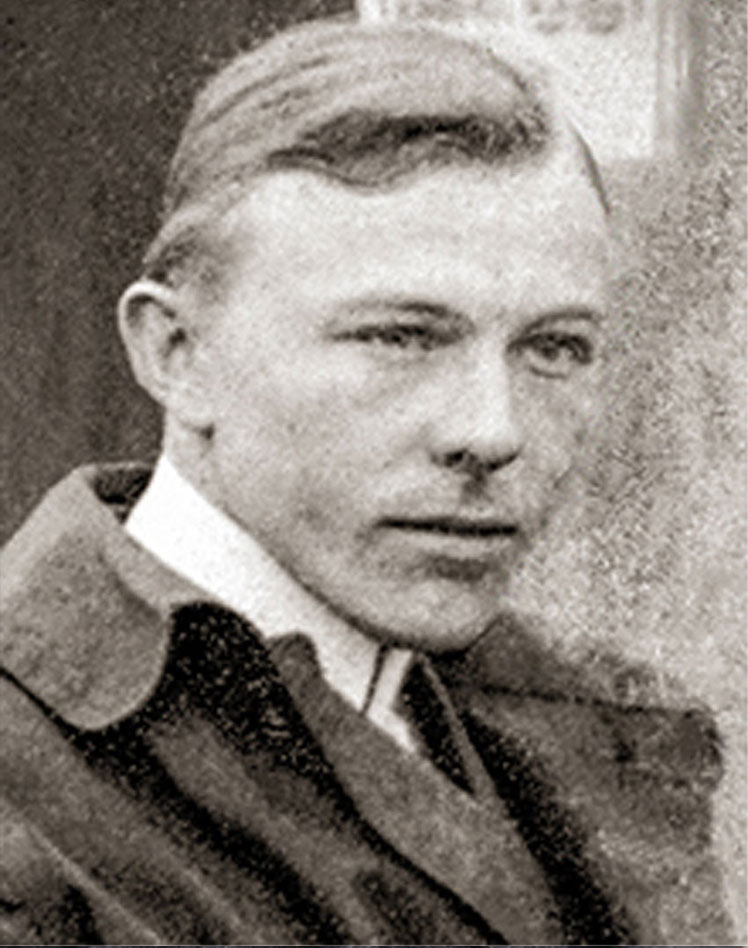
If F. Scott Fitzgerald truly modelled Jay Gatsby on the real-life bootlegger and mystery man Max Gerlach, were these rumours pure fiction? Or had someone, somewhere, actually suspected Gerlach of spying for the enemy?
The answer is startlingly simple.
Yes, they did.
Agent Grunewald
There is an eight-year period in Max’s life, starting 1912, when his exact location and activities are the subject of much speculation. This becomes clear in the report put together by Agent Harry W. Grunewald in the summer of 1917 and memorably uncovered by Kruse. After serving with the Atlantic Fleet at the Brooklyn Navy Yard and a shorter stint at the Brooklyn Navy YMCA, Grunewald had found himself being head-hunted by US Congressman and Democrat, Murray Hulbert.
Within weeks of being introduced to Hulbert he was being hired by Hulbert’s friend, Charles F. DeWoody, Chief of the Department of Justice Bureau in New York who gained some notoriety for helping boxer Jack Johnson escape a jail sentence for dating a white woman, and the far less progressive round-up of US Army draft ‘slackers’.
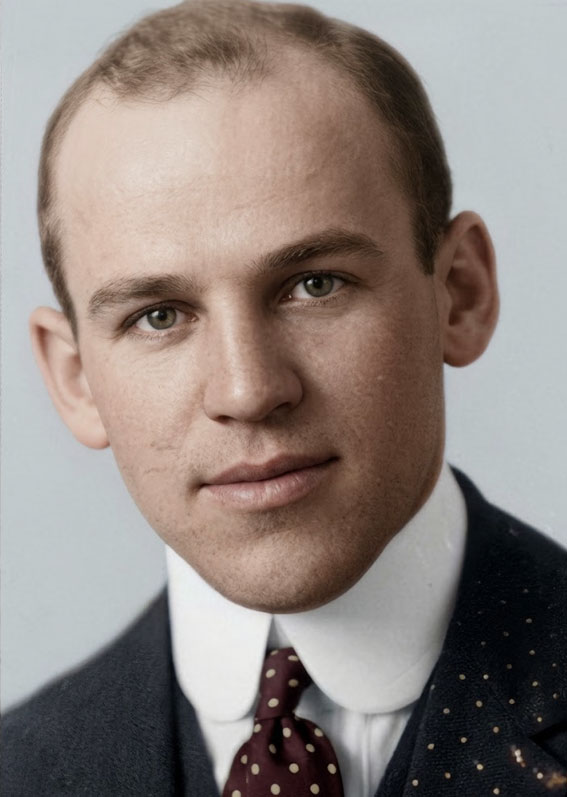
In April 1917, the tough-talking 27 year old began his work as an agent on $3.50 a day at its Bureau of Investigation in New York, his fluency in German and his broad knowledge of German affairs bagging him a leading role in tracking down German spies. According to Fred C. Kelly, a journalist come investigator who had assisted Grunewald in some of the Bureau’s more outlandish plots, the agent and his men had once been responsible for spiriting a way a vast collection of secret papers belonging to the German Embassy. For this the men had been forced to temporarily resign their commissions and burgle the Swiss Consulate where the papers were being held. Another plot had Grunewald impersonating a German agent to crack the cover of another German agent in Cuba.
Posing as friends, Grunewald and Kelly had lured the man’s wife to a fake office at Union Square and quizzed her about her husband. The wife is believed to have been so taken in by the pair’s performance that she blew the lid on everything. On another occasion the wonderfully talented ‘G-Man’, posing as a ‘Mr Grimm’ spearheaded a similar ruse on a deeply embedded German agent who was suspected of stealing navy and aircraft documents from navigations company, Sperry Gyroscope.
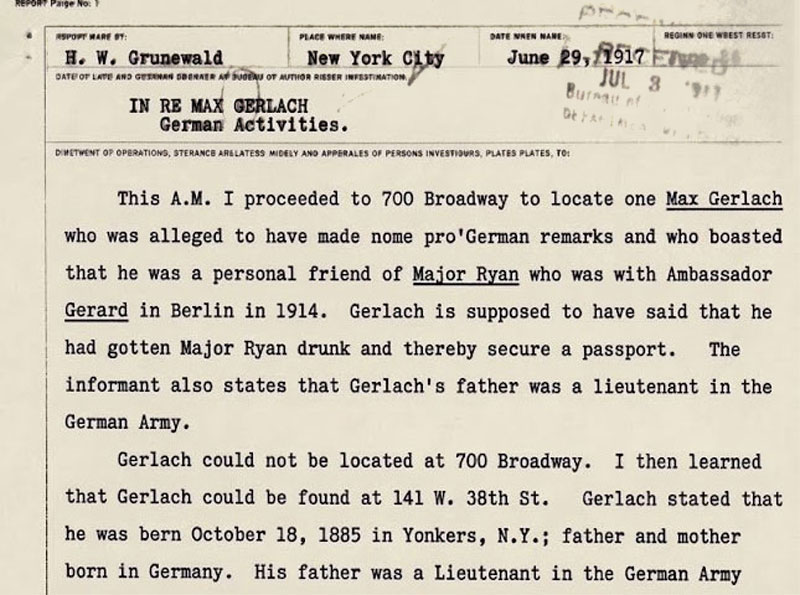
To all those who were on the right side of the law and the right side of the war, this unusually clever agent was known as a rough and tumble, two-fisted spy-hunter who was capable of being all things to all men — jovial yet stiff-jawed, creative but task-driven. One minute he could be smiling and cracking jokes, and the next he might very well have you in a headlock. It wasn’t some minor gambling or bootlegging offence that interested Special Agent Grunewald in Gerlach; he was attempting to cast some light on Gerlach’s ‘German Activities’.
Intelligence Report
It isn’t exactly clear what led him to Gerlach. The report merely states that Max was believed to have been expressing sentiments that might have been perceived as vaguely anti-American and how he had also been a personal friend of Major Ryan at the American Embassy in Berlin during the first six months of the war. Grunewald was unlikely to be in the habit of grilling every German-born American saying bad things about Uncle Sam, so it is probably safe to assume that his decision to question Gerlach was based on a more specific lead he was following up in one of his many spy-busting operations.
At the time that he compiled his report, Grunewald had been busy building a case against New York anarchist, Emma Goldman. Grunewald and the Justice Department had apparently come up with ‘evidence’ that showed that Goldman and her husband, Alexander Berkman had been cooperating with German spies in foreign countries to stir up rebellions in India. The ‘evidence’, which was typical of the time, chiefly consisted of Goldman’s objection to the British Raj and the anti-war message that she and Berkman were pushing at home. Nevertheless, a number of requests for aid made by Indian Nationalist Revolutionary, Har Dayal in Berlin, believed to have been found among letters at their home, were viewed as proof of ‘collaboration’.
As Grunewald looked into Goldman, he was also looking into several other notable figures in the Jewish-dominated Second Avenue, and it is quite possible that Arnold Rothstein was amongst them. The investigation would eventually bring Grunewald into contact with Broadway impresarios, J. L. Costello and Freeman Bernstein whose impressively broad network of contacts and distribution channels would help the Federal US Government thwart a plot by German spies. The spies, it was alleged, would place messages in movie-reels and then ship them to neutral Holland to communicate with agents back home. [1]
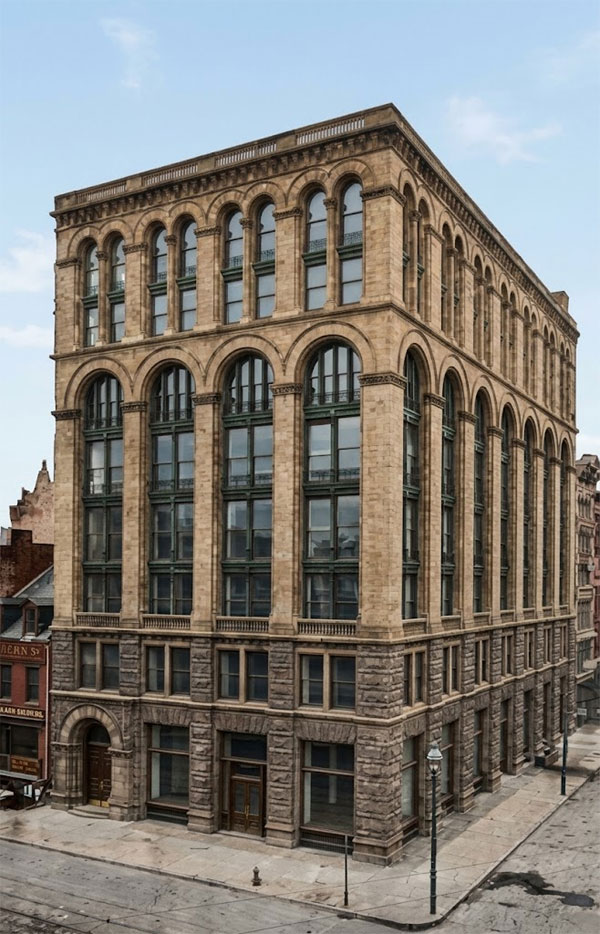
Grunewald’s attempts to speak to Gerlach at his 700 Broadway address in the summer of 1917 — a location that may have been linked to his motor business concerns with Rothstein’s legal counsel and ‘fixer’, George Young Bauchle — had proved futile. [2] A search was made of the premises, further associates were quizzed, but there was simply no trace of him. Grunewald had better luck at his address at West 38th Street, home of the New York Institute of Photography. [3]
The official report suggests that Grunewald’s investigation into Gerlach had been triggered by some ‘pro-German’ remarks that Max is alleged to have made. Who shared this information wasn’t specified in the agent’s report.
When interviewed, Gerlach very calmly cleared up any confusion about his birth, telling Grunewald that he had been born in Yonkers, New York in 1885 and that his father and mother had been born in Germany. When pressed about the change of his name his response was no less prosaic: his father had died and his mother had remarried. Max’s story seemed so straightforward. In 1913 he had gone back to Germany and returned the following year. The extent of his ‘German activities’ consisted mainly of visiting relatives. The next bit was a little more interesting. Max confirmed that his father, Ferdinand Gerlach, had indeed been a Lieutenant in the Royal Prussian Army as Grunewald’s informant had alleged.
A report compiled by the American Protective League the following year added a few more details. According to Gerlach, his father had served as some kind of ‘secretary’ in the Royal Court of Friedrich III — the father of Kaiser Wilhelm. It may have all seemed a little grey and unsensational, but what Max was telling Grunewald was a confusing mixture of truths, half-truths and plain old lies. According to research undertaken by Professor Kruse in the mid-2000s, Max’s father does appear to have served Friedrich III in some capacity.
Records retained from the archives of the German Royal Court reveal that a Ferdinand Gerlach served as Geheimer Kanzlei-Sekretar (Inspector of the Secret Chancellery) in the Ministry of the Royal House of Hohenzollern in Berlin sometime between 1874 and 1877. If it was anything like the Secret Chancellery of Austria or Imperial Russia, then the ‘Geheimer Kanzlei’ was the seat of espionage and state police — the department of intrigue. Extraordinarily enough, the one thing that Max seemed a lot more anxious to lie about was the country of his birth. Gerlach had not been born in America but in Germany.
Gerlach did, however, confess that he had been back in Germany as recently as 1913 and 1914. Although the report fails to identify the exact reason for Gerlach’s visit, it does tell us that he secured his passport back to the United States through his friendship with a Major James A. Ryan, an associate of Ambassador Gerard at the US Embassy in Berlin. After spending some 12 months in Berlin, Gerlach says he applied for his passport back to the US in August 1914. [4]
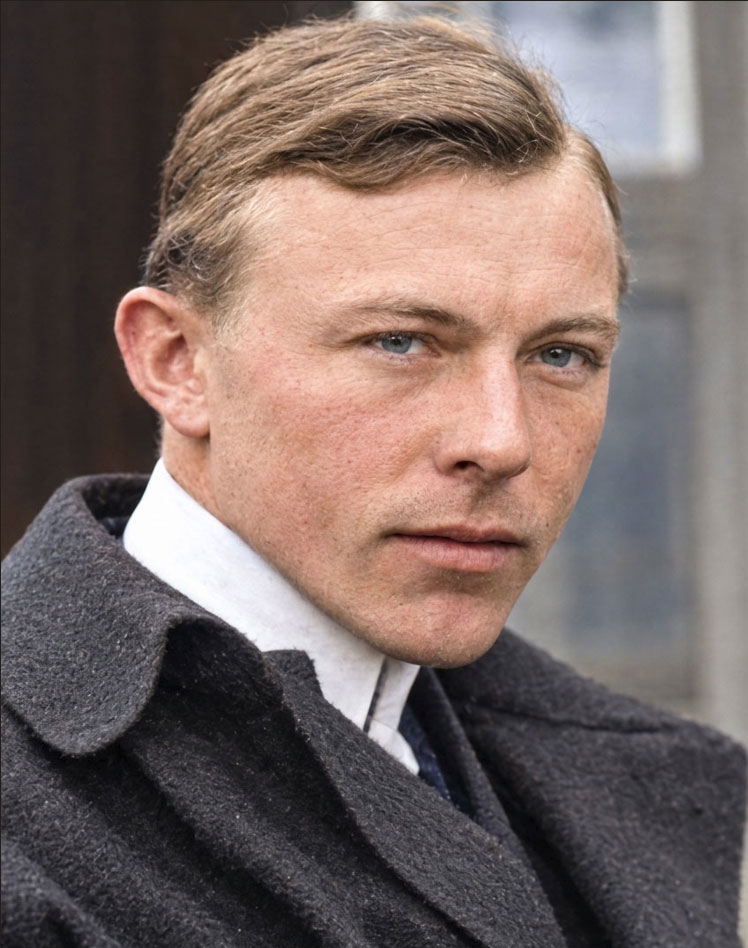
According to travel records, Gerlach left Berlin in October 1914, spending some three weeks in Great Britain before continuing his journey back to the United States. The ship manifest for the trip on the SS Devonian shows that Max left Liverpool for Boston on October 1st. Accompanying him on the journey was 23-year old music student, Mary L. Morrison. [5]
There are two reasons that we know the pair travelled together. The first reason is that Gerlach uses the young woman’s home address for his passport application: 309 Sterling Avenue, Joliet, Illinois. The very same address appears in the US census of 1910 and shows Morrison, a ‘musician’, living here with her parents. [6] On the ship manifest Max A. Gerlach lists himself as ‘broker’ but enters ‘German’ in the field marked ‘race’. Why Max did this isn’t clear, but it may be a subtle indicator of where his loyalties lay in the first few months of the war.

Some, but not all, of the details regarding Gerlach and Mary Morrison are repeated in a newspaper report that the pair featured in upon their arrival in Boston. On October 11, the Boston Sunday Post told the grim and tragic story of how 49 year-old Annie Robinson — a survivor of the Titanic disaster — was presumed to have drowned in the last hour or so of the journey. It is believed that poor old Annie had jumped into the water as the SS Devonian had entered port after its 3,000 mile trip from Liverpool to Boston.
According to the press report, the ship had started groping through a dense, unsettling fog in the last few hours of transit. It was speculated that Annie, perhaps restless and agitated by the sounding of the ship’s horn and by memories of the Titanic, may have panicked and fled the ship. It was only her absence at the breakfast table that alerted the Captain that anything untoward had happened. Nobody witnessed the leap, but the Captain had concluded that it was the only possible explanation. After the Titanic disaster Annie’s daughter Gladys had settled in Boston with James E. Prentis, son of the former American Consul, Thomas Theodore Prentis.
She was on her to see her at the time of the incident. It was only Annie’s absence at the breakfast table that alerted the Captain that anything untoward had happened. Nobody witnessed the leap, but the Captain had concluded that it was the only possible explanation. The press report went on to describe how the vast majority of passengers were Americans who had managed to secure their passage to the United States as part of the American Relief Fund.
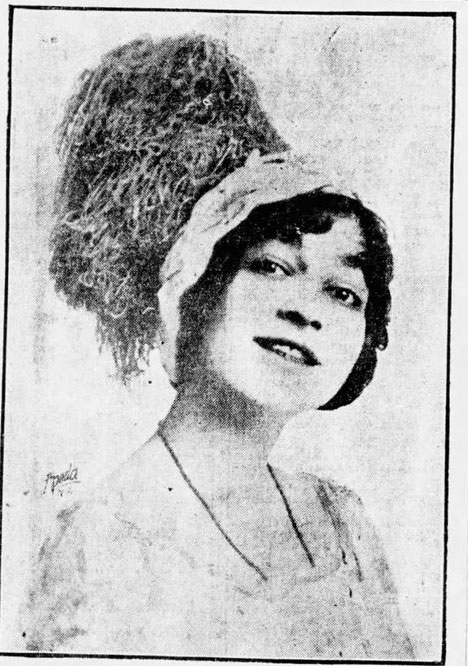
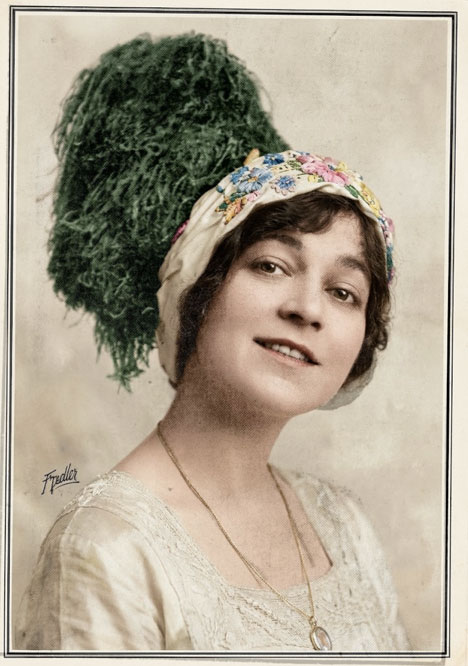
Some four months earlier war had been declared, and many of those sailing had been caught in the crossfire in Europe. Among the people interviewed by reporters as the passengers disembarked in Boston were Max A. Gerlach of New York and Mary L. Morrison of Joliet — both of them described in the article as “music students in Berlin”. [7] What happened between Max’s return from Berlin in October 1914 and Grunewald’s investigation in June 1917 isn’t known.
The only clue about Max’s activities between October 1914 and enlisting with the US Army in August 1918 are the references he provides from two known Rothstein associates: Judge Aaron J. Levy and George Young Bauchle, the gangster’s partner at the Partridge Club and high profile attorney among the ‘Old Money’ families of New York. The employment record that Max enters on his Army Application ends rather mysteriously some six years earlier in 1912.
It’s more that he was a German Spy During the War
F. Scott Fitzgerald places no small amount of emphasis on rumours of spying in the Gatsby novel. At Gatsby’s parties, guests exchange furtive, short-breathed rumours about his possible wartime adventures. In dramatic terms, it was the verbal equivalent of puffing out a toxic cloud of smoke and asking his readers to pick shapes from it. Some say that Gatsby spied for Germany during the war and some say that he’d killed a man once. Others, who claim to have known him growing up in Germany, insist that he is either a cousin of Kaiser Wilhelm or a nephew of Paul von Hindenberg, the former General of the German army who was poised to become President at the time the novel was published.
There’s no denying that Gerlach himself had done much to contribute to the various rumours flying around about his loyalties during the war. When agents acting on behalf of the American Protective League spoke to his character witness, George Young Bauchle, Bauchle claimed that Gerlach had once shown him a signed-photo of composer Richard Wagner, possibly the most iconic symbol of German Nationalism outside Adolf Hitler.
Gerlach alleged that the picture had been signed personally by Wagner for his father, Ferdinand von Gerlach, when he was acting as secretary in the Secret Chancellery of Frederick III. In Imperial Russia, the Emperor’s ‘secret chancellery’ — or the Geheimer Kanzlei as Kruse describes it — was a dreaded organization consisting of spies and spy handlers, men and women who would have the unenviable task of keeping tabs on royal subjects.
The combination of Wagner and Privy Councils makes it all sound tantalisingly Machiavellian and full of fabulous intrigue, but maybe the House of Hohenzollern was very different to that of the Romanovs. The notion that Gerlach’s father was some glamourous ‘master spy’ is an attractive one, but there is no firm evidence to support it.
It wasn’t the last time that Max would reaffirm his roots to Imperial Germany. When approached by a reporter during a flight at Westfield International Airport in April 1930, Gerlach would present himself as a “former German Royalist”. [28] Rumours of German spies were rife during the war. Not even the singers and musicians that Max was associating with in Berlin and Manhattan were immune. A report in Musical America in June 1917 spelled out the scale of the problem the singers were facing, Dr O.P. Jacob writing that that he had been struck “by the persistency with which the rumour, ever and anon, crops up that many German artists, opera singers by preference, are nothing less than German ex-officio, secret service agents.” [29]
The rumours of spies operating beneath the veil of opera and musical theatre had arrived the same month as Agent Harry Grunewald and the Bureau of Investigation started compiling their report on Gerlach. His friends and associates on the Berlin music scene, like Mary L. Morrison and Alice-Peroux Williams — whose son Hallam would plan to write about about Gerlach — can’t have failed to trigger some general interest, but equally, it may well have been prompted by something more specific.
Sure enough, the report, which Grunewald completed on June 29, 1917, just happened to coincide with news that leading New York Opera singer, Edyth Wilson, was presently on a tour of Berlin, Munich and neutral territories like Holland, pushing a peaceful, if pronounced, pro-German message.

The news chimed with the previous efforts of Alice-Peroux Williams and Paul Knüpfer to bring about an amicable understanding between America and Germany “by deeds rather than words”. The idea of an “entente cordiale” might have seemed harmless enough when America was taking a neutral stance in the war, but the sentiment would have been deemed undesirably unpatriotic as the US started mobilizing its troops against Germany in May 1917.
The man accompanying Edyth Wilson on the tour was her musical director, Herr von Gerlach. A report in Musical Courier in February 1917 revealed that Wilson would be among several stars from Berlin and Munich who were scheduled to give a performance at The Hague under the direction of Intendant von Gerlach. [30] The concert, curiously enough, was based around the work of Wagner, the composer that Wilson had become most famous for popularising in America and Europe.
Contrary to what you might think, ‘Intendant von Gerlach’ appears not to have been Max Gerlach. The Intendant was Berlin-born Arthur von Gerlach, an Opera House aficionado who was lending his support to the German Foreign Office in their diplomatic efforts with America and the neutral territories. Nevertheless, word might have gone around that the pair were related.
There are several questions worth asking: was it possible that Max Gerlach was trading on some alleged (or real) family association with Arthur von Gerlach during his musical time in Berlin? Had Max inveigled his way into the operatic circles at the Embassy with the intention of gaining monetarily from these contacts, for the purpose of intelligence gathering? Was it in Berlin that he had got the autograph of Wagner and not, as he told Bauchle, as an heirloom from his father when he was in the service of Friedrich III?
More Trips to Germany
Max, as it happens, continued his trips to Germany well into the 1930s. On one of those trips he can be seen travelling with wealthy widower Estelle Rolle. On May 7, 1931 the pair set sail on the S.S Hamburg from Hamburg. Details on the ship manifest reveal that Gerlach was then living at the prestigious New York Fraternity Club. His stay there couldn’t have been any more ironic, coinciding as it did with a raid by baton-wielding prohibition agents — the first raid of its kind in a private club. [70] Rolle, meanwhile was residing in St Albans in Queens. [71]
Just twelve months earlier, Gerlach and Rolle had grabbed the headlines when their small auxiliary yacht, the Zara was lost for eight days at sea. The battered schooner was eventually picked-up 45 miles northeast of the Virginia Capes and towed back to berth in the Municipal Boat Harbour near Newport, Virginia. The boat had set off from the Marine Basin, New York on November 26 for Miami, intending to stop at Hampton Roads for supplies. It appears that a wild storm had blown in and taken the intrepid pair 500 miles off course. Gerlach, who captained the vessel, told reporters how he had signalled a coast guard vessel, assuring them that they had no liquor on board “but needed plenty of help.” [72]
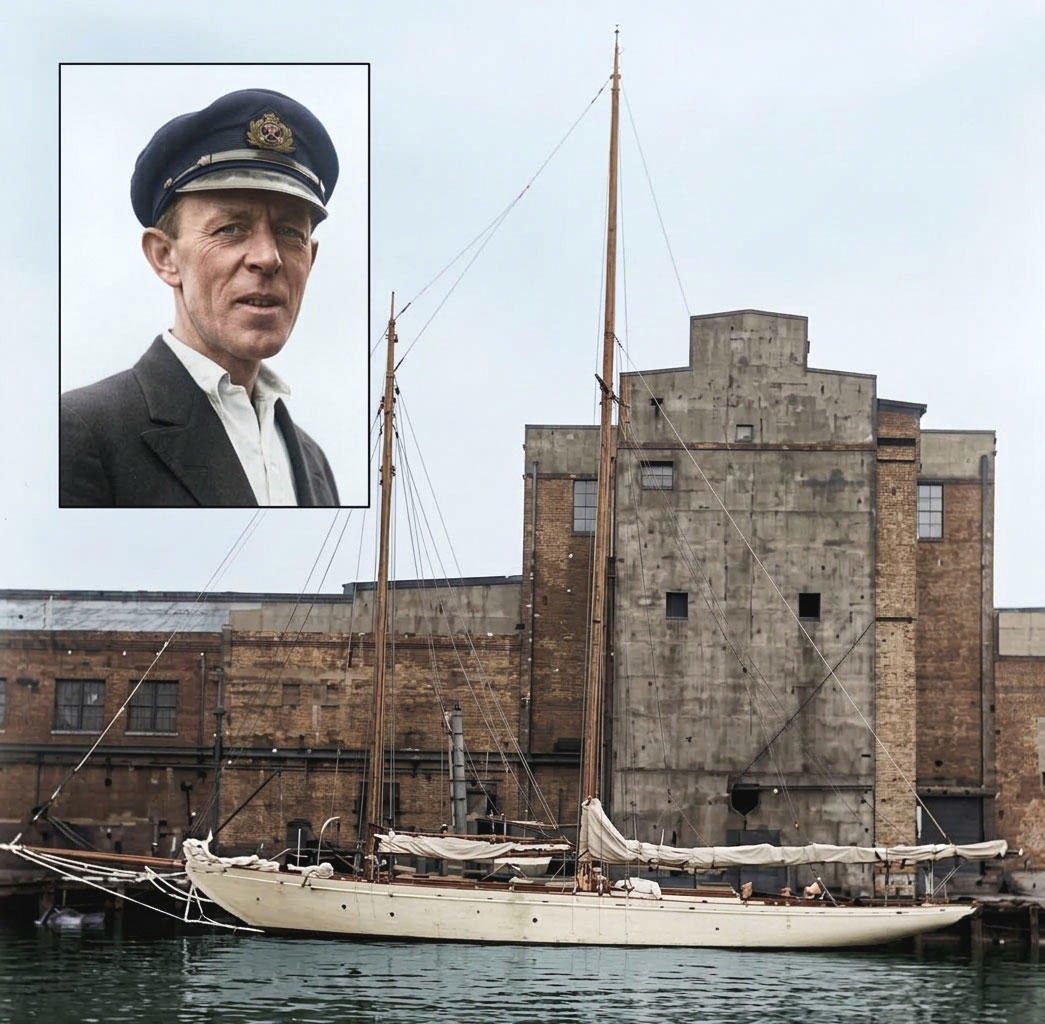
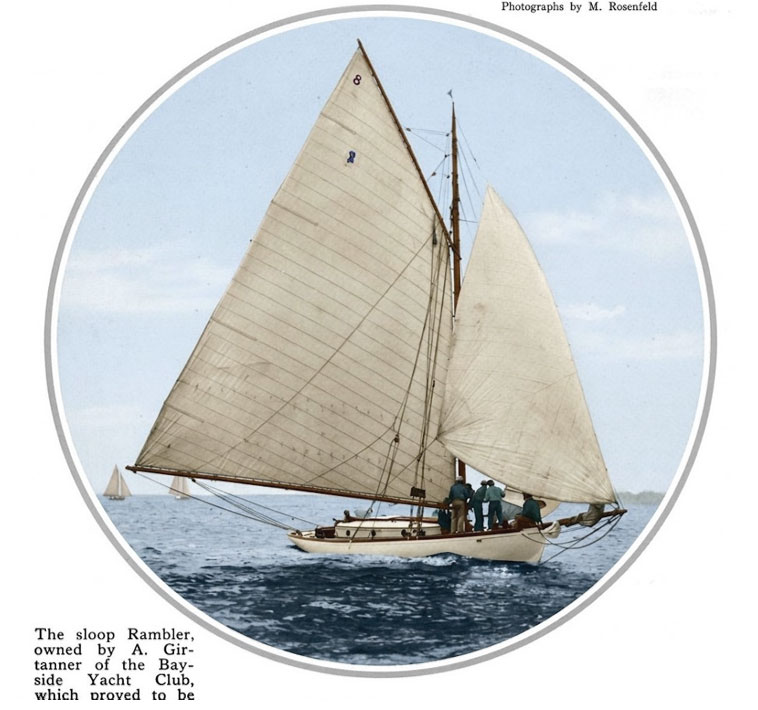
Although the news report suggests that Max’s yacht, the Zara was owned by Mrs Rolle, the Lloyds Register of American Yachts has no record of a yacht by that name owned by either Rolle or Gerlach. Pat Schaefer, a researcher at Mystic Seaport tells me that there was a sloop Zara in the 1930 Register, designed and built by Herreshoff, but unlike Rolle and Gerlach’s yacht, it was not powered. However, the same Lloyds Register reveals that there was a Max Gerlach listed as the owner of Rambler (formerly, Ramallah) which was an auxiliary sloop, 44’6″ (32′ waterline) x 12’6″, designed by Henry Read and built by Read Brothers of Fall River, Massachusetts in 1896. The owner was logged as Max Gerlach of Bayside, Long Island.
The Rambler’s former owner was Alex Girtanner, also of Bayside and prominent member of the Bayside Yacht Club. [73] Among Girtanner’s former neighbours on his ‘Old World’ Freeport Bay estate was German aristocrat and flying enthusiast, Baron von Beaulieu-Marconnay of Hildesheim. The Baron’s wife Betsy was Broadway stage star, Marise Naughton. Just several months before the yachting incident, ‘Baron Max von Gerlach of New York’ had been telling reporters about his days as a pioneering aviator at Westfield International Airport. [74] Whether Max was using the story as a means of inveigling his way into yachting and flying circles of von Beaulieu-Marconnay is anyone’s guess.
Mrs Estelle Rolle is an interesting figure in the broader context of Gerlach’s Long Island adventures. In April 1927, Rolle had lost her husband, Edward F. Rolle in a tragic car accident. According to a report in the New York Times, Edward, a chief buyer for the McCrory chain store, was thrown from his car after skidding into a lamppost as he was driving home to Great Neck. It seems he had been playing golf at the nearby Soundview Country Club and was speeding back home to his wife when the accident happened. [75]
Just a few years earlier, Edward and his wife had purchased the famous Gracefield Estate, previously owned and built by William Grace, the first Catholic Mayor of New York. Grace was the man who had personally received the Statue of Liberty to New York from Paris in 1885. There was a poetic kind of aptness about it. Not only was it the year of Gerlach’s birth, it was also the year that Scott had originally intended setting the Gatsby novel. Look over a Google map today and you will spot ‘Gatsby’s Pool’ (now closed) where the estate once stood at Gracefield Drive, Kings Point.
In 1937 there is a record of Herr Max Gerlach travelling first class to Hamburg on the Hansa. Immediately above him on the list is Herbert Blankenhorn. At the time that he made the trip, Blankenhorn was serving as private secretary to German Ambassador, Hans Luther at the German Embassy in Washington. Blankenhorn, who doesn’t appear to have joined the Nazi Party, was later credited as being part of the Nazi-Resistance. The trip was taken as a temporary leave of absence from his role in Washington.

Had it not been for information that has come to light only very recently, it would probably have been fair to regard Gerlach as some tragic, house-bound invalid after blinding himself in his botched suicide bid in Greenwich Village — a sad and ageing dreamer scraping a hand-to-mouth existence on the vaguely appetising scraps of the past. However, Max’s regular first-class flights to Havana and his adventures with Hallam Keep Williams in the spring of 1950 suggest that this was almost certainly not the case. To what extent he was incapacitated is likely to remain unknown, but if there’s one thing we can take away from all this, it is that the 65 year old Gerlach was still pursuing life with a enthusiasm and resilience most folk don’t even possess at twenty.
[1] Hustling Hitler: the Jewish Vaudevillian Who Fooled the Führer, Walter Shapiro, Blue Rider Press, 2016, 210-215
[2] There is some indication that prestige cars were being bought and sold at this address in 1917. See: The New York Times February 9, 1917, p.18 (Van Dyke autos)
[3] ‘Situations Wanted, Men — Earn Big Money’, The New York Times December 16, 1917, p.4
[4] F. Scott Fitzgerald at Work, Kruse, pp.29-33
[5] Max A. Gerlach/Mary L Morrison, Massachusetts, Boston Passenger Lists, 1820-1943, Passenger Lists of Vessels Arriving at Boston, Massachusetts, 1891-1943, SS. Devonian, 1914
[6] Mary Louise Morrison, born 1890, US Census. Her parents are Angus and Flora Morrison. Both Scots Gaelic, originally from Canada.
[7] ‘Titanic Survivor Jumps from Liner’, Boston Sunday Post, October 11, 1914, p.3. The SS Devonian made the return trip to England with several hundred horses for the British Cavalry Regiment.
[28] ‘Flies Again’, The Courier News, New Jersey, April 1, 1930, p.10
[29] German Opera Singers in America Victims of False Spy Rumours, Musical America, June 9, 1917, Vol 26 Iss 6, p.44
[30] ‘Wagner at Dutch Capital’, Musical Courier, February 8, 1914, Vol 74 Iss 6, p.7
[71] Estelle Rolle/Max Gerlach, Hamburg to New York, New York City Passenger Lists, 1820-1957, May 7, 1931
[72] ‘Yacht in Port After Fierce Fight with Raging Waves’, Daily Press, Newport News, December 7, 1930, p.1, p.2
[73] Email, Pat Schaefer to Alan Sargeant, July 27, 2023 3.23pm, Collections Access and Research, Mystic Seaport. Bayside is located at Little Neck Bay, is just a few miles west of Great Neck in Queens. Girtanner regularly entered the boat in the Block Island Race.
[74] ‘Flies Again’, Courier News, New Jersey, April 1, 1930, p.10
[75] Obituary, Norwich Sun, May 11, 1931, p.31; ‘Freeport Home Purchased by Baron’, Nassau Daily Review, May 7, 1927, p.1. Estelle died in Miami having never remarried in 1971. In December 2024 I learned that Estelle had been living in the same Great Neck Estates village as Scott and Zelda during the 1921-1925 period. Details of this and more to be published separately.