During research carried out for the eight-part Audible podcast, American Dreamer: Who Was Jay Gatsby?, veteran New York journalist, Joe Nocera shared some tantalising new information. A brand new report had come to light. According to a story published in the San Francisco Call in April 1950, ‘Baron Max von Gerlach’ had arrived in Havana, Cuba with “the eccentric Hallam Keep Williams.”
Despite the report being no more than 40 words in total, the newspaper had a bombshell claim: the 65 year old Gerlach had been the original inspiration for the hero of The Great Gatsby and Williams was going to write a book about the Baron “that would top Fitzgerald’s famed work”. [8]
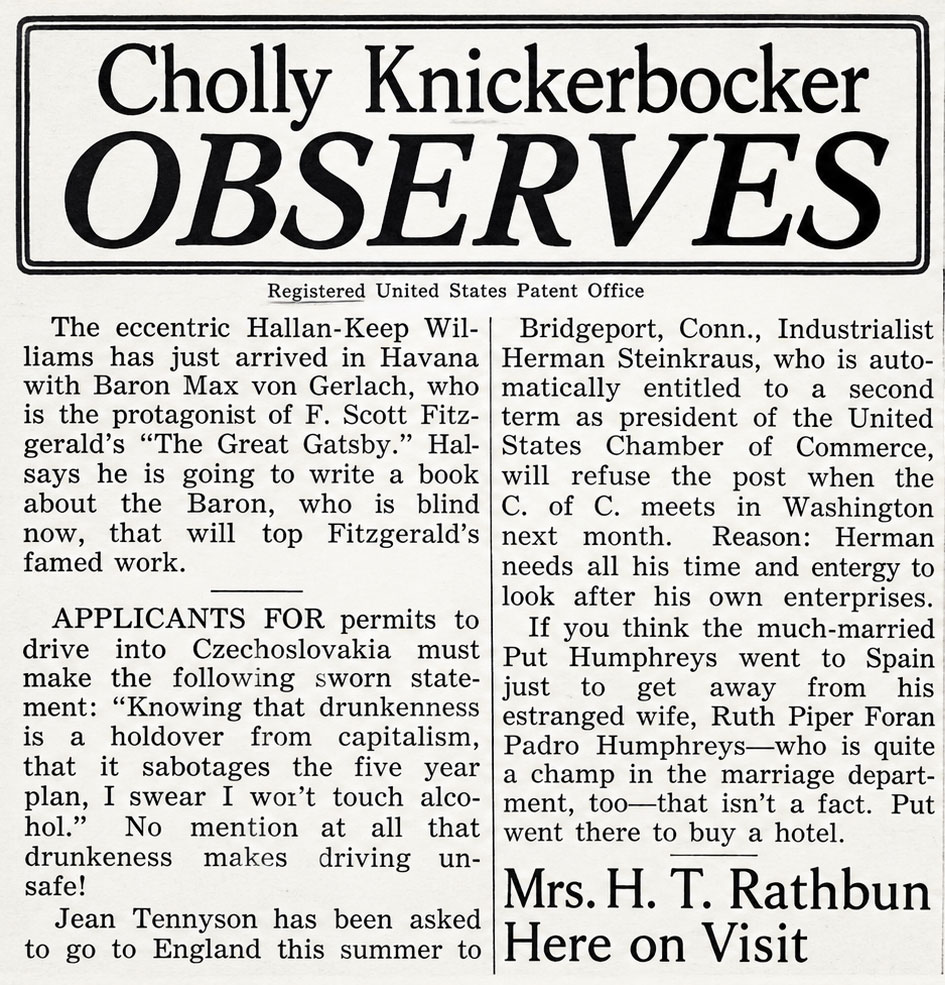
The news came just three years after Zelda Fitzgerald is alleged to have told Princeton researcher, Henry Dan Piper that some Teutonic-looking bootlegger called ‘Guerlach’ had been the inspiration for her husband’s fictional creation, Jay Gatsby. It also came hot on the heels of the 1949 movie remake of the novel starring Alan Ladd and Betty Field. Ever since the novel had been republished for American troops in 1945 there been a sharp revival in interest. If ever there was a good time for Max to tell his story, it was now.
The man behind the Gerlach story was ‘Cholly Knickerbocker’, the pseudonym used by powerful ‘smart set’ gossip-columnist, Igor Cassini for New York Journal-American, a paper owned by his one-time father-in-law, William Randolph Hearst. Cassini, an aristocratic Russian whose grandfather had served as Russian Ambassador to Washington at the time of Theodore Roosevelt and William McKinley, would eventually face criminal charges for having failed to register his interests as a paid agent of Spanish dictator, Rafael Trujillo and the Dominican Republic. The dictator, whose autocratic empire had been built-up partly in collusion with Arnold Rothstein’s men, Frank Costello and Meyer Lansky had been a thorn in the side of America for years.[9]
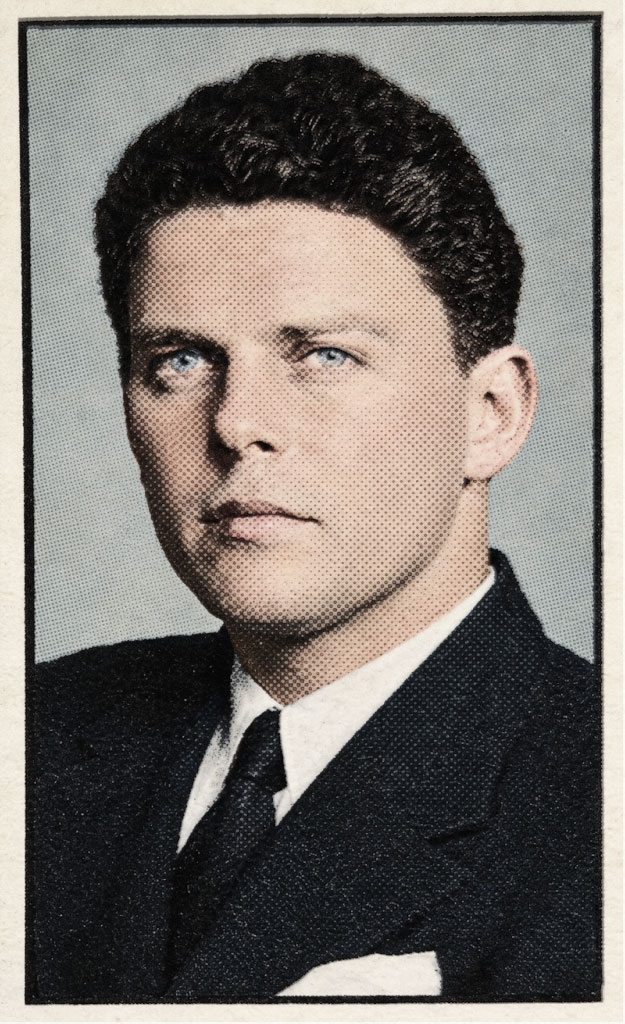
According to reports compiled by the FBI in 1943, Cassini, an uncompromising anti-Communist, had been in receipt of a number of grace and favour benefits from General Manuel Benitez — then serving as head of the National Police in Havana — and several other Cuban notables. Rumours were also circulating that ‘Cholly’ had been voicing ‘un-American’ sentiments. [10]
Cassini reviewed the trip in his 1977 autobiography, ‘I’d Do It All Again’, rejecting any suggestion that he had been expressing unpatriotic views and pointing out that he had been invited back to Havana under President Eisenhower just a few years later. Cholly’s host on that second occasion, the US Ambassador, Earl E. T. Smith, did, it must be said, share the columnist’s abject loathing of the Liberal-backed dictator, Fulgencio Batista, and so he was there amongst good company.
Gerlach made numerous trips to Havana over the years — invariably arriving at times of political or social turmoil or transition. This time was no different. Cassini tells us that Gerlach had arrived with the 43-year old eccentric playboy, Hallam Keep Williams in mid-April, but this wasn’t the only trip that Gerlach had made to Havana that spring. Max appears on a flight manifest dated March 26th 1950, travelling back from Havana to Idlewild International Airport in New York. When Gerlach booked the flight, the airline, Linea Aerospostal Venozolana (LAV), had been promoting itself in ads as a ‘luxury’ direct flight linking New York with Havana and the sunny Venezuelan capital of Caracas.
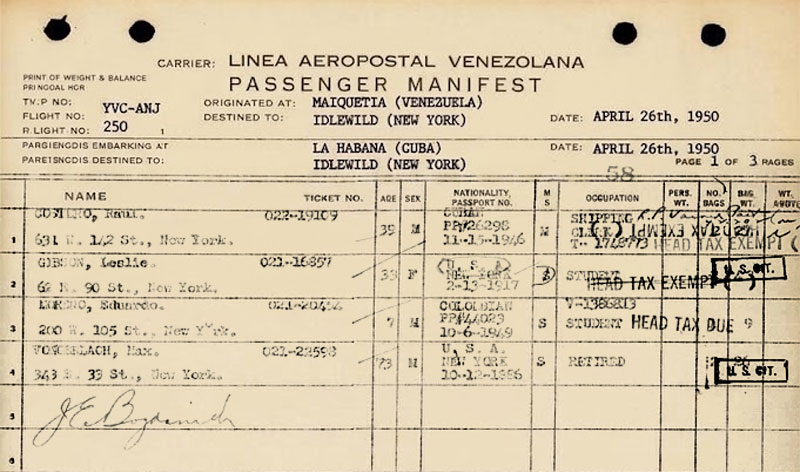
Money must have been no object to Gerlach, because no sooner had he arrived back in New York in March than he was back in Havana with Williams again in April. It is equally interesting to note that ‘Baron’ Gerlach and Hallam Keep Williams had arrived in Havana just in time for the First Inter-American Conference for Democracy and Liberty, a series of talks and lectures that had been organised to promote the ideals of American democracy to its South American neighbours. As Batista’s corrupt government began to show signs of collapse and the warlords moved in, America was keen to promote credible alternatives to fascism, communism and the oligarchic dictatorships of military strongmen like Trujillo. [11]
A few years later, Igor Cassini, still writing as Cholly Knickerbocker, would recycle the whole ‘Inter-American’ brand for his pro-Trujillo lobbying agency, “Inter-American Public Relations Ltd” — a clear attempt by Cassini and his friends to wrestle the spirit of pan-Americanism from the arms of the American Left and Roosevelt’s New Dealers. It is not without some irony that Max von Gerlach, the man who was promoting himself as the patron saint of the American Dream, Jay Gatsby, had found himself in Havana just as America was planting the seeds of the dream in the poor, ungiving soils of South America. With the release of the Paramount remake of Gatsby starring Ladd the previous summer, the time had never been more ripe. [12]
Berlin 1914 – Max at the Opera
Based on Joe Nocera’s discovery about Gerlach and Hallam Keep Williams, I was able to determine that Hallam’s mother was Alice Peroux-Williams (aka Alice Perew Williams, b.1871), an American opera singer who was active in Berlin at the same time as Max Gerlach. Records show that Alice, a gifted mezzo-soprano singer, had separated from her husband, the Buffalo-based stockbroker, Gibson Tenney Williams, shortly after the birth of Hallam in 1907. In 1909, Alice moved the family to Berlin, where she resided for some twenty years or more, returning only occasionally for concert tours of the States and special shows at the Carnegie Hall. [13]
In 1914, Hallam’s father Gibson married his second wife, Rhode Island music student and teacher, Florence Alice Smith (b. 1881) in Rochester in England after spending the previous five years shuttling between London, Germany, Italy and New York. They tied the knot on July 22, just six days before the outbreak of war. Gibson and his wife left Britain and returned to Germany sometime in late October. It was their intention to spend the winter in Munich, away from their base in the Bavarian alps. [14]
Gibson’s time in Munich was marked by a new diplomatic crisis, when Irish-American Nationalist, Thomas St John Gaffney was forced to resign his role as US Consul General in Munich for expressing frank pro-German sentiments. It was also alleged that Gaffney had links to human rights activist, Sir Roger Casement. Back in Britain, Casement had been charged with high treason for the role he was believed to have played in the shipment of illegal arms between Germany and Irish Nationalists. [15]
On October 14 1914, Max Gerlach arrived in Boston aboard the SS Devonian with music student, Mary L. Morrison after a stay of some three weeks or more in London. Gibson Tenney Williams, the father of Gerlach’s friend Hallam, returned briefly to the United States in the autumn of 1917 when he gave a series of lectures to students revealing the ‘bare truth’ of the ongoing war in Europe and the true nature of conditions in Germany, France and Switzerland. [16]
According to Professor Kruse, Gerlach was in England at least twice during this period. A passport application from 1916 states that Gibson first arrived in Germany in November 1913. The place that he made his home was Oberammergau, a tiny Catholic enclave on the Austrian-Swiss border. [17] When America entered the war in 1917, Gibson surrendered his services to the American War Relief Society of Geneva, then operating under the auspices of the American Red Cross. [18] A news item from the Harvard Graduates Magazine of September 1917 gives his forwarding address as the Société de Crédit Suisse in Zurich. [19]
Whilst there is no actual record of what Gerlach was doing in Germany during the 1913 to 1914 period, it is curious to note that the name ‘Gerlach’ features on a photo of Alice Peroux-Williams that appeared in the Musical America journal dated May 1914, some several months before Max returned from Germany when both of them were in Berlin. [20] In light of the fact that Max was cavorting in Havana with Alice and Gibson’s son Hallam in April 1950, it seems likely that Gerlach was known to Hallam Williams and his family as early as 1913/1914, and that they had probably kept in contact throughout their lives.
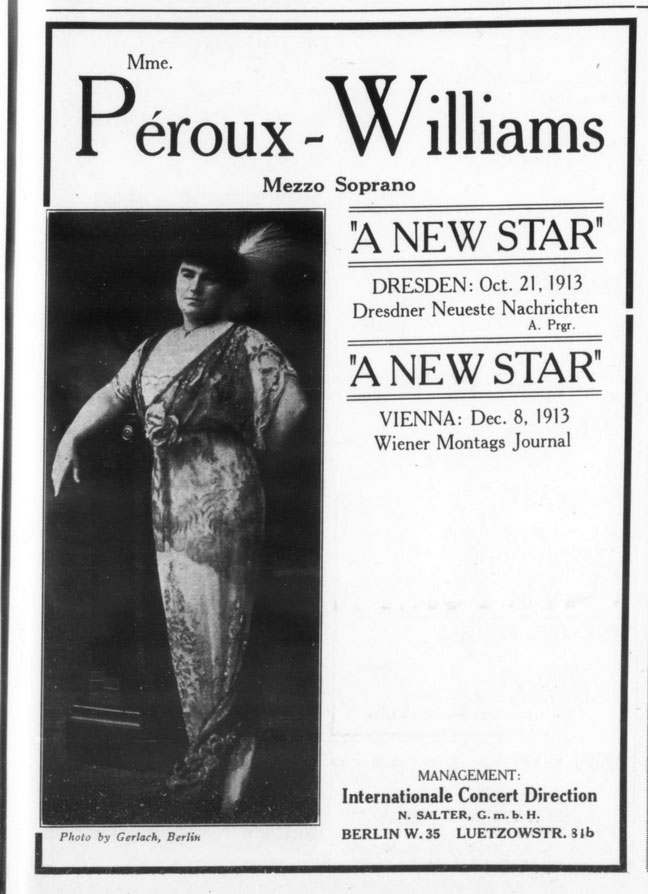
Other items that appeared in the European Press during the 1913-1914 period suggest that Hallam’s mother was a popular and respected figure within the ‘American Colony’ that was ringing American Ambassador, James W. Gerard, at the US Embassy in Berlin. This is interesting in several respects as the investigation into Gerlach’s German activities performed by Harry Grunewald and the Justice Department in July 1917 reported that Max’s passport application had been secured through his personal familiarity with Major James A. Ryan, a close adviser to Ambassador Gerard in the Embassy staff. According to Grunewald’s report, Ryan was residing at the Hotel Kaiserhof in Berlin at the time that Max secured the passport.
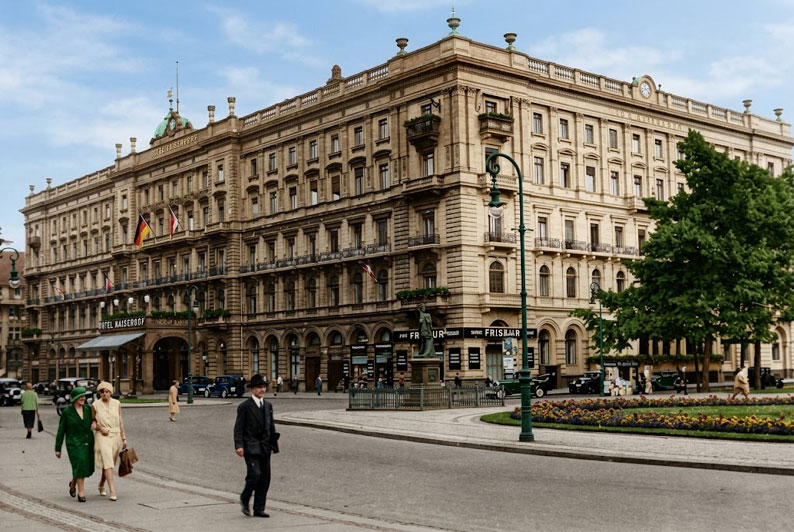
A report compiled by the Operations of United States Relief Commission in Europe confirms that James A, Ryan was conducting his relief effort from the hotel during this period. [21] Coincidentally, records show that Gerlach and Peroux-Williams had both completed their passport applications on August 3rd, 1914 — although they appear to have travelled back to the United States separately — Alice setting out on her journey alone in March 1915 and Max with student singer/ musician, Mary L. Morrison in October 1914. [22]
In January 1914, Ambassador Gerard had been forced to issue a strong defence of the morality of American singers and musicians after an article in Musical America suggested that the women were exposing themselves to corruption and exploitation. The journal, owned by British-born American, John Christian Freund, said the girls were exposing themselves to danger by being in Berlin unchaperoned. [23] The fears that Freund was expressing may have been spurred in part by concerns over blackmailing and spying in the months leading up to the war. A spy-mania had gripped the country, and the nation responded by closing its borders and introducing super-tight regulations on those entering and those leaving the country.
Gerard, a neutral envoy who was representing British interests in Germany at this time, would subsequently describe how travellers would be herded onto trains and at every port and transit point would have their particulars triple-verified by non-commissioned officers as the genheim-Polizei (secrete police) looked on. Unless one’s credentials were particularly strong you would then endure a strip-search. Every item of clothing would be held up to a strong-light so that any hidden messages sewn into the lining of the clothes would be exposed. Every bottle would be examined, every food container opened, and every suitcase, bag or portmanteau inspected for false sides, tops and bottoms.
Precisely eleven separate operations would need to be completed before anyone could leave the country: several visits to the Police precinct would have to be made, questions answered, particulars checked, friends and associates called to verify your identity, and questionnaires filled-out. This would be followed by a similar procedure carried out by the Polizei-Praesidium — a series of four separate visits to seven different offices lasting the best part of a week. As Gerard explained, the method of making travel difficult had been reduced to an almost scientific formula — a process that would almost certainly have been reciprocated in America. Gerlach’s application for a passport back to the States that August must be viewed in this context.
Shortly after war in Europe had been declared, thousands of Americans, many of whom had not taken the precaution of travelling with passports, started lining up at the doors of the Embassy in Wilhelm Platz. Demand was such that even an eleven year old boy was recruited to help sort the papers. Trains were laid on to get citizens out of Berlin on a dedicated relief line that ran from Charlottenburg Station via Switzerland, Munich and Carlsbad to Holland and from Holland to England. Major Ryan had recently arrived as head of the relief and repatriation mission, taken up residency at the Kaiserhoff Hotel and it was down to Gerlach to get to know him.
When Ambassador Gerard returned to America in the first months of 1917 he co-wrote a Pulitzer Prize winning book called Inside the German Empire with the New York World’s Herbert Baynard Swope. In the book, Gerard shares his first-hand impressions of the economic, political, spiritual and military conditions that helped sustain the German nation in the first three years of the war, making special mention of the mass of bureaucratic hurdles that all Americans faced in their bid to get back home.
Although Gerard and his wife had a social network that extended all over Long Island, it would be Swope’s parties that Scott and his wife Zelda would attend in Great Neck. It wasn’t simply Scott’s proximity to Swope in Great Neck — Scott and family on Gateway Drive and Swope on East Shore Road — that drew the pair into each other’s orbit, it was Swope’s close personal and professional relationship with Scott’s main drinking buddy, Ring Lardner. The newspaperman also had a deep, abiding friendship with Gerlach’s Speakeasy patron, Arnold Rothstein and his wife Carolyn.
At around the time that Max was managing Rothstein’s speakeasy at No. 51 West 58th Street, Swope was renting a city apartment at No. 135, and Rothstein was living in one at No. 145 West 58th Street. That’s how cosy the pair had become. [24]
Although divorced some several years, Alice and Gibson Williams would both provide talks on the ‘truth’ of the situation in Europe on their occasional trips back to the United States. In February 1915, Musical America reported that Alice was now striving to bring about an amicable understanding between America and Germany “by deeds rather than words”. As a celebration of this special relationship she would be joining the famous German baritone Paul Knüpfer at the Beethoven Hall, a performance she hoped would represent a “veritable entente cordiale”. [25]
A little earlier in February 1915, Alice had sung at a benefit concert organized by Mrs Hans von Bülow. [26] Bülow, a virtuoso pianist and conductor, had been instrumental in popularizing the composer, Richard Wagner, whose autograph Gerlach possessed and which he claimed had been handed to either his father or his grandfather when the family were still living in Germany. [27]
Gerlach’s Ghost Writer — Hallam Keep Williams
What, if anything, became of the book that Gerlach had intended to write with Hallam Keep Williams in April 1950 isn’t known. Journalist Joe Nocera thought him worthy of investigation. Sadly our knowledge of Williams turned out to be little better than our knowledge of Gerlach. Looking at both their lives is like looking through frosted glass; you can make out the vague, blurry outline of things, things you think you see, but these things are so lacking in definition, so full of gaps in our understanding that they have all substance of ghosts. The whole thing is like looking at some fascinating antique tapestry where it is the holes and not the fabric that dominates.
What we know about Williams can be summed up fairly quickly and some of which has been touched on already. Hallam was born on April 14, 1907 to Alice-Peroux Williams and Gibson Tenney Williams, the former a respected opera singer and the latter a prominent broker from a wealthy and respected family in Buffalo, New York. [49] Hallam’s Uncle, Charles Hallam Keep was the former US Secretary of State during the Roosevelt and Taft administration and Hallam and his siblings would be embroiled in claims over his estate for the best part of fifty years. [50]
In 1910 his parents separated and in March 1914 the marriage was dissolved. It was around this time that Hallam left with his mother and siblings for Germany. During the war and post war years, Hallam’s education is believed to have been “received and polished” in Budapest, Vienna and Petrograd in Russia. [51] From 1909 he was living in Berlin, and during the late 1920s had joined his mother in the concert halls of Paris, playing the Ukulele and singing in several different keys and languages as vaudeville act, ‘Bubbles’ Williams. [52]
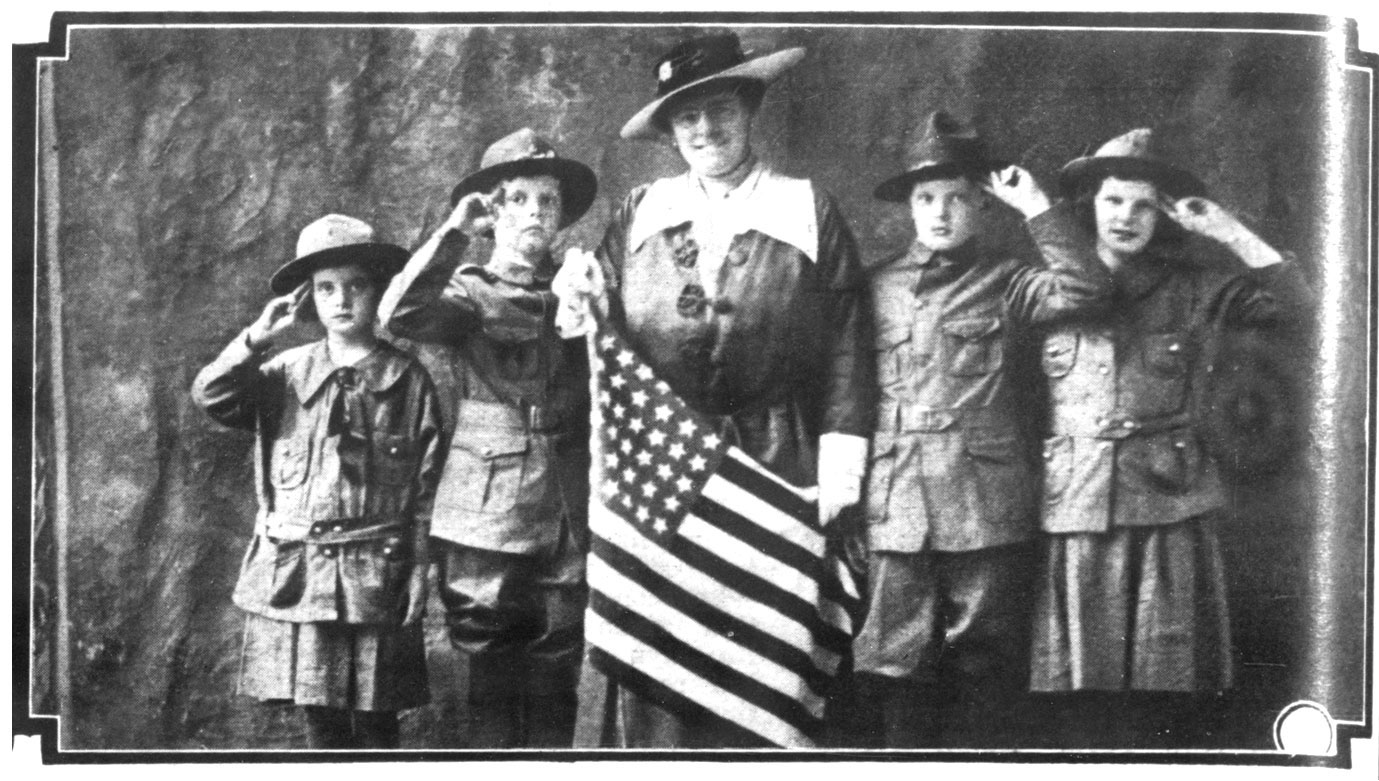
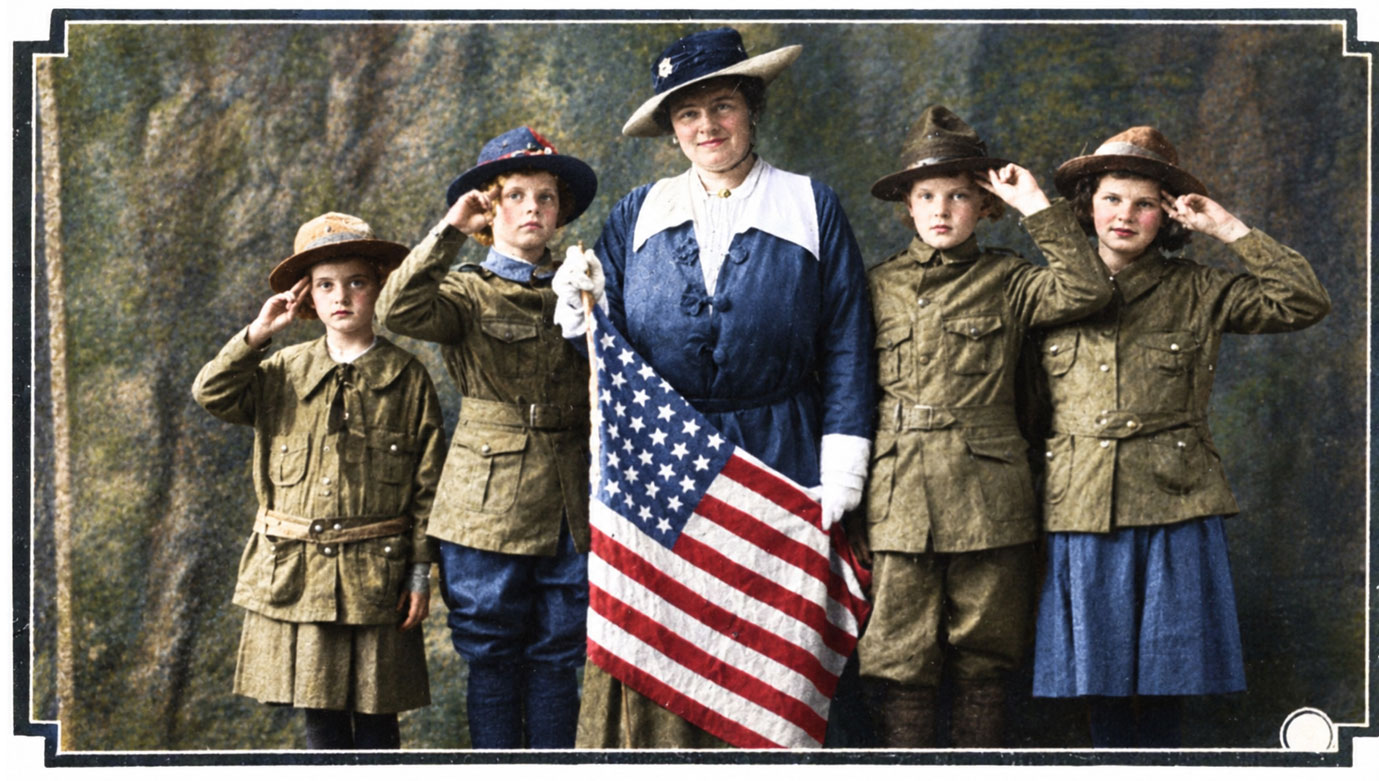
An item in the Paris edition of the Herald Tribune in June 1928 describes Hallam as ‘jazzing’ his way through music halls and salons attended by European kings, queens and nobility with the stage-act, The Happy Trio, a group that comprised Hallam, the Oxford-Harvard educated Billy Walker and the young, black jazz musician Gene Ramey. Hallam is described in the report as a former ‘vaude entertainer’ and radio and recording artist. By 1928 the group were appearing nightly in the grill room of the Chez Paul & Paul on the Paris Right Bank (champagne not obligatory).
The teenage trio appear to have first found fame in New York. Hallam’s manager at this time was Jim Carroll, the brother of producer and Broadway band leader, Earl Carroll. [53] In 1926, Earl found himself in jail after bringing out a nude young woman reclining in a bath of illegal liquor at a party thrown at his theatre on Seventh Avenue. One of Carroll’s ‘Vanities’ stars was the former ‘Follies’ showgirl, Peggy Hopkins Joyce — sometime lover of Arnold Rothstein.
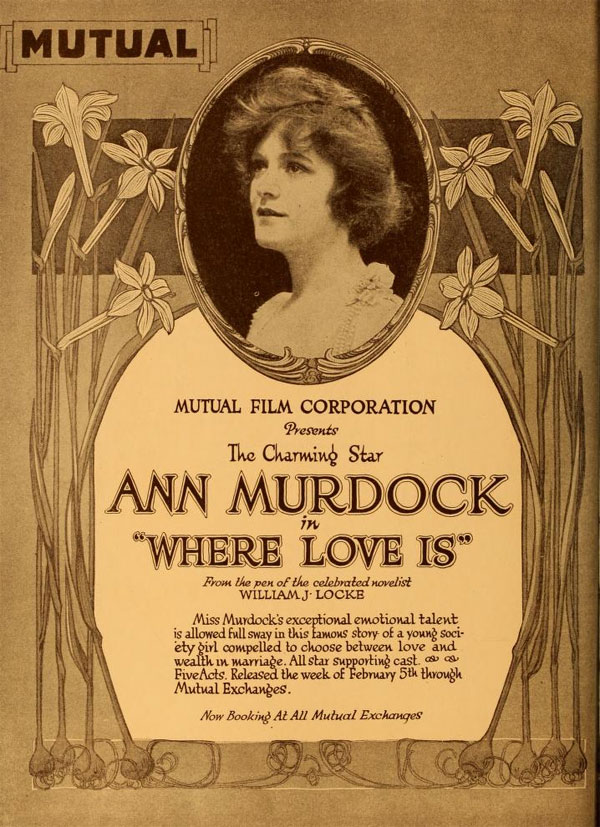
It was during his time in Paris that Williams is believed to have met Ann Murdock, the beautiful millionaire actress whose marriage to Wall Street banker, Harry C. Powers had ended in divorce some years before. According to press reports it was a whirlwind romance and the couple married in August 1928 in Rye, New York. The word going round was that the handsome blond lothario with boyish curly locks had come back to New York with dreams of being a music agent. Within a month of the marriage, Murdock had become seriously ill and the relationship faltered.
As Murdock convalesced in a New York sanatorium, Hallam, a serial philanderer with no fixed job or abode, met and romanced Ruth Anderson, a rival actress. As media speculation intensified about the couple, Hallam made his escape to Paris and it was here that he met the Mexico-born Byron Khun de Prorok. Another fraudulent Baron, Prorok had somehow blagged his way into the Adventurers Club of New York and onto some bizarre archaeological dig in Africa. According to the press of New York, Hallam would be going with him.
In 1929, Murdock filed for divorce and Hallam continued his romance with former ‘Vanities beauty’, Ruth Anderson. [54] For several months he had been in Nice where he had continued to perform as multi-lingual ‘uke’ player, Gayne ‘Bubbles’ Hallam. [55] After this he was back in New York. The details that Williams provides on a ship manifest in 1929 show him sharing rooms at 120 West 58th Street in New York with journalist Heywood Broun, a close friend of Ring Lardner, Harold Swope and several other Algonquin Round Table regulars that Scott and Zelda used to party with back in Great Neck. [56]
Scribners editor Max Perkins mentions Broun in a letter he scribbled off to Scott whilst the author was working on Gatsby in France. Max was telling the author that he had found a new place in New Canaan and Broun was among the most hospitable of his neighbours. His invites across for supper were about as close as he got to parties, Perkins jokes. [57]
The detail about Hallam and Broun’s apartment is interesting for several reasons: the apartment was just around the corner from Max Gerlach’s speakeasy at 132 West 58th Street and there is some indication that Broun was on very friendly terms with a mutual acquaintance of the pair called Texas Guinan — the notorious actress and Speakeasy hostess who provided glamourous front-of-house entertainment for gangster Larry Fay and Owney Madden at their El Fey nightclub on West 47th Street. The former actress had, like Gerlach, been schooled in the art of running speakeasies by Arnold Rothstein, the man who is believed to have provided the initial capital for the club.
In what might be an intriguing coincidence, it is interesting to learn that the lub had two large swastikas on either side of its door. It is something that may have an echo in Gatsby.
As the novel’s narrator Nick Carraway pushes open the door to Meyer Wolfshiem’s New York office, it is marked by a sign reading ‘The Swastika Holding Company’.[58] When Nick enters the office he hears someone whistling the popular Catholic opera-tune, The Rosary. Rothstein’s partners in the El Fey, Larry Fay and Owney Madden, were of Irish-Catholic heritage, and it is not beyond the realms of possibility that Scott was alluding to the pair’s partnership with Rothstein (Wolfshiem) in the club and was using the swastika motif as a nod and wink to amuse fellow regulars like his friend, Edmund Wilson. [59] The swastika also appeared on the cars in Fay and Hallam’s taxi-firm: one on the driver’s door, one on the passenger door and one on each of the four hubs of the wheels.


A report in New York’s Daily News in August 1930 would describe how Hallam had been hired by Fay as a $50 a week taxi-cab salesman. It also describes how Hallam’s friend, Tex Guinan had once taken him aside to reveal the true age of his wife, Ann Murdock and advised that he should curb his spending habits. [60] It is alleged that Fay’s entry into the nightclub business had been bankrolled by Gerlach’s old boss, Arnold Rothstein. Guinan, who was roughly the same age as Max, would die in 1933. One of the pallbearers at her funeral was Hallam’s flat-mate, Heywood Broun. Scott’s friend Edmund Wilson would famously describe her as a formidable, glittering woman operating under the “great glowing peony” of a ceiling that melted from pink to deep rose. To woozy, beguiled patrons like Wilson there was something coarsely hypnotic about her.
The Hostess and the Kaiser
Interestingly, there are indications that Guinan was in Berlin at roughly the same time as Max Gerlach. Like Hallam Keep William’s mother, Alice, Guinan had begun her career as a soprano singer with a New York Opera company. Taking a break from a ‘Whirl of the World’ concert tour, Guinan had made the trip to Germany. It was here, according to an interview she gave to the press in 1915, that Texas received the personal attention of Kaiser Wilhelm. In a short, teasing interview with the Seattle Star, Guinan described the scene. She had been sitting alone on a bench under a linden tree enjoying a book when several German officers passed by.
Suddenly there was commotion.
A battalion of infantry were marching through the street, and when some overzealous officers, keen to subdue subversive characters, started mingling amongst the crowd. As Guinan stood to observe the procession, the burly hand of an officer who was “shouting in vigorous German” gripped her by the arm and pushed her backwards. Guinan’s spontaneous cries of injury attracted the attention of the Kaiser who quickly moved forward to help. The reason for his intervention, Guinan tells us, is that he discerned that she was American. He then explained how much he would like to visit America. [61]
In all fairness, Guinan’s story was a typical piece of pro-German propaganda at a time when many American newspapers were reflecting public fears about imminent war with Germany. Either way, if any part of the story is true then the incident places Texas Guinan in Berlin in 1913, the same year that Max Gerlach and Hallam’s mother, Alice Peroux-Williams were also in Berlin.
Hallam’s marriage to Ruth Anderson appears to have lasted little longer than his marriage to Murdock. By 1931 the couple were in the throes of a very public divorce and for the next fifteen years Hallam disappeared from the headlines — the only notable related events in his life being the murder of his cab-boss, Larry Fay in January 1933 and the no-less sudden death of their mutual friend Texas Guinan in November that same year.
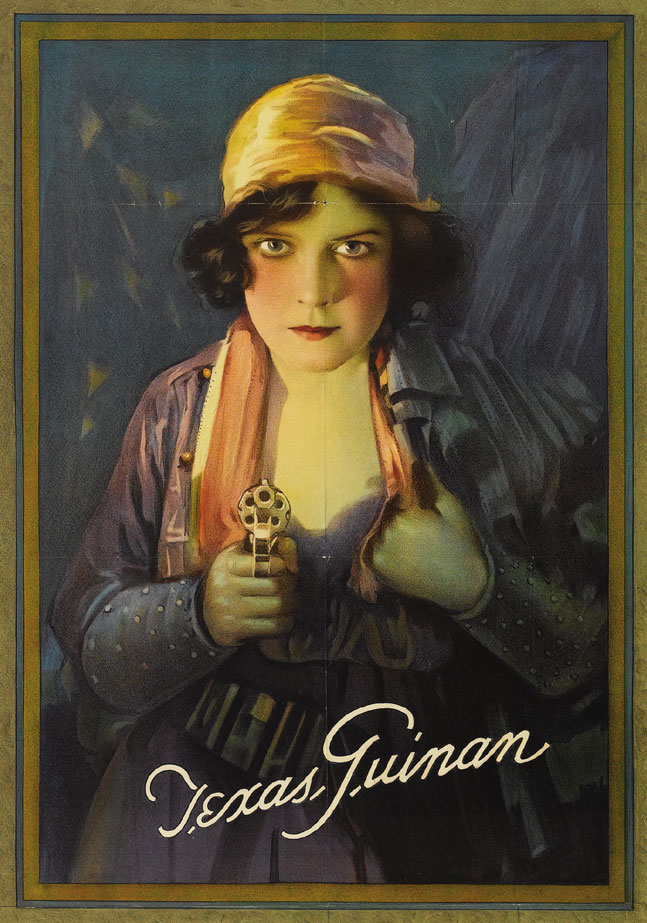
In the immediate aftermath of Arnold Rothstein’s murder in November 1928, a number of better known establishments were raided by Police, including those being managed by Guinan. The hostess would share her memories of this and her old friend, Arnold Rothstein in a book she planned to publish called ‘Hello Sucker’. [62] In July 1930, the publisher Alfred A. Knopf signed a contract with Carl van Vechten — a friend of Scott — for his novel Parties, a book that depicted the wild and sensational antics of Americas boundary-breaking club lovers. Pictured witnessing van Vechten’s signature was Texas Guinan — Queen of all parties. [63]
Among those who served as models for von Vechten’s novel were Scott and Zelda Fitzgerald who appear in the book as David and Rilda Westlake. The Parties author had been introduced to Scott when he first arrived in Great Neck in October 1922 and the group partied regularly until Scott’s last-minute departure in May 1924. [64] Von Vechten’s publisher, Alfred A. Knopf would, incidentally, go on to publish the second edition of Arthur Mizener’s groundbreaking biography of Scott, The Far Side of Paradise (1951). It was this book that featured the first ever public mention of Gerlach as a source for Gatsby.
In May 1925, van Vechten reviewed The Great Gatsby for The Nation, hitting the nail right on the head when he wrote: “The theme of a rather soiled or cheap personality, transfigured and rendered pathetically appealing through the possession of passionate idealism.” His diary entries in 1923 also reveal that he attended the gatherings of the Algonquin Round Table with Hallam K. William’s 1929 ‘neighbour’ Heywood Broun and their mutual friend, Texas Guinan. [65]
There is no record of Guinan ever publishing ‘Hello Sucker’, but one wonders that if it had, it may well have been published by Knopf. Shortly before her death the last of her legendary speakeasies was firebombed and Texas returned to the stage in America, having already been denied to entry to England and France. Headlines like ‘Actress Silenced By Death’ duly followed.
The next press reports of the 37-year old Hallam have him hooking up with twenty-one year old glamour star, Josi Johnston. Like Hallam’s first wife Murdock, Josi was heir to a million dollar fortune and had fallen head over heels in love with him. Against their parent’s wishes, the two Stork Club regulars married on August 1st 1944. The venue they chose for the wedding was the University Chapel at Princeton.
The reason why they chose Princeton to tie the knot remains unknown. There is certainly no indication that either party was enrolled at the university, so it may have been at the suggestion of an unknown third-party. Either way, it’s extraordinary to find a friend of Gerlach’s so close to the Ivy League college that produced Fitzgerald.
The romance lasted barely 18 months, and despite the birth of their child, Turner, the couple divorced. [66] Two years later Williams married Ann Baldwin. After starting and aborting a film production company, Hallam tried his hand at writing dramas: Façade (a three-act play with wife, Ann Baldwin in 1946), Alimony Pete (a three-act play in 1949) and What Happened Then?/This Is Why I Pray (musical compositions with John Vroman, 1961). [67] It is April 1950 when Hallam is still married to Baldwin that we see him in Havana with Max von Gerlach, promising to spill the beans on the man behind Jay Gatsby.
In 1953, Cholly Knickerbocker catches up with Williams again: “Hallam keep Williams saw his associate, Leo Y. Chertok, first cousin of the newly appointed Prime Minister of Israel, Moshe Sharrett, off for London the other day to complete transfer of 200,000,00 pounds sterling of financing in connection with a Libya Government oil concession and other grants, that Hallam had been negotiating for in Chertoks behalf.” Chertok, who like his cousin Mosche had emigrated with his family from Kherson, Ukraine in the early 1900s, had been in the headlines of the world’s press two decades before when he claimed to have negotiated similar oil and mineral concessions in Ethiopia on behalf of Standard Oil.
A CIA file on Chertok was declassified in 2018 and reveals that the FBI and the Intelligence in France and Britain had been investigating Chertok as a possible Soviet Agent. Chertok appears to have begun his career working as a promoter for the amusement parks at Long Beach on Long Island before founding a newspaper in nearby Freeport, called The Guide with Herbert F. Hoffman. At the time of the first concessions story he had just incorporated a theatrical business at 142 West 42nd Street with writer and psychoanalyst, Milton Wexler.
Several weeks after the Chertok story, the same newspaper reports on Hallam’s third marriage to Lora Rothschild in the chapel at Princeton University.
This is the second time that Hallam has married at Princeton, despite there being no obvious links in either his domestic or professional life to New Jersey. They had originally tied the knot in Mexico the previous summer, but explained to reporters that he didn’t feel they had been “married in earnest” until the marriage had been completed on American soil.
Someone else to marry that same summer was Henry Dan Piper, the Princeton graduate who had learned from Zelda Fitzgerald that the source for Jay Gatsby had been a man called ‘Von Guerlach’. The couple tied the knot in Pasadena, California before honeymooning in Mexico. It is worth noting that Belle Trenholm, who was writing letters to Scott’s biographer Arthur Mizener, on Max’s behalf in June 1954, had just spent the previous three years in Mexico and California. [67b]
[8] ‘Cholly Knickerbocker Observes’, The San Francisco Examiner, April 17, 1950, p.20
[9] The Dictator and the Mafia, Jonthan Marshall, Journal of Global South Studies , Spring 2018, Vol. 35, No. 1, pp. 56-86. Just one month before the assassination of President Kennedy, Igor Cassini was charged with abusing his family’s relationship with Jackie Kennedy to influence decision-making at the White House (Igor’s older brother, Oleg Cassini was a close friend of Jackie Kennedy). It is believed that Kennedy made last-minute attempts to prevent the assassination of Igor’s paymaster, Rafael Trujillo of the Dominican Republic in 1961. See: Cedar Rapids Gazette, March 24, 1963
[10] Luis Posada, Igor Cassini Espionage, January 30, 1943, JFK Assassination Documents/Federal Bureau of Investigation/NARA Record Number: 124-90158-10003
[11] According to his FBI file, Scott Fitzgerald’s friend John Dos Passos was among those helping to organize the conference with Frances R. Grant.
[12] Alan Ladd’s previous film for Paramount had been about the formation of the OSS — the forerunner of the CIA. Paramount had been discussing plans to make the film since 1945.
[13] Alice P Williams, Hallam Keep Williams, Department of Passport Applications, August 3, 1914, Embassy at Berlin. The application explains that the family had left America in December 1909.
[14] Stafford Springs Press, July 29, 1914, p.1. Casement was executed in August 1916.
[15] Gaffney to Lecture, Chicago Broad Ax, October 1915, p.2 .Gaffney had been a leading advocate of Bishop John Ireland of Scott’s hometown of Saint Paul, when Rome was considering making him a Cardinal of the Catholic Church of Rome.
[16] Stafford Springs Press, September 27, 1917, p.3; October 4, 1917, p.1
[17] Gibson T. Williams, b.1870, Passport Applications, January 2, 1906 – March 31, 1925, Roll 301. Oberammergau was the location of a very famous passion play which attracted international attention during its 1910 performance The future of this small Alpine village was politically sensitive at this time.
[18] See: https://oac.cdlib.org/findaid/ark:/13030/kt1h4nd13n/dsc/
[19] The Harvard Graduates’ Magazine 1917-09: Vol 26 Issue, 101, p.136
[20] ‘Mme. Peroux-Williams, Mezzo Soprano, A New Star’, Musical America, May 30, 1914, Vol 20 Iss 4, p.25
[21] Letter from J. A Ryan, Major of Cavalry, Chief of Party, American Relief Commission, September 1914, Report on Operations of United States Relief Commission in Europe, United States. Relief Commission in Europe, 1914, United States. War Department, 1914, p.71
[22] F. Scott Fitzgerald at work : the Making of “The Great Gatsby, Horst Kruse, p.27; Alice P. Williams, Concert singer, b.1871, August 3, 1914 Passport Applications, January 2, 1906 – March 31, 1925
[23] ‘Mr Gerard Defends US Singers Abroad’, The New York Sun, January 25, 1914.
[24] The World of Swope, E.J. Kahn Jr, 1965, Simon and Schuster, p.289;
[25] ‘German Attitude Toward Americans’, Alice Peroux Williams, Musical America 1915-02-27 Vol 21 Iss 17
[26] Musical America, February 20, 1915, Vol 21 Iss. 16, p.24
[27] Kruse, p.33
[49] Hallam’s father was a member of one of America’s oldest patriotic societies, The Society of the Cincinnati. He was also a member of the Sons of the Revolution in the State of New York. He was based in Germany from 1913 until the late 1920s when he relocated to Italy, before eventually living near Caltech in Pasadena (1936-1944)
[50] ‘Sues Mother As Guardian’, New York Times, September 14, 1926, p.25. Hallam sued his mother for access to a trust fund set up by his aunt, Margaret Turner Williams. Margaret’s husband, Charles Hallam Keep also served as treasurer of the American Red Cros and the Knickerbocker Trust.
[51] ‘Blue Eyes, Blue Auto’, Laurel Morning Call, march 2, 1929, p.1
[52] ‘On the Left Bank’, The Paris Times, May 29, 1928, p.3
[53] ‘Happy Trio Comes to Paris Cabaret’, The New York Herald Paris, June 1, 1928, p.3; Hallam Williams in Paris, Chicago Daily Tribune, Paris edition, March 1, 1929, p.2
[54] ‘Why Ann Murdock’s Latest Beautiful Adventure Blew Up’, Ogden Standard Examiner, December 8, 1929
[55] ‘Ann Murdock’s Career’, Variety, May 29, 1929, p.52
[56] Hallam Keep Williams, SS Bremen, Cherbourg to New York, October 22, 1929, New York City Passenger Lists, 1820-1957. Scott and Broun had a complex professional relationship. After Broun lampooned Scott’s efforts at self-promotion in 1920, the writer felt he was one of the few critics who were “on his trail”. The fear related to his anxiety that he would eventually be revealed as a literary ‘fake’ or ‘lie’ and that his status was undeserved. Broun had dismissed him as a very self-conscious and pretentious young man.
[57] ‘Dear Scott’, August 8, 1924, Dear Scott/Dear Max, Charles Scribner’s Sons, 1973, p.74
[58] Rothstein: the Life, Times, and Murder of the Criminal Genius Who Fixed the 1919 World Series, David Pietrusza, Carroll & Graf Publishers, 2003, p.206; The Great Gatsby, p.161
[59] The episode is packed with symbolism and irony. The song is about someone handling the rosary beads (a Catholic prayer accessory) as if they were pearls. The song, which has several references to preserving someone in their memory, has a number of references to Christ upon the cross (which Gatsby’s death in the novel to some degree allegorizes). The Swastika symbol also appears in Scott’s original preface for Gatsby, the short story Absolution.
[60] ‘Hallam Keep Williams Calls Larry Fay Boss’, Daily News, August 3, 1930, p.3
[61] ‘Texas Guinan, Prima Donna’, Tells of Chat With Kaiser, Seattle Star, March 4, 1915, p.3. The Whirl of the World was a Broadway revue by Hungarian composer, Sigmund Romberg and bankrolled by Manhattan’s Schubert Organization. In 1913 Texas was touring in The Passing Show of 1912, often billed as ‘German repertory’.
[62] ‘When Rothstein Was Peeved’, Chicago Sentinel, October 3, 1930, p.4; ‘Glamour Gets the Blame’, San Antonio Light, December 1, 1946, p.14
[63] The Publishers Weekly, July 26, 1930, Vol 118 Issue 4, p.340
[64] The Splendid Drunken Twenties, Carl van Vechten, 2003, University of Illinois Press, p.22.
[65] Ibid, pp.23-36
[66] ‘Get Away Young Man, Get Away’, Detroit Evening News, October 15, 1944
[67] ‘Two Incorporate’ (H.K.W. Productions Inc), Motion Picture Daily, October 6, 1944, p.11
[67b] ‘Hallam Keep Williams’, San Francisco Examiner, December 24, 1953, p.9; ‘Chertok Refuses to Yield’, Washington Times Herald, September 1935, p.1; San Francisco Examiner, February 7, 1954, Smart Set Section, p.8; ‘Henry Dan Piper … wed in California’; Matt Gorzalski to Alan Sargeant, email, May 5, 2025, 8:39 PM, Matthew J. Gorzalski, University Archivist, Morris Library, Southern Illinois University.