At the time the military camp riots were taking place in France, Britain was in the grip of a paranoia about German Spies and Russian anarchists. It saw them everywhere. In his 1922 book Queer People, Intelligence Chief, Sir Basil Thomson offers his own sardonic take on the affliction:
“I began to think in those days that war hysteria was a pathological condition to which persons of mature age and generally normal intelligence were peculiarly susceptible … I remember Mr Asquith saying that there was nothing so completely proved as the arrival of the Russians. Their landing was described by eyewitnesses at Leith, Aberdeen and Glasgow; they stamped the snow out of their boots and called hoarsley for Vodka at Carlisle and Berwick-upon-Tweed.” — Queer People, Basil Thomson, 1922
Even before the Great War, writers like Erskine Childers, author of The Riddle of the Sands and William Le Queux had been writing imaginatively of a sophisticated German intelligence network laying the foundations for an invasion of Britain. Hysteria aside though, by April 1916 a total of 11 German Spies were rounded up and executed in Great Britain, and Scotland featured prominently. In 1915 two spies, George Traugott Breeckow (aka. Reginald Rowland) and Lizzie Wertheim (operating under several Toplis-like aliases) were believed to have been meeting at the Station Hotel in Inverness (now the Royal Highland Hotel just off Academy Street).
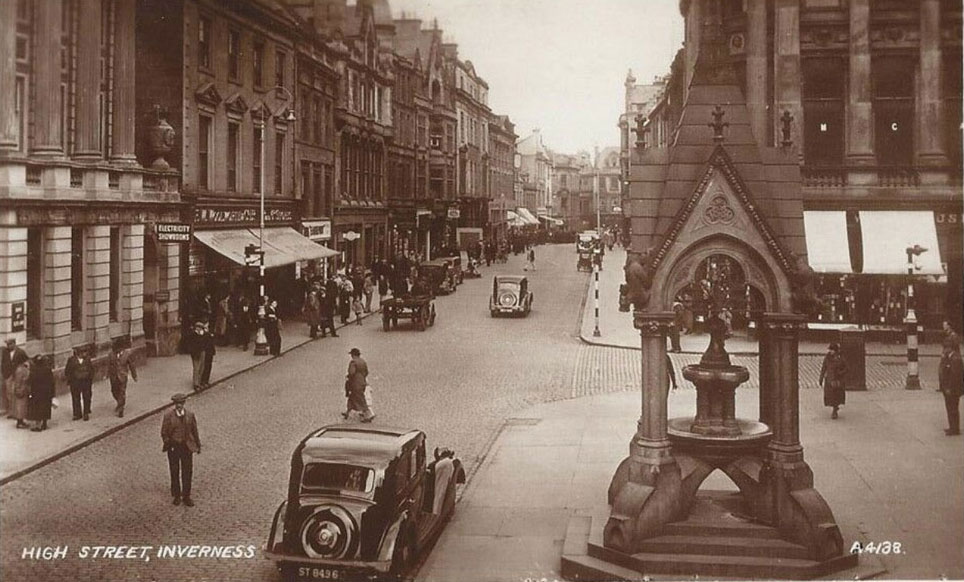
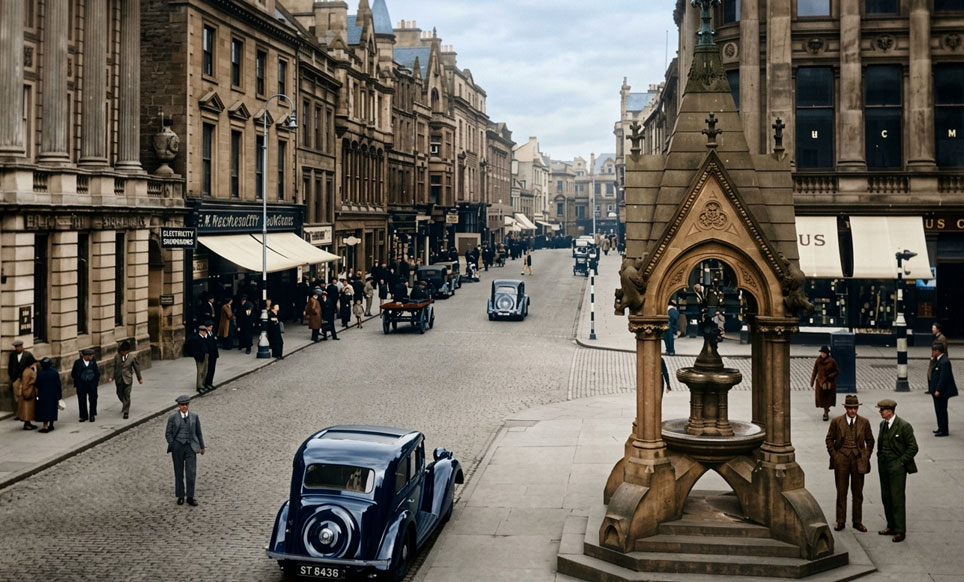
Coincidentally or not, Inspector Hubert T. Fitch, the commanding officer of Toplis detective Edwin Woodhall, was instrumental in their capture. Breeckow was subsequently executed at the Tower of London on 26 October 1915. Wertheim on the other hand was sent to Broadmoor criminal asylum. Prior to taking refuge in the bothy, Percy had blagged a job playing piano at another hotel just minutes around the corner. An edition of a local paper records that guests at the small Temperance Hotel in Inverness city centre found his “conversational powers” attractive and had asked him to entertain. It’s a peculiar story to say the least. His stay in Alford on May 3rd suggests he arrived in Scotland via Aberdeen. From here he makes his way to a ‘little hut’ in Strathdon, spends a few days in Tomintoul, before finally landing work at Dunmaglass – a forestry estate owned and managed by the McGillivray family, the mighty Highland clan who had made such an heroic stand at Culloden as part of the Jacobite rebel army.
Prompted by either business or an itch to move on Toplis arrives in Inverness on May 11th. Signing the guest book as ‘G. Waters’ he tells guests he is a jobless piano-tuner and has recently spent time ‘in Russia’. Asked about his activities in the area, Toplis says he had landed the post of caretaker at the nearby Northern Meeting Rooms. He had just been to see the agents. When the owner asks about his female assistant, he remarks that she will be arriving shortly from Aberdeen, and makes a trip there the following day. The details on his stay at the Temperance Hotel vary little in each of the local reports but two details in particular stand out: Toplis was not travelling alone and he had a brown paper parcel that he was ‘most concerned’ about. When he arrived back at the hotel one night without the parcel the hotel keeper decided to quiz him about it. Toplis confessed that he had left the parcel in a nearby public house. He’d been engaged in some business matter and had just received a telegram at the post office. The keeper takes up the story:
“To cut a long story short he was here till Friday on and off. It was like this, he explained. we had known on his own confession that he had been out having drinks. He asked me to keep him over the weekend. Then I put it to him quite bluntly: “It strikes me there’s a mystery about you, young man”.
“Do you think he was pressed for money?”
“I think so. He wanted to get his coat to sell. He said he had brought his cabman with him and that he was outside. I saw the man whom he had brought. He was certainly not an Inverness cabman. This man was wearing a dark bowler hat, and had all the appearance of a stranger. Both of them stood very erect.” (The Highland News, June 1920)
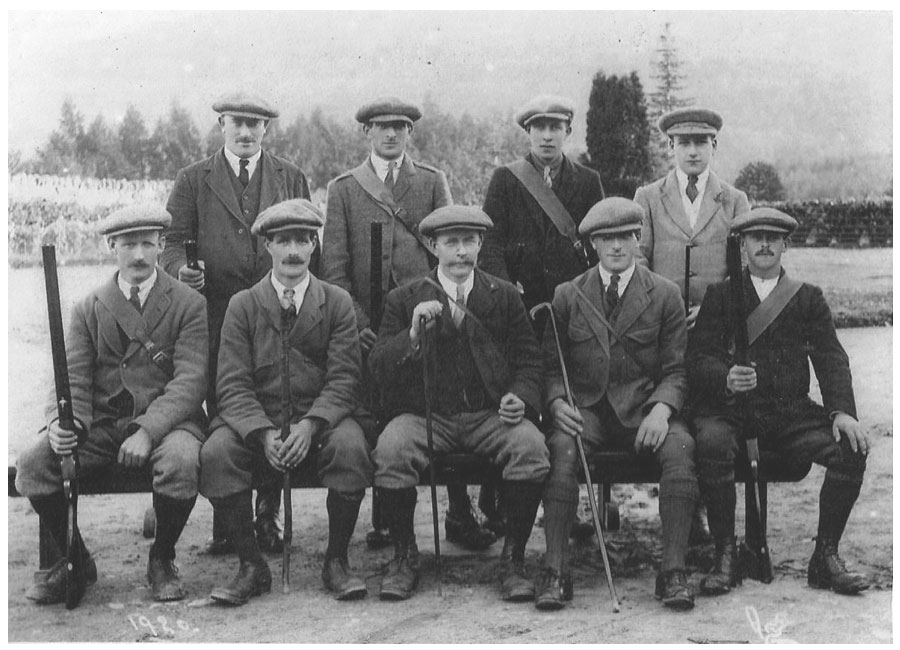
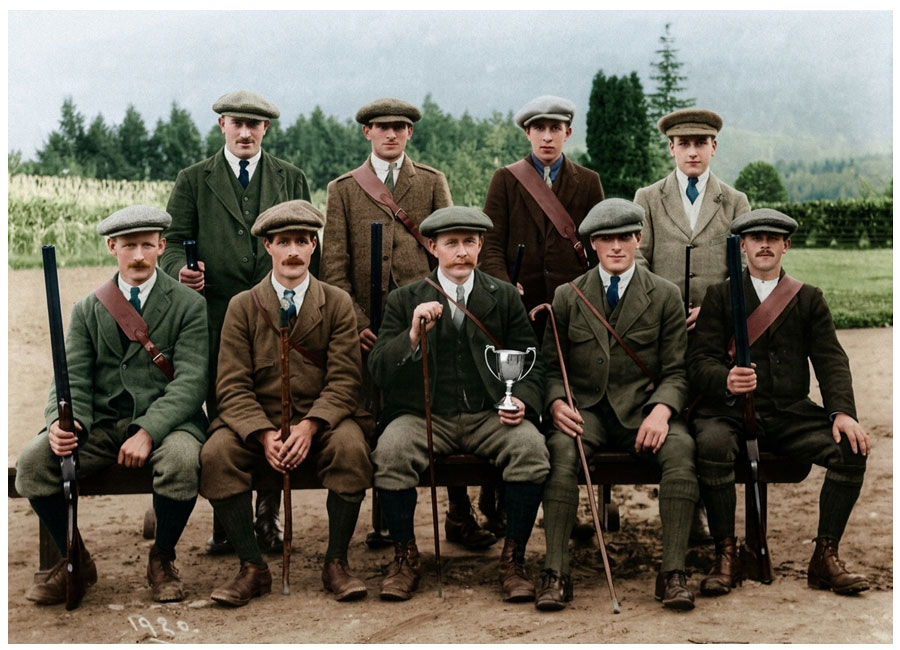
When the coroner inspected the quality of his boots at the Inquest in Penrith he remarked that there was barely any wear on them, suggesting the victim had enjoyed regular periods of transport. This is completely at odds with the depiction of Toplis as a wandering itinerant, rambling randomly around the Highlands. Was someone sheltering him? Who was his companion? Did the Police ever follow this up? What brought him so urgently to Inverness? Let’s look at it another way; Toplis lands a job on an isolated farming estate in Dunmaglass, some fifteen miles south of Inverness and leaves it to spend four days in a densely populated city with all the potential pitfalls and sightings this might present. This would be a substantial risk for a wanted man. What had prompted the move so urgently? A telegram or a tip-off? True to form, Toplis departed the hotel without paying the bill and found alternative work, first at MacDonalds Mill in Inverness, then Finnies Mill in the Muir of Ord and then finally as a woodcutter on Banffshire’s Delnabo Estate, just a mile or so from the Tomintoul bothy. Contrary to popular belief, Toplis had begun his journey in Tomintoul. He had clearly not just spent his few remaining nights there.
Spies in Inverness
Did Percy’s frequent trips to Inverness and the North of Scotland give Woodhall and the Secret Service reason to think he was a spy or agent provocateur? It’s certainly possible given the taut, suspicious climate at the time. Several other German Spies captured during that same period had their bases in Scotland: Haicke Janssen, Willem Roos and Ludovico Hurwitz Y Zende – both of the former spending significant periods of time in Inverness. Breeckow and Wertheim were not an isolated case. A total of 18 German spies were arrested (and subsequently executed) during the first 12-months of the war. The son of a Russian piano manufacturer, George Breeckow had been born in Stettin, Germany before travelling to America. Here he lived as Reginald Rowland, pianist and piano salesman, only returning to Germany in May 1914. Back in Germany he landed a post at the Bureau of Foreign Affairs. A transfer to the Kriegsnachrichtenstelle Antwerp — the German school for spies — immediately followed.
Breeckow‘s plausible American accent, polished manners and considerable wealth made him easy to embed among the military elites of Whitehall. On arrival in London, he booked into the 630-room Ivanhoe Hotel on Bloomsbury Street. This would be critical to two objectives. On the one hand it would give him access to gossip leaking from the Admiralty Building and War Office in Whitehall and on the other he could garner support from the well-heeled clique of parlour subversives who’d taken up residence in the Bloomsbury area. His cover as pianist and piano salesman for the Vandervoort Piano Salon would bring him into contact with only those people who could afford this particular model at this time: the Officer class and gentry (interestingly, professional musicians accounted for a significant proportion of the ‘Kriegsnachrichtenstelle’ spies arrested at this time). But it was the lowly and uneducated Lizzie Wertheim who did the field work.
According to British Spy Chief, Basil Thomson in his 1922 book, ‘Queer People’, Wertheim would go to Scotland, hire a motor-car, and drive around its various ports picking up gossip about the Grand Fleet. Her approach to naval officers was so lacking in subtlety, however, that it brought her to the attention of Special Branch and before long she was placed under surveillance. Toplis, on the other hand, was not so lacking in guile. Not only was he a master of disguise and a resourceful and consummate actor, he also was in the habit of using aliases, faking IDs and used the kind of counter-surveillance tactics frequently used by professionals to dodge being tracked. His flight from Tomintoul is characterised by tried and tested manoeuvres. He was sticking methodically to certain rules. His ‘cleaning run’ from Alford to Aberdeen included regular changes in direction. He would change his mode of transport, talk to as few people as possible, abort journeys abruptly, getting off before intended stops. All of these were reliable counter surveillance measures, and all would require training.
“Another statement made by a lorryman was as follows … I was driving my employer’s lorry along Great Western Road in the direction of Mannofield when a man held up his hand a s signal to stop … he asked me for a lift to Bieldside — ‘Going to Bieldside’, 04 June 1920 – Aberdeen Press and Journal – Aberdeen, Aberdeenshire, Scotland
What business Toplis had in Bieldside is anyone’s guess. The lorry driver goes on to say that he was only able to take him as far as Craigton Road. Here the driver stops. He tells him that he should be able to flag down another car to Bieldside but Toplis reassures him it’s not a problem. He says he recognises the area and will walk the rest of the way. Toplis starts walking in the direction of Cults and disappears down Morningside Road. If this was his first trip to Aberdeen, then how did Toplis know the area? Bieldside was and remains one of the wealthiest districts in Scotland. The respected architect, Alexander Marshall Mackenzie was based here and the family of Ruth Roche, Baroness Fermoy, the Maternal Grandmother of Diana Princess of Wales were also residents here at this time.
His two bookend stays in Alford are also interesting. Alford is the Clan Base of the Forbes family. The family of Etaples ‘canteen lady’ Lady Angela Forbes, dismissed from the camp for her disruptive influence on the troops, had their home in neighbouring Asloun. What was Toplis up to? Did he have old scores to settle? Was he trying to solicit allies? Trying to drum up a defence with the help of the Forbes? Interestingly, another member of the Alford Forbes family, William Forbes-Sempill (very nearly tried for spying for the Japanese in 1941) was active in several anti-Semitic associations, including the Anglo-German Fellowship, the deeply mysterious Link organisation and pro-Nazi Right Club. Lady Angela’s nephew, ‘Hamish’ St. Clair-Erskine became the lover of Tom Mitford. Tom’s sisters were Diane and Unity Mitford whose devotion to Adolf Hitler needs little elaboration.
James Cullen — the Other Mutineer
But there was another twist. Lady Angela’s sister, Lady Sybil Mary St-Clair Erskine had been made Countess of Westmorland on her marriage to Anthony Mildmay Julian Fane in 1892. Curiously, the ambush on Toplis had been organised on the ground by Chief Constable of Westmorland, Charles De Courcy Parry. Like the Fanes, the Chief Constable’s family were similarly devoted to a lifetime of hunting and shooting. And here was another thing; after the death of Lady Sybil in 1910, Anthony Fane married Catherine Geale, who in 1925 as Catherine Countess of Westmorland co-sponsored a fundraising ball for the British Fascists. The event was held at the Hammersmith Palais de Dans.
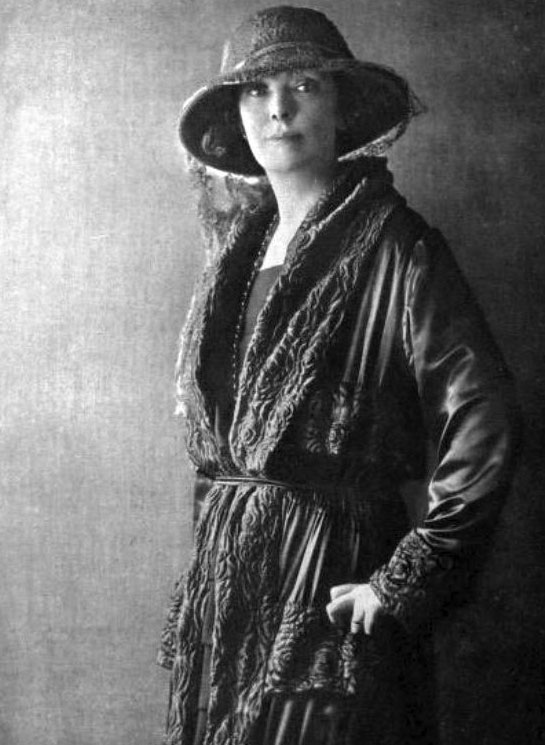
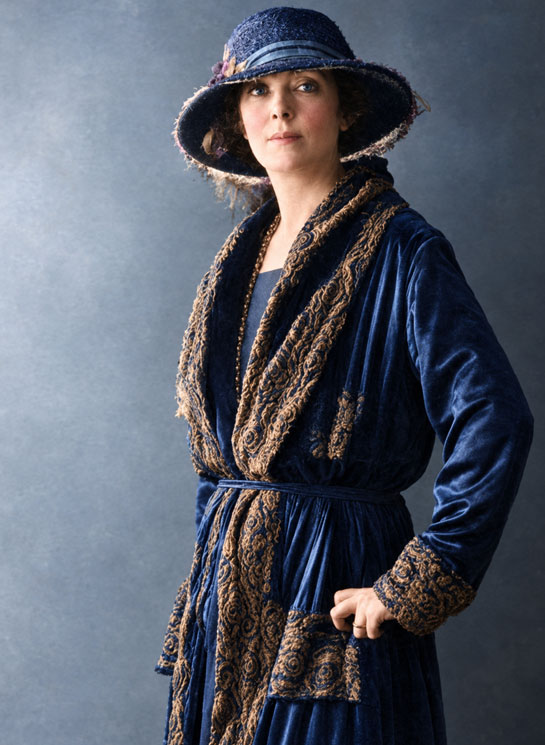
The event organiser was Rotha Lintorn-Orman, founder of the British Fascisti and whose Scottish Women’s Hospital Corps had served in Percy’s Royal Army Medical Corps in Slovenika in 1917. Like Percy, Rotha had been invalided out of the corps with malaria that same year. Was the reference to the ‘Bolshie Bug’ on the poster for the event a saucy sweep at the ‘Bolshie’ Chelsea Arts Club and its left-wing clientele? The Chelsea Arts Club was based on Old Church Street in Chelsea and boasted a healthy left-wing membership base. Those associated with the Club included the Rennie Mackintoshes, Scottish dance queen, Margaret Morris and Communist Kodak King, George Davison, whose funding of Keir Hardie and the South Wales Miners’ Federation (as well as the quasi-anarchist Workers Freedom Groups in Gateshead, Bristol and the Rhondda Valley) had already brought him to the attention of Special Branch.
At this time Morris had set-up her own tri-monthly ‘Margaret Morris Club’ on Flood Street, Chelsea. The Club had become something of an ‘outpost’ for all the artists and intellectuals who had previously coalesced at Soho’s ‘1917 Club’ (frequented by none other Oswald Mosley). The Chelsea Arts Ball (hosted annually at the Albert Hall on New Year’s Eve) was one of the most scandalous events on the calendar, a fancy-dress extravaganza brimming with immoral intent and voluptuous barbarity. Sponsors of the Fascisti Ball by contrast, included Patrick Boyle, 8th Earl of Glasgow (who had witnessed Bolshevik brutality first hand) and British Diplomat, Sir Arthur Hardinge.
The image of the benign Lady Angela contrived by the Bleasdale 1985 BBC TV drama was slowly beginning to fade. As I boy I had found to my cost that if you left anything burning long enough, the embers of the fire would turn from red to white, and that the endearing first shapes of the flame were nothing when compared to the white hot properties of the coal. Contrary to expectations Lady Angela Forbes was not some banner-waving socialist but every inch the Militant Conservative out of whose soft feminine features would soon be carved the firmest of fascist mugs; back to black, as it were, for the coal.
If I were a Prime Minister I should promise nothing, but I should spend my time in devising means to reduce this strangling taxation and unemployment, and if I succeeded even a little in that direction my tenure of office would be secure. I should reduce Government staffs to a practical minimum, and I should order other people about not be twisted round other people’s fingers. I think I should know that Kharkow was not a general, even though I could not put my finger exactly on its situation on the map. I should bind our colonies to us with bars of steel ; I should make the firmest alliance possible with France ; I should fight alien labour to the death; I should squash the Jewish invasion by every means in my power, even if it meant having fewer new frocks. But then I never shall be Prime Minister — Lady Angela Forbes, Memories and Base Details, 1921, Hutchinson & Co
James Cullen, sentenced to one year’s imprisonment for the part he played in the Etaples Mutiny, similarly found his way into the bosom of British Fascism. Born in Pollokshaws in Glasgow in 1891 and a miner by trade, Cullen’s regular war-time cycle of insolence and desertion came to a head in September 1917 when the mutiny was in full swing. Having already served sentences for an assault on a female worker and breaking out of barracks, Cullen was charged by Brigadier Thomson with ‘disobeying lawful commands’ and ‘using threatening language to a superior officer’. He was sentenced to one year in prison. However, the sentence was duly suspended and the soldier dispatched immediately to the front. What better way of purging the ranks than by sending them all to Passchendaele? But Cullen didn’t die at Passchendaele. Wounded he arrived back at Etaples, where he convalesced awaiting trial.
For reasons that are not entirely clear it was decided that no further disciplinary action would take place and in August 1818 Cullen was approved for immediate return to Scotland where his mysterious demobilisation (and wrongful, arrest) became the subject of debate in parliament. The route he embarks on next is quite extraordinary, and made all the more extraordinary by having never been acknowledged previously. Within a few years of leaving the army, Cullen becomes a member of the Communist Party of Great Britain, organises hunger marches from Glasgow to London, and then, under the stellar guidance of notable Clydeside Marxists, Harry McShane and John Maclean (similarly born in Pollokshaws) becomes an active and respected figure in the National Unemployed Workers’ Movement. However, concerned by the undue weight of Soviet influence in the NUWM and an increasing lack of faith in Maclean, Cullen begins his move away from Communism, and within years he has become Secretary for The West Scotland Association for the Abolition of Communism. An encounter with Baptist Minister Peter McRostie of Tent Hall, further revolutionises his way of thinking and by July 1927 he is writing an article in the British Fascisti periodical, The British Lion lifting the lid on a contingent of Bolsheviks at work in Etaples at the time of the riots:
“I was approached by a prominent Communist agitator, who asked me what part I would take in getting the troops to mutiny. There was a small council of action set up and we set about doing everything possible to get a general rising… the councils of action, of which I was one, were giving instructions through under channels. The revolt lasted three days, at the end of which a truce was come to between the General Officer Commanding and the rebel troops. I was one who refused point blank to recognise the truce and carried on with a small band of irresponsibles. Eventually we tried to rush the guard one night, but were repulsed. I was captured and made a prisoner.” — James Cullen, British Lion
George Bernard Shaw once said that, “the moment we believe something, we suddenly see all the arguments for it.” Suddenly the world changes and events we have experienced previously are transferred to the source code of an executable program that is only ever designed to calculate one particular outcome. I was experiencing much the same phenomenon now.
Were these the candid insights of one seriously pissed-off mutineer, unburdening himself of the truth after all those years, or the skewed, revisionist strokes of a belligerent would-be fascist seeking formal membership of a new and very exclusive club?
Cullen was someone I would come back to.
_________________
Read Part III – Toplis and the Cross Keys Mystery