In 1907, Alfred Richard Orage, an acolyte of Nietzsche, would write an influential essay for The Theosophical Review in which he made an appeal for a ‘New Romanticism’: “Romanticism is in essence an attempt to escape from the compulsory vision of things as they are, by imagining them to be what they are not.” Orage, the editor of the New Age in London and an enthusiastic student of Theosophy, believed Romanticism to be the things we “substituted for the real world” — the superior images and fantasies we had in our heads that were used to replace the world around us. Romanticism was, he continued, a sort of “wilful blindness”. Whilst it is unlikely this notion directly influenced plans for his third novel, Scott may have been vaguely aware of Orage’s works through his Theosophy-loving mother-in-law, Minerva Sayre, and his work on the progressive British periodical, The New Age. At the time that Scott started his work on The Great Gatsby, Orage was lecturing at G.I Gurdjieff’s Institute for the Harmonious Development of Man in Fontainebleau, some thirty miles south of Paris. To those on the outside, the school in Fontainebleau must have seemed like a madhouse. There would be singing and dancing, incantations and psychic sessions, all based entirely around Dr Gurdijeff’s rather batty ‘Fourth Way’ teachings. Needless to say, the school would occasionally attract the casual interest of American Expats in Paris who would make the pilgrimage south for a riotous few days ‘cleansing’. Edmund Wilson would describe several attempts by the group to recruit him into the movement in his autobiography, The Shore of Light. Wilson, managing editor of the New Republic at this time, had been a fan of Orage since his days at Princeton, but meeting him on his tour of New York had been a disappointing experience all round. [1]
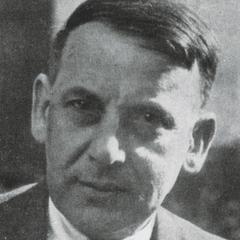
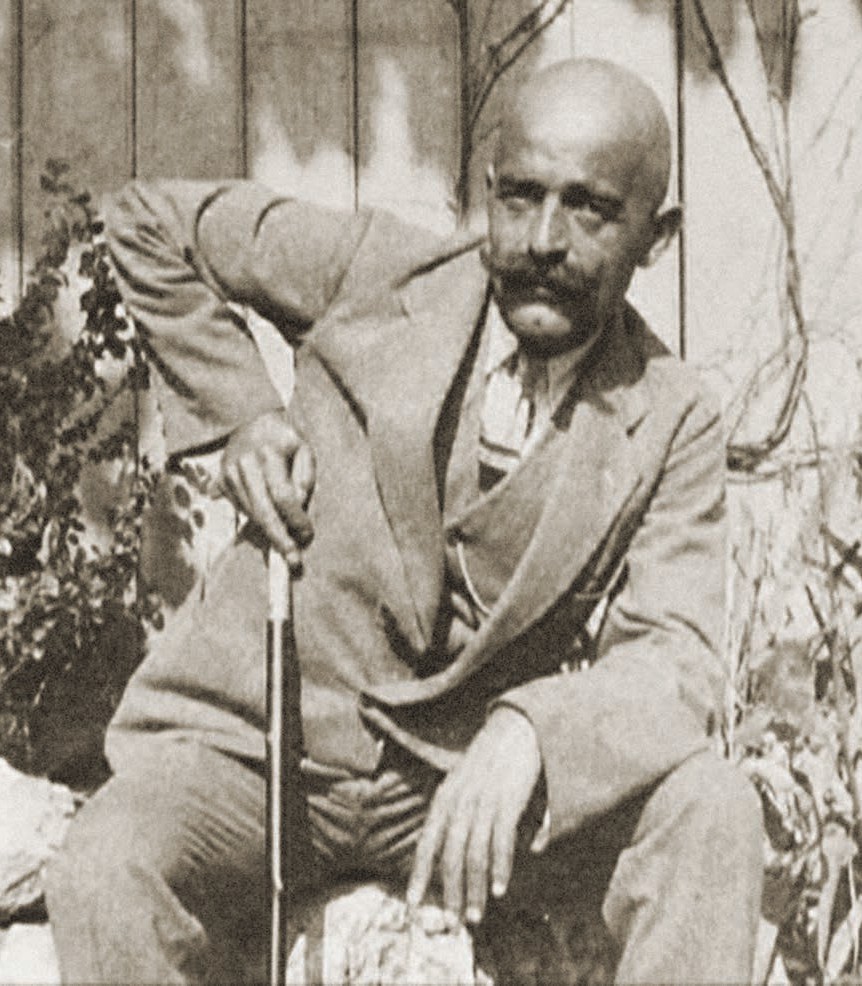
Orage had arrived in New York in December 1923 to prepare the way for a series of lectures and demonstrations by Gurdjieff, whose delivery was often so rambling and so obtuse that nobody had the faintest idea what he was talking about. Gurdjieff, nevertheless, had two things to his credit: his faithful interpreter Orage, who was respected all over Europe for his work on Nietzsche and his championing of Modernist literature, and his own prodigious talent for manufacturing spectacle. For many it was like the circus had rolled into town. At the demonstration at the Carnegie Hall at the beginning of March, the curious socialites of New York sat opened mouthed as dozens of students and artists occupying the cheap seats rose from their chairs, scrambled boisterously up the stairs and took up occupancy of the empty hundred dollar boxes, giving trust to the adage, “God helps those who help themselves.” Then out of the smoke would emerge the Barnum & Bailey magus, G.I. Gurdjieff, fresh from holding court at his mystic monastery in Fontainebleau. The Pittsburgh Press summed the whole thing up rather neatly: “Dr Gurdjieff and his Magical Secret of Life: How to be a Super-Man or Super-Woman by Feeding Pigs, Dancing Weird Dances All Night and Other Fantastic Antics.” [2] Gurdjieff, with his huge handlebar moustache and shaved head, would take his position centre stage and be immediately surrounded by forty of his students kitted out in the most exotic costumes, every one of them as bald as a baby. At the clap of his hands the students would perform their ‘enlightenment dances’. He would clap his hands again, offer some shrill commands, sometimes in Russian, sometimes in Greek, and the dancers would stop holding their poses like statues. The demonstration, a combination of magic show and cosmic ballet, couldn’t fail to attract attention and the show would even make the pages of Vogue. It was like a drug, wrote a reviewer in Current Opinion, “a very potent and searching drug.”
Orage’s job in the weeks leading up to the demonstration was to provide something of a primer course. Unlike Gurdjieff, the plain-speaking Yorkshireman was a spellbinding talker, his oratory honed to perfection after years of soap-box addresses at Labour rallies with that ‘stormy petrel’ of protest, Victor Grayson, back in England. [3] This was someone who knew how to speak to ordinary people; someone who could take the most extraordinary ideas and make them relatable and accessible. After seeing him speak at a small theatre in New York, Fitzgerald’s friend, Margaret Anderson of The Little Review had called Orage “the most persuasive man I have ever known”. She would would later make the pilgrimage to his school in Fontainebleau. Even John O’Hare Cosgrove, editor of the New York World Magazine had fallen under his spell. [4] According to his friend and biographer, Philip Mairet, the feeling was mutual. Orage had found that the “sparkling atmosphere” of New York had “quickened” his spirit. The “quick responsiveness of American audiences, and their “greed and gratitude for new knowledge and startling ideas” had made New York and Chicago the perfect place to justify and expound a system of psychology “couched in terms of self-realisation.” [5]
Upon his arrival in December 1923, Orage would head straight for the offices of the Little Review in Greenwich Village. Here, the magazine’s editor Jane Heap and Margaret Anderson, already devotees of Gurdjieff, would get to work immediately on an invite-only briefing. The eventual ‘toolbox talk’ they came up with took place on January 9, 1924 at Madge Jenison and Harold Loeb’s Sunwise Turn Book Shop and was intended to prepare the way for the fuller and more sensational Gurdjieff experience. It was this same book shop, or ‘shrine of romance’ as Jenison called it, that F. Scott Fitzgerald and his friends, Edmund Wilson and John Dos Passos, would occasionally use as a literary salon. Orage’s objective was to introduce a group of likely supporters to the rudiments of his teaching, emphasizing the disruption played in our lives by appearance and reality — the ‘self-hypnotic’ state that was set by default in all of us. Speaking with quiet restraint but evidently with great joy, Orage got to the crux of the matter: how can we possibly know anybody well if we don’t even know ourselves? How did we arrive at the conclusions we had about other people? Under what circumstances? What evidence did we use to form such opinions? [6] Edmund Wilson would later recall a habit he’d fallen into with people. When he was with John Peale Bishop he would say: “John, you and I are the only real artists,” and when he was with Alec McKaig he would say, “You and I are the only ones who understand the common man,” and when he was alone with Scott he would say, “Well Fitz, you are the only one!” So much of what we were was buried behind several masks. [7]
A similar insight is revealed in The Great Gatsby. When Jay Gatsby first introduces himself to Nick Carraway, Scott writes that he flashes him one of those “rare smiles” that had a quality of “eternal reassurance in it.” Nick says that for the briefest of moments it put you at the centre of the whole universe. It was a smile that “understood you just so far as you wanted to be understood, believed in you as you would like to believe in yourself, and assured you that it had precisely the impression of you that, at your best, you hoped to convey.” [8] It’s a classic observation from Fitzgerald who weaves it into something that feels both fleeting and infinite. There is a flicker of warmth there but it’s laced with something deliberate, almost performative. It’s a smile that lets you project whatever you want into it. It is probably fair to say that for the most part, we tell people only as much as we want them to know about ourselves and we understand them only as much as they wanted to be understood, pitching our values to whatever key is suitable at that time. It’s an echo chamber of sorts. We are all things to all people. We do our various ‘acts’ but we go about our lives in secret. Orage and Gurdjieff believed that the only real clue we ever had about the nature of others was their manner of behaviour, their tone of voice, their posture, some gesture or move they would make. We would take these inadequate fragments and then stitch them together into what we might crudely call a personality. In the finished novel, these exchanges between Nick and Gatsby reveals a friendship that dances between performance and those rare, raw glimpses of something deeper.
Orage and Gurdjieff believed that we were sleepwalking through our lives, living in a state of permanent ‘illusion’ in which automatic judgements, assumptions, and unconscious behaviour were preventing us from gaining genuine self-awareness and achieving personal growth. In his later confessional essays, Scott Fitzgerald would write that he too would find himself making decisions as if he were in some deep sleep. There would always be something — repressed desires or suppressed instincts — pushing him forward or pulling him back as he hovered at the doorway of opportunity. He had a basic knowledge of Freud after someone had given him a copy of his book on dreams. If asked, Scott would probably have said that it was Freud and Nietzsche who had had the wildest influence on his generation, not Gurdjieff or Orage. His friend Wilson had dragged Freud into the limelight in an article for Vanity Fair in August 1920, in which he explained that man was not only not master of his own universe, he was not even master of his own mind. [9] Wilson appreciated what men like Gurdjieff was saying but he was saying nothing new, he was just getting it out there to a wider audience like the good salesman and the good showman that he was. The wily old rogue had seen an opportunity and he’d seized it. After sleepwalking into the hellfire of war it was a question that everyone was asking: how much of our lives were an illusion or waking dream brought about by a lack of conscious knowledge?
In an interview Fitzgerald had given in November the previous year, he told B. F. Wilson that the men who had served in Europe had come back from the war completely disillusioned with the world. Edmund Wilson had said something similar. He’d never wanted the war to end, not because he liked what he was seeing, like the gas victims with their “swollen membranes and genitals”, but because he could never go back to the “falseness and dullness” of prewar life again. The words had been spoken in disillusionment and reflected that part of Wilson that wanted to “stand outside society” altogether. He explained that he had come from a clannish, inhibiting family and felt only a sense of restlessness and disappointment when he got back to New York. [10] Like Nick Carraway in The Great Gatsby, Wilson would have been quite happy to polish his boots, wear his uniform and stand at attention for all his remaining days. Anything was better than the drill of urban inanity that dominated life after the armistice. The last casualty of the war and first sacrifice of peacetime had been romance, the theatre of heroes.
Scott had told journalist, B. F. Wilson, that the war had given the youth a new appetite and a new outlet for all that energy. When they returned after only ten months service, much of that energy remained unspent. Psyching them up for war had resulted in unleashing a mass of potential energy. The bottle had been shaken and the cork was ready to fly. For writers like Scott and Wilson, the life of disastrous excess in the ten years that followed would be inevitable, and what had made it all the more inevitable would be the failure of America to give them something new to believe in. The whole country was a cracked plate. After years of hearing the stories told by Edmund Wilson and John Peale Bishop, and trying his best to understand his own personal disintegration, Scott put the whole thing down to the unrealistic beliefs of youth and early adulthood; the war was over and “the best and the smartest of them” had become disillusioned “at the fiasco of their ideals.” [11] The one good thing to have come out of all this, he told Wilson, was the Flapper. All those repressed desires had come flooding out in a surge of independence and the more disillusioned the men became, the wilder the women got. It had been the dope girls of England who had started it. Now there were Flappers everywhere craving danger and mad for excitement. For the first few years it had been a positive phenomenon, but the usual mechanisms of industry and fashion were taking their toll. What had been anti-establishment at first had become part of the establishment. The commercialisation of the Flapper had betrayed its core ideals. The whole thing had been a sell-out. Scott would try his best to describe the dysgenic nature of the change. At one time, these were unique human beings, but now they were just part of a pack, he told Wilson. The rise in divorces and extra-marital affairs was a sign that things were getting out of hand. [12] The fun wasn’t leading to unhappiness. At the end of the day it was just another form of reckless driving. The girls who now regarded themselves as Flappers had no imagination. They were no longer originating new ideas, new customs or new moral standards, they were simply “endowing the old ones”. They were parodies of themselves. They saw the same shows, listened the same tunes and read the same books. Alfred Orage had his own definition of ‘imagination’, which all too often, he would say, expressed itself as an excess of desire over ability. [13] And it wasn’t a great deal different to Fitzgerald’s. Scott explained to Wilson how the Flappers of old had imagination. They had been “involuntary and invaluable cupbearers to the arts.” Now she had forgotten her Flapper creed and was “conscious only of her Flapper self”. [14] This was the message that Orage and Gurdjieff were pushing but had extended to everyone. You had to wake up and take control of your life, know when to apply the brakes and when to put the foot on the gas. You couldn’t live your life on assumptions any more than you could live your life according to what was fashionable or what was expected of you, either by your parents or your peers. The pair were challenging their students to break free, to imagine beyond the grooves of what they’d been carved into—shedding rote tradition, the algorithms of habit, to spark something new. There were always going to be limitations and plagiarisms of sorts. Life was borrowed bones that we rattled in new ways. People were hardwired to mimic, but outside of the warmth and the illusion of connecting with someone or something outside of yourself, there were no real intellectual or emotional leaps to be gained from parroting. Gurdjieff implored his students to break free from the past and step outside these infinite loops.
This was probably the one thing that Fitzgerald could get behind. We spent our life chasing ghosts—ghosts of the people we were, ghosts of the people we thought we were, ghosts of the people we wanted to be. We looked for answers in the champagne and the stars when we should have been connecting the atoms that made them up. We ran down streets of concrete blocks and secrets, tripping over our own shadows. People weren’t just puzzles with one key that would unlock them. To know others well we first had to know ourselves. At the start of their beginner courses in Manhattan, Orage and Gurdjieff would ask their students to imagine two portraits of themselves, one on each wall: on the wall to your left would be you as you are, your actual self, and on the wall to your right would be you as you might be— not ‘should’ as was meant in the context of morality or social convention. Much of our life was spent under the influence of some hypnotic code that inhibited our ability to actualise our full potential and the full potential of others. Impressions of ourselves were often as twisted as the impressions we had of other people. All too often we saw others in relation to ourselves, not in relation to their potentialities. Every time we attempted to get close, our personal biases would intervene and twist the hell out of things. [15] Reserving judgement, it seemed, was the key not only to “infinite hope” but the key to infinite happiness and infinite growth. [16]
A New Romanticism
In April 1924, Scott wrote to the editor of Adventure Magazine, Moran Tudury, about his work on The Great Gatsby: “I am so anxious for people to see my new novel which is a new thinking out of the idea of illusion (an idea which I suppose will dominate my more serious stuff) much more mature and much more romantic.” [17] Scott might have had little time for the confusing mumbo jumbo being shared by the rest of his cult, and the quasi-religious zeal with which Gurdjieff, Orage and their circus of gymnastic monks went about their mission in Europe and America, but it’s likely that he got the gist of what they were saying: the world was not enough, and without imagination and greater self-knowledge, could never be enough. When people looked upon reality, the only thing they felt, more often than not, was an acute sense of misery. It was only natural that people responded to this by seeking refuge and escape in the world of appearances. The ‘New Romanticism’ that Orage spoke of would consist of “a deliberate vision and creation of the world, not as one thinks it ought to be, but as one thinks it can be.” Just like Gatsby in the novel, and Shelley before him, Orage was spreading the gospel of the imaginary world.
There’s a scene in Gatsby when Nick Carraway is sitting on the front steps of Gatsby’s house during one of Gatsby’s parties. He looks up at one of the bedroom windows and observes the silhouetted movements of his guests: “Sometimes a shadow moved against a dressing-room blind above, gave way to another shadow, an indefinite procession of shadows, who rouged and powdered in an invisible glass.” [18] In Plato’s Allegory of the Cave, the people experiencing these shadows are men who have been imprisoned in the cave from birth. Like Scott, the poet TS Eliot had drawn on this famous allegory in his poem, ‘The Hollow Men’, published in the American magazine, The Dial in March 1925. In the story told by Plato, the things the men observe are shadows thrown upon the wall of a cave, and the sounds they attribute to the shadows are the echoes of people passing by. Their reality is wholly subjective. It’s the only world they know and for the prisoners this world istrue. The shadows on the wall are real. But what if a prisoner were to escape, asks Plato. Would he think his new world to be unreal? Or would he, once his eyes adjusted to the light, try to convince the prisoners in the cave that this new world was superior — that it was a world of ideal forms? And would the other prisoners, fearing the destruction of the only world they knew, fight off anyone who attempted to take them out of the cave? Freedom for the men would mean shattering the illusion. It would destroy everything that they had previously held sacred. [19] Like the men in the cave, the uneducated masses of New York would quite happily live and die in the Valley of Ashes if some kind of equilibrium could be maintained. It was like the ‘paralysed forces’ that Eliot would write about in his poem. Whether it was the men and women who drifted like moths to Gatsby’s mansion or the ash-grey men stumbling around like the dead in the Valley of Ashes, this was “death’s dream kingdom”, a world without purpose where empty great men did great empty things and were prisoners to either apathy or instinct. [20] Freedom and ambition was fraught with danger. Escape wasn’t always the safer option and reality wasn’t always the better option.
Scott may have had only a schoolboy appreciation of Plato, but the intertextuality of Joyce’s Ulysses and Eliot’s The Wasteland had thrilled him. With a little bit of effort, and some subtlety he could weave it into his book. He’d been telling Wilson that one day he was going to be the greatest of writers. Wilson had nodded politely before reminding him that at Princeton he’d buried all the works of Dante and Plato beneath a tall and garish cairn of popular novels. Their tutor Christian Gauss had once asked them where did he think we got our ideals from — justice, righteousness, beauty and so forth? Out of the imaginations of men, replied Wilson. [21] Whilst Wilson had been dipping regularly into Plato’s Republic, Fitzgerald had been reading the trash bestsellers of Booth Tarkington and Compton Mackenzie. But this time he had a vision. Gauss’s influence was finally making its mark. After the loose and subjective formats of his first two novels, Scott was suddenly possessed to write something “in which every word, every cadence, every detail “ would perform “a definite function in producing an intense effect.” [22] On one particularly intoxicated evening, Scott had lifted his head from his desk, pushed away the empty glasses and opened his notebook. The moon had cast an eerie silver glow around the window and the shadow of a bust of Theodore Roosevelt had appeared on the wall beside him. He scribbled something down: “The truth was that Jay Gatsby of West Egg, Long Island, sprang from his Platonic conception of himself.” [23] Even by this early stage, Scott had every intention of sprinkling his story with layers of Platonic motifs. There would be no end of light, no end of shadows, no end of suns, stars and moons. Like Orage’s New Romantic the world of his hero would be a “real world by virtue of its potentiality”. Jay Gatsby would arrive in West Egg and immediately set about building his “perfectly impossible future”. First he would draw the line and then he would pursue the line’s trajectory. [24] It would be like someone whose soul had just crawled from the Platonic Overworld into ours.
In the finished novel, Jay Gatsby, like the men in Plato’s allegory, inhabit a world of ideals, and as long as Gatsby remains isolated from the rest of the world in his marble tower, his own world is safe, but once it collides with the cold, granite world of Tom Buchanan and Myrtle Wilson, the whole thing collapses on impact. Just moments before his death, Gatsby recoils at the blinding sunlight as it breaks through the leaves of the trees surrounding his pool. The light feels raw on his skin, and the rose, which once seemed so beautiful, now seems so ‘grotesque’. Just as in the Allegory of the Cave, the glare of the light is actually painful to his eyes. Scott tells us that when Gatsby stares up at the sky from his pool he is faced with a “new world, material without being real, where poor ghosts, breathing dreams like air, drifted fortuitously about.” The rich reality of the dream he had created has vanished along with the summer, and maybe, just for a moment, Gatsby sees the world as it really is. [25]
[1] The Shores of Light, Edmund Wilson, Farrar, Straus and Young, 1952, pp.494-495
[2] ‘Dr Gurdjieff and his magical secret of life: How to be a Super-Man or Super-Woman by Feeding Pigs, Dancing Weird Dances All Night and Other Fantastic Antics’, Pittsburgh Press, July 6, 1924,
[3] The appointment of Victor Grayson as New Age co-editor was explained by Orage as complementary to The New Age‘s aim “to turn the fierce light of public discussion on the secret insanitary corners of our social and political life”. Grayson vanished without trace in September 1920.
[4] The Fiery Mountains, Margaret Anderson, Heritage House, 1951, p.109
[5] A.R. Orage: A Memoir, Philip Mairet, New York University Book, 1966, p.95
[6] Moving Bodies: Kenneth Burke at the Edges of Language, Debra Hawhee, University of South Carolina Press, 2022, pp.36-37
[7] The Twenties, Edmund Wilson, Farrar, Straus, Giroux,1975, p.53
[8] The Great Gatsby, p.58
[9] The Progress of Psychoanalysis, Edmund Wilson Jr, Vanity Fair, August 1920.
[10] The Twenties, Edmund Wilson, Farrar, Straus, Giroux,1975, p.XXXV
[11] ‘All Women Over the Age of Thirty Should be Murdered’ B. F. Wilson, Metropolitan Magazine, 1923), Conversations with F. Scott Fitzgerald, p.57
[12] ‘F. Scott Fitzgerald Says: All Women Over Thirty-five Should Be Murdered’, B. F. Wilson, Metropolitan Magazine, No. 58, November 1923, pp. 34, 75-76
[13] The Unknowable Gurdjieff, Margaret C. Gurdjieff, S. Weiser, 1966, p.98
[14] ‘What Becomes of Our Flappers and Sheiks?’ F. Scott and Zelda Sayre, McCall’s Magazine, October 1925, vol.53, No.1, p.12, p.30
[15] Gurdjieff Meeting Notes, Alfred Orage, March 24, 1931
[16] The Great Gatsby, p.2
[17] ‘To Moran Tudury, April11, 1924, Great Neck’, Correspondence of F. Scott Fitzgerald, p.139. Tudury would publish an article on Gilded Age socialite, Ward McAllister in American Mercury in 1926. Scott would mention the ‘cheap snobbery’ of Ward McAllister several times over the years, including Tender is The Night.
[18] TGG, p.118. Scott draws on a some highfalutin philosophical ideas to get a simple idea across: James Gatz has reinvented himself as Jay Gatsby. He didn’t want to satisfy his readers, he wanted to impress authors like Joyce and Eliot.
[19] Plato’s Allegory of the Cave was drawn upon by H.G. Wells in his short story, The Country of the Blind (1904) in which an adventurer stumbles in a remote ancient valley cut off from the rest of the world in which its people have adapted to life without sight.
[20] ‘The Hollow Men’, TS Eliot, The Dial, March 1925, pp.193-194
[21] The Shores of Light, Edmund Wilson, Farrar, Straus and Young, 1952, p.22
[22] Ibid, p.15
[23] The Great Gatsby,, p.118
[24] The New Romanticism, A.R. Orage, The Theosophical Review (American Edition), Vol. 40, March 1907, pp.50-56
[25] The Great Gatsby,, p.194. Critics differ in their reading of this. Nick Carraway imagines that Gatsby may have felt this way before his death but we do not know for certain he did let reality intrude. There is a convincing argument that Gatsby dies with his foolish dream intact and that he still expects Daisy to ring.