Manuilov & Rachkovsky
As a journalist in Paris, Manuilov had found himself in the employ of Vladimir Burtsev’s nemesis, Pyotr Rachkovsky, the notorious chief of Russia’s Secret Police in Europe.[1] It was also Manuilov, by this time a very able and experienced intriguer, who had played a central part of Gapon’s alleged plans to re-start the Worker’s Assemblies under the patronage of Count Witte. After the Kishinev massacre of 1903 it had been Manuilov who had carried out orders to straighten out the narrative in English, French and German papers using a combination of bribes and persuasion. [2]
His time in Paris would inevitably have brought him into contact with Times of London journalist, Robert Wilton, the first man to name Pinchas Rutenberg as the assassin, at that time working for the New York Herald. Extraordinarily enough, Wilton had been brought specifically across to The Times as a replacement for its St Petersburg correspondent, Dudley Disraeli Braham, who had been expelled from Russia in 1903 for telling the truth about the Kishinev Massacre and finding himself embroiled in the fall-out of the fraudulent ‘Kishinev Dispatch’ that had implicated von Plehve and Lopukhin in the region’s aggression against the Jews. [3]
Wilton’s appointment had been based on two assurances: the first was that Russia would drop all charges against Braham and his second, that Wilton would be well received. Given the pronounced anti-Semitic bias of Wilton, it seems reasonable to infer that his role as Braham’s successor had the full support and backing of Rachkovsky and his man, Manuilov. [4] Given that Braham had not been linked directly with the publication of the invented ‘dispatch’ by The Times of London, it is possible that Russia was exploiting the situation to install a more suitable correspondent to sanitise and improve its news-flow to Great Britain. Should everything go to plan, the negative ‘fake news’ charges that had been brought against D. D. Braham, would effectively make way for more positive ‘fake news’ from Wilton.
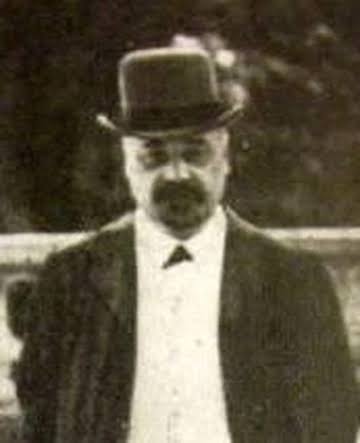
Not that any of it would end well for Manuilov. By 1916, Manuilov had found himself acting as Secretary to Rasputin and on the fringes of a plot by Grand Duke Dmitri Pavlovich Romanov and the British Secret Service to have him ‘removed’ from the team of influencers operating within the inner circle of the Tsar. It was determined that Manuilov, like Rasputin, was in the pay of the Germans and was subsequently arrested. He’d been using his privileged entanglement in various schemes and plots to extort large sums of money for personal use.
The trial that followed revealed the true scale of corruption within the Tsar’s inner circle, the Duma and the Secret Police. The next move was rather more extraordinary. After the Tsar had been toppled and the former-Socialist Revolutionary Kerensky had won his place as leader of the Provisional Government, Manuilov was released from prison. The man who had perhaps done more than most to sharpen the nation’s aggression against the Jews was released by a man that was currently being celebrated globally for their liberation in Russia.
The tale later told by Robert Wilton of The Times wasn’t true. In that version of events a “wild eyed soldier” had “burst” into his cell, screamed “are you for the Revolution?” and let him go. The truth of the matter was that no one was entirely sure why he had been let go. In the last weeks of December 1917, Robert Wilton of The Times was reporting on the indefinite postponement of his trial as a result of several important witnesses failing to show. [5]
The idea of such a high-value individual and enemy of Kerensky’s government being released on the whim of one prison guard even during the chaos of the revolution seemed remote to say the least. Why historians have not made more of this rather unusual episode, isn’t immediately obvious. The Daily Telegraph’s correspondent, E. H. Wilcox certainly thought so. In fact he devoted a whole chapter to the so-called ‘Manuilov Scandal’ in his 1919 book, ‘Russia’s Ruin’, claiming the whole fantastical story “occupied a definite place among the events which brought about the overthrow of the Tsar.” According to Wilcox, the London Press had printed a short telegram on March 6th 1917, just two days before the Revolution announcing that the blackmailer, Ivan Manasevitch Manouiloff, had been sentenced to 18-months imprisonment. It was added that the case raised a host of further questions and that it would be necessary to revisit it in the days and weeks to come. But the promise was never kept. The furious pace of events between February and April meant there was “no time to pick up the threads”. [6]
How such an ‘enemy of the people’ had been brought to trial under the repressive Tsarist government and freed under the Kerensky government never seems to have been adequately explained. Perhaps his sympathies were never really that clear. However, his various intrigues in Italy and the various oblique allusions made by Zeev Jabotinsky to Manuilov being a ‘convert’ go some way toward suggesting this infinitely fluid character may have already switched sides by this point. [7]
The bewildered young Wilson endeavoured to undo some of the damage that had been inflicted on his reputation by providing the Manchester Guardian with an update from official police sources. There had been a return train ticket dated April 9th found in Gapon’s pockets. The sheer number of blows to the head and body, and other injuries like stab wounds and his eye being gorged out, showed that the man had been murdered and then made to appear as if he’d been hanged. [8]
Two days later, the Manchester newspaper published a report that had been inspired by a story that had come into The Tribune. According to The Tribune, a gentleman had called at the offices of the paper and had given them an assurance that Gapon was alive and well in London. They had even arranged an interview. Before the interview could take place, however, the surprisingly buoyant Gapon had disappeared. The Tribune was satisfied with the bona-fides of the gentleman, who held a ‘quasi-official position in London’. The statement was alleged to have been backed-up by a letter received from an ‘M. Nikolaevich’ in Hampstead.
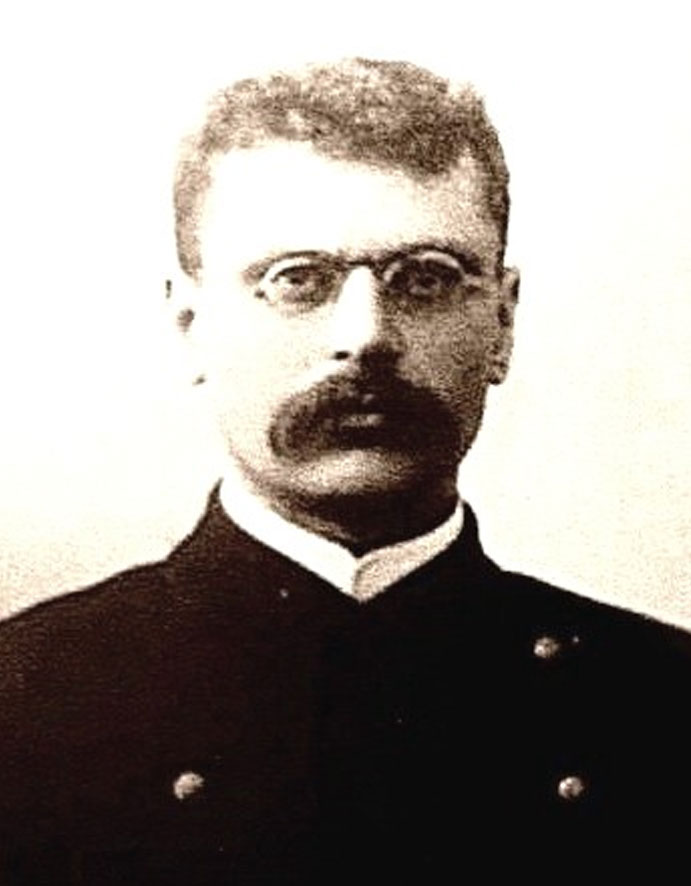
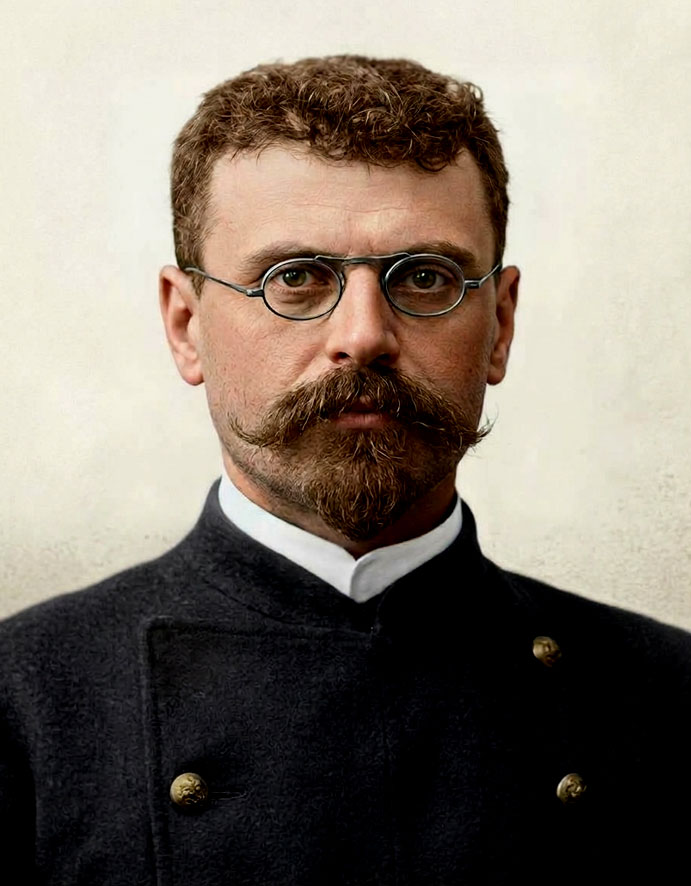
The Manchester Guardian concluded that there was clearly a determined effort to persuade the public that Gapon wasn’t dead. That it was balanced by an equally determined effort to prove it was the work of Rachkovsky and the Secret Police passed by without mention. One thing was certain at least, between them, The Tribune and the Manchester Guardian had managed to create an enduring state of confusion among the British left-wing public. Any attempt to shape public reaction through opinion-pieces and editorials would have laid themselves open to ridicule and disreputability on a long-term basis.
The Tribune had duly contacted their correspondent in St Petersburg, David Soskice. Seeking clarification, Soskice duly contacted Gapon’s lawyer Sergei P. Margolin who confirmed that the body he’d identified in the morgue was that of his client, Georgy Gapon. The evidence had showed that his murderers had bound the arms of their victim and “knocked him senseless” and then hanged. Soskice had said he had been assured that the villas where the murder took place had been the scene of no fewer than fourteen acts of violence over the years, and that the villa had belonged to a relative of an officer currently serving in the St Petersburg Police. The prevailing belief in St Petersburg, Soskice went on, was that the Secret Police had been responsible. [9]
By mid-June, The Tribune were reporting an announcement by the Russian Government that Rutenberg’s guilt had been firmly established and that his accomplices were already in custody. The toxic nature of the various claims seems to have stymied the tide of stories for a time, and it was only the shameless persistence of The Daily Express — obviously experiencing a slow news week — who made any attempt to revive it. The new(ish) story that was to emerge in August that year was that the death of Father Gapon was due “not so much to his having betrayed the secrets of the revolutionary party to the Police as to jealousy.”
During his travels around Europe, it was now being alleged that Gapon had encountered a beautiful Jewess who had worked as an intermediary between him and the revolutionaries. His killer Rutenberg had also been in love with the girl and upon learning that the pair had arranged a lover’s meet, had lured the Priest to Oserki and bludgeoned him to death. [10] It was a curious take on the tale but not altogether unlikely. The Socialist Revolutionaries had issued a similar statement, claiming that Gapon’s assassin had acted autonomously and that the motive had been a personal one. Entries found in the records of the Okhrana by historian Walter Sablinsky appear to confirm this. In a flurry of messages between the Paris office of the Okhrana and the Tsar’s private secretary in May that year, they said it was clear that Rutenberg had murdered the priest out of personal vengeance and not at the behest of the Socialist Revolutionary Party who would have deemed his death unnecessary. [11]
When the Central Committee of the Socialist Revolutionary Party did eventually sit to review the circumstances of Gapon’s death and the alleged treachery of the double-agent Azeff, it concluded that the “murder of Gapon was carried out without the knowledge and consent of the Central Committee as a body”. [12] He was ejected from the party shortly after.
In December 1906, David Soskice at The Tribune provided an update on the investigation into Gapon’s death launched by Russian Police. Communicating with S. D Kvashnin-Samarin, the legal counsel representing Gapon’s widow, Soskice had learned that there existed “quite a number of conspiracies, independent of each other” to murder Gapon and that those who had carried it out had “only forestalled their rivals.” Soskice and Kvashnin-Samarin — S. D Kvashnin-Samarin, a Narodnik of 1860s and former president of the Tver Gubernia Zemstvo Board — ultimately shared the view that any forthcoming trial would inevitably reveal a number of political revelations about Count Witte, and these may have been initiated by rival members of the Government and Tsar’s entourage. As a Narodnik, the nationalistic and intellectual wing of the Socialist Revolutionary Party, the views of Kvashnin-Samarin would have sat quite comfortably alongside those of Soskice.
Up until the review of Gapon’s death launched by the Socialist Revolutionary Party in 1909, Pinchas Rutenberg had said very little about the part he had played in Gapon’s death. The only real exception was an interview that he provided to the Corriere della Sera newspaper in November 1907. Twelve months before he had been in London, but as soon as extradition arrangements were initiated, Rutenberg had fled to Italy. In Italy he would join his old friend Maxim Gorky, recently back from New York and now in Capri, and it was there that the pair would remain until 1915. It was at this point in Italy’s history, when it rejected its alliance with Germany and Austria-Hungary and entered the war alongside the Allies, that the pair’s mutual friend, Zeev Jabotinsky, dispatched Rutenberg on a mission to America to initialise the formation of a Jewish Legion and a Jewish Congress with Chaim Zhitlovsky. [13]
The ensuing report by the Corriere della Sera, fleshed out a few of the details hinted at in the letter to Gapon’s lawyer Sergei P. Margolin. It was a story that would be fleshed out with further details in a series of interviews Rutenberg conducted with Byloe in 1909. But there was one notable exception: in Byloe, Rutenberg says that he too had been under suspicion of being an agent for the Secret Police and that his decision to murder Gapon had arisen in part through his desperation to prove his innocence to his peers. However, his claim that he had gone to the house in Ozerki with two Socialists and two workmen “chosen by their respective associations” not only contradicted the findings of the Socialist Revolutionary committee reviewing the subsequent treachery of Azef, it also contradicted his series of interviews for Byloe in which he claimed to have first sought the permission of the Revolutionary Committee. Rutenberg claimed that on discovering that none of its members had been available, had gone to Azef who had authorized the execution himself.
When the news of this came out in 1909, Azef vehemently denied doing anything of the sort, but the combined evidence provided by ‘Revolutionary Detective’ Vladimir Burtsev and the former chief of Police, A. A. Lopukhin had, by this time, made any denials invalid. By the time that Rutenberg was making his claims about Azef, the ground had already been taken from beneath his feet. Azef was already persona non-grata. Rutenberg had simply provided Burtsev, who had been investigating Azef for some two to three years after an alleged tip-off from an Okhrana agent, with what Burtsev wanted to hear. Rutenberg had seen his opportunity and heaped the entire responsibility of Gapon’s murder on the first real plausible scapegoat. Again, it was a classically timed manoeuvre and just slotted in neatly with a developing narrative.
An Elemental Force Developing
The definitive account of how Rutenberg first ensnared and murdered Gapon made its first cautious appearance in the French journal, L’Humanité, before morphing into a thigh-slapping, barnstorming epic in Burtsev’s Byloe in the summer of 1909. [14] By November 1909, Rutenberg was embarking on his first trip to New York, where he would repeat the entire macabre account for Herman Bernstein at the New York Times. The story, split rather sensationally into a holy trinity of dramatic parts — The Here, The Traitor, The Death — remained vaguely consistent throughout, although it is nothing short of remarkable to think that the starchy British Press, both Liberal, Left Wing and Conservative were framing the brutal and essentially needless murder of a priest as part of a ‘thrilling’ tale of daring-do, rather than the squalid act of messy, personal vengeance that it was.
Rutenberg’s account for the New York Times commenced with some broad assertions about the power of influence that Gapon commanded over the workers: “I saw an elemental force of the events that were developing, all the powerlessness of the revolutionary parties and the intellectuals to exert any influence upon these events … one thing was clear. Under the leadership of the priest the starving exhausted working people, with the dark and solemn resolution that it is “impossible to live any longer this way;” with the naive confidence in the success of the last means, were going to the Tsar to ask for bread and liberty.”
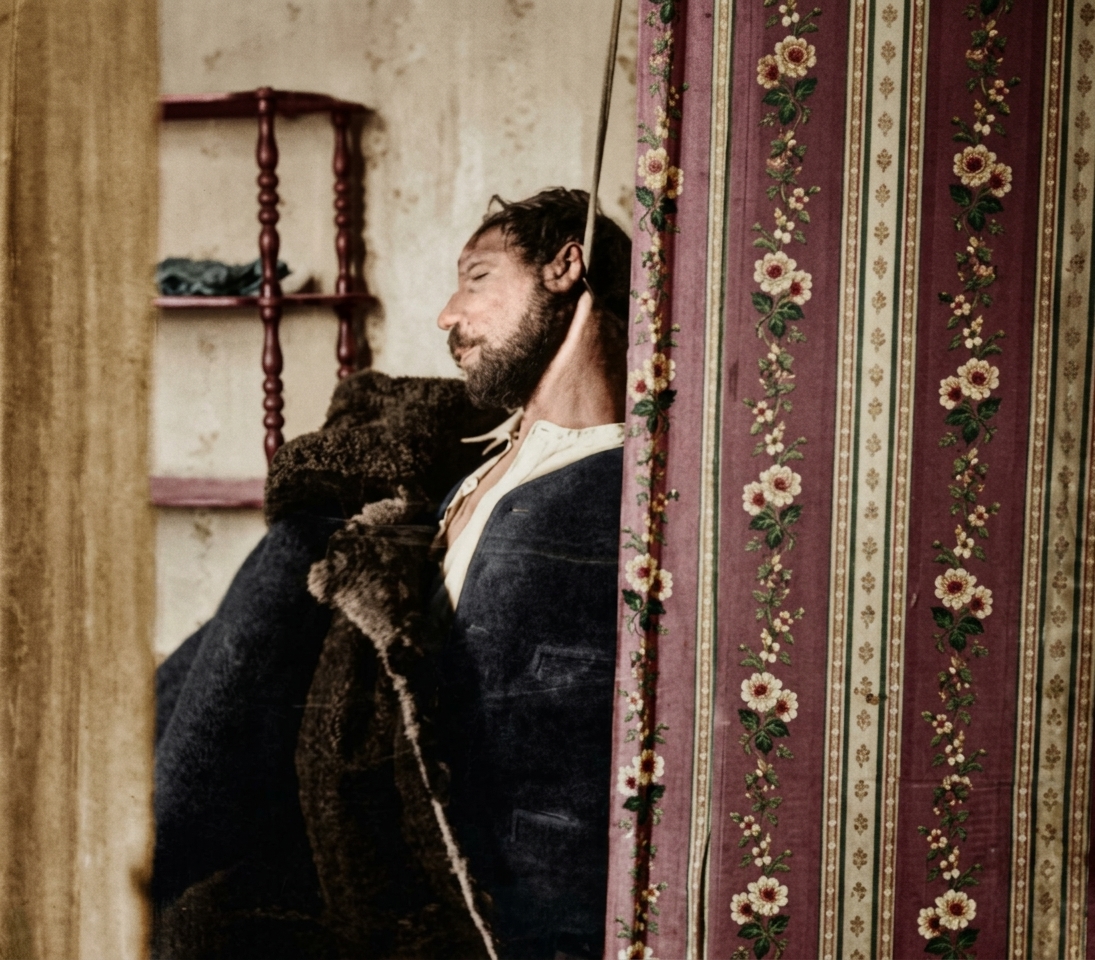
Rutenberg says that after drafting the petition, he next sees Gapon on the morning of January 9th, the day of the protest, and asks the priest, who is “pale faced and confused” if he had any “practical plan.” He had none. Rutenberg then proceeds to demonstrate how he tried to offer practical help and claims that it was at his suggestion that they should raid the gun-shops and arm the people. He says his offer was accepted. A street-map with key positions the troops would take was then produced. Rutenberg was making every effort to have the reader believe that he was prepared in a way that Gapon was not. He was not only beefing up his role in the revolution, he was highlighting the complete indifference that Gapon had shown to ensure the safety of his workers. He was also sending a signal out to prospective groups that he was a more than capable strategist.
As Gapon grows increasingly pale and weak, it’s Rutenberg who digs deep into emotional reserves to make the effort to warn the people. He tells them that the soldiers may not let them pass to the Winter Palace, and provides some tips on how to make their way around the streets to avoid the worst of the volleys. The subtext here is that Gapon, contrary to what he’d claimed in press interviews was deliberately squaring up for violent and armed protest but was doing absolutely nothing to protect them; that he was, to all intents and purposes, leading them like lambs to the slaughter — perhaps even deliberately: “Liberty or death!”, he cries. It’s with these words that Rutenberg achieves two things; he severs the priest from the few remaining Liberals who were still prepared to believe he was a robed and heroic titan of peaceful reform and parliamentarianism, and reinstates him within the trammels of disastrous military history. He was another General Custer at Little Big Horn, another Napoleon at Moscow. [15]
There then follows a graphic account of the cavalry and the Cossacks tearing into the people with swords slashing wildly in all directions, and the explosion of wanton chaos that sweeps through the streets. Leaving behind the blood and the corpses and the groans of the wounded, Gapon becomes “seized with a nervous fever.” His concern isn’t for the workers lying dead and broken around him but for his own wellbeing: he is frightened of being arrested. Rutenberg leads him to the house of a friend, and that friend was Maxim Gorky — the same author who arrived in the United States within days of Gapon’s murder some 12 months later. His hair had been shorn, he’d been swapped into some other clothes, and according to Rutenberg’s account at least, was switching between moods of vanity and indifference when safe, and hunkering nervousness when in danger.
On the night of the demonstration he was alleged to have sat in Gorky’s study and asked: “What is to be done, Alexey Maximovich?” Gorky had tried to console him and told him that it was necessary to go ahead till the end, even if death seemed practically ensured. A decision was made to get a message across to the workers, a formal proclamation of sorts, but the words that he had composed were deemed so unsuitable that Rutenberg was forced to rewrite them. However, Gapon had liked his expressions so much that he signed fifteen blank sheets of additional paper and suggested that Rutenberg should finish it.
The picture that Gapon’s former friend was painting was of a man seriously out of his depth and being overwhelmed and incapacitated by a deluge of important decisions: “he fell from one awkward position into another, and I had to disentangle him”, wrote Rutenberg. Despite his misgivings, and contrary to everything he had claimed so far, he reasserts his loyalty to Gapon by saying that he was sincere to the cause at this time and cared little for his own “greatness.” The sympathy he’s soliciting from the reader, however, is not for Gapon but for himself. He wants to be seen as the loyal and trusted friend who would remain faithful till the end, in spite of the evidence. On the one hand, the narrative that he is crafting is murdering Gapon all over again, and on the other he is presenting himself rather gallantly as an unquestioning friend and disciple, who was prepared to go along with Gapon’s wish to “unite and organize all the revolutionary forces” of Russia , France and Britain around him. [16]
It was at this point, Rutenberg says that they parted ways. The next part of the story shows the relatively quick spread of his vanity and his enlistment into the Socialist Revolutionary Party (something that did not and could never have happened). It shows the priest being seduced by fame and twisted by all the glorious possibilities and opportunities that easy money could bring. “Unheard of sums paid him for his manuscripts” and even a certain English Princess was falling over herself to meet him. Theatre and circus posters announcing his arrival in towns and cities throughout Paris and London were being pasted in the streets, paving the way for his “performances.” Gapon was seen to be positioning himself at the centre of the Revolutionary universe, appointing himself leader of all men.
In February 1906, some six month after the ‘last date’ of his European Tour, Gapon had paid a secret visit to Rutenberg in Moscow. He had something very important to tell him. They were to go to the Yar restaurant in Moscow where they could talk. Fearing arrest if seen in public, Rutenberg at first said no, but Gapon assured him he had nothing to be fear. In other accounts Rutenberg would say that Gapon had come to see him in Finland, so the revision here may be a significant one. Despite the certainty of a heavy Police presence and the creeping shadows of Okhrana spies, Rutenberg says he agrees to meet the priest and promises not to breathe a word of what he tells him to the rest of the revolutionaries. And what he tells him is quite astonishing. [17]
Enlisting Rutenberg into his confidence by praising him for his loyalty and fidelity, Gapon tells him that he has been privately working with Witte’s secretary Ivan Fedorovich Manasevich-Manuilov, the son of a Jewish official also working as correspondent for the newspaper, Novoe Vremya, and as an agent for the Secret Police who had worked for Rachkovsky in Paris. According to Rutenberg, the man who had introduced Manuilov to Gapon was Gapon’s press secretary, Matushensky. Manuilov and Witte were said to be seeking Gapon’s support in reviving the Worker’s Assemblies as an alternative to the radical revolutionary movements that Gapon had moved across to in Europe. Again it was with one condition: there were to be no unauthorized demonstrations and strictly no Socialism.
Rutenberg’s narrative becomes rather compromised at this point, the sequence of dates and events resisting any attempt to arrange them in a plausible, logical order. Rutenberg wants us to believe that in February 1906, Father Gapon was trying to recruit him as an agent for Manuilov who was said to be running Gapon through his press agent, Matushensky. But by February 1906, Matushensky was already under investigation for embezzling worker funds. He also wants us to believe that Gapon was attempting to recruit him on the basis of his loyalty and fidelity to the Revolutionary cause. But therein lays the problem. If Rutenberg was so committed to the revolutionary cause then why was he being recruited as a potential informer? Surely he would be the last person the priest would approach. Far better to have selected someone whose fidelity to the cause had been challenged or complicated as much as his own.
Attempts by Manuilov and Matushensky to revive the workers assemblies had dated back to early November, shortly after the Tsar had published the October Manifesto which pledged the formation of the Duma, and a whole new era of civil rights for ethnic Russians — peasants and workers alike — and the loosening of certain restrictions for a narrow group of Jews such as those studying law or embarking on other routes of assimilation. The new Minister of the Interior, Pyotr Durnovo, wanted the Assemblies closed and Prime Minister Witte had wanted them re-opened.
As a result, Durnovo’s right hand man and the new Assistant Director of Police, Pyotr Rachkovsky had his acolyte, Manuilov, broach a scheme to Father Gapon who was assuring the triumvirate that he’d lost faith in the Revolutionary movement and was once again desirous of seeking change through professional and peaceful means. To cut a long and faintly implausible story short, Rutenberg says he had gone along with the scheme for the sake of learning more and entering the confidences of Rachkovsky and the Secret Police. He was looking to become a triple agent.
Again, the narrative was not making a great deal of sense. Rackovsky was alleged to have been doing Durnovo’s bidding and Durnovo had very much liked to see the Workers Assemblies closed. Yet here was Rutenberg asking us to believe that Rachkovsky was recruiting Gapon to spearhead the Assembly’s revival and “legalise’ the movement completely — the complete antithesis of what Durnovo had been demanding. [18]
The middle and clearly more explosive part of Rutenberg’s narrative is his account of the various conversations that were alleged to have taken place between Gapon and Rachkovsky — and which Rutenberg was able to recount in astonishingly great detail. First they had discussed the fairy godmother and godfather of the Socialist Revolutionary Party, Madame Babushka and Viktor Chernov. Then they had discussed Rutenberg and his relationship the Socialist Revolutionary Party’s combat organisation and it was at this point that Rachkovsky had suggested that Gapon should recruit him also. Gapon’s reply was that it would cost at least 100,000 roubles. They had been looking for more information about a plot to murder the Tsar, Witte and Durnovo and thought Rutenberg would make a suitable provocateur.
Rutenberg said he couldn’t believe what he was hearing and had little option but to play along with it, until he could inform the Central Committee. He told Gapon he would consider it and set-off immediately for St Petersburg, seeking instruction from its senior members. Arriving in St Petersburg he found no one, and sought out Azef in Seversk. It was here that he told Azef everything. Azeff is alleged to have told him that he should not wait for authorisation and execute Gapon as soon as it was conceivably possible.
Azef’s preferred idea was for Rutenberg to lure Gapon and Rachovsky to a meeting and kill them both in the act of conspiracy. If their bodies were discovered together, the Revolutionary Central Committee would have little option but to believe the charges he brought before them and that Gapon had betrayed them all. Rutenberg makes some attempt to arrange this, but is thwarted by the creeping suspicions of Gapon. Instead, he arranges the meet at the summer house in Oserki and places the workmen in an adjoining room so they can overhear the priest’s confessions.
On Tuesday March 28th, Gapon arrived at the house and entered into a frank discussion with Rutenberg about their arrangement. After becoming somewhat jumpy Gapon is said to have stumbled across one of the workmen who attempts to pass himself off as a servant. Pushing him against a wall, the priest checked his pockets and found a revolver. Rutenberg says he feigned surprise and took the gun from Gapon’s hands. At that moment he stepped back and swung open the door to reveal the workmen who had been listening. Everything was clear. They knew all his plans. Gapon was bound and subsequently hanged. No mention was made of the vicious beating that was alleged to have killed him, or the gorging out of his eye. It was a grossly sanitized version that wouldn’t have looked out of place in a best-selling ripping yarn. [19]
The fact that the conversation with Gapon is alleged to have taken place at the end of February when the investigation into Matushensky had already been launched and the rumours about Gapon’s duplicity had already started to spreads inclines me to think that much of what Rutenberg tells Byloe and the New York Times is to all intents and purposes a pack of lies. And why Rutenberg had suddenly brought forward Gapon’s death by some fourteen days to March 28th remains a mystery. In the account he’d provided in Italy in November 1907, Rutenberg had claimed that the priest had been killed some two weeks before Police had discovered his body. The date for that was April 30th. Even allowing for the Russian Old Style (Julian) calendar the March 28th would be April 10th in England and the train stub from St Petersburg found in Gapon’s pockets was dated April 11th.
If Gapon had died on April 12th which was suspected by Police this would have made it March 30th on the old style calendar. In the West this would have been around Easter, the day of the Last Supper to be more precise. What better day to avenge a betrayal? I say this not to cause offence but because there are several times when Rutenberg’s narratives draw upon Christian imagery that’s not always in the best taste. His account of cutting Gapon’s hair during their escape is a case in point: “I offered to cut his hair. He did not object. The workmen who had just experienced all the horror together with us stood around us at a great sacrament, receiving from me tufts of Gapon’s hair in their outstretched hands, with bear heads, reverently repeating, as during prayer: “Holy!” Gapon’s hairs were distributed among the working people and were kept by them as relics.”
In fairness, the detail about Gapon’s hair leaves little to the imagination, alluding as it does, both to the story of Samson and to the perfectly recognizable ritual of Holy Communion. There’s clearly a hostile and mocking undercurrent: the good natured workers are seen ‘receiving’ the divine grace of the false Prophet Gapon. Is the vaguely contemptuous reference to ‘outstretched hands’ and the ‘bear heads’ significant? Jewish law dictates that men should cover their heads during prayer, so it may have been offered as additional evidence by Rutenberg of the profane nature of Gapon and the workers action, but if he did at would have been at the risk of offending a sizable percentage of the world’s readers.
One of the most important centres of power in many religions is the hair. The belief among some is that men should not enter the Divine presence with a bare head. But to arrive at an exact reading of Rutenberg’s statement is fraught with complications relating to both time and custom. Among some religions of the world to tear one’s hair was a sign of utter despair, as many women did during mourning rites. By contrast, among Sikhs, Muslim and even some Jewish sects, the cutting of hair is even prohibited. It may even have been the case that receiving Holy Communion ‘bare headed’ was just as irreverent a practice in the Russian Orthodox Church at this time. Perhaps it was acceptable among Nonconformists but not within the so-called High Churches.
Divining the author’s intention is not an easy task. But one thing seems certain; Gapon’s autobiography, published just months before his death, wrote that if there was only one ritual of the Orthodox church that he could get behind with any real sense of belief or enthusiasm, it was the celebration of the Mass “in which a vision of the full meaning of Christ’s sacrifice” had come to him. It was, he confessed, the only time that he had felt any sense of “elation” or “delight” in his work. [20]
read: Death of Father Gapon Part I
[1] Vladmir Burtsev – a liberal revolutionary who styled himself as a Revolutionary Sherlock Holmes. He was responsible for uncovering dozens of agent provocateurs and informers for the Russian Secret Police (the Okhrana).
[2] Fighting Words: Imperial Censorship and the Russian Press, 1804-1906, Charles A. Ruud, University of Toronto Press, 1982, p.215
[3] ‘Kishineff Massacres’, Westminster Gazette, 6 June 1903, p.6
[4] Windows on the World, Robert W. Desmond, University of Iowa Press, 1980, p.33
[5] ‘The Trial of Stuermer’s Private Secretary’, Justice, January 4, 1917, p.5
[6] Russia’s Ruin, E. H. Wilcox. Chappell & Hall, 1919
[7] ‘An Odessa Odyssey’, Barry P. Scherr, Slavic Review, Vol. 70, No. 1, Spring 1911, Cambridge University Press, pp. 109-110
[8] ‘Father Gapon’s Death’, Manchester Guardian, May 15, 1906, p.12
[9] ‘Gapon Tragedy’, Manchester Guardian, May 17 1906, p.12
[10] ‘Father Gapon’s Murder’ Manchester Guardian, Aug 11, 1906, p.6
[11] The Road To Bloody Sunday, Walter Sablinsky, Princeton University Press, 1976
[12] Zakliuchenie Sudebno-Sledstvennoi Komissii Po Delu Azefa, Paris 1911, p.97
[13] ‘Hebrews to Meet Tonight’, Philadelphia Inquirer, August 30, 1915, p.8
[14] Byloe, no.11-12, July-August, 1909, pp. 29-115
[15] ‘How Father Gapon was Led to His Death’, Pinchas Rutenberg, translated by Herman Bernstein, New York Times, November 7, 1909
[16] ‘How Father Gapon was Led to His Death’, Pinchas Rutenberg, translated by Herman Bernstein, New York Times, November 7, 1909
[17] ‘How Father Gapon was Led to His Death’, Pinchas Rutenberg, translated by Herman Bernstein, New York Times, November 7, 1909
[18] ‘How Father Gapon was Led to His Death’, Pinchas Rutenberg, translated by Herman Bernstein, New York Times, November 7, 1909
[19] ‘How Father Gapon was Led to His Death’, Pinchas Rutenberg, translated by Herman Bernstein, New York Times, November 7, 1909
[20] The Story of My Life, Georgi Gapon, Chatton and Hall, p.24