The way that Edwin Woodhall’s narrative evolves is that Percy Toplis, like motor-gang nemesis Jules Bonnot before him, had been helped by radicals he’d met in the deserter camps around Camiers. If this is true, then its possible that once back in England he had somehow managed to embed himself into the deeply subversive sub-culture of London and Paris Bohemia. Did the freshly liberated women around Richmond and Chelsea present a lucrative new seam to mine? According to his 1929 book, Detective and Secret Service Days, Woodhall’s earliest days in the Special Department were contemporary with the growing Suffragist agitation:
“I repeat that there was a considerable undercurrent of political bias in the movement, and if you had to examine the lists of Fascist women’s membership today, I think you would find a number of names that were there which were familiar in the days of the great Suffragette trouble.” — Detective and Secret Service Days, Edwin T. Woodhall, 1929
Woodhall’s Secret Service commander, Sir Basil Thomson shared much the same opinion, conflating everyone from Suffragettes and Irish Nationalists, Pacifists and British Marxists with the volatile political manqué supporting Germany’s ambitions. Interestingly, the street on which German Spy George Breeckhow took up residence in 1915 (Bloomsbury Street) became the HQ for the Left-wing and Suffrage periodical, Time and Tide. The hotel itself reclaimed its notoriety some 50 years later when British SiS agent, Frank Bossard (former member of the British Union of Fascists) was arrested at the Ivanhoe for spying for the Soviets.
From Woodhall’s perspective Toplis must have seemed like Bonnot’s British counterpart. Both men were alleged to have been at the forefront of various ‘motor bandit gangs’, both had been trained in the ungentlemanly art of villainy in and around streets of Montmartre in Paris, both had found favour with anarchists and both had come into contact with the roaming Bolshevik contingent responsible for encouraging desertion in the woods and caves around Etaples (Bonnot’s mentor and colleague, Victor Serge was actually arrested in France with a small Bolshevik contingent in the period in which the Etaples Mutiny took place). Woodhall saw both men as vicious reprobates skilled at exploiting anarchy and extremism for their own mercenary pleasures. In a passage that looks like it might very well of come out a Brexit manifesto, Woodhall laments:
“The activities of Special Branch was formed primarily to watch the activities of certain undesirable visitors to these shores. The open door which it was Britain’s boast to keep for all, the asylum for which this country provided for the oppressed of other countries, and for refugees of all nationalities, was not without its very serious attendant dangers …. Frequently it was found that some of these alleged “oppressed” refugees were indeed, criminals of a very desperate order.” — Detective and Secret Service Days, Edwin T. Woodhall, 1929
Woodhall doesn’t mince his words when it comes to subversive movements, foreign or domestic. For the Toplis detective, any movement that condoned the use of illegal and anti-social methods to achieve objectives was destined to attract not just the ‘hysterical and fanatical element’ but also the criminal element. He said it was as true of the Suffragette Movement as it was the Irish Nationalists and the Communists. Criminal elements would ‘creep in and use the movement as tools to bring about their desired ends’. Latvian revolutionary Peter the Painter and French Anarchist anti-heroes like Jules Bonnot (both of whom make it into Woodhall’s book) are judged to be little more than lumps of iron pyrite masquerading as people’s gold, their extravagant ‘illegalist’ philosophies a rambling front for peasant envy. In Woodhall’s estimation Peter the Painter never organised a burglary or a robbery without emphasising to his comrades a ‘political angle’ to his schemes: anarchist last and criminal first. As Woodhall puts it, his anarchy was ‘used as a cloak’ to ensure the loyalty and commitment of a substantial political underground.
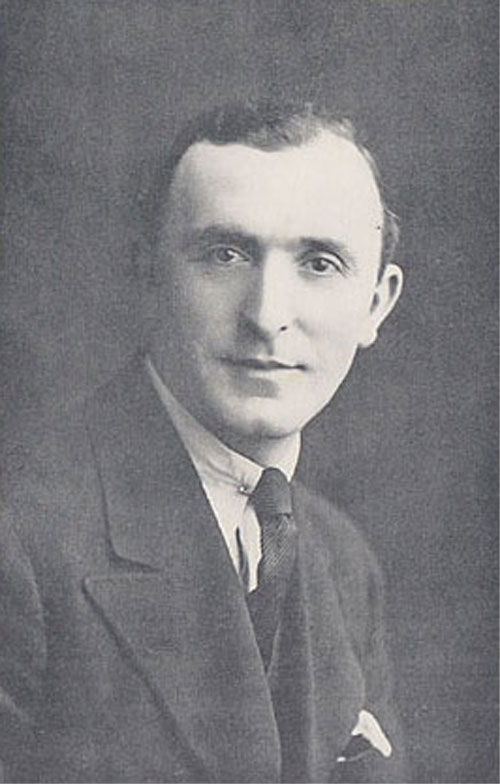
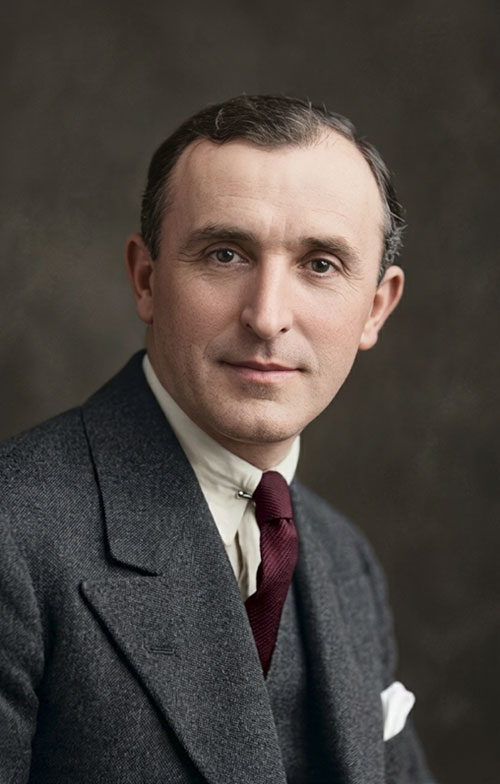
Not that Woodhall wasn’t without some sympathy; ‘extreme poverty and conscious inferiority were always at the root of crime’, he writes. The deaths of Jules Bonnot and Peter the Painter in separate sieges in 1911 brought closure for the detective. Cases had been closed, crises had been averted and desserts, just or otherwise, had been emphatically served. Real or imagined, Toplis was a loose-end, his daring escape from the army’s detention compound on Woodhall’s watch wasn’t just an opportunity missed, but proof that subversion paid:
“It is a well known axiom in criminal investigation, especially in political crime, that an unfinished crime is an automatic challenge to other fanatics!” — Detective and Secret Service Days, Edwin T. Woodhall, 1929
The stake he finally drives through the heart of Bonnot and Peter the Painter may prove critical to our understanding of the narrative he builds around Toplis. In a move that is clearly addressed to their legion of die-hard supporters, Woodhall makes a stunning ‘revelation’; Peter the Painter didn’t fight in the Siege at Sidney Street, but left his comrades to die, escaping to France in the hue and cry; he was a traitor and a coward. Woodwall’s pièce de résistance in the tale was even more shocking: Peter the Painter and Jules Bonnot were one and the same. He took exactly the same tack with Toplis: you couldn’t just kill a man, you had to kill what he stands for. As John F Kennedy said, ‘a man may die and nations may rise and fall, but an idea lives on’. Woodhall would have to kill the idea. Anarchy though was one thing, espionage was quite another.
Civil Unrest
In the relative calm of the ante bellum, subversion, though disruptive, produced little in the way of fall-out. Men would strike, they would go back to work. A fire would spring up, a fire would be put out. In war time Britain this was very different. Woodhall would be faced with a far greater concern than insubordination; had Toplis’s skills in impersonating officers brought him into contact with German or Communist spymasters? Bolshevik members of the rebellious First Russian Brigade had already played a central role in the French Army Mutinies in the Spring of that same year.
The spark that had ignited the Russian Revolution was spreading throughout Europe and there was some indication that Germany were among those keenest to have Lenin and the Bolsheviks in power. Lenin hadn’t backed the war with Germany and there are those who believe the German government secretly provided safe-passage for the leader to return to Moscow from Switzerland in the Spring of 1917.
As for himself, Woodhall claims to have helped foil an attempt by The Russian Nihilist Movement in London to kidnap the young Russian Prince Alexei. He recounted similar stories of espionage and daring-do in his book, Spies of the Great War, published in 1935. Ever since encountering a young Lenin in London, Woodhall and Scotland Yard had been monitoring the emergence of Bolshevik networks in the Clydeside area of Glasgow. Woodhall had been tasked specifically with watching the ‘Russian Refugees’ in and around the Limehouse and Whitechapel districts. His encounter with both Lenin and Kropotkin on Jubilee Street is recalled in his 1936 book, ‘Secrets of Scotland Yard’.
Woodhall’s feelings about the Russian Revolution of 1917 are unequivocal; “it was not a sudden and spontaneous, and unexpected event rising out of the extraordinary circumstances of the time” but the expression of a long, pent-up revolt. It was “the boiling point of countless schemes, which were conceived in misery and fostered in exile.” (Secrets of Scotland Yard, 1936). In January 1919, several Russian émigrés had helped foment a clash between 60,000 striking workers and Police and English troops. An estimated 10,000 English troops in total were deployed to contain the riots. This was in spite of a full battalion of Scottish personnel stationed at the nearby Maryhill barracks.
Drawing on their considerable experience at Etaples, where Scots and New Zealand troops had been involved in the most violent skirmishes, law enforcers had made an educated guess that if a truly revolutionary situation was to develop then Scots soldiers were more than likely to side with the workers. There was intense speculation in Whitehall that foreign revolutionaries and foreign money were behind the strikes. Viscount Long, First Lord of the Admiralty, and Woodhall’s commanding officer at Special Branch and Scotland Yard, Basil Thomson, corresponded regularly on the issue. As far as Long was concerned, both the police strikes, the rail strikes and the strikes that broke out in the Clydeside area of Glasgow were the result of only one thing: “German Intrigue and German money”.
In Defence of the Realm: The Authorized History of MI5, author Christopher Andrew suggests that privately Thomson may not have been entirely convinced that Long was right, but that he appeased him nonetheless. Thomson was well aware of wartime paranoia, drolly observing in Queer People that it was ‘positively dangerous to be seen in conversation with a pigeon’ when hysteria was at its height. But there was something more pressing here; Long was a crucial ally in Thomson’s bid to fund and build the then nascent Mi5.
Even if Long was being unduly suspicious, having these dark, elusive phantoms dominating the imagination of those in Whitehall was clearly desirable. Ghosts and enigmas like Percy Toplis were worth their weight in gold. In return for endorsing Long’s revolutionary conspiracies, Long backed Thomson’s request for a coordinated domestic intelligence system with a civilian as its head.
The Battle of George Square as it became known was the culmination of years of hardcore activism. A series of local strikes and insurrections had followed an excitable flurry of anti-war demonstrations organised by Communist Celtic firebrand, John MacLean. In January 1918 MacLean had been elected to the chair of the Third All-Russian Congress of Soviets and a month later had been appointed Bolshevik consul in Scotland. He was even paid direct tribute by Lenin himself when the newly appointed Russian leader told his supporters that MacLean was one of the “best-known names of the isolated heroes who have taken upon themselves the arduous role of forerunners of the world revolution”. His outspoken opposition to the First World War, and his subsequent arrest under the Defence of the Realm Act made him a powerful national hero and an obvious enemy of the State.
During the early 1900s, head of the Special Intelligence Service, William Melville (the original ‘M’) devoted a considerable amount of money and resources to infiltrating the Polish and Russian émigré communities, and many of these assets would not have been out of place among the more salacious establishments of the European underworld. We need to remind ourselves of one thing here; although a skilled and resourceful player himself, there were those within the professional spying community who could seriously outplay Percy.
Toplis Ace of Spies?
Well, anything was possible if you closed your eyes and fantasied long and hard enough. Had he been at any point a paid-informer? That certainly might account for his easy escape from detention (should it have ever really taken place). It might also account for how such a renowned deserter was able to re-enlist in the army in 1919. A total of 292 deserters had been captured and executed since hostilities began. Even during the peacetime year in which Percy re-enlisted a further six outstanding deserters were convicted and duly shot. The army themselves have no explanation for how Toplis was allowed to re-enlist.
The logical explanation would be that he was never on a list of deserters and that his wartime deployment was at best rather fluid. On the other hand, maybe the army simply couldn’t keep track of the sheer number of casual absconders leaking from battalions at this time. Percy’s itinerant life in Scotland during the 1911-1912 period could certainly have brought him into contact with Bolsheviks and anarchists, but there is no record of any political sentiments being expressed by the young rogue.
Although its terrifically unlikely, his earliest encounter with these kinds of figures would have been during his two-year incarceration at Lincoln Prison, the correctional facility of choice for audacious Irish nationalists like Éamon de Valera and Conscientious Objectors like Fenner Brockway. Alternatively Toplis could very likely have fallen in with the French Milieu, a particularly vicious and well organised group of criminals operating in Paris at that time (Woodhall says Toplis was shielded by Parisian underworld after his escape from the compound at Le Touquet). One thing we can say with certainty is that British Intelligence, with the backing of several prominent politicians began to see the Etaples riots as a deliberate plot by Bolshevik subversives acting on the orders of German agents to undermine the British and French war effort and started looking closer to home for possible clues.
“The AG reported some disturbances had occurred at Etaples due to some men of new drafts with revolutionary ideas who had produced red flags and refused to obey orders. The ringleaders have been arrested and others sent to their units at the front.” — Douglas Haig: Diaries and Letters 1914-1918
Since the beginning of the war, the British Socialist Party (BSP) had packed a serious anti-war message. After the war ended, the BSP evolved into a more volatile revolutionary socialist organisation, eventually merging with the Communist Party of Great Britain in August 1920. Active duty within trade unions and strikes became routine. The organisation’s conference in Blackpool in 1913 attracted more than a 100 delegates. Lenin himself was aware of the event, worrying that the party’s newly emerging leader, Henry Mayers Hyndman, was increasingly supportive of British military intervention. And whilst this became something of a moot point among more radical members of the group, the BSP Annual Conference in Leeds at the time of the French Mutiny in April and the British-New Zealand riots at Etaples in September 1917, was all the proof that Cummings and the Security Service needed to suspect that British and French Pacifist organisations may have played a part. The idea that the military riots were spontaneous, and not communist in nature was rejected outright.
Speculation and rumour can’t have been helped by the fact that the area in which some of the deserters were taking refuge was popular among Europe’s artists and intellectuals. Fabian Socialists like HG Wells and Amber Reeves had both eloped here. Back in Britain, the War Cabinet demanded a full assessment of the threat posed by anarchist and socialist movements, believing the groups to have been funded directly by German money. Between July and November 1917 a total of five British pacifist centres were raided, one of them at the Wakefield Work Centre in West Yorkshire (November 1917) and one at the Brotherhood Church in London (October 1917). This particular venue had been used by Lenin and the Russian Social Democratic Labour Party to host the group’s 5th Congress and was located on Southgate Road in the Limehouse district of London.
Other Pacifist routs took place in Bristol, Manchester and Swansea. A committed Intelligence gathering operation had been in place since April and events in Etaples and La Courtine only ratcheted up concerns at the War Office that British subversives were accepting German money as a means of undermining the war effort. In September 1917, the month of the mutiny, Paul Bolo, editor of an anti-war newspaper based in France was arrested on his way back from Switzerland. He was believed to have been in receipt of German subsidies and was executed some twelve months later. Similar concerns were raised by Nicholas Klishko, a known Bolshevik with links to both the British pacifist movement and suspected German agents. If you found yourself under arrest as a Bolshevik in 1917, you were most likely suspected of being a German agent. Percy Toplis’ dramatic costume changes and his prodigious cash-flow shenanigans could only have aroused suspicion.
If Toplis was impersonating officers and socialising with officers, then there was also every chance that he was privy to the secrets of officers too, making him an attractive and resourceful recruit to German agents. To the likes of Basil Thomson, Percy’s legendary promiscuity with women in the higher echelons of society followed the “usual spy routine of making love to impressionable young women and winning acquaintance by the promise of partnership” (Queer People, 1922). Much the same path had been followed by Carl Frederick Muller, an acquaintance of Breeckow and executed shortly before him in June 1915.
Even if Toplis had been nothing more than a skilled and arrogant chancer it would be reason enough for someone like Woodhall to be suspicious. As head of counter-espionage in the Boulogne area and irrespective of any other crimes the ‘Military Ishmael’ may have committed, Toplis would have been on his radar. It also seems reasonable to assume that the military top-brass would much prefer passing off the mutinous incidents as the work of hostile forces — Bolsheviks, or otherwise. If it didn’t, the military would have some serious explaining to do. Recasting this impudent working-class villain as an accomplished spy and professional saboteur would certainly go down better with the Home Office. Explaining it as the result of a catalogue of military failures, including serial failures to either inspire or contain the troops, was likely to end several promising careers.
_______________________
As I stood in the calm, diffuse sunlight of the bothy, it was difficult to imagine the events as they unfolded all those years ago. On his return from visiting family, gamekeeper John MacKenzie had seen smoke rising from the chimney of the Gamekeeper’s Lodge where Toplis had taken refuge. He immediately recruited Constable George Greig and local farmer, John Grant to go with him to the lodge. Apparently unaware of the threat the occupant posed, the men entered. Toplis was asleep on a tartan rug in front of the fire. Startled he sprang to his feet and demanded to know the reason behind the intrusion. The Constable explained that Toplis was trespassing, and pointing to the chair that lay broken in front of the fire, mumbled something about damaging property.
In an effort to bluff his way out of the situation Toplis explained that he was an American soldier, George Williams, recently demobbed from the Army and hitch-hiking his way across Scotland. Having already seen the bike outside of the lodge, the Constable knew that Toplis was lying. Without warning Toplis drew his pistol and opened fire, hitting the Constable in the neck and the farmer in the stomach. The gamekeeper escaped unhurt and ran off to raise the alarm. Percy rushed from the scene on his bike, singing popular war-time favourite, ‘Good-bye-ee’ at the top of his voice as he cycled down Old Military Road.
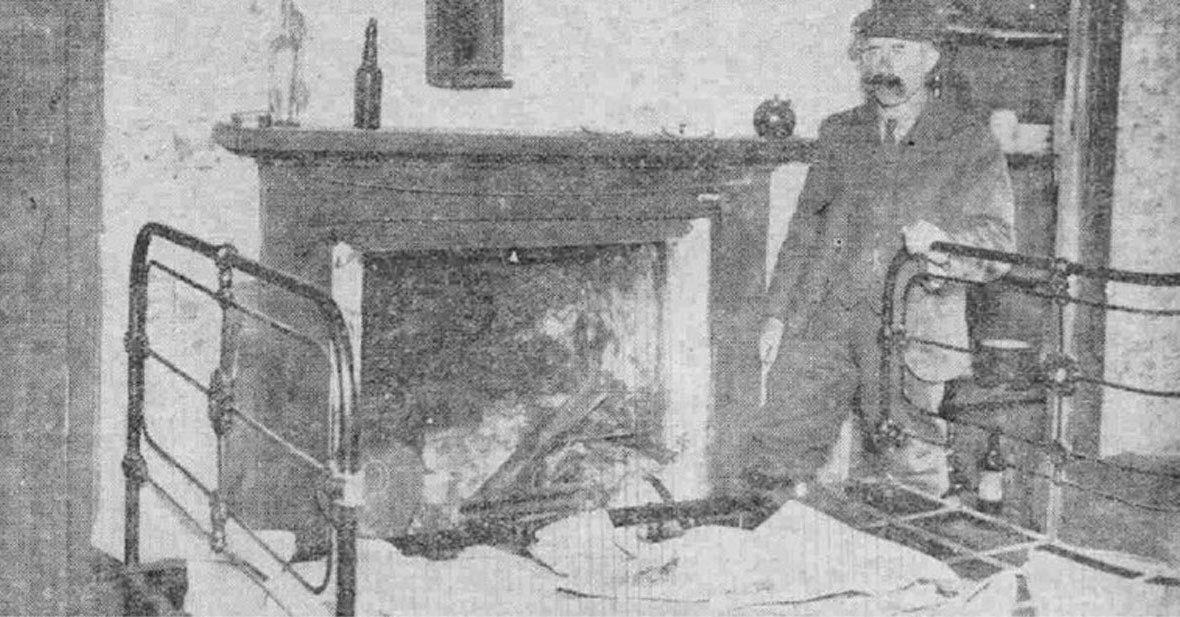
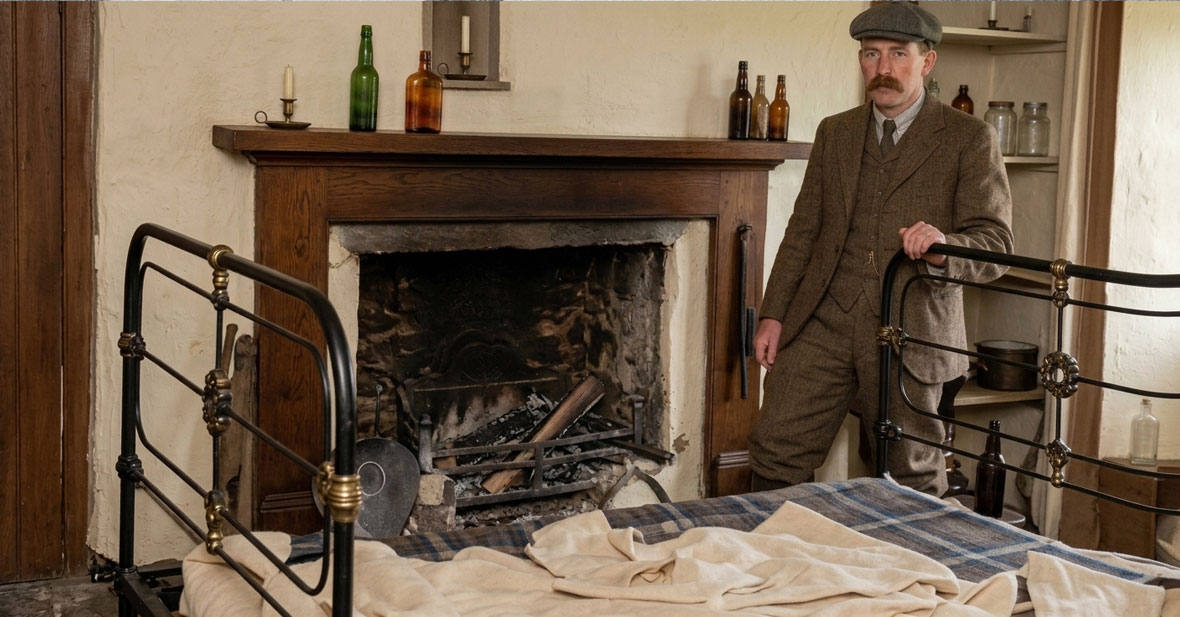
By this point Toplis was already the Most Wanted Man in Britain for the murder of taxi-driver, Sidney Spicer in Hampshire. He’d been tried and found guilty in absentia. If caught he would be executed, which makes his decision to hotfoot it to the barracks at Carlisle, home at that time to the King’s Own Border Regiment, all the more extraordinary. The witness account that implicated Toplis in the murder of Spicer is an interesting one. Listening to the testimony of Private Henry Fallows we learn that Toplis had arrived at the Bulford Camp shortly after the murder had taken place.
Fallows claims Toplis invited the Private to accompany him on a car journey east, first to a Temperance Hotel in Swansea and then to Cardiff where the trail goes cold. Fallows describes how Toplis stopped the car at Savernake Forest to burn several items of clothing he had unpacked from the boot. Percy’s explanation was that they were rags and of no use. In spite of his involvement after the fact, the Private was duly discharged by the magistrate who was happy that Fallows had not ‘the slightest conception that Toplis had committed murder’.
Why Toplis, a man who was very much in the habit of working alone, should deliberately burn several mysterious items of clothing in front of a witness who seemed to serve no practical purpose being there, and whose knowledge of the escape Toplis could have well done without, isn’t challenged by the Coroner. Fallows says Percy simply asked him to join him on a ‘joyride’, promising to pay his returning train fare to the camp from Swansea. Why Percy needed Fallows to observe his moonlight getaway isn’t explained at all. Only Toplis had been driving the car, so the young man wasn’t needed at the wheel. Unusually, the Police take Fallows at his word. Sadly, Fallows was to die in mysterious circumstances some six years later, his body found in a cave in Derbyshire with a vial of poison at his side.
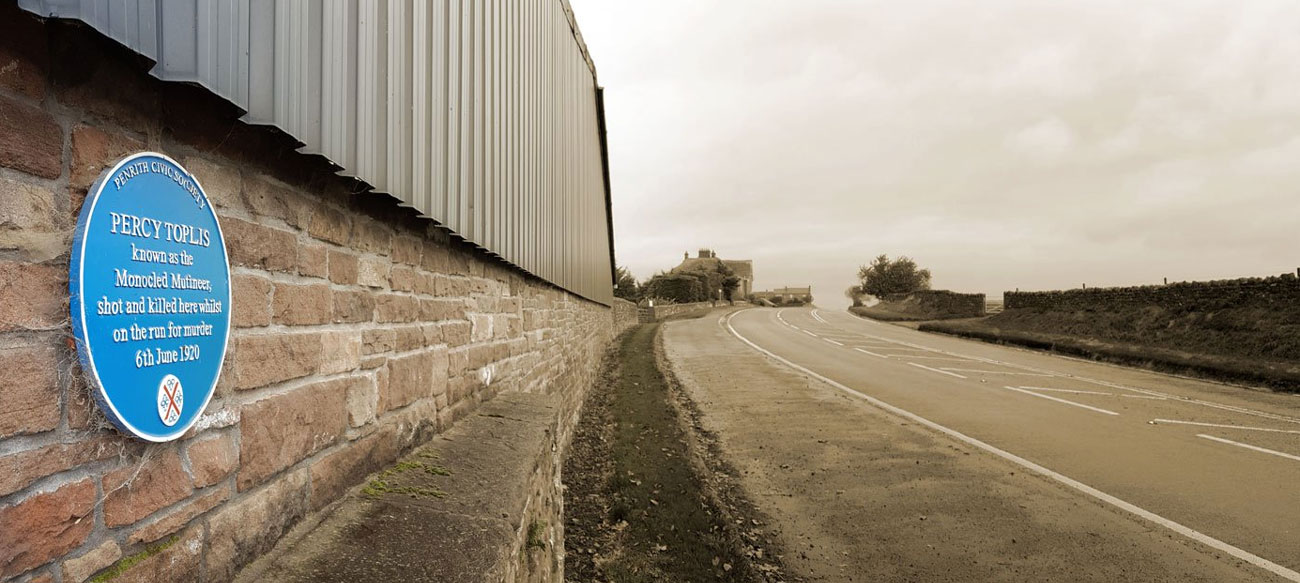
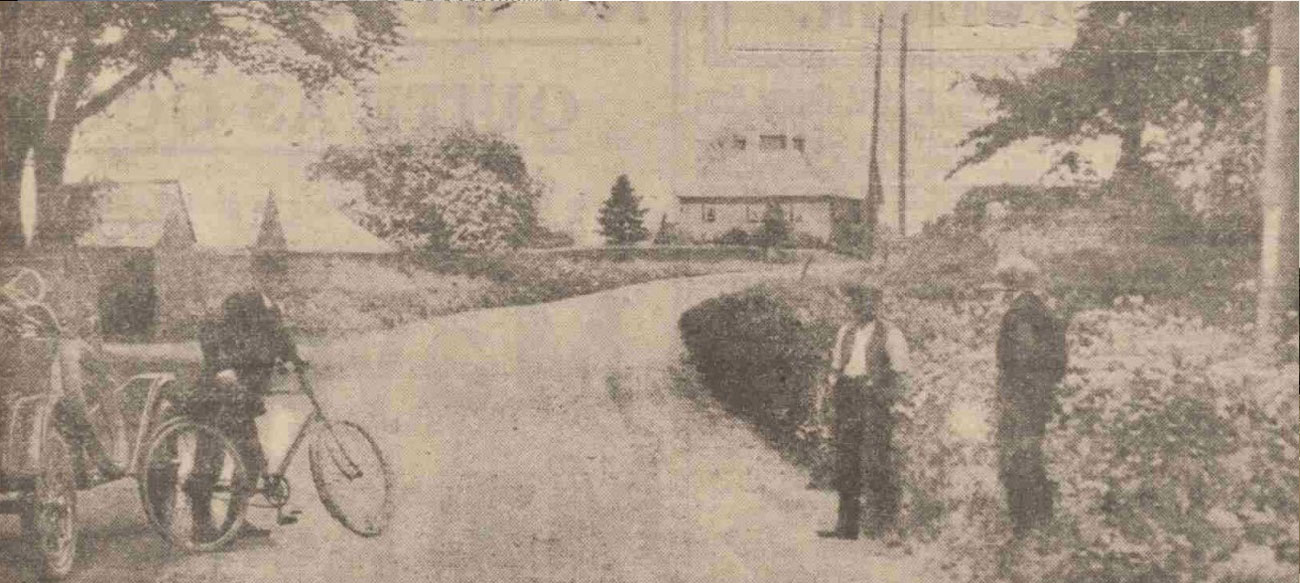
Even by his own standards, Percy’s audacious trip back to Carlisle Barracks to enlist was nothing short of madness. Here was the country’s most wanted man, and arguably its most famous deserter, making a beeline for another army compound as part of his breakneck getaway south. My own feeling is that Percy made the trip based on assurances he may have received by letter, only to be subsequently double-crossed and lured into a classic turkey shoot.
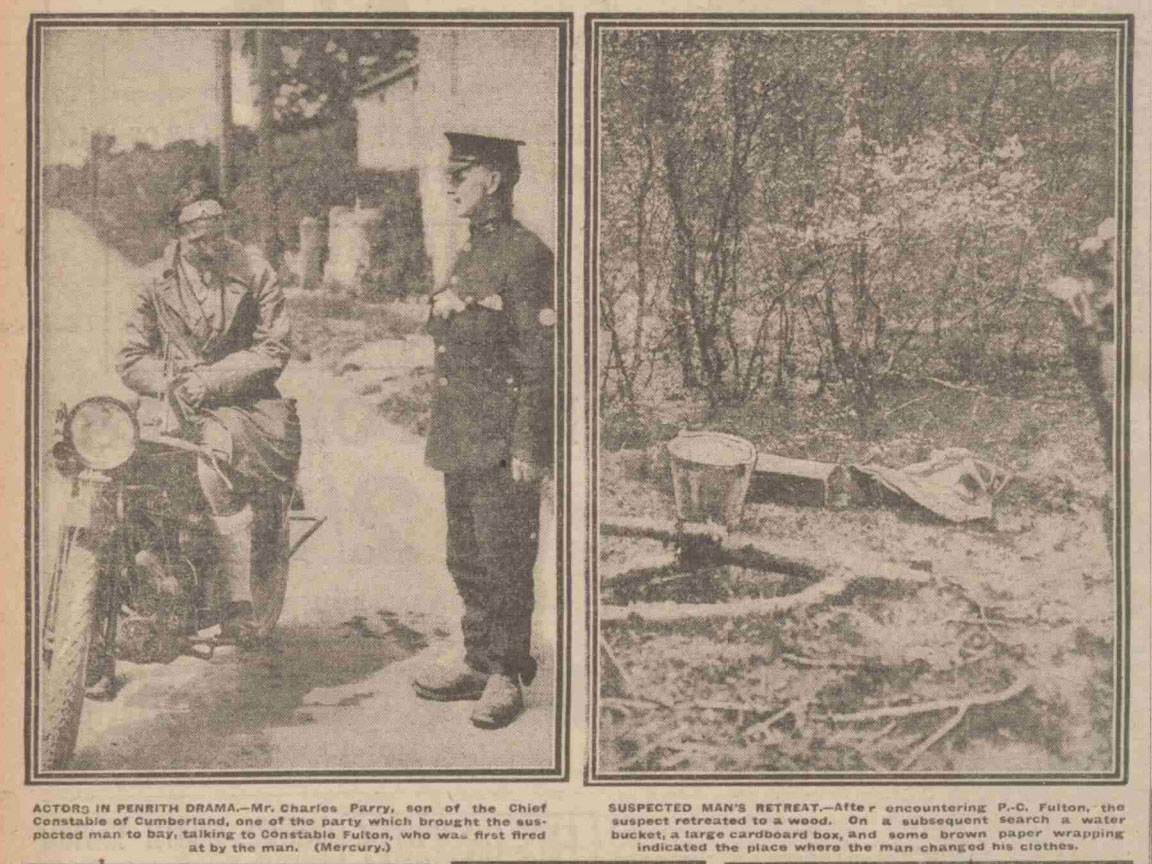
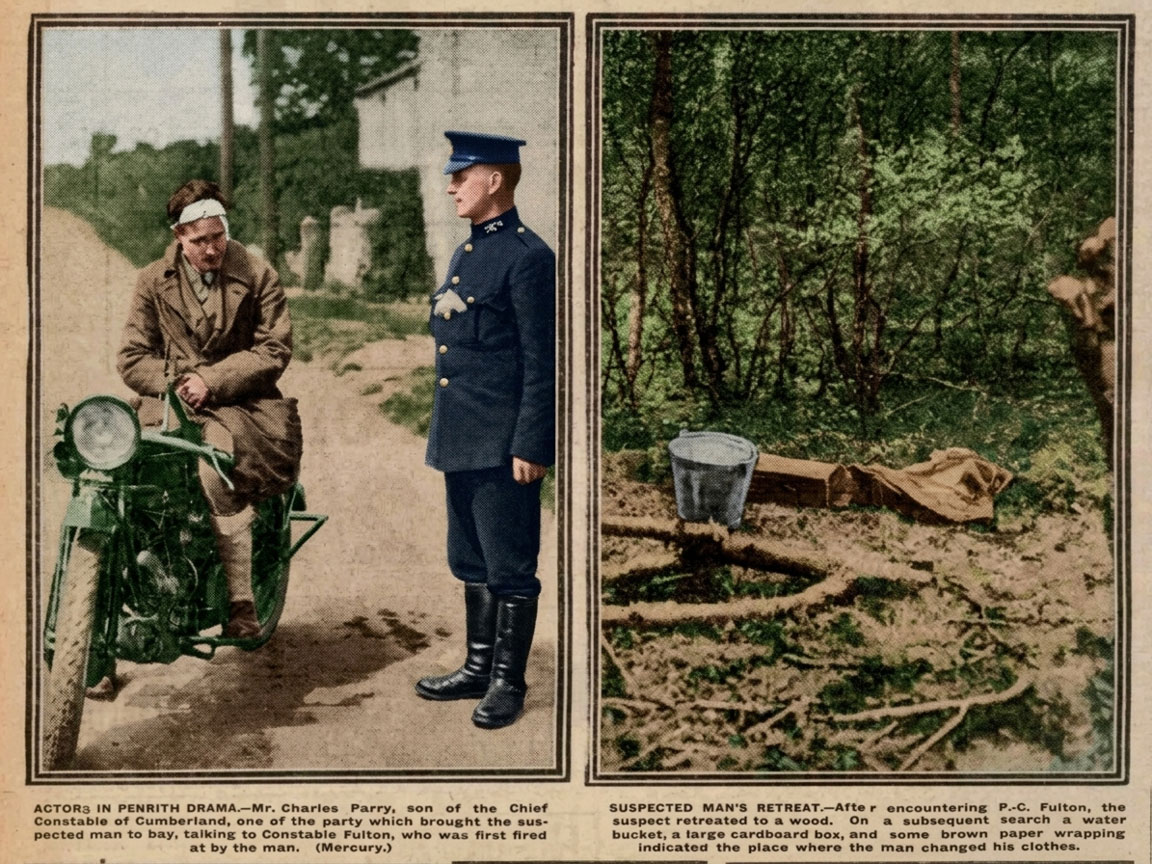
The man generally regarded as having shot Percy was Charles Norman de Courcy Parry, the rebellious and headstrong son of the Chief Constable of Westmoorland. Parry’s background resembles something straight out of a John Le Carre or Ian Fleming novel. By his own admission, Charles (or Bay as he was known by friends) had fought in two great wars, battled in a South-American revolution, fought in the ring for the Middleweight Championship of French Oceania, worked as a ship’s cook, been a swagman in Australia, a Master of Foxhounds for 35 years, travelled alone behind the Iron Curtain and also had spent time in jail.
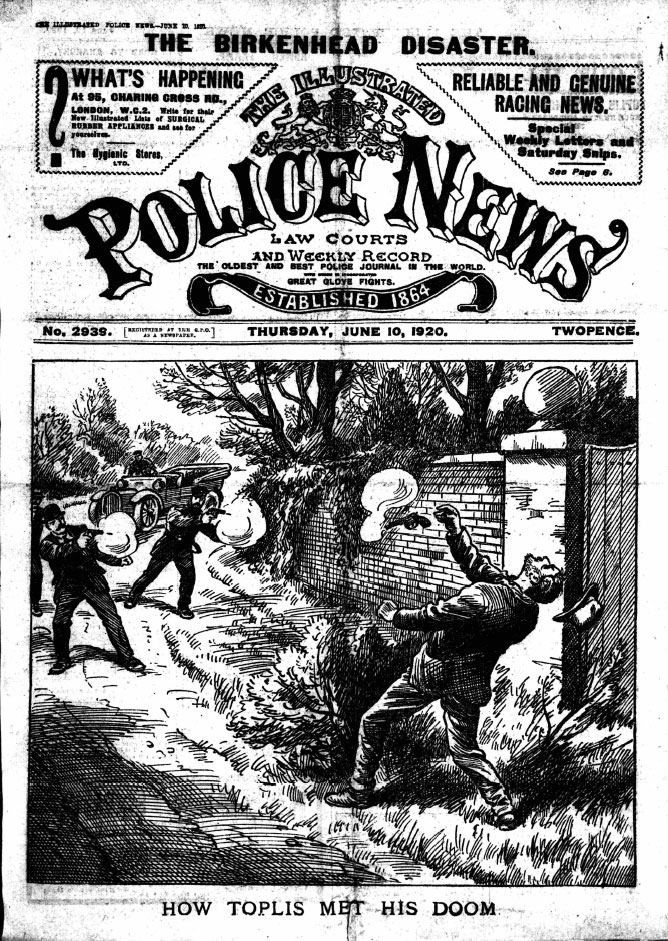
The 22 year-old had joined his father’s police hunt when Toplis turned up in Cumberland, at Plumpton, near Penrith. He took with him his small Belgian automatic, an unofficial souvenir from the war, and headed the police chase on his 1000cc American motorcycle. His close range shot, fired as he pretended to fix his bicycle beside the suspect, is generally regarded as having finished Percy off. Toplis had been shot through the heart and died instantly. Within months of his death, Norman’s father resigned the service due to health reasons, receiving a CBE in the 1920s Honour’s List later that same year. Several years later he was appointed by the King to be one of three of His Majesty’s Inspectors of Constabulary. Had Percy been lured into a trap by his previously reliable handlers?
The Fox and the Hounds
Given the status in hunt circles the de Courcy Parry family enjoyed nationwide, it seems curious that Toplis had sought refuge at a huntsman’s lodge at Tomintoul. Grouse shooting excursions in Northern Scotland were not uncommon among senior ranking Police Officers at this time. The ‘sport of kings’ was a much loved pastime in the de Courcy Parry household and de Courcy Parry Jnr spent the next 50 years of his life writing as ‘Dalesman’ for the Fox and Hounds. It was an ironic twist indeed given the number of hounds cast so quickly by Westmoorland Police that day and Percy’s eventual ambush in Plumpton. Had someone within the ranks tipped off local Police that Toplis would be at the bothy? It sounds outrageous but it just might be possible.
At this time much of Tomintoul and the Glenlivet Estate was owned by Charles Gordon-Lennox, the Duke of Richmond. A regular visitor to the village and a keen hunter and motoring enthusiast, the Duke was in and out of Tomintoul regularly between 1918 and 1919, opening bazaars or entertaining the Duke of Northumberland and his wife. It is more than likely that the Gamekeeper’s Lodge where Toplis went to ground, belonged to the Duke and family, whose military service to the country was well and truly distinguished. The Dukes Grandfather, the 5th Duke of Richmond had once recruited James Robertson, a Scottish cleric to spy in Germany. Ironically, it was another Scottish cleric who gave Toplis his lift to the train station in Aberdeen and it was another Banffshire man, Dr James MacDonald who examined the body of Toplis at the morgue in Penrith. The Duke was likely to have eyes and ears across the whole of North East Scotland.
According to his diary, just several weeks before his death Toplis writes in his diary, “Hunting in Monmouth-shire’. For an insane moment, images of Percy and the deeply eccentric spymaster, Lord Tredegar (2nd Viscount of Monmouthshire), unloading several rounds of lead shot into the skies above the Brecon Beacons unfolded before my eyes. Tredegar, like Toplis, had spent the best part of the war spilling from bolt-hole to brothel in Paris. Perhaps these two outrageous adepts had encountered one another during some decadent marathon card game or other. As far as fantasies went, it was probably one of the more fanciful, but it was not entirely without substance. In the lurid aftermath of Percy’s death, Fleet Street ran one sensational story after another.
One of the salacious stories centred around a claim made by one of his well-heeled lady friends. During the course of their short affair, Toplis had said he had been a principal member of a deeply hedonistic club operating in the East End of London. This ‘gang of miscreants’ as the press described them ‘were out to destroy the very foundations of ordered life and government, and to set loose the wildest and most violent of human passions’. Lord Tredegar was a member of one such group. The Order of the Black Hand consisted of 13 members and Tredegar was known as the Black Monk.
Little is known about the group other than it featured a menagerie of men, boys and girls, all solicited for various sexual and mystical practices. For years, Tredegar had arranged boys for sex and bath house frolics in London’s East End with celebrities, politicians and Royalty. It was certainly an oddball family. His sister Gwyneth Ericka Morgan was found dead at age 29. She was commonly assumed to have overdosed in an East End Opium Den, and then dumped in the nearby Thames. This would have been 1923, just a few years after the death of Toplis and Cross Keys hostess Frances Buxton.
Percy’s philandering with high-class (and low-class) women were the stuff of legend. Given the circumstances, it’s entirely possible that Toplis was operating as a young male escort and pimping underage girls and boys for sex with the wealthy paying patrons around Richmond, Chelsea and Mayfair. Had he found himself pimping for Tredegar and his illustrious motoring friends? Cars were a rare luxury indeed but petrol rationing had put a brake on the idle pursuits of the fast-living London elite. Had Percy’s contacts within the black market put him into contact with the more depraved demands of high society? Was blackmail a possible motive?
If Toplis had fallen in with the criminal gangs active in Paris in 1917, as Woodhall had claimed, it’s possible he could have fallen in with a violent group of libertines, anarchists and intellectuals who decamped to the Limehouse area of London under the management of vice-queen, Betty May, one time girlfriend of the self-styled king of depravity himself, Aleister Crowley. Between 1913 and 1917 May had fallen in with a ruthless crime boss dubbed the White Panther. Back in London May would play a critical role in the supply of drugs and young girls to gentlemen in and around London’s West End.
The coroner who recorded Percy’s death found the circumstances surrounding his death rather unconventional. No British officer was traditionally armed, yet several of those officers pursuing Percy were packing non-government issue revolvers. He was also interested in letters that Percy had been receiving during those six weeks on the run. His diary, quite intriguingly, was described as frequently ‘cryptic and undecipherable’. There was a cruel twist here too. Just a few months prior to the shooting, Percy had made a mysterious trip to Bath. It was here that Charles de Courcy Parry’s career had really got going. He had been made Chief Constable of Bath some several years previously.
_______________________
In her 2014 book, The Nightingale Shore Murder: Death of a World War 1 Heroine, Rosemary Cook tells us that Percy had been implicated in at least one other unsolved crime at the time he was at Bulford; the violent death of Florence Nightingale Shore on a train travelling between London and Bexhill-on-sea on January 12th 1920. As Rosemary suggests, it was one of those classic ‘closed room’ murder mysteries. Woman travelling alone in a railway compartment enters tunnel and is subsequently discovered murdered with serious fractures to her skull. If it wasn’t for the fact that Florence had been related to the famous nurse and social reformer of the same name, it might not have gained such press attention. It was indeed a mystery.
As Cook describes it, the compartment in which Florence died was one of those old ones that had ‘no corridor and no escape route’. It could only be entered or exited at stations. Witness accounts were vague enough to lend the event a certain plasticity where Toplis and the press were concerned. There was talk of a man in a brown tweed suit, a man of military bearing and a watch and a gold ring set (with diamonds) being snatched from the body of the victim. At the time of his death, Percy had all these things. The only exception was the ‘wristlet watch’, but Percy did have a receipt in his pockets for a similar watch he had pawned on his journey through Edinburgh. As Cook rightly observes, all of these are common items and can hardly be construed as proof that Percy was the killer. He had come by a similar watch when arrested in 1918.
But there are coincidences here, all the same. Just a few years earlier Florence had served as a highly regarded nurse at the General Hospital in Etaples. She had in fact been decorated for her services. A letter from her matron states that Florence arrived in Etaples in April 1918, the same time that Percy’s nemesis, Edwin Woodhall could be found rounding up deserters and mutineers in the forests around Comiers. Although from complete polar extremes of the social spectrum, Percy and Florence had both grown up in Derbyshire, her grandfather having served as both High Sheriff and Deputy Lieutenant of Derbyshire during the mid-1800s and her father a medical doctor, educated at in Edinburgh but taking up his practice in Chesterfield. Another of her forebears, Thomas Walker had, like her famous lamp-bearing aunt, also played a crucial role in major Social Reform and radical politics.
As a result of his support for the French Revolution, Walker had been prosecuted for treasonable conspiracy. There was shame, glory and scandal in her family on all sides. Bankruptcy, desertion, decoration, adultery and divorce. And if that wasn’t enough, the victim’s young stepmother was to die in an Asylum in London of Syphilis. It also transpires that the nurse’s first cousin, Raphael Farina, was head of the Russian Section for Mi5 during this period, and Florence had been visiting her aunt (Farina’s mother) in Tonbridge the night before the incident.
How any of this might have impacted on Florence’s brother, Offley Shore, a Brigadier General at the time of her death, is anyone’s guess, but there’s certainly scope for espionage and skulduggery in all this. At the time of the Bolshevik revolution in November 1917, Offley Shore had served as British Attaché to Russian Forces in Tiflis, in modern day Georgia. Shore had remained at his headquarters as part of the Imperial network of spies and embassy staff until he was replaced by Colonel Pike in spring 1918.
Certain ministers within the Foreign Office had been concerned at Shore’s refusal to share intelligence with anyone other than the War Office and Captain Edward Noel, a respected and courageous member of the British Secret Service, had been brought in by Sir Charles Marling to ensure this didn’t happen. Marling had incurred the wrath of the Bolsheviks by backing first cousin to the Tsar, Dmitri Pavlovich as ‘British candidate’ for the Russian throne. Pavlovich had been exiled by the Tsar over the murder of Romanov confidant, Grigori Rasputin in 1916 and had struck up a close personal bond with Marling, and both men regarded Shore as something of an obstacle in their plans. But as with most things relating to Percy, the speculation was intense and the evidence was scarce.
According to the diaries that Cook quotes, Percy was between Bristol and Swansea at the time of the woman’s murder. Why he was shuttling so regularly between London, Swansea and Bristol is anyone’s guess, but if the claims are right about Percy’s role in the mutiny, it is interesting to note that Swansea and Bristol at this time were playing a particularly active role in the development of trade unions and the birth of the Communist Party of Great Britain.
In nearby Ammanford, a Communist Club had done well to provide a common platform for those interested in Social problems but the demand for direct and more disruptive industrial action was increasing. That Detective Jack Williams of the Bristol Constabulary was among several non-commissioned officers seconded to the War Office to lead the raids on the camps of deserters around Etaples is interesting. Did they have any information which led them to believe that Bristol anarchists had somehow played a part in the riots? Was Toplis in Bristol to settle a score with an old adversary?
In Left- Wing Communism in Britain 1917-21 Bob Jones tells us that whilst most societies of this ilk were to be found in Scotland and London, South Wales was seeing a steep growth curve where interest in non-sectarian communism was concerned. The Communist League had only been formed in March that year and its aim was to merge with the Workers’ Socialist Federation in an effort to affect a more populist dimension. The miners of Treherbert near Swansea were one of the first to lend their support.
When Percy was released from prison in May 1919 things had changed very little. Uprisings among soldiers and civilians were continuing apace. Strikes, mutinies and riots were breaking out across the country. Southwick, Folkestone, Dover, Felixstowe, Grove Park, Southampton, Maidstone and Blackpool were among dozens of army compounds where rebellions had broken out, the latter being the camp for the Royal Army Medical Corps which Percy had deserted some months before.
1919 was to be a particularly volatile year in Wales and Scotland, with the Battle of George Square taking place in January and the Soldier Riots at Kinmel Park occurring in Wales just a couple of months later. In London and Glasgow it was the Anarchists who were having the greatest influence on the UK Communist League, and their growing solidarity with the coalminers in South Wales and the Clyde Workers in Glasgow was giving the government enormous concern.
Percy’s release from prison couldn’t have been better timed. Other deserters had been caught in Swansea that year. Is it possible that union activists loyal to the mutineers had been sheltering them in Wales? In Bristol it was the dockers and the railway workers who had been the most vocal opponents of war and it is perfectly plausible that their resistance (and solidarity) continued after the war. Percy Toplis was still being spotted in Swansea and London as late as May, so it is possible he was being harboured. Even a hoax letter arrived at Bristol Western Daily Press. The letter claimed to be from Toplis, but is widely regarded as a decoy tactic as the villain fled North to Scotland.
The problem with this kind of thinking, though, was simple; rather than letting the evidence shape the story, I was beginning to let my own story about Toplis and some largely unsubstantiated claims about his militancy shape the evidence. Worse than that, I was looking for evidence were none really existed. As George Bernard Shaw had said, once we believe something, we suddenly see all the arguments for it. I was indulging in my own conspiracy story, adding my own unique layers to the Toplis mystery, shooting my own holes in the shutters of the window in a fairly crude attempt to let in some light. In Scottish climbing tradition it is fairly routine for a walker or a climber to add a stone to an existing cairn at the top of a mountain. I was just adding my own stone. Taking a story and just making it bigger, making my own scruffy little mark on some broad collective experience. The tradition has its roots in worship, and I suspect this was much the same.
_______________________
The boards on the windows of the bothy had made things difficult at first, but as our eyes adjusted to the light, it was clearly a modest affair. There was little in the way of furniture and all the roof beams lay rustically yet very crudely exposed above us. The fireplace opposite had seen better days and the cool bare granite walls gave it a functional yet deeply unsociable character. Even to this day the affluent classes will use the lodge to host grouse shoots on the local Glenavon and Glenlivet Estates. The grouse are shot among the rough, blazing heathers of the neighbouring moorlands and brought down to the lodge where the gamekeeper will enjoy a celebratory tipple with the shooting party, mulling over their respective victories over the scrawny feathered cadavers of the birds. Not that you would ever have guessed it from what you could see here. There was very little evidence of anybody inhabiting the place. A small cheerful parade of whisky, rum and beer bottles occupied a pert little space on the window sill, and one single spent gun cartridge sat on top of a folded newspaper. The hut’s interior was like the crudest of stage-sets, illuminating rather than dominating the stage and highlighting, to my mind at least, the sheer transitory nature of the place.
A hot summer sun came pouring through the door of the bothy but the room remained as cool as the water dreaming idly by in the stream beyond the walls. The fear and the dread that must have occupied the villain’s thoughts during those few short weeks at the lodge had long since melted away like snow. The place had a mellow and easy-going warmth about it now. A sparse and random accumulation of debris and garage junk hinted at various stories, none of which were ever resolved, and none of which made a great deal of sense: a red leather sofa, a vinyl cover, a few discarded sacks and a single old Lucozade bottle, no longer aiding recovery and sitting in a mocking, solitary fashion beneath the grate in the fireplace. It couldn’t have been any more disappointing and it couldn’t have been any more apt. Each of the walls bore the scars of a thousand signatures, the chalky white layers of the plaster often coming away in flakes. There was a loose leaf visitor book sitting on a shelf by the door but it remained largely ignored. Instead visitors scratched their names onto a sprawling and cheerfully impudent wall of remembrance. I’m still not sure whether it was graffiti or some kind of improvised sacrament.
We left the bothy and made our way up the steep path and across the bridge back onto the Old Military Road. It wasn’t difficult to see why Toplis had taken refuge here. It’s a beautiful location, desolate, pure and solitary and for one insane moment it must have provided the kind of hope that only the truly hopeless can ever dare possess. The place existed outside the usual divisions of class and status. The area was the perfect leveller. A man could slowly dissolve here, becoming only as tangible as the lazy, morphing vapour on the hills above the bothy, masquerading now as clouds.
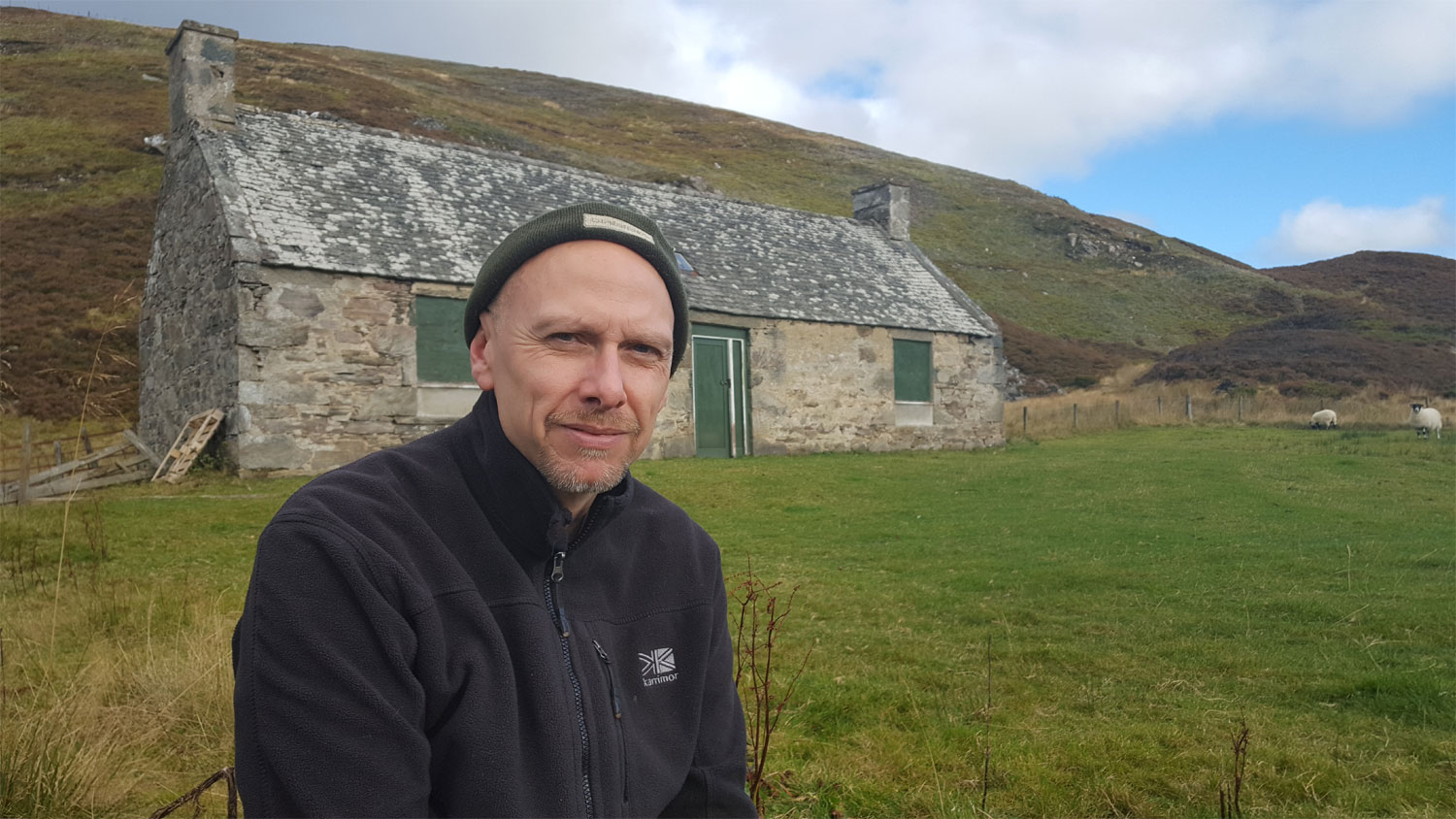
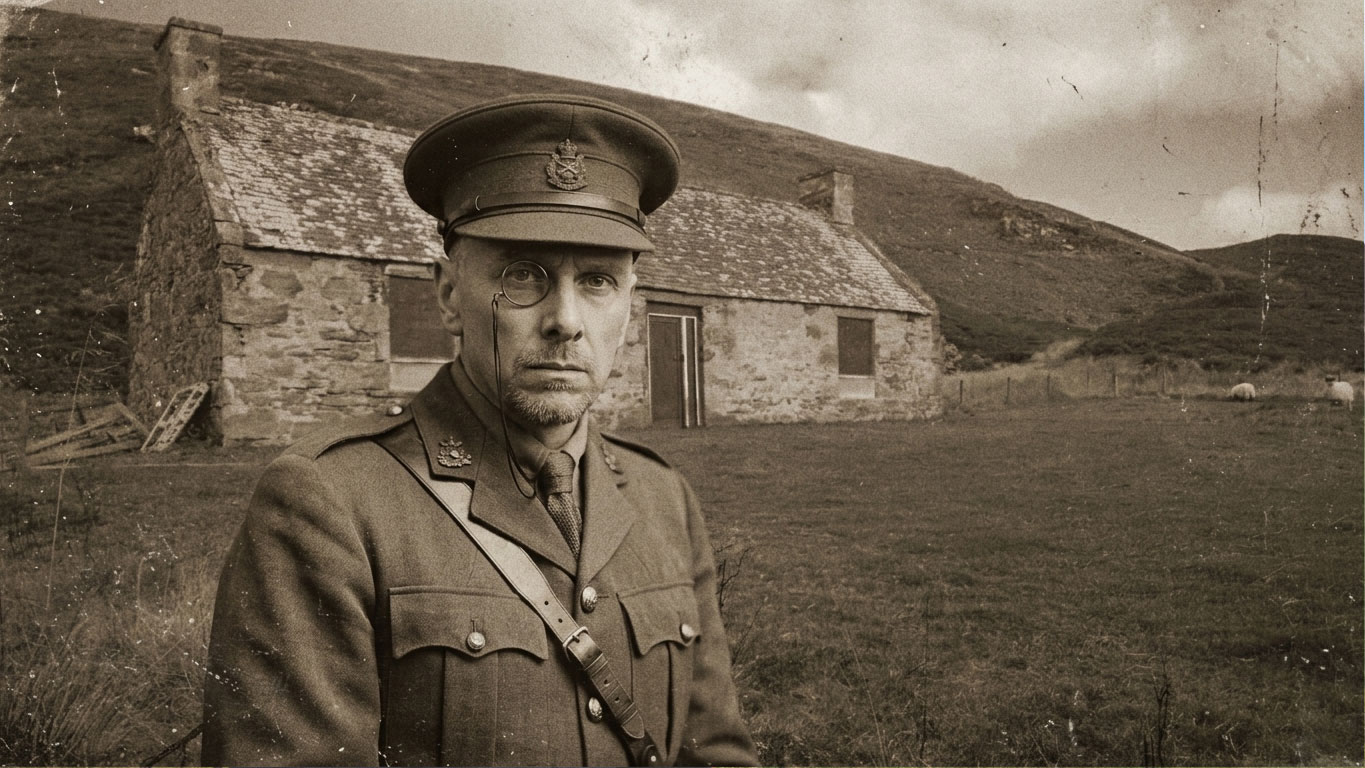
A journalist who caught a glimpse of Percy’s face as lay on a slab in the mortuary said that he had none of the features which one’s mind would associate with the countenance of a murderer. He described the young man’s expression as like that of a “sunny-tempered boy, smiling as if in a happy dream”. And I left smiling in much the same way, I have to confess. One final teasing irony lay in the simple cardboard box which had carried his Officer’s uniform. It was found in the wood not far from his body along with a bucket half-full with soapy water. His stay in Scotland couldn’t be any clearer: it bore the name ‘Annackers — black, white and sweet puddings and Scottish Haggis’. Pierre Annacker was a German butcher who had came to Glasgow in the 1850s. His shop stood at 511 Sauchiehall Street, just yards from the banks of the Clyde, scene of some of the most intense industrial riots seen on British soil just several months before. On Red Clydeside today there stands a statue of a woman with her hands outstretched towards the sky. It bears a defiant and inexorable message: Better to die on your feet than live forever on your knees. The waspish Scottish firebrand, Hugh MacDiarmid was a little more prosaic: “better to be an electric current for five years than a vegetable for fifty.”
Hero, villain, soldier, spy? Probably guilty on all counts m’lud, but not in equal measures. The story of Percy Toplis was probably the story of how all heroes evolve; not from any meaningful sequence of courageous deeds or actions but from some urgent need or compulsion felt within the legion of deprived unheroes that make up the unhappy world around us. I looked at a rock I had taken and cleaned from the stream. If I hadn’t failed my Geology O Level, I might have known what it was. I did know this though; what I held in my hand had been subjected to over 500 million years of collisions and distortions and was now flaking apart in my hands. Scratching it might tell me what minerals were in it, but knowing how hard or how soft the rock was, was still unlikely to offer any clues. As pleasing as it was to look at, the whims and impulses of time would continue to transform it, even if that just meant coming apart in my pocket. The official files on the Etaples Mutiny are due to be made available in 2017. Perhaps its only then we’ll learn the secret behind the secrets. Perhaps we won’t. If there is one thing I have learned over the years, it’s this; there might be few things in life that cling more firmly than the past, but there is nothing more uncertain and likely to elude your grasp than the future. Or is that the other way around?
Sources
Screenshots of The Seamiest Side of War by Edwin Woodhall (1937) provided by Andy Smith at https://greatwarfiction.wordpress.comNo Mans World, Toplis Week June 2016Inquest into the death of Toplis Toplis Bothy can be found on the A939 between Tomintoul and Cock Bridge in Moray and Aberdeenshire.