What brought Alexis Sheftel to Hastings is likely to consist of little more than guesswork but there are some clues, some of which bring us back round to bomb-making librarian, Alexei Teplov and his life after leaving Paris. But before we do that, we first need to take a look at the man who was most likely Sheftel’s Priory Road employer: Jaakoff Prelooker.
Jaakoff Prelooker and The Anglo-Russian
Just 140 yards from Sheftel’s lodgings at 7 Priory Street stood the printing offices of Burfield & Pennells Ltd (47-49 Priory Street) printers of Jaakoff Prelooker’s popular émigré journal, The Anglo Russian. [1] Prelooker, a former teacher of languages at the Second Government School for Jews in Odessa had arrived in Britain in the early 1890s. Through his own admission he’d been something of a serial menace to the Tsarist authorities who despite all the evidence to the contrary had branded him a “Nihilist”, a catch-all term in Russia at this time for anyone who challenged the existing religious and political order of things or caused tension among its people. At the age of just 22 he’d formed a group that was earning no shortage of attention in Europe and Russia. The New Israel Brotherhood, as he’d called it originally, was causing something of a sensation with its “epoch making” plans to restore the deep spiritual and historical bonds that existed between Jews and Protestant Christians. In Prelooker’s estimation, Christ had been the redeemer that had been promised by God, and the Jews had simply ignored it. His mission, he wrote, was “to revive Israel and reconcile it with the Christian World”. [2] Inevitably he took hits from all sides. The Jewish Rabbis didn’t want him, the agencies of the Russian Government didn’t want him and the Russian and Greek Orthodox Church would sooner have him dissolve into the swirling liturgical smoke than bring them together. In in 1882, Prelooker was excommunicated from the Jewish fold by a radical assembly at Odessa. Arriving in England he embarked on a nationwide series of lectures in which he explained the complex mechanisms of Russia’s religions, life and politics, drawing the veil of mystique that had isolated it from much of Europe. No area was out of bounds, whether it was the type of tea that Russian’s drank, the kind of music that it would listen, the manners and protocols of Russian courtship or the appalling poverty of its peasantry and working classes — very often accompanied by slideshows and musical accompaniment. Many years later he would extend his cultural relations efforts to other countries, helping found the Russo-Scandinavian Press Agency and the Société Franco-Ottomane in Paris. For a Europe that had little or no knowledge of Russian culture, the talks were a watershed moment in the development of relations with Russia.
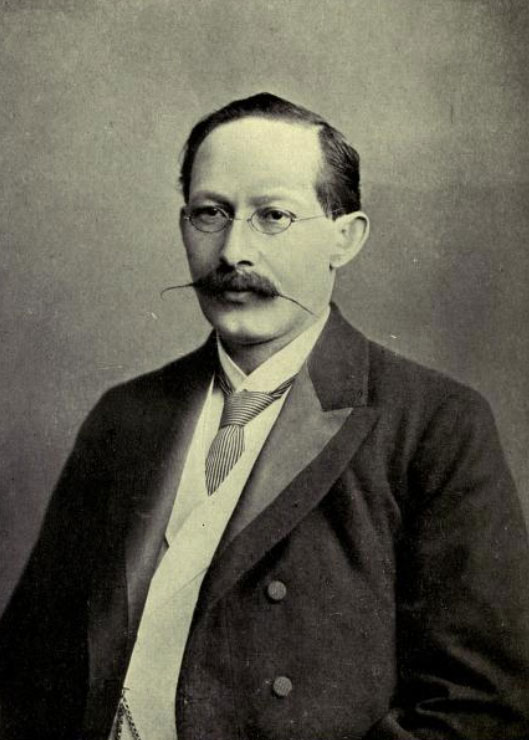
Prelooker’s New Israel vision hadn’t been entirely original. In a self-written account of his experiences published in 1895, Prelooker cites Brooklyn playwright Jacob Gordin and Anna Pokrasova’s Biblical Spiritual Brootherhood as among his inspirations, and the melding of Judaism and Christianity was even to be glimpsed in sects of the first century where it took root in Jewish Messianism and the more offbeat Gnostic sects. Aspects were also to be glimpsed in the predominantly, German, Moravian and Galcian Haskalah movement too, or the ‘Jewish Enlightenment’ as it became known. [3]
What distinguished Prelooker from others, was his unique political vision. His “secret aspiration”, he confessed had been to unite the various dissenters, the “Molocans, Stundists and Dukhoborzies” with their equally rejected Jewish counterparts under one ‘Reformed Synagogue’, dissolving the fractious divides that impeded collaboration and weakened them as groups. [4] Establishing the whole thing in Odessa couldn’t have been more apt: a predominantly Greek settlement once in Turkey and now in Russia. This wasn’t about assimilation in the crudest sense of the word, which he resented; it was about escaping persecution in the one safe refuge available: the Christian church. It was an instinctive emotional response derived from years of brutality. The “new covenant with Israel” that he sought was his own personal promised land which he then extrapolated on a global level: Israel’s life and Israel’s salvation was the life and salvation of the whole world. Their destinies were entwined.
As difficult as it may be to appreciate the scholar’s logic, restoring the Nation of Israel was to be realised at least in part by assimilation with the religious superpower that was Christianity at this time. As far as Prelooker was concerned, no amount of government intervention was going to improve things for Russian Jews. It was the Talmud itself that was at fault for preserving separatist values and exciting hate. Out would go circumcision and in would come mixed marriages. Moving the Sabbath from Saturday to the Sunday and rejecting all notions of ‘Kosher’ foods would also be desirable. In fact anything that ever promised to give them their unique identity and jammed the mechanisms of assimilation were placed on the New Israelite strike-list. One couldn’t be passionate about being Russian, if one was passionate about being a Jew. It was serving two separatist Gods, one based in pluralism and patriotism, and one on fanatical intolerance and the pledging of an oath to an unhelpful and unyielding infinite. In years to come, the Communist International would issue much the same ultimatum. His thoroughly misleading pen name, Emanuel Ben Zion, perhaps best expressed the confused state of the entire project. Unlike the Zionists’ movement’s founder, Theodor Herzl, a mass return to Palestine wasn’t at the centre of Prelooker’s plans — assimilation was. The inevitable contradictions of maintaining ancient customs and embracing necessary cultural change in an increasingly volatile world were clearly holding them back. The nutrients the young Jews needed could only be derived from the pools at which the rest of the world drank. To put it rather crudely; you had to be in it to win it. If the Jew could weft the threads of the sheep into those of the wolf the wolf would leave them alone and they could flourish. It wasn’t authority that worried Prelooker it was isolation. His college days were filled with covert acts of defiance, whether it was procuring forbidden papers, reading them to his comrades at night, flouting the campus rules to communicate with friends in town or organising demonstrations outside the headmaster’s house. It wasn’t the brutal setbacks he feared the most, but the withdrawal of support from his friends, of being left to fight alone on the battlefield. While submitting outwardly to the demands of official loyalty, Prelooker took the hate and concealed it in his heart like the proverbial jail bake. [5]
If anything, Prelooker seemed to side with Marx rather than Bauer on the Jewish Question. For Bauer the Jew could only achieve true political and personal emancipation by relinquishing their Jewish consciousness. For Marx, a successful secular state did not need to oppose religion, but rather disable it from the social and political matrix. As an underprivileged class, emancipation for the world’s Jews could only come by first absorbing themselves into the global proletariat and finding their freedom alongside them. For Prelooker, as for Marx, the problem for Jews came not from the Christians but from them both: from the religious class system that was pertinent to each. Change was required of both.
Prelooker’s attempts to solve the issues of Jewish and Russian identity were courageous but doomed to failure. Reform Judaism had traditionally rejected the return to Israel outright, but such was the frequency and brutality of persecution in Tsarist Russia, that more radical reformers like Prelooker began to change their opinion. His book ‘Palestine or Russia’, which crystallised these conflicts, was said to have been so heavily censored by the Russian Government that he was left with no other option but not to publish it. Prelooker had accepted the practical issues of the dream and its impact on the Tsar, who though favouring a large Palestine settlement at first soon recognised the disastrous impact it would have on Russia’s economy, who would be “impoverished” by such a sudden withdrawal of capital: “The goose may go, but he must leave with us his fat and feathers” [6] For the likes of Prelooker and Leon Pinsker, the founder of the Hovevei Zion movement who likewise endorsed the creation of both a Jewish and a National consciousness, the move towards a New Nation of Israel didn’t take shape in some old Jewish cemetery in Prague but among the improvised mass graves being dug in the villages around Odessa and Kiev. Supporting Prelooker’s New Israel movement in Odessa was Joseph Rabinovitch’s analogous sect in Kishinev. For Rabinovitch however, restoring the land privileges of the past and returning to the land of their birth was not only preferable but as vital to their beliefs as it was to their survival.
By January 29th 1882, he had his first article published in the Odessi Listok on the impulse of sub-editor Adam Bialoveski, whose friendship with American explorer George Kennan would eventually result in the emergence of the deeply influential Society of American Friends of Russia a few years later. It may not come as any surprise to learn that the first quote in the ‘Thoughts on Revolution’ preface of his 1908 book, Heroes and Heroines of Russia is taken from the American Declaration of Independence of 1876: “Whenever any form of government becomes destructive, it is the right, it is the duty, of the people to throw off such government, and to provide new guards for their future security.” [7] Rebellion to tyrants was disobedience to God.
By the time that Sheftel arrived in Hastings in 1904 the journal was operating under the management of Spriggs Publishing Company — a sub-group of Edinburgh-based publishing house, Oliphant, Anderson and Ferrier. The company’s most successful author at this time, the suffragist Annie S. Swan, would eventually become founder-member and vice-president of the Scottish National Party. This particular link in the chain may go some way toward explaining why Prelooker was admitted as an honorary member of The Cairngorm Club shortly after his arrival in England in July 1891. [8] The Club, which was most active in Speyside, Strathnairn and Grampian districts of Scotland, had close associations with William Beardmore, Lord Invernairn of Strathnairn who would join Philip Rabinovitch, a senior Director of the Soviet Trade Delegation in London, as Vice President of the Russo-British Chamber of Commerce in 1924. [9] Curiously, the club’s president at this time was James Bryce MP who would serve alongside Philip Whitwell Wilson and Henry Brailsford on Parliament’s influential Balkan Committee in 1903. Bryce’s alignment with the anti-tsarist, pro-constitutional goals of the Russian freedom movement is well-documented. Evidence of this is preserved in Bryce’s personal correspondence and letters of sympathy regarding Robert Spence Watson (president of the Society of Friends of Russian Freedom), alongside prominent Society figures like Peter Kropotkin, Felix Volkhovsky, and Sergei Stepniak. Bryce had travelled through Russia in 1876—journeying down the Volga River and through the Black Sea steppes—culminating in his famous ascent of Mount Ararat. [10]
Prelooker’s lightning admission to the Club has always baffled experts. Despite having shown little or no interest in hill-walking beforehand, Prelooker was formally introduced as a member on the Barmekin of Echt summit on International Worker’s Day 1893 (1st May). The company of climbers including a dozen or so women had made their way by carriage from Bon Accord Square in Aberdeen to the grounds Dunnecht House before resuming their journey on foot. Bryce, the Club’s president, then a radical land access campaigner and a good friend of Scottish-American industrialist Andrew Carnegie, would eventually serve as Britain’s Ambassador to America between the years 1907-1913. His peerage came shortly after, as part of the 1914 Honours List, the same year that William Beardmore would receive his. As the Cairngorms are well known for their arctic-alpine environment and challenging snow-capped summits, it will probably come as no surprise to learn that both men had played a part in Ernest Shackleton’s ‘Nimrod’ expedition to the Arctic in 1907 — Beardmore being his principle sponsor and Bryce, a fellow member of the Royal Scottish and London Geographical Society, receiving him at the White House upon his less than triumphant return. Prelooker would eventually be replaced as a member at the turn of the century by John Findlay of Aberlour, proprietor of The Scotsman newspaper.
Why was Prelooker given honorary membership status at the Cairngorm Club? As Ken Thomson explains in The Cairngorm Club journal, it was unlikely to be on account of his “mountaineering prowess”. The Ukraine where he was from was a singularly flat country and his innocent expressions of wonder on completing his inaugural climb suggest the exuberance of a novice rather than the satisfaction of a seasoned pro. [11]One might only surmise that it had its basis in political networking and campaigning, the Right of Way issue having gained no small amount of traction among liberal and anarchist circles in London, Sheffield and Manchester. If one was to follow the logic, the invite is likely to have come from Bryce and Prelooker may have accepted on the basis that it was as good an opportunity as any to determine the radical or liberal calibre of the group, and they, a better appreciation of revolutionary Russia. As both men were also members of the Aberdeen Philosophical Society, it seems a plausible enough theory and Bryce’s position at the Carnegie Trust of Scotland opens up possible routes of cooperation with the Russian anarchists in America whose hot-cold relationship with Scots-born Carnegie would culminate in the shooting of his business partner Henry Clay Frick.
The volume of lectures Prelooker was undertaking in Scotland upon his arrival in Britain certainly outnumbered those in other regions, so we might want to spare a thought for Annie S. Swan, whose books for Prelooker’s publishers Oliphant, Anderson and Ferrier had put her firmly in the Suffrage limelight. Speaking in Aberdeen in December 1891, Prelooker was clearly desirous of forging a bond between the sentiments of Women’s Suffrage and those of the anarchist: “Whatever one may think of the Nihilists’ fight for freedom, it is undeniable that these women are fighting for the emancipation of the whole Russian nation.” [12]
Prelooker is also known to have made several early addresses under the auspices of the Edinburgh branch of Stepniak and Volkhovsky’s Society of Friends of Russian Freedom. The man in the chair during these talks was the society’s Edinburgh representative, David William Wallace, the sole partner in Robertson and Wallace, Solicitors to the Supreme Court, who had made something of a name for himself during his efforts to maintain the right of free speech at Edinburgh’s famous Mound. In later years Wallace would act as agent for Labour MP William Graham, appointed Financial Secretary to the Treasury under Ramsay MacDonald’s 1924 government. His tenure at the treasury would see him and his immediate superior Philip Snowden brought to book over the deeply controversial General Treaty with Russia. The draft proposal was facilitated in part by former British government adviser Frank Wise, a close friend of Krassin, who had sensationally quit UK politics in 1923 to become Director of the Soviet Union’s Trade Office. The Bill was finally defeated in November 1924, largely through the combined efforts of Conservative leader Stanley Baldwin and the timely arrival of the earth shattering ‘Zinoviev Letter’. But any triumph enjoyed by the Conservatives was short-lived. By 1929, Ramsay MacDonald had been re-elected as British Prime Minister and Wallace’s protégé William Graham was immediately appointed President of the Board of Trade, and the defeated General Treaty with the Soviets put back on the table. [13] Having already expressed his support for nationalising banks, one of his first moves on re-entering government was to re-start negotiations on the issue of Soviet export credit schemes. Graham’s previous bid had been well and truly scuppered by the failure of Ramsay MacDonald to bag the Premiership, but it had already met stiff opposition from Chancellor of the Exchequer, Philip Snowden who objected to Graham’s suggestions that Anglo-Soviet trade was to be given “most-favoured-nation treatment”. Graham would die at the age of just 62, just months before the sudden death of his close ally, Frank Wise in the grounds of Wallington House in November 1933.
Whatever kind of story lies behind his membership and his fairly protracted affair with Scotland, there’s no mention of hill-walking or mountaineering in any of the hundreds of articles Prelooker published in The Anglo Russian Press during this time. All of which leaves us with a reasonable question: what was in the journal, and what was its objective?
In a letter published in the first issue of The Anglo-Russian Press in the late 1890s, Prelooker set forth the principle intentions of his journal as follows: To seek to promote more friendly relations and increased commercial intercourse between England and Russia, to strive in general to assist the realisation of purer and higher ideals and to encourage the study of the English language by Russians, and vice-versa. [14] Subjects that featured prominently in the publication included Anglo-Russian commerce, financial policy in Russia, English and French trade competition in Russia, trade with Finland and religious issues. In a move that would anticipate Stalin’s similarly conceived VOKS project by some 25 years, Prelooker was seeking to remove the cultural misunderstandings that continued to divide the two great nations to the detriment of their mutual artistic, religious and economic interests.
Two Trains
In spite of the many differences between the mild, bookish liberal Prelooker and the more fractious Socialist Revolutionaries and anarchists that made up the vanguard of Goldenberg and Volkhovsky’s Society of Friends of Russian Freedom, Prelooker grew to have a strong, enduring bond with one of the society’s most enigmatic and wilful characters: Vladimir Burtsev, the one-man Echelon system who had tasked himself with weeding out the most devious of Tsarist agents. Like Burtsev, he had arrived to live in London in 1891. Despite his contact with Tsarist undercover agent, Arкadiy Harting (aka Landezen) and other members of the revolutionary People’s Will during the preparations for the 1890 bomb plot, he’d managed to escape from Paris before any arrests were made.
After hiding in a succession of flats and apartments in Romania and Bulgaria, Burtsev made his way to Turkey where he boarded a British merchant vessel under the captaincy of William Rees, whose sympathies had been aroused and his services procured by Volkhovsky and his friends in England. Despite having been on the Okhrana’s radar for years, Burtsev had so far managed to escape both detention in Siberia and arrest in France. The heroism of Captain Rees was duly praised by the British Press. Sympathising with his plight and those of other revolutionaries, Rees had enrolled Burtsev as a member of his crew in the capacity of second steward. Nothing further was to happen until the ship arrived in Constantinople. Arriving in the bay the ship was immediately surrounded by Police boats and steamers bearing the Turkish flag. They had been waiting for the best part of three weeks and asked Rees if it was possible to inspect his ship. Rees replied in the negative. Despite being offered a generous cash reward, Rees continued to decline their offers and put his boat on full steam, whereupon it arrived safely in England in mid-January 1891 [15]
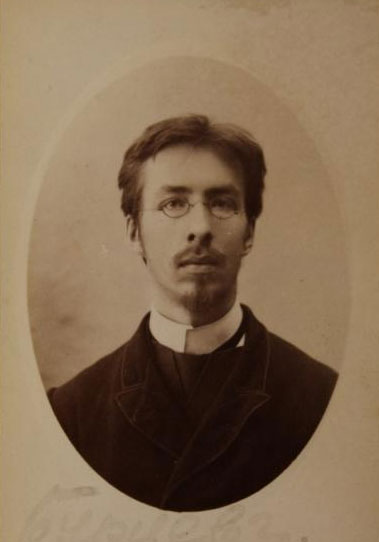
Given his very close shave in Paris, Burtsev, a formidable ‘theoretical anarchist’ and spokesman in his own right, had little option but to move to Britain. With Prelooker it wasn’t quite so straightforward. The move appears to have been made by choice. His autobiography of 1895 suggests that by 1889 Prelooker had sought work in Germany where he was introduced to Orientalist, Dr Hermann Strack, radical Scottish Nationalist, John Stuart Blackie and Alex Stewart, Professor of Systematic Theology at the University of Aberdeen. All three men would later appear in his 1895 list of testimonials. Sadly, nothing substantial had been forthcoming but the four months he would spend here was found to be more profitable in terms of his health and intellectual development. He’d tried moving back to Russia to restart the New Israel movement, but the constant fear of state intervention and regular grilling by Police, had put the brakes on his earlier energy. Losing faith he made his way to Vienna where he garnered the short-lived support of some eminent Rabbis. But at this point the trail goes cold. Is it possible that his failure to move things forward had seen Prelooker fall prey to the radical influence of men like Burtsev? Was it possible that their paths had first crossed in Vienna? Burtsev’s memoirs are just as inconclusive about the 1889-1890 time-periods. He certainly passed through Vienna on his way to Switzerland and much of the Intelligence regarding the setting-up of an Okhrana agency in London was emerging from journalist sources hunkered down in the Austrian capital. Attacks on Jewish communities in Vienna had also been intensifying. The Rothchilds of Britain had even been threatening to remove their banking house from the city if order couldn’t be restored and further attacks prevented. If Prelooker’s misty-eyed retrospective of Russia’s revolutionary heroes in 1908 is anything to go by, he was certainly supportive of their efforts, as tactful and judicious as he was in avoiding the watchful eye of the censors and secret police. That Russia’s bonanza of Revolutionaries were an “invigorating and uplifting influence” is abundantly clear in his opening pages, both political reformer and “dreaded terrorist” alike (see: Heroes and Heroines of Russia, p. xii-xiii).
One thing is certain: he was no disinterested onlooker. Accounts of his student days are filled with brushes with authority, encouraged in part by his close friendship with Socialist revolutionary Adam Bialoveski, exiled to Siberia for three years for his ‘nihilist’ affectations and being found to have corresponded with Russian dissidents living abroad. [16] Bialoveski disappeared off Prelooker’s radar in 1887 after he and other exiles (including a teenage Leonid Krassin) made the acquaintance of American adventurer, George Kennan. Kennan’s trip to Siberia, serialised in the Century magazine in September 1888, would play a critical role in changing American perceptions of the so-called anarchists and nihilists being incarcerated by Imperial Russia. On his return to America, Kennan would duly hook-up with Kropotkin and Stepniak on their tour of the United States in 1891 and 1897 respectively. At the invitation of the latter, Kennan would become one of the more instantly recognizable faces at Lazar Goldenberg and Leo Hartmann’s Society of American Friends of Russian Freedom. The society, linked directly to its namesake in Britain, had been launched with the specific purpose of awakening American and British minds and consciences to the fight for political and religious freedom inside Russia. Kennan’s regular stream of appearances in support of his campaign on both sides of the Atlantic provided the American edition of its literary organ, Free Russia with the bulk of its content for years.
Although the journal’s primary focus lay in directing American support away from the proposed extradition treaty with Russia being prepared under President Cleveland, its broader, more long-term aim was to expose the excesses of Tsarist oppression to a wider world. As a result, a considerable amount of emphasis was placed on drawing clear and unequivocal parallels between the plight faced by Russia’s disenfranchised millions and those of the Patriots during the American Revolution and the Union during the Civil War. Re-centering the nihilist’s struggle within the discourse of international suffrage, where it could be seen to be driven by the natural pursuit of happiness rather than lawlessness and disorder was certainly an attractive goal. Prelooker makes this connection himself in the preface to Heroes and Heroines, first with a couple of quotations from US abolitionists Julia Ward Howe and William Lloyd Garrison, followed by a few dexterous references to ‘slaves’.
Kennan’s way of thinking was that if the anarchists’ cause could be seen to be motivated less by dynamite and more by dreams, greater traction might be achieved with a broader demographic, and eventually, one might hope, the tactic would engender a more positive political and cultural outcome. In his 1891 book, Siberia and the Exile System, Kennan would also pay lip-service to Vladimir Debagori-Mokriévich and Felix Volkhovsky who had likewise been sent to Siberia.
As far as the press were concerned, however, Prelooker was an entirely different proposition. He arrived in England in July 1891, after spending the whole of the winter in a villa on the France-Italian border. Prelooker was never forthcoming about the purpose of his stay at the villa, but it’s interesting to note that within weeks of him leaving the region, a French police commissioner on the Franco–Italian border near Nice approached the local Italian police with a proposal of ‘operational co-operation’ regarding the passage and arrest of anarchists that were active along its borders. [17] The previous November in Paris, the 33 year-old Ukrainian, Stanislaw Padlewski, had shot dead the Head of Russian Secret Police, General Seliverstoff. Somehow he’d managed to escape. By December 1890, reports were beginning to emerge that Padlewski was going to be provided with a safe house in Nice. [18] An escape route had been prepared by several influential associates including Parisian journalist, Caroline Rémy de Guebhard, more commonly known by her byline, Madame Severine. [19] The plan was eventually discarded, but it’s curious to think that he would have arrived in Nice at exactly the same time as Prelooker. The victim of the plot, General Seliverstoff had enjoyed a stellar career both in Russia and abroad and had played a vital role in uncovering Teplov and Burtsev’s anarchist cell in Paris. According to the press, Seliverstoff would leave Paris at the end of every autumn and spend the winter at the Cosmopolitan Hotel in Nice. It was only the unusually mild weather that had delayed his journey to the resort that year.
As we’ve learned already, Burtsev made his own escape from Paris via Bulgaria and Constantinople arriving in Britain a few months ahead of Prelooker in January 1891. Within months of their arrival, the Chief of Russia’s Secret Police in Paris, Pyotr Rachkovsky, was seeking permission and support from the Russian Embassy to set-up the first of their agencies in London. [20]
According to letters and diaries written by both men, each was encountering their own ethical and emotional difficulties, and both were increasingly desperate to escape the smothering inefficacy of political exile. In his 1895 memoirs, Prelooker describes his time on the French-Italian border during the winter of 1890 as one of “unbearable suffering both of body and soul”. In his attempts to convey his misery he tells the story of a man who can only watch helplessly from the window of his villa as two trains belted toward one another at full speed. The observer anticipates the “terrible catastrophe that must take place but is powerless to prevent it”. Hundreds of victims had lost their lives or were dreadfully injured. The man had been so distressed by his powerlessness to prevent the collision that his black hair had turned grey overnight. Prelooker concludes the tale by saying that he could understand the man’s “spiritual agony” as “he too had witnessed the sufferings of hundreds, nay thousands and millions, of victims in the train of the Russian autocracy, and was not permitted to stretch out a helping hand.” [21]
Was the whole thing a symbolic confession of sorts? The timing of his retreat to the French-Italian is certainly interesting, arriving as he did in the immediate aftermath of the hit on Seliverstoff. Had Prelooker known of some murderous plot but was somehow unwilling or even unable to prevent it? Damned if he did, and damned if he didn’t, so to speak?
The phrasing is interesting too. Prelooker writes of the “terrible catastrophe that must take place”. Not ‘would take place’ but ‘must take place’. The reader doesn’t get a sense of a collision occurring purely by chance but of an inevitable and necessary clash. One could either put this down to pure calculus, in which Prelooker is predicting an inevitable outcome based on the raw algebra of time and place, or a sense of complicity or obligation is being conveyed; perhaps even a hint of divine providence. Traditionally speaking, ‘must’ is used in present and future reference, but Prelooker is relating a story that has taken place in the past. He’s taking some poetic license here and he knows it. “A freeborn Englishman, Prelooker goes on “will scarcely be able to realise what it means to be condemned to inactivity when all around you, Jews and Christians alike, are groaning under the yoke of the oppressor and you dare not say that that they and you are suffering, you dare openly sigh when the heart is bleeding and the blood boiling.” [22] Was this as close as Prelooker would ever get to condoning violence in the pursuit of freedom? Or was he merely expressing some inner turbulence or conflict? If we were to extend his railway metaphor a little, we might say the scholar had arrived at a personal junction of sorts.
A few years later, Burtsev would stop in Nice during his trip to Genoa, hoping to meet with veteran activist Petr Fedorovich Alisov through a Nice-based intermediary. The resort continued to be a hub of anarchist activity for years. [23]
There’s certainly no evidence of complicity in any terrorist plots. When Prelooker arrived in Britain in the spring or summer of 1891 (there’s some confusion about the date) the ‘sombre, bespectacled little man’ who called at the offices of the Pall Mall Gazette eager to write on ‘The Woman Question’ seemed cautious, if not “openly antagonistic” towards the kind of terrorist methods being advocated by Burtsev and other nihilists. [24] With the possible exception of his Heroes and Heroines of Russia book in 1908, in which he heaps no shortage of praise on ‘murder league’ leader Gershuni, Prelooker’s literary output suggests that you were more likely to find him lobbing holy water than bombs to achieve his goals.
As the shadow of the Great War advanced like the impending collision of the trains in his earlier parable, the scope of his interests broadened and his optimism of a new Jewish settlement was renewed. During the early phases of the Great War, Prelooker would join his old Cairngorm Club associate and former US Ambassador Viscount James Bryce in condemning the government’s failure to intervene in the Armenian Genocide of 1915. And after the entire Jewish population of Palestine were forced to leave their homes in April 1917, Bryce looked to the hope that the February Revolution in Russia offered to the establishment of a true Jewish Nation in Jerusalem. In a cable message to Reuters in New York, Bryce said that a great of sympathy and interest had been aroused in Britain regarding the re-establishment of a Jewish Nation in Palestine, but to attain this he believed three things were necessary: Turkish rule would need to be “extinguished, not only in Palestine but everywhere south and east of the Tauris Mountains”; large bodies of American and other Jews would need to indicate their wish to return and large funds would be needed to repair the immense devastation wrought by the Turks. American Jews, he added, would need to dig deep into their pockets. [25]
Certain Undertakings
Despite an initial and very public spat with Burtsev shortly after the arrival of the pair in Britain, the mood in Prelooker was turning, and though still not formally advocating violence he was conceding in letters to Burtsev that the slow reformist measures he’d previously been extolling no longer satisfied the immense scale of the challenges they faced:
“I doubt you will find an English publisher thanks to your reputation as a dangerous man … and here is what I propose: that you write a plain narrative of the above episodes without getting argumentative and defending terrorist methods … I agree that all possible strong means should be used to deal with a strong enemy but I recommend you be practical and wise as a snake.”
— Vladimir Burtsev and the Russian Revolutionary Emigration, R. Henderson, p.232.
The “strong means” he had found himself advocating in February 1904 would benefit from a little further calibration in December that year with the publication of Russia: What She Was and What She Is, printed by his usual firm, Burfield & Pennells in Hastings.Writing just months before the Revolution of 1905, Prelooker provided something of a stormy forecast:
“After the war, Russia cannot remain the same that she was before it. The world at large must be prepared for more political convulsions, shocks and destructive eruptions destined to remodel and regenerate the land of seething volcanoes.”
— Russia: What she was and what she is, Burfield & Pennells, 1904
As news of the Bloody Sunday massacre began to come through the month after its publication, the press were quick to seize on the sinister timing of the apocalyptic vision that Prelooker had presented. The scholar had described it as a “land of seething volcanoes”. His description had been fully borne out by the violent events that ended Father Gapon’s disastrous march on the Narva Gate. The fire of revolution and devastation that would follow was being touted to become the greatest political movement in a hundred years (The Brisbane Courier, Mon 23 Jan 1905, p.4). His metaphors were no less intense for the Washington Times on the subject of the Russo-Japanese War: “Extinction is the only penalty that fits the autocratic crime in the Far East. The rivers of blood that have flowed in Manchuria are on the heads of the authorities in St Petersburg. They blindly provoked the war, and blindly continue it, though the futility of the slaughter is clear to them.” [26]
That Burtsev’s Society of Friends associates Felix Volkhovsky, Nikolai Tchaykovsky and Varlam Tscherkesoff were believed to have been actively recruited by Colonel Akashi Motojiro of the Japanese Imperial Army at this time in their war with Tsarist Russia, makes the timing of his comments particularly chilling. If nobody had been listening to Prelooker up to this point, he certainly had their attention now.
It wasn’t the first time that Prelooker had found himself playing a supporting role in Free Russia propaganda. In the latter months of 1898 Prelooker had been lending his voice and fund-raising services to the Burtsev Defence Fund, set up by Volkhovsky to secure the author’s release from Pentonville Prison. Burtsev had been awarded 18-months hard-labour for supporting the assassination of Tsar Nicholas I in his Narodovolets journal — a journal that was launched, curiously enough, the very same year as Prelooker’s newspaper. The pair renewed their friendship in February 1904 when the proselyte Prelooker offered to publish the writer’s memoirs. The plan was simple; in light of the deeply controversial subject matter that was likely to accompany Burtsev’s story, Prelooker would stick to a clear and concise narrative and avoid any clear endorsement of terrorist methods. After translation, the articles would be serialised in his own newspaper.
As Robert Henderson points out in his 2008 thesis on Burtsev, Prelooker went on to make an “intriguing observation”. In a letter dated February 1904, Prelooker informs Burtsev that Volkhovsky was right to defend him in the way he did, by “keeping quiet about certain undertakings”, before adding rather chillingly that it would be wiser to keep these secret until after Burtsev was dead. [27]
What these “certain undertakings” are is unclear, but it certainly gives the impression that Burtsev may have been involved in a more practical application of terrorist theory than the writer ever publicly acknowledged, and that he had the support — at least in principle — of the considerably more conventional Prelooker.
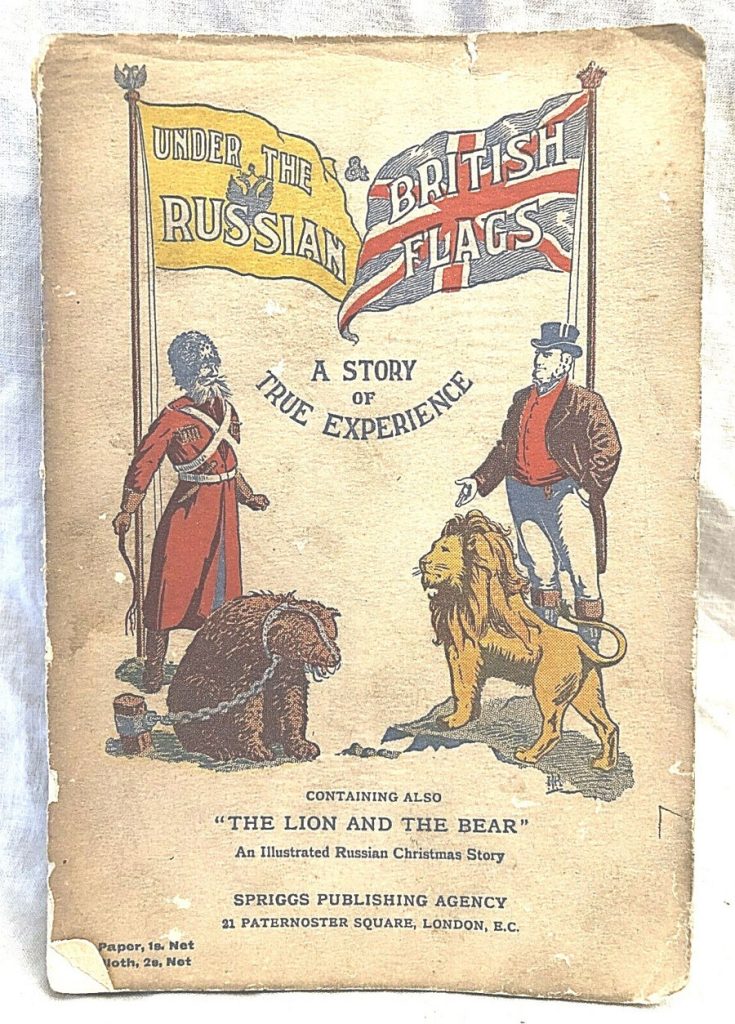
The office that Prelooker maintained for The Anglo Russian was based at 21 Paternoster Square, longstanding engine-room of London’s prosperous publishing trade. If the young typesetter, Alexis Sheftel, was working for his journal at all it would have been at the company’s printing house in Hastings, where he would be operating the actual press. The man running the shop in London was American-born, James F. Spriggs, a Camberwell Congregationalist and former publishing clerk who had been taken on as agent by Prelooker’s Scottish publisher Oliphant, Anderson and Ferrier. He would use the same office to conduct his affairs with its sister company in New York, Fleming H. Revell.
Spriggs, a familiar figure in the world of publishing would die aged 61 in 1906 after spending some thirty years in England. Whether or not it was the result of a simple coincidence or the inevitable outcome of shared spiritual and political interests or the input of mutual patrons, Prelooker’s US publisher Fleming H. Revell, would also go on to publish the works of Philip Whitwell Wilson, starting in 1896 and only finishing in the mid-1930s.
The first editions of The Anglo Russian had been printed in English but by 1904, Prelooker and his publishers had managed to secure access to a rare Russian typeface. From here on they were in a position to undertake any Russian printing, from visiting cards and circulars to invitations and books. Within weeks of arriving in Hastings, Alexei Sheftel got to work improving his lot, placing a series of small-ads in the Bexhill-on-Sea Observer and Hastings and St Leonards gazettes promoting his services as translator. An advertisement also appeared in an edition of Prelooker’s Anglo Russian Press: “A young Russian is desirous of giving lessons in his native language and vice versa, and could act as interpreter in courts of law, business arrangements etc — A. Sheftel, 7 Priory Street Hastings, Sussex.” [28] In view of the fact that Prelooker’s printers were based just a few hundred yards up the road at 47-49 Priory Street, it seems reasonable to speculate that the young typesetter may have been offered a position assisting in the printing and translation of The Anglo Russian, perhaps through an introduction by either Volkhovsky or Goldenberg, and was attempting to supplement his modest earnings by working as a tutor and interpreter. As 1904 was also the year that Prelooker would approach Burtsev with his proposal of translating and publishing a sanitised account of his life, it’s also possible that Sheftel had made the 60 mile journey to the East Sussex coast in anticipation of this and other services.
Related
[1] The Anglo-Russian, Volumes 7-13, 1904
[2] Under the Czar and Queen Victoria: The Experiences of a Russian Reformer, Jaakoff Prelooker, J. Nisbet, 1895, p.VI
[3] Under the Czar and Queen Victoria: The Experiences of a Russian Reformer, Jaakoff Prelooker, J. Nisbet, 1895, p.22
[4] Ibid, p.25
[5] Under the Czar and Queen Victoria: The Experiences of a Russian Reformer, Jaakoff Prelooker, J. Nisbet, 1895, p.20
[6] Under the Czar and Queen Victoria: The Experiences of a Russian Reformer, Jaakoff Prelooker, J. Nisbet, 1895, p.218
[7] Heroes and Heroines of Russia, Jaakoff Prelooker, Simpkin, Marshall, Hamilton, Kent & Co, 1908, p.162
[8] ‘Excursion of Cairngorm Club’, Aberdeen Press & Journal, May 3, 1893, p.7
[9] ‘British Chamber of Commerce’, Russian Information & Review, July 12, 1924, Vol.5, no.2, pp.25-26
[10] see: Item SW/1/2/61 – Letter from James Bryce to Elizabeth Spence Watson, Spence Watson/Weiss Papers, Newcastle University; Revolutionary Connections: Russia and Ireland, 1905-1923, Anna Lively, Oxford University Press, 2026; James Bryce, Transcaucasia and Ararat: Notes of a Vacation Tour in the Autumn of 1876 (London: Macmillan and Co., 1877
[11] ‘Who was Joseph Prelooker?’, Ken Thomson, The Cairngorm Club Journal 109, 2011
[12] ‘The Women of Russia’, Aberdeen Free Press, December 26, 1891, p.7.
[13] Foreign Office minutes on Soviet Draft Agreement, 7 February 1930, N808/28/38, FO 371/14845.
[14] ‘We are not Barbarians: Literature and the Russian Émigré Press in England, 1890–1905’, Carol Peaker, October 2006, Interdisciplinary Studies in the Long Nineteenth Century
[15] Vladimir Burtsev and the Struggle for a Free Russia, Robert Henderson, Bloomsbury, 2017, pp.30-31; Free Russia, American Edition, No.8, March 1891
[16] Under the Czar and Queen Victoria: The Experiences of a Russian Reformer, Jaakoff Prelooker, J. Nisbet, 1895
[17] The Terrorist 1890s and Increasing Police Cooperation: 1890–1898, Richard Bach Jensen, Cambridge University Press
[18] ‘The Escape of Padlewski’, The Times (London), December 24, 1890, p.3
[19] ‘The Flight of Padlewski’, The Standard, December 24, 1890, p.5
[20] ‘Vladimir Burtsev and the Russian Revolutionary Emigration’, Robert Henderson, 2008
[21] Under the Czar and Queen Victoria: The Experiences of a Russian Reformer, Jaakoff Prelooker, J. Nisbet, 1895, p.152
[22] Ibid
[23] ‘Vladimir Burtsev and the Russian Revolutionary Emigration’, Robert Henderson, 2008
[24] ‘Vladimir Burtsev and the Russian Revolutionary Emigration’, Robert Henderson, 2008
[25] ‘Bryce Cables to Jews’, New York Times, May 7, 1917, p.8
[26] ‘Predicts that War means Revolution’, Washington Times, March 16, 1905, p.2
[27] ‘Vladimir Burtsev and the Russian Revolutionary Emigration’, Robert Henderson, 2008
[28] The Anglo-Russian, Volumes 7-13, 1904