Toplis was the rank and file army deserter masquerading as a monocled officer, a ‘fascinator of women’, a ruthless anarchist — the man who some claimed had led the mutiny at Etaples in 1917 — but was his extraordinary legend an invention of the press or the creation of an incorrigible fantasist? This where the line between fantasy and reality becomes dangerously blurred — the original pulp faction.
Just picture the scene. It’s May 1920, and a nationwide dragnet is closing in on Percy Toplis, the 24-year-old former blacksmith wanted for the cold-blooded murder of cab driver Sidney Spicer. Having spent two months dodging authorities through the back alleys of London and the valleys of South Wales, Toplis bolted north, vanishing into the Scottish Highlands. Since the end of April, he has holed himself up in an unused gamekeepers cottage in a remote mountain pass, but suddenly he has the urge to get moving and he makes a beeline for Inverness, the region’s nearest commercial centre. This cold northern coastal city sits on the famous River Ness, and is home to some 20,000 people, making it the most populous settlement by far. After the relative safety and anonymity of his ‘cottage in the pass’, the journey comes at a considerable risk.
When he lands in the city, allegedly by cab, he checks into a Temperance Hotel under an alias. Today he is George Walters, a piano tuner by trade. The hotel keeper will later tell reporters that the man, some six feet tall with a strong military bearing, had entertained guests on the piano in the lounge. His favourite tune, the hotel keeper claims, is the Russian National Anthem. He makes animated conversation about his adventures of late and tells them he has been in Russia. Then one evening he disappears, melting into the dark streets with his brown trilby hat drawn low over his lean, handsome features and a mystery parcel wrapped in plain brown paper clutched beneath his arm. He enters a city tavern, leaves the package and returns to the hotel. [1] It’s like something from your classic John Buchan spy novel. But then maybe that’s the point.
Toplis’s Highland exploits sit at the murky intersection between self-fashioned fantasy and press-driven melodrama. On the one hand, Toplis was being presented as a chameleon-like character with a lifelong fascination with acting, disguise, and cheap pulp fiction stories — a man genuinely driven to play out his own rogue adventures in real time. On the other, the press of 1920 was all too eager to frame his flight from justice around the foremost anxieties of that era. Readers were already captivated by the high-stakes espionage thrillers of John Buchan, William Le Queux and Erskine Childers, while the detail of the Russian anthem appears to have tapped directly into worsening Red Scare hysteria over Bolshevik (communist) agitators. Ultimately, it’s hard to unpick where Toplis’s own daydream-led performance ends and early twentieth-century ‘fake news’ begins.
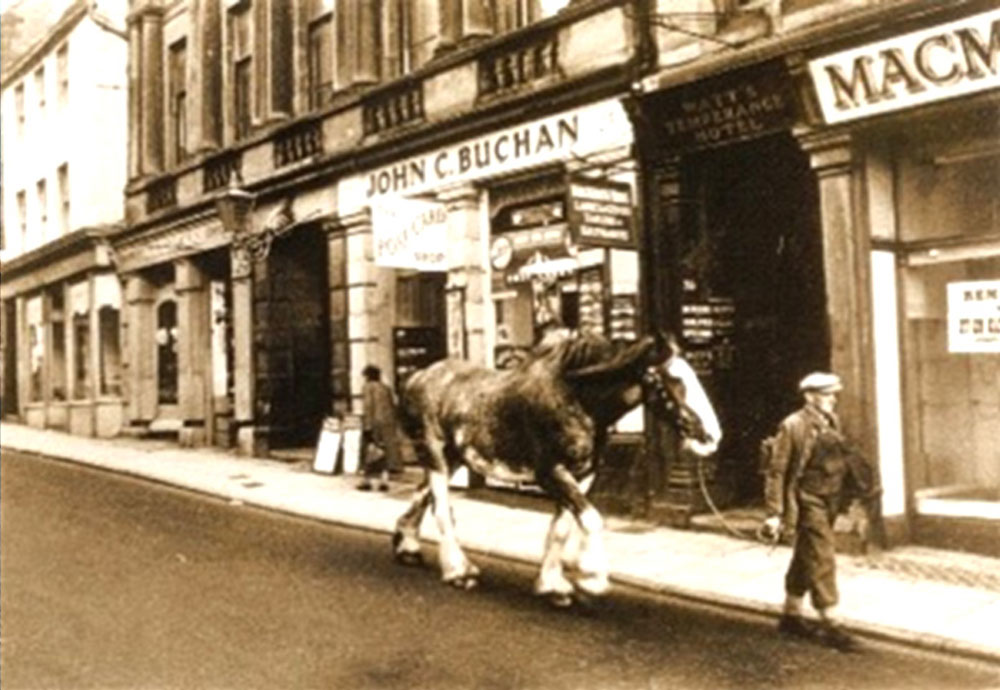
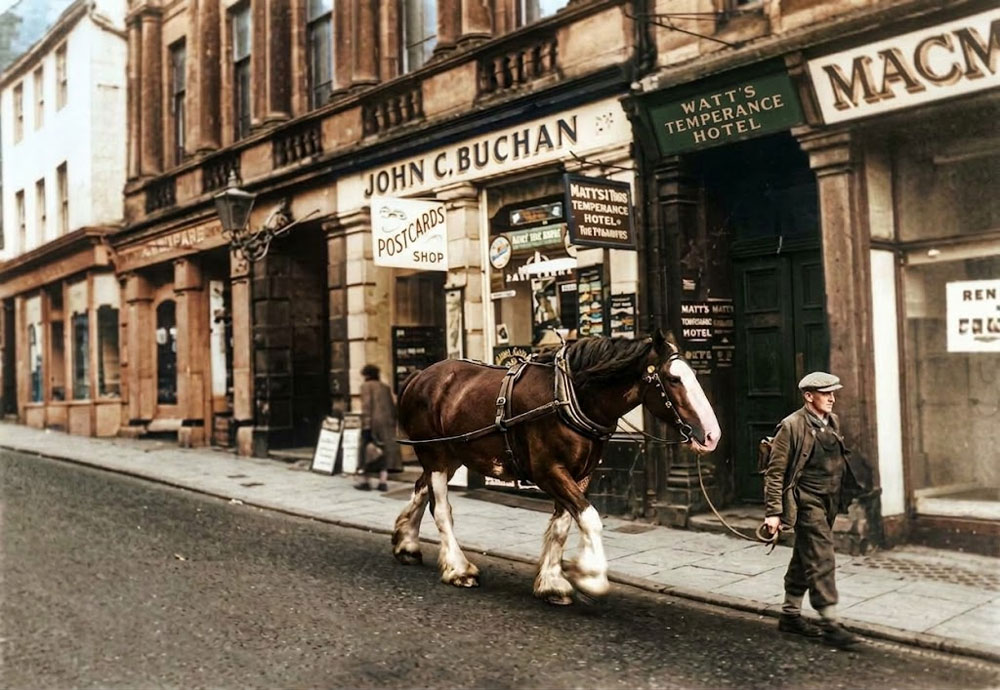
(note the name of the postcard shop next door)
In reality, Percy’s politics were less than clear. A natural contempt for authority may have seen him drawn into the orbit of various radical groups during the closing stages of the war, but evidence of any political ideology or firm methodology is thin on the ground. Aside from the posthumous reports in the press linking Toplis to a ‘Free Love’ anarchist group operating in the East End of London [2] and being described as ‘one of those intellectual Socialists’ by one of his friends in Mansfield. [3] The only firm indication he had any militant sympathies were reports of him posing as a ‘Sinn Feiner’ whilst on the run in Scotland. And sure, if the hotel keeper in Scotland is to be believed, he was known to bang out the Russian National Anthem on the old Joanna from time to time, but Lenin he was not. [4]
A Flair for acting
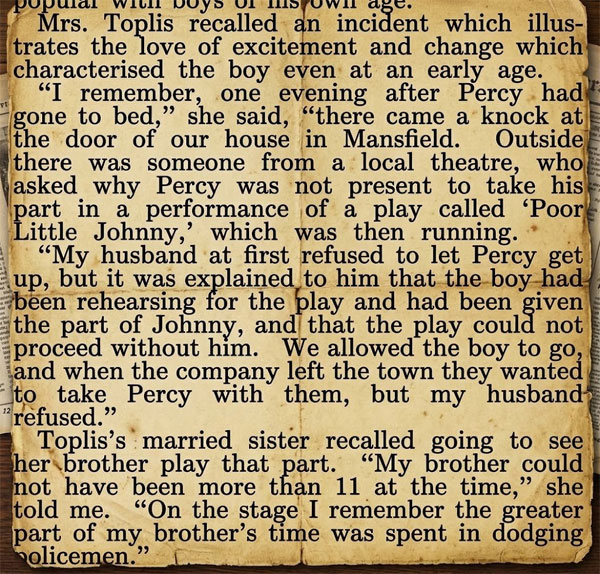
Much of what we know about Percy’s love of acting and detective stories can be traced to two articles published in May and June 1920. In an interview with the Sheffield Evening Telegraph on the day of the inquest into his death, Percy’s mother described how a touring theatre company in Mansfield had been so impressed by the young man’s acting abilities that they had offered him a full-time place in the show. She went on to explain how the director of the play had come knocking on the door of the house, shouting about his interest in the boy’s talent. As it is, her husband had refused to let Percy join the touring production and the man was sent on his way.[5] Another report, citing Scotland Yard as its source, said that he was a ‘wizard at disguises’. Even in his youth, Toplis had a “passion for reading detective stories” and “on many occasions attempted to emulate some of the detective characters, both as regards their adventures and disguise.” [6]
If we can draw anything from the two reports, it’s that during his long absences from active duty, Percy may well have immersed himself in the worlds of heroic secret serviceman Richard Hannay and the tireless quick-change artist and detective, Sherlock Holmes. The lines between fantasy and reality were becoming fantastically blurred. Life was rapidly imitating cheap pulp fiction novels.
Highland Flight
Hannay’s most famous story, The Thirty-Nine Steps (1915) started with a breakneck escape to Scotland. In the novel, Buchan’s hero, Richard Hannay witnesses the murder in his apartment of shape-shifting spy, Franklin P. Scudder, whose slow American drawl retells a life of outrageous disguises and audacious impersonations. On one occasion he recalls his life as a diamond merchant, another time a ‘cinema man’ and just as he is stepping out of the door of Hannay’s apartment, the American has transformed himself into a British Army Officer complete with monocle and tales of India. Anyone who has knowledge of Toplis’s flight to Scotland would be staggered to learn that many of the basic details of his Highland adventure are foretold in The Thirty-Nine Steps: the sensational tales of a Russian-funded ‘anarchist movement’, the overnight stays in a Shepherd’s bothy by the side of a ‘brawling stream’, the eager and anxious reading of his daring escape from Marylebone and the ensuing police manhunt in the daily newspapers. And if that wasn’t enough, there’s the same bewildering succession of shuttling train-rides across Britain. As the Police hunt is closing in, Buchan’s character Richard Hannay informs the reader that his notion is to get to some “wild district” where his skills in living rough might be of some use. If he didn’t, Hannay concluded, he would be “trapped like a rat in the city”. And this is exactly what Toplis does.
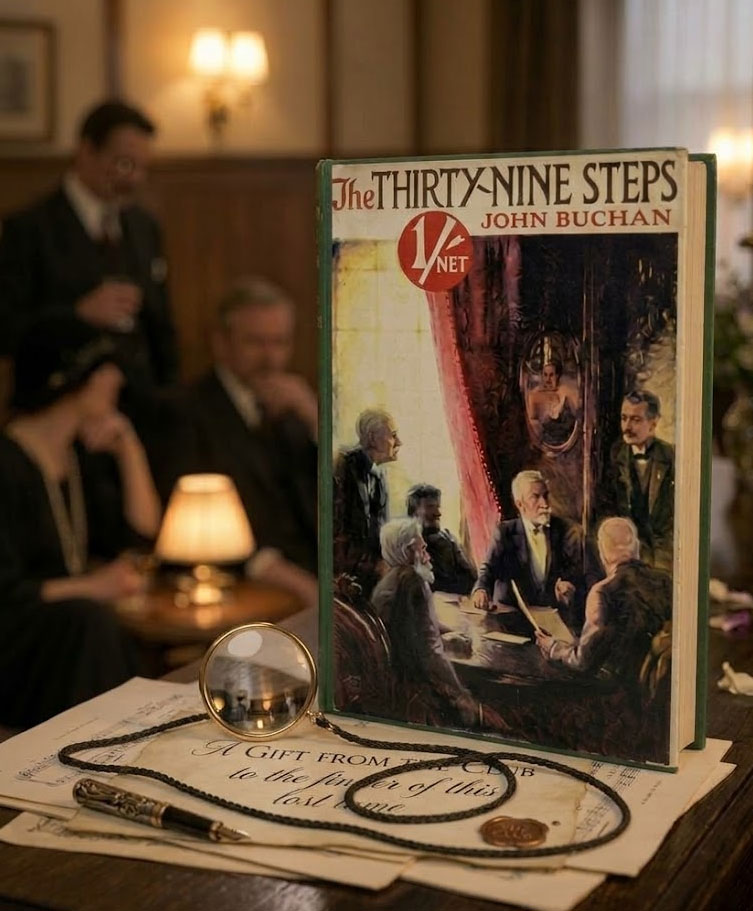
Both the real world of Toplis and the fictional adventures of Hannay would, incidentally, take place between May and June. Even the reports of Toplis at Lochrosque posing as a ‘cinema man’ was a perfect match for the extraordinary tale recounted by the mysterious American spy, Franklin P. Scudder in Buchan’s novel. When Scudder disguises himself as a British officer (Captain Theophilus Digby of the 40th Gurkhas), Hannay notes that “every trace of the American had gone out of his speech.” When confronted by the gamekeeper and policeman in Tomintoul, Toplis did much the same thing and had a shot at an American accent. [7]
But here’s where the line between fantasy and reality gets very blurred indeed, as Buchan’s plot —German spies embedded in the Scottish Highlands — mirrored a real-life episode of wartime paranoia.
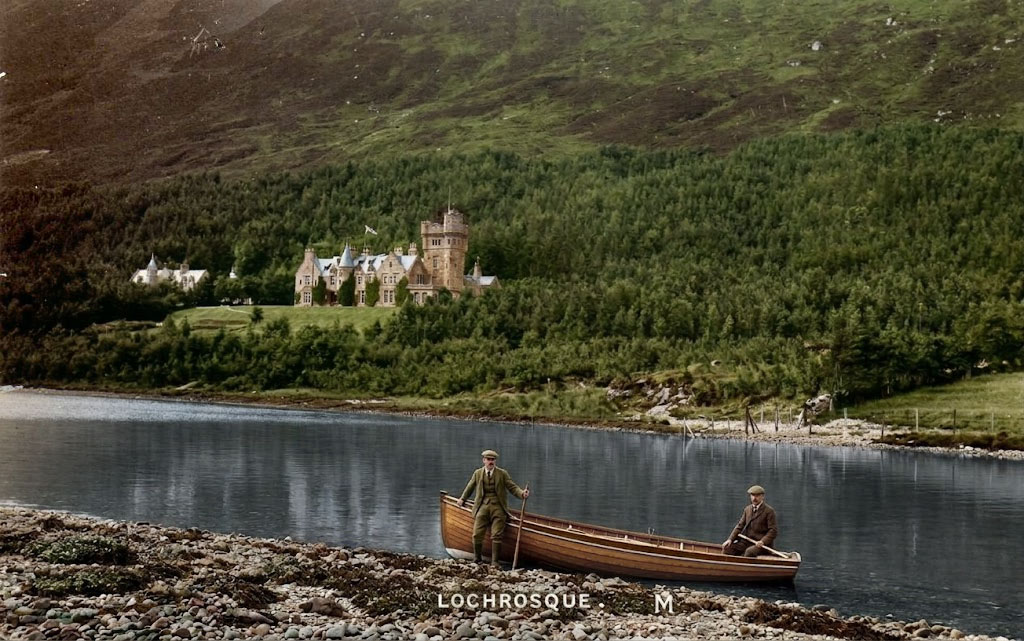
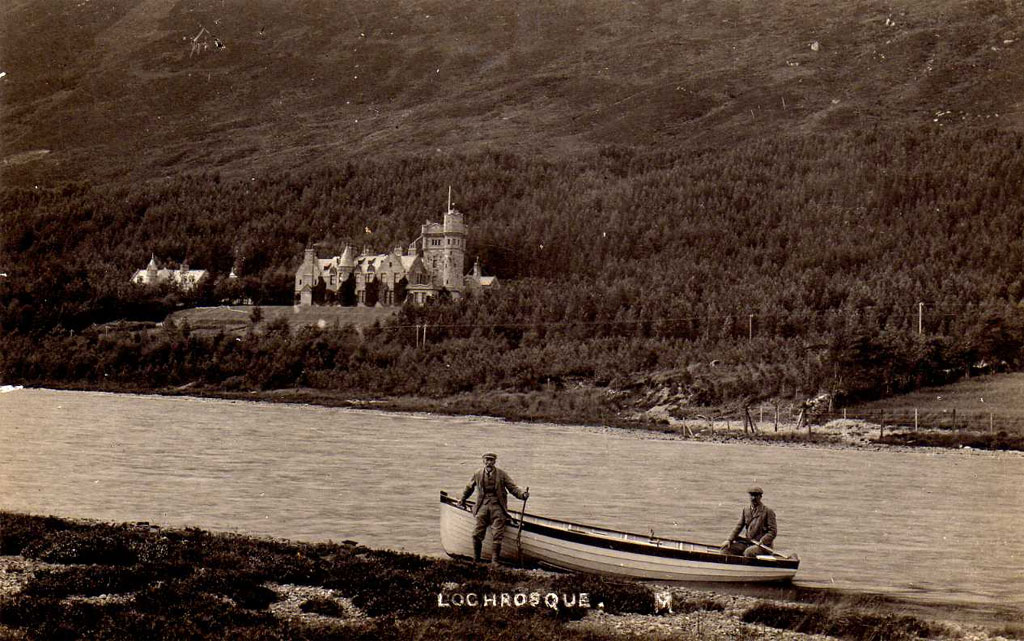
Just before the novel was published, Winston Churchill had led a midnight raid north-west of Inverness. According to witnesses, Winston had been on his way to inspect the Royal Navy fleet base at Loch Ewe when a powerful shaft of light came punching through the darkness. The light, it turned out, was a searchlight. Paranoid that the light was a secret signalling device being used by German spies, Churchill gathered a group of local police officers and with pistols drawn the officers stormed Lochrosque Lodge, the estate of Liberal MP Sir Arthur Bignold. The MP had installed a searchlight in his manor tower, aiming it squarely at Loch Ewe, where the British Grand Fleet lay anchored. Although Bignold was cleared of espionage, the incident permanently coded Lochrosque in the popular media as a site of potential treason, establishment paranoia, and subversion.
Fast-forward to 1920: Toplis arrives in Lochrosque—a desolate hamlet rarely if ever mentioned in newsprint—claiming to be a ‘cinema man’. The parallel to Buchan’s novel and Winston’s midnight raid story are hard to miss. Was Toplis consciously re-living The Thirty-Nine Steps, or had the Unionist press weaponised his escape, blending local wartime rumours with anti-Bolshevik panic to sell papers and push political agendas?
As a location, Lochrosque consisted of little more than Bignold’s lodge, a herd of deer and a scattering of pheasant. It was a name that rarely appeared in the papers. If the whole thing about Toplis in Lochrosque was an invention of the press, then what were they hoping to achieve?
As chief of the Gaelic Society of Inverness, Bignold had been very busy promoting the unique identity of the Scots and with it in all probability, the inevitable slide toward Home Rule and the triumph of the Land Leaguers. By the early 1900s, the language revival was being viewed as potentially dangerous. The Highland News, which had been founded some 25 years before as the official organ of the Highland Temperance League was the first to have the exclusive of Percy’s four-day stay at the Temperance Hotel in Inverness. By 1920 though, this provincial Scottish journal was giving a strong lead to home rule agitation in Scotland and came out in support of the Bolsheviks and the epidemic of land seizures breaking out in the Outer Isles during the final year of the war.
That Toplis was reported in the same small village of Lochrosque, miles from anywhere in the Western Highlands spinning tales of opening a cinema, can hardly be a coincidence. Certainly, the febrile imaginations of the press, and the machinations of post-war spymania could account for the lively Toplis narrative, but what if there were more sinister motives at work here?
Immediately prior to the war, Bignold had been associated with a Conservative faction that had favoured a policy of conciliation and improved Anglo-German relations rather than conflict. By simply being there, Toplis was being lumped in with the appeasers, the anti-militarists and conscientious objectors. The story, at a subliminal level at least, recasts Percy as an unpatriotic brigand, implicitly framing his serial desertion not as heroic resistance, but as privileged self-preservation. Lurking in the shadows of elite privilege and appeasement — makes him look parasitic rather than heroic. The mythos of the rebel folk hero — if ever there was one — was being destroyed before it had even had chance to take shape.
Real life spies
By the time of the Russian Revolution in October 1917, the author of The Thirty-Nine Steps, John Buchan, had been installed as Director of Intelligence at the Department of Information under newspaper magnate, Max Aitken (Lord Beaverbrook). It proved to be the year that the British propaganda factory was launched in earnest with two of the most sophisticated anti-Bolshevik storytellers in the business at the helm. Collaborating with Churchill, who had by this time been re-deployed as Secretary of State for War by the Lloyd George government, Beaverbrook and Buchan launched an all-out assault on subversion and disorder, assisted in no small part by Churchill’s secret intelligence department M04(x) and Etaples hero, Horatio Bottomley. MO4(X) and the Admiralty’s cipher specialists in Room 40 would provide the intelligence leaks, and Bottomley’s right-wing Morning Post would publish the dirt that would bury Socialism.
Buchan’s novel was a late addition to an oeuvre of paranoid literature popularised by the likes of William Le Queux and Erskine Childers in the late 1800s and early 1900s. Both men had been writing imaginatively of a sophisticated German and Russian intelligence network laying the foundations for an invasion of Britain from within. The deeply infectious spirit of ‘Spymania’ during the first years of the 20th Century even took hold within the usually chill calm of the British Admiralty. As a result of largely imagined or, at the very least, grossly exaggerated fears of a ‘Fifth Column’ network of fiendish German exiles plotting the downfall of Britain from within, the Secret Service Bureau was formed in October 1909 with naval man, Vernon Kell put in as chief.
Within months of Toplis’s death in Penrith, Le Queux used the surname of Percy’s right hand man at Etaples, Aubrey Aaronson. [8] in his book The Fifth Finger (September 1921). Just as in the book, the family of Aubrey Aaronson were Russian-born diamond merchants conducting less than transparent business in Hatton Garden, Amsterdam and Brussels. [9] The real Aaronsons had also been the subject of an international jewel heist story some ten years earlier, a story which had attracted considerable interest from the press. [10]
Spy Tropes
The coverage of Percy’s stay at the Temperance Hotel in Inverness is crammed with similar espionage motifs and tropes.
According to the owner of the Temperance Hotel, Toplis had stayed there for four days between the 11th and 14th of May. He signed the register on the 11th as ‘G. Walters’, a jobless piano tuner, and left in a hurry some three days later without paying. The Burgh Police had brought them a picture of Toplis and he was immediately identified by the owner. Dressed in a brown jacket, soft hat and khaki trousers, Toplis was said to have been carrying a small parcel wrapped in brown paper that he is reported to have shown “no small amount of concern about.” The hotel keeper remarked on his handsome appearance, his popularity with the other guests and claimed that the gentleman stranger stood little short of six-feet tall. The following morning, the “perfect gentleman” had left for Aberdeen on some new and important matter that demanded his attention.
When Toplis returned in the morning he told the hotel owner that he had received a telegram at the Post Office around the corner and was presently engaged in business. With the brown paper package still under his arm he left to have drinks in the town. When he returned, the parcel was gone. The following day, sensing his game had been rumbled, Toplis left in a hurry. At his side was a man of military bearing in a dark bowler-hat whom the hotel owner referred to as his ‘cabman’, quickly adding that he was not a local. [11]
If you are familiar with espionage novels of this period, the entire scene is a familiar one. The ‘brown paper parcel’, so synonymous with the so-called ‘dead drop’ tactic so famously used by spies in parks and in bars, had even made it into the novels of Buchan and William Le Queux. It didn’t matter what was in it, the image alone was enough to send shivers down the spine and generate all manner of fantastical rumours and possibilities. That the reader doesn’t know what is in the parcel is what makes it so compelling. The brown paper was the veil and beneath it an infinite resource of untapped secrets and occult truths.
The significance of the drama taking place around the corner from the Station Hotel on Academy Street may not have been lost on some newspaper readers either, the two German spies, Lizzie Wertheim and George Breeckhow (also posing as a piano tuner at this time) having been arrested there in 1915. Breeckhow was subsequently executed at the Tower of London at the height of the notorious spy hunts. He was just one of 12 men to face the firing squad at the Tower that year.
Was Toplis, driven by ever more complex fantasies, trying to pass himself off as a spy? In his 1929 book, Detective & Secret Service Days, Edwin T. Woodhall, the Secret Service officer tasked with restoring order in the immediate aftermath of the Etaples riots, placed Toplis among the deserters who had taken refuge in the sanctuary around the wells, woods and tunnels of Camiers at the time of the mutiny. Even if there was little truth in Woodhall’s story, did Toplis actually lead the mutiny at Etaples, or did he simply dream himself into the centre of it? Had Toplis’s habitual daydreams and grand fantasies hardened into a boast whose payload would eventually kill him?
Truth or fiction?
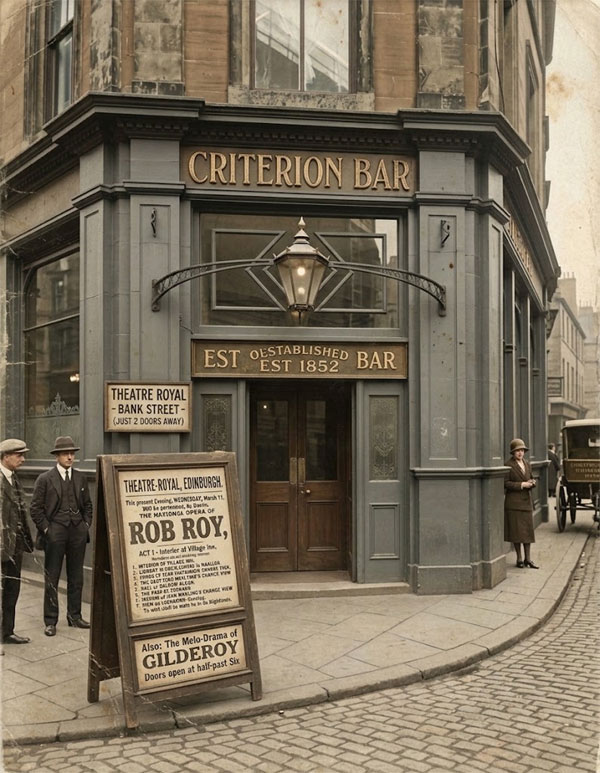
Whilst there’s every reason to doubt the story of Percy’s three days in Inverness (he was 5 feet 6½ inches tall not 6 feet), witness accounts of him being the “modern Yorrick” — a reference to the dead court actor in Shakespeare’s play Hamlet — and spending his time in a local bar “popular with members of the Theatrical profession” chimes with what we know about Toplis, both from press interviews with his family, and statements made by Scotland Yard. One day he would dress as a Sergeant Major and the next, an itinerant traveller. He was even known to have disguised himself as a woman to evade capture.
As his mother had told the press, a flair for acting had been with Toplis since childhood. But if the unpredictable demands of war had taught Toplis anything, it was that appearances, even in real life, could be just as fluid. Like so many other men returning from Europe, Toplis had found fault lines developing along traditional class boundaries. The influence and power enjoyed by Britain’s elites and its glamorous landed classes had always been something of a confidence trick. All you really needed was the guts, energy and the dedication to perform, the skills to memorise dialogue and the ability to enter another character and truly engage with an audience. In war, all men were re-created equal. The differences between men were found to be arbitrary, and the privileges and the skills that kept men apart could be easily overwhelmed with some simple affectations; the addition of a few pips and chevrons, the wearing of a monocle, the swaggering of a stick — and building oneself the platform and opportunity to amaze.
According to Scotland Yard, the well-educated former Blacksmith was a “wizard at disguises and had on many occasions attempted to emulate some of the detective characters both as regards their adventures and disguise.” On one occasion Toplis had kept a promise to write to Harry Fallows, his co-accused in the murder of Spicer, and did so telling him to reply to the Union Jack Club in Waterloo, under the name of Private Wilson, RAF. The letter had been posted outside the Union Jack Club a day or so before Fallows’ arrest. Fallows, under the direction of Scotland Yard, addressed a decoy reply to Toplis as Private Wilson, the Police then waiting at the club to pounce when Toplis claimed the letter. Toplis, anticipating the move, is believed to have watched quietly from afar, using the identity of a sailor called Mabb whose discharge papers he had robbed at breakfast. Chairs were upended, tables flipped, and rooms torn apart. Police jostled bystanders and interrogated bewildered servicemen, but Toplis was gone—a phantom who had melted into the crowd, confident that Harry Fallows was now in the pay of Police and that his support network had been rumbled.
In the end, whether Percy Toplis was a genuine criminal mastermind weaving his own Pulp-fiction adventure or merely an opportunistic fraudster whose exploits were being amplified by a hungry tabloid press is beside the point. In an era shattered by world war and haunted by foreign intrigue, Toplis understood a fundamental truth: in the grand theatre of post-war Britain, reality was malleable, and a convincing performance was the ultimate disguise.
“They fought, but not for love of strife:
They struck, but to defend,
They stood for liberty and truth
Soldiers to the end.”
(dedication in the Inverness Courier, 1919 by Mrs Mary Watt, proprietor of Watt’s Temperance Hotel)
[1] ‘Toplis Goes West’, Highland News and Football Times, June 12, 1920, p.2.
[2] ‘How Toplis Eloped with Pretty Motorist’, World Pictorial News, June 1920.
[3] The Monocled Mutineer, John Fairley/William Allison, Quartet Books, 1978.
[4] The song was probably The Internationale, adopted as the Soviet national anthem but sung by Socialists long before the revolution.
[5] Sheffield Evening Telegraph, June 8, 1920, p.6
[6] ‘A Wizard at Disguises’, Western Gazette, May 7, 1920, p.12
[7] ‘Toplis Goes West’, Highland News and Football Times, June 12, 1920, p.2; ‘Toplis Bluffs the North’, People’s Journal, June 12, 1920. Franklin P. Scudder mentions posing as a “cinema-man with special ski films” while explaining his travels and cover stories to Richard Hannay
[8] The Monocled Mutineer, John Fairley/William Allison, Quartet Books, 1978.
[9] The Fifth Finger, William Le Queux, Stanley Paul & Co., 1921. The character is called Philip Aronson in the book but the details about the family are remarkably similar. Aubrey’s 45 year-old father, Harry Aaronson, was listed as Russian subject at his home at 361 Cheetham Hill Road
[10] ‘Attempt to Rob a Manchester Diamond Merchant’, The Guardian, May 3, 1912, p.16
[11] ‘Toplis Goes West’, Highland News and Football Times, June 12, 1920, p.2; ‘Toplis Bluffs the North’, People’s Journal, June 12, 1920.